
Editorial
Tackling Air Pollution

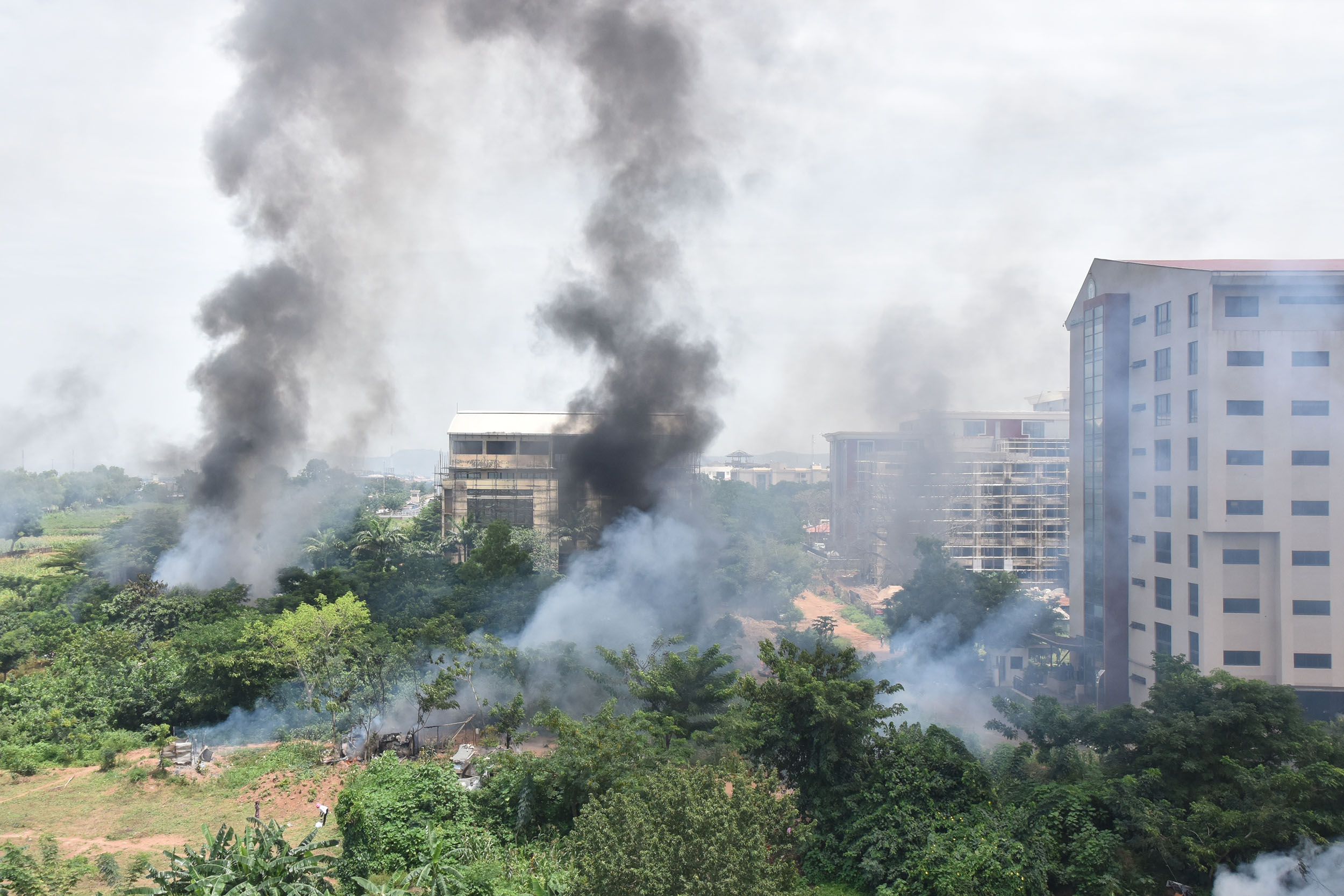
Following the international community’s increasing interest in clean air, and the need to make further efforts to improve air quality to protect human health, the United Nations General Assembly designated Tuesday, 7 September every year, as the International Day of Clean Air for blue skies. Last year, being the first-ever edition of the Day, was marked with the rights-based theme: “Clean Air for All”.
However, this year’s theme “Healthy Air, Healthy Planet”, emphasises the health effects of air pollution, particularly during the Covid-19 pandemic. The event aims to prioritise the need for healthy air for all while keeping conversations broad enough to encompass other critical issues such as climate change, human and planetary health as well as the Sustainable Development Goals. This is a collective call to action to align efforts and reclaim the right to clean air.
Air pollution is the single greatest environmental risk to human health and one of the main avoidable causes of death and disease globally, with some estimated 6.5 million premature deaths (2016) across the world attributed to indoor and outdoor air pollution. In developing countries, air pollution affects women, children and the elderly indiscriminately, especially in low-income populations as they are often exposed to high levels of ambient and indoor air pollution from cooking and heating with wood fuel and kerosene.
Given its long-range transport, air pollution is a global issue with significant impacts. In the absence of aggressive intervention, the number of premature deaths resulting from ambient air pollution is estimated to be on track to increase by more than 50 per cent by 2050. Society bears a high price for air pollution due to negative impacts on the economy, labour productivity, health care costs and tourism, among others. Therefore, the economic advantages of investing in the fight against this pollution cannot be overestimated.
Figures published by the United Nations Environment Programme (UNEP), 92% of the world is exposed to polluted air, causing about 7 million premature deaths annually. Air pollution constitutes an environmental hazard to human health and a preventable cause of death and disease worldwide. Moreover, it has negative effects on climate, biodiversity and ecosystems, and quality of life in general. The improvement of air quality will bring health, development and environmental benefits.
Developed countries have significantly improved their air quality in recent years, but many, which continue to depend on wood and other solid fuels for cooking and heating, are lagging behind. The implication is that many vulnerable and marginalised people also have the worst air quality. This issue arose during the Covid-19 pandemic, and there is proof that air pollution may increase the risk of infection. The pandemic has reduced pollution and improved air quality, while air transport and car travel have decreased during international isolation activities.
Unfortunately, Nigeria’s story is pathetic as it has the largest number of deaths in Africa caused by air pollution, while it also ranks fourth for air pollution across the globe. Statistics show that in 2016, there were 150 deaths per 100,000 persons due to this environmental problem. The State of the World Air Report published by the Institute for Health Impacts (HEI) stated that air quality in Nigeria was among the most lethal globally.
Uncontrolled emission of carbon monoxide mainly from generators causes great concern for Nigerians. Older automobile engines are also at risk of emitting unhealthy vapors into the atmosphere, same as domestic kerosene stoves that produce flames contributing to poor air ventilation. More than 3 million tonnes of waste are generated in Nigeria per year. Most Nigerians burn their waste in their neighbourhoods rather than dispose it, hence, increasing air pollution.
Activities of illegal refiners and bunkerers are causing a surge of deadly soot in Rivers State. Consequently, the state government swung into action by setting up an expert committee to investigate the incident. Companies noted to be sources of the soot were shut down. Those actions indicate that the government can end the menace. Efforts should, therefore, be intensified in that regard.
Africa experiences more than 700,000 deaths annually from air pollution. More people die of this cause than unsanitary hygiene practices and under-nutrition. For example, the victims of Nigeria’s air pollution crisis have increased by almost 40% in the past 30 years. The nation is home to some of the highest rates of poor air quality in Africa. Nigerian cities have the most unhealthy air quality with 10 urban areas ranked on a list of 30 cities in Africa with the most unhealthy air quality.
To effectively handle the rising air pollution crisis in Nigeria, it is imperative for the country to provide regular inspections of automobiles to ensure that older cars are not releasing harmful chemicals into the atmosphere. It is also necessary that cars emitting toxic substances to the environment are removed from our roads.
Implementing effective electrical power will help reduce the need for generators that produce unhealthy air pollution in households and workplaces. The authorities should take from the abundance of our sustainable energy resources and supply energy to the citizens. Such methods are safer for the environment as their use reduces the utilisation of gasoline generators.
Furthermore, household air pollution can be mitigated by replacing firewood with biogas, which is a form of biofuel produced instinctively from the decay of natural waste. Biogas provides sustainable options to prepare food and heat the household while eliminating air pollution both indoors and outdoors.
Recycling practices of waste disposal is expedient as it will ensure that people do not burn waste. Daily household waste removal will also help to properly eliminate waste and prevent odors that contribute to air pollution. This should be complemented by the government’s efforts to compel firms to observe sustainable practices guidelines to curtail air pollution.
The effective application of environmentally-friendly practices in Nigeria will help to reduce the air pollution crisis in households, businesses and the external environment. Since environmental health is inseparable from human health, everyone must act to reduce air pollution and bring a transformative change in our lifestyles.



Nigeria stands at a critical juncture as the world marked World Press Freedom Day (WPFD) on May 3. This annual observance is a reminder that a free press is central to democratic life, good governance, and public accountability. For Nigeria, it is also a moment for sober reflection on how far the country has come and how far it still has to go in safeguarding the independence of its media.
World Press Freedom Day exists to highlight the fundamental importance of freedom of expression and to honour journalists who risk their lives in pursuit of truth. It underscores the idea that without a free press, societies cannot function transparently, nor can citizens make informed decisions. In countries like Nigeria, where democracy continues to evolve, the observance carries particular urgency.
This year’s theme, “Shaping a Future at Peace: Promoting Press Freedom for Human Rights, Development and Security”, places journalism at the heart of global stability. It emphasises that a peaceful society cannot be built on silence, fear, or manipulated information. Rather, it depends on the free flow of accurate, timely, and independent reporting.
At its core, the theme highlights the role of journalism in fostering accountability, dialogue, and trust. These are not abstract ideals. In Nigeria, where public confidence in institutions is often fragile, the media remains one of the few platforms through which citizens can question authority and demand transparency. When press freedom declines, so too does public trust.
Journalism serves as a foundation for peace, security, and economic recovery. Countries with robust media systems tend to attract greater investment, maintain stronger institutions, and resolve conflicts more effectively. Nigeria’s economic challenges, ranging from inflation to unemployment, require open scrutiny and informed debate, both of which depend on a free press.
However, the issue of information integrity has become increasingly complex in the digital age. Artificial Intelligence (AI) and online platforms have amplified the spread of misinformation and disinformation. In Nigeria, where internet penetration has grown rapidly, false narratives can travel faster than verified facts. This makes the role of credible journalism more vital than ever.
The challenge is not only technological but also ethical. AI-driven manipulation of information threatens to distort public discourse, influence elections, and deepen social divisions. In such an environment, professional journalism must act as a stabilising force, ensuring that truth prevails over sensationalism and propaganda.
Equally troubling is the safety of journalists. Across Nigeria, reporters face growing levels of online harassment, judicial intimidation, and physical threats. Self-censorship is becoming more common, as media practitioners weigh the risks of reporting sensitive issues. This trend undermines the very essence of journalism.
A particularly alarming incident involved a serving minister in the present administration, who openly threatened to shoot a journalist during a televised exchange. Such conduct, broadcast to the public, sends a dangerous signal that hostility towards the press is acceptable. It erodes the norms of democratic engagement and places journalists in harm’s way.
This year’s theme aligns closely with the United Nations Sustainable Development Goal (SDG)16, which promotes peace, justice, and strong institutions. Freedom of expression is a cornerstone of this goal. Without it, institutions weaken, corruption thrives, and justice becomes elusive. Nigeria’s commitment to SDG 16 must therefore include genuine protection for the media.
Historically, the Nigerian press has been a formidable force. From resisting colonial rule to challenging military dictatorships, our journalists have played a central role in shaping the nation’s political landscape. Today, however, that legacy appears to be under strain, as the media operates under what can best be described as a veneer of freedom.
Beneath this facade lies a troubling reality. Journalists are routinely harassed, detained, and prosecuted for performing their constitutional duties. Reports from media watchdogs indicate that dozens of Nigerian journalists face legal threats or arrest each year, often for exposing corruption or criticising those in power.
The Cybercrimes (Prohibition, Prevention, etc.) Act of 2015 has become a focal point of concern. Originally intended to combat cyber threats, it has increasingly been used to silence dissent. Sections 24 and 27(1)(b), in particular, have been invoked to target journalists, bloggers, and social commentators.
Although amendments introduced in February 2024 were meant to safeguard journalists, concerns persist. The law continues to be wielded in ways that stifle investigative reporting and restrict freedom of expression. Legal reforms must go beyond cosmetic changes to address the root causes of misuse.
To safeguard the future of journalism in Nigeria, decisive action is required. The Cybercrimes Act must be revisited to ensure it cannot be weaponised against the press. Law enforcement agencies must operate free from political influence, upholding the rule of law and protecting journalists’ rights. Civil society and international partners must also strengthen independent media through funding, training, and platforms for wider reach.
In this rapidly evolving world shaped by artificial intelligence and digital innovation, Nigeria faces a clear choice. It can either allow press freedom to erode under pressure, or it can champion a truly independent media landscape. The path it chooses will determine not only the future of journalism, but also the strength of its democracy and the peace it seeks to build.

-

 Featured2 days ago
WASSCE: RSG Distributes Science Materials To Secondary Schools
-
News2 days ago
Xenophobic Attacks: Nigerian Lives More Important Than Foreign Investment – Oshiomhole
-
Rivers2 days ago
MBA Forex Trial Adjourn To June 3, Amid Bereavement … As Court Declines Cost Application
-
News2 days ago
ActionAid Demands Probe Of Govs Using Public Funds For Campaign
-
Aviation2 days ago
Passengers Stranded As Delta Airline From Atlanta Route Back Eight Hours After
-
Business2 days ago
Customs Impound N2.35bn Cocaine, 15 Trailers of Rice
-
Politics2 days ago
2027: Bayelsa Senator Gets Critical Endorsement For Second Term
-
 Politics2 days ago
INEC Sets Rivers South-East Senatorial By-Election For June 20