
Nation
Afe Babalola Doles Out N13.2m To Ekiti Farmers

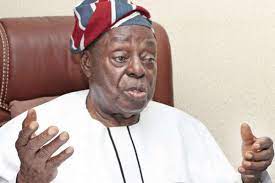
Legal icon and “Edupreneur’’, Aare Afe Babalola (SAN) gave out N13.2 million to outstanding farmers in Ekiti State on Sunday as part of efforts to encourage farming and lift farmers financially.
Babalola, who is also the founder of Afe Babalola University, Ado-Ekiti (ABUAD), is reputed to be the largest farmer and highest tax payer in Ekiti State.
The gifting of money to farmers took place at the grand finale of this year’s edition of the Annual Afe Babalola Agricultural Expo and UNESCO Youth Empowerment, held at the university’s sports pavilion.
At the event, Mr Aribasoye Emmanuel, from Ado Local Government Area, got the star prize of N2 million as the overall best farmer in the state for the year.
Five best farmers in each of the 16 Local Government Areas, got N250,000, N150,000, N100,000, N75,000 and N50,000 respectively.
Babalola said distributing money to hardworking farmers on annual basis was a fulfilment of his dream.
“This is in realisation of my dream. It all started like a dream which translated into reality since 2015.
“The dream was my burning desire to make people realise that farming is a divine vocation.
“It is also part of my individual contributions to on-going efforts at revitalising farming as well as reducing unemployment in the country.
“Another reason why I started this Expo was that I found it utmost painful that many Nigerians have abandoned farming for white collar or menial jobs and also for no jobs
“Many of us in the country are familiar with the story of the Garden of Eden in the Holy Bible where we were made to understand that God, in His wisdom, established the Garden and asked Adam and his wife, Eve, to look after the Garden.
“There was a time in this country when whatever one’s profession was, such a person would still have a small garden at the back of his house, if only for vegetables, tomatoes, pepper and garden eggs, among others,’’ he observed.
“Let me use this opportunity to appeal to the Federal Government to establish a special Agriculture Bank, which will be completely different from those before it.
“This is where farmers can obtain loans at low interest rates with their cooperative societies serving as guarantors,’’ he added.
The ABUAD founder expressed regret that farming has suddenly become abandoned and discouraged in Nigeria.
“Farming has been abandoned in Nigeria today and Nigeria is the worse for it.
“For instance, time it was when Ekiti State alone was producing 52 per cent of the Internally-Generated Revenue of the defunct Western Region.
“Today, Ekiti State is the poorest state in Nigeria. In fact there was no beggar in Ekiti State at that time as everyone was gainfully employed, but today beggars are found everywhere.
“Regretfully, Ekiti State has become the poverty capital of Nigeria,’’ Aare Babalola said.
Continuing, Babalola said “Also, no thanks to the spate of insecurity ranging from kidnapping, robbery and invasion by herdsmen ravaging the country, life is no longer safe at home, on the farm, on the road or even in classrooms.
“The combination of these ills has led many farms to be destroyed with many farmers having to abandon their farms.
“Thank God that despite all these, Ekiti State farmers have been able to forge ahead. I believe in farming because I grew up on the farm and I am still a farmer as many of you know,’’ he said.
He added that he included the study of agriculture in the curriculum of his university, with a 50 per cent slash in tuition fee for the course.
“In my university, we provide seed money for graduates of agriculture to start their own businesses.
“That was why in addition to all of these, in 2015, I thought of how to improve the lot of our farmers.
“That is why I started this programme. I started with a prize of N5 million, but it has risen over the years, thus this year, we are giving out N13.2 million,’’ he said.
The Local Organising Committee Chairman and UNESCO Chair in Entrepreneurship Education for Sustainable Development, Prof. Abiodun Ojo, also made a donation of 48 spraying machines to select farmers.
He said that partnering with ABUAD was to commend the good work which Aare Afe Babalola was doing to return agriculture to its old days of glory.
Mr Olugbenga Odesanmi, Permanent Secretary, Ministry of Agriculture, Ekiti State who stood in for the state government, commended Babalola’s efforts and promised government’s enabling environment at all times.



Rivers State University and the Otonti Nduka Foundation for Values Education jointly hosted a two-day National Conference on 8 and 9 May 2026 to examine the state of values in Nigeria.
The two days conference held at Rivers State University convocation arena brought together academics, policymakers, legal experts and education leaders under the theme _“Trends and Challenges in Upholding Values in Nigeria.”_
The gathering focused on policy gaps, curriculum reform, and the role of ethics in public service and education.
The event opened on Friday with remarks from Vice Chancellor Prof. Chief Isaac Zeb-Obipi, who stressed the need to address declining moral and civic values across Nigeria’s education and public sectors. A book of abstracts for the plenary sessions was also presented to participants.
Key speakers included former Attorney General Chief Dr Kanu Agabi, SAN; NERDC Executive Secretary Prof. Shehu Salisu; Prof. Hauwa Imam, FNAE, of the University of Abuja; former Rivers SUBEB Chairman Ven Dr Fyneface Akah, ; former NIMASA DG Dr Hon. Dakuku Adol-Peterside; and RSU Director of ICT Prof. Sunny Orike.
Discussions centered on integrating values education into schools, tertiary institutions and public institutions, alongside the impact of technology on moral development among young Nigerians. Panel and plenary sessions produced practical recommendations for curriculum and policy reform.
On Saturday, the foundation marked its centenary with the unveiling of the book _Otonti Nduka in History_, launched by Chief Engr. Grant Offor, FNSE. The Nigerian Academy of Education held a ceremonial procession led by its President Prof. Olu Jegede and the Ikwerre Professors Forum.
In a communiqué, participants called for stronger collaboration between government, civil society and academia to mainstream values education nationwide. They recommended reviewing teacher training curricula and expanding digital platforms to promote ethical civic engagement, with the foundation pledging to share the outcomes with education authorities for implementation.
Dignitaries present included Ogbakor Ikwerre Worldwide as Chief Host, Prof. Emeritus Chief T. Uzodimma Nwala, the Ikenga 1 of Mbaise and first philosophy student of Prof. Otonti Nduka, alongside scholars and community leaders.
Amadi Akujobi

The Shell Nigeria Gas Limited, in partnership with the Manufacturers Association of Nigeria, has reaffirmed support for efforts to expand gas distribution infrastructure in Rivers State as part of initiatives aimed at improving access to affordable, cleaner and more reliable energy for industries across the South-South region.
The commitment was highlighted during the SNG–MAN Business Forum held in Port Harcourt, where stakeholders from the industrial and public sectors examined the role of natural gas in driving industrialisation, boosting local production and strengthening energy security.
Speaking at the forum on behalf of the Managing Director of Shell Nigeria Gas Limited, the company’s Head of Gas Distribution, Mr. Chukwuka Amos Ejesi, described natural gas as a critical component of Nigeria’s energy mix and a key driver of sustainable industrial growth.
According to him, Nigeria’s gas development agenda has reached a stage where policy direction must be matched with practical implementation capable of addressing the energy challenges confronting manufacturers.
He noted that pipeline gas offers industries a cleaner, more dependable and cost-effective energy alternative capable of supporting uninterrupted operations, reducing emissions and improving production efficiency.
“Gas is the backbone of manufacturing, and we are encouraged by the growing recognition among stakeholders of the need for cleaner and more reliable energy solutions,” he said.
Ejesi stressed the need for sustained collaboration among energy providers, government institutions and industrial stakeholders to maximise the country’s gas resources for economic development.
He added that improved gas infrastructure would strengthen manufacturing value chains, enhance productivity and promote more competitive industrial operations across Rivers State and the wider South-South region.
Participants at the forum also emphasised the importance of expanding energy infrastructure as a pathway to unlocking industrial capacity, reducing operating costs and promoting sustainable industrial development.
Representing Governor Siminalayi Fubara, the Director-General of the Rivers State Investment Promotion Agency, Dr. Chamberlain Peterside, reaffirmed the state government’s commitment to partnering with private sector investors to revitalise industrial activities in the state.
He identified key projects targeted under the initiative to include the revival of the Ahoada Industrial Park, the New Port City project and the proposed Bonny Industrial Park, all aimed at stimulating economic growth and expanding industrial opportunities along the Bonny corridor.
According to the governor, the long-term vision is to position Rivers State as a leading manufacturing hub in Southern Nigeria through strategic public-private partnerships.
Governor Fubara also commended Shell Nigeria Gas and MAN for sustaining engagements geared towards improving industrial energy access, noting that gas infrastructure development remains central to the state’s economic recovery plans.
He further observed that the gas sector presents enormous opportunities for economic growth, especially as global energy systems continue to shift towards cleaner energy sources.
The governor called on stakeholders to work collectively towards developing a practical and sustainable gas framework capable of supporting the state’s industrial and energy development objectives.
Chairman of MAN, Rivers and Bayelsa Branch, Elder Vincent Okuku, described gas as indispensable to industrial operations, noting that many manufacturers continue to struggle with the high cost of alternative energy sources.
Similarly, President of the Port Harcourt Chamber of Commerce, Industry, Mines and Agriculture, Dr. Chinyere Ngozi Nwoga, said the transition to natural gas had become increasingly necessary for businesses seeking stable and cost-efficient operations.
“Pipeline natural gas provides a more cost-effective and reliable source of energy for industries,” she stated.
Also speaking, former Chairman of MAN in Rivers and Bayelsa States, Mrs. Emilia Akpan, stressed the need to align energy infrastructure development with investment in human capacity.
She maintained that rebuilding the state’s economy would require not only reliable energy supply but also the development of technical skills needed to support long-term industrial growth.
By Kevin Nengia

The City Boy Movement in Etche Local Government Area of Rivers state has commended Senator Allwell Onyesoh on his victory in the APC primary election for Rivers East Senatorial District.
Chairman of the group in Etche, Dr. Fortune Uchenna Obi, spoke to journalists in Okehi Ward after participating in Monday’s direct primary. He described Onyesoh’s emergence as the party’s candidate for the 2027 senatorial election as a reflection of the people’s will.
Dr. Obi said the senator has performed well during his first term and deserves re-election. He also thanked FCT Minister Nyesom Wike, leader of the Renewed Hope Agenda and Rainbow Coalition in Rivers State, for supporting Onyesoh’s candidacy. According to him, Wike’s backing was instrumental to the senator’s nomination, clearance, and victory at the primary.
He further praised voters in Etche and across Rivers East for turning out in large numbers at ward centers and urged them to sustain the support to ensure Onyesoh’s success in the January 2027 general election.
-

 Editorial4 days ago
Enough Of Xenophobic Attacks On Nigerians
-

 Education4 days ago
UNIPort Senate Grants Two-Year Amnesty to U2010–U2018 Students
-

 Sports4 days ago
Oparaodu Urges Rivers United To Win Katsina United
-

 Nation4 days ago
RSU, Otonti Nduka Foundation Holds Centenary Conference, Unveil Book on Values in Nigeria
-

 Oil & Energy4 days ago
Rivers PETROAN Elects 12-Member Executive
-
Politics4 days ago
APC Group Protests Ex–Presidential Aspirant’s Disqualification From Rivers Senatorial Race
-

 Sports4 days ago
” Nigeria’s best domestic players are not in NPFL”
-
Politics4 days ago
Reps Speaker Secures APC Return Ticket For Fifth Term