
News
Afenifere Backs Rivers On VAT

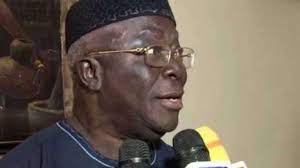
A pan-Yoruba socio-political organization, Afenifere has hailed the ruling of a High Court sitting in Port Harcourt, Rivers State on Value Added Tax (VAT), saying that it would enhance true federalism in the country.
The group also called on the Federal Government to stop its actions and policies that are impeding the practice of true federalism in Nigeria.
In a press release issued by Afenifere, signed by its National Publicity Secretary, Comrade Jare Ajayi and made available to newsmen in Ibadan, yesterday, the group also commended the Rivers State Government for initiating the legal process.
Afenifere noted that the rulings by Justice Stephen Dalyop Pam of the Federal High Court, Port Harcourt on August 9 and on September 6, 2021 have earned the Judiciary in Nigeria an epaulet as an institution that is not only capable of ensuring justice but is actually working on deepening federalism in the country.
The group noted further they observed that the manner of distributing VAT revenue is patently unfair, unjust and is pitched against the hardworking while rewarding the indolent by a manner of speaking citing an example of Lagos State which generates as much as 55 per cent of this revenue receives less than 10 per cent while most states where less than 5 % is generated get the same amount that Lagos gets.
They described it as distasteful.
They added that the sum collected by the FIRS is shared among the three tiers of government, with the Federal Government taking 15 per cent, states 50 per cent; local governments, 35 per cent adding that the Federal Government is taking undeserved larger chunk because when 50 % is shared among the 36 states, what each state gets is a paltry sum, adding that same applies for 774 local government councils that share 36 per cent.
Ajayi then called on the state governments to use the opportunity provided by these judgments to explore other areas that the Constitution empowers them to assert themselves as federalists, adding that states should step up actions that will liberate them from the stronghold of the federal government that has turned Nigeria into a unitary state.
He listed areas in which the states need to assert themselves to include agriculture, health, education, electricity, physical planning, title registration, registration and production of vehicle number plates and casino licensing e.t.c. as Lagos State Government did in the past.
Afenifere also said that the attempt by the Federal Government to establish farm estates in all the 109 senatorial districts in Nigeria was another way of bringing back the rejected cattle colony and RUGA.
According to Ajayi, “To us in Afenifere, the attempt by the Federal Government to establish so-called Farm Estates in all the 109 Senatorial Districts is another way of imposing the rejected cattle colony and RUGA on Nigerians. It is also another way of defying the federal spirit of the Constitution as lands are vested in the state governors.
“If the governors granted the lands being asked for, cattle colonies would be established in these estates as revealed in the view expressed by the Executive Secretary of the National Agriculture Land Development Agency (NALDA), Prince Paul Ikonne.
“States should reject this attempt, particularly since the farm estates NALDA is using as an excuse to grab lands for the Federal Government “are familiar territory for many states, especially in the South-West that inherited farm estates from the defunct regional government of late Chief Obafemi Awolowo.”
Afenifere, however, told the Federal Government to stop its actions and policies that are impeding the practice of true federalism in the country, adding that the Rivers State Government has further enhanced the practice of true federalism bases on the litigation it initiated against the Federal Government on Value Added Tax (VAT).
According to Afenifere, the rulings by Justice Stephen Dalyop Pam of the Federal High Court, Port Harcourt on August 9 and on September 6, this year, have earned the Judiciary in Nigeria an epaulet as an institution that is not only capable of ensuring justice but is actually working on deepening federalism in the country.
Justice Pam had while delivering judgments on August 9, in Suit No. FHC/PH/CS/149/2020, filed by the Attorney-General for Rivers State (plaintiff), against the Federal Inland Revenue Service (first defendant) and the Attorney General of the Federation (second defendant) had said that allowing the Federal Government, through FIRS, to continue to collect VAT would negate the spirit of the federal system of government that Nigeria is supposed to run.
The judge reiterated the position, while ruling on Tuesday, September 7, the case brought by the FIRS.
“Afenifere commends the judge for this. Going by to item 62, Part 1, 2nd Schedule of the 1999 (constitution as amended) and the VAT Act, Cap. V1, LFN, 2004 (as amended by the Finance Act, 2020), the states are empowered to collect VAT. The power of the federal government on taxes is limited to the profits/income of persons/companies, capital gains and stamp duties on instruments, but does not extend to VAT as attested to by a Federal High Court judgment delivered on December 11, 2020 in a case between Emmanuel Chukwuka Ukala v. FIRS.
“Afenifere observes that the manner of distributing VAT revenue is patently unfair, unjust and is pitched against the hardworking people, while rewarding the indolent by a manner of speaking. For instance, Lagos State, which generates as much as 55 per cent of this revenue receives less than 10 per cent while most states where less than five per cent is generated get the same amount that Lagos gets. It is quite distasteful.
“The sum collected by the FIRS is shared among the three tiers of government, with the Federal Government taking 15 per cent, states 50 per cent; local governments, 35 per cent. From the foregoing, it would be seen that the Federal Government is taking undeserved larger chunk because when 50 per cent is shared among the 36 states, what each state gets is a paltry sum. Same for 774 local government councils that share 36 per cent.”
Afenifere also called on the state governments to use the opportunity provided by the landmark judgments to explore other areas that the constitution empowers them to assert themselves as federalists, saying they should step up actions that will liberate the states from the stronghold of the Federal Government that has “turned Nigeria into a unitary state – in contradiction to the federal spirit prescribes by the constitution. They should be rest assured of Afenifere support as they give vent to power devolution and entrenchment of true federalism in Nigeria.
“Areas in which the states need to assert themselves include agriculture, health, education, electricity, physical planning, title registration, registration and production of vehicle number plates and casino licensing, as Lagos State Government did in the past.”
Afenifere, however, suggested that a roundtable discussion could be held between states and Federal Government to clear the fear on possible multiple taxation. The group also advised FIRS to resist the temptation to keep appealing the judgment that empowers states to collect local taxes, saying “such a step is another assault on the federal system that we are supposed to be running.”



The State Coordinator of the forum, Archbishop Lucky Aroh, made this known during a breakfast and thanksgiving meeting held in Port Harcourt, where leaders gathered to pray for the stability of the party and the safety of its candidates ahead of the 2027 general elections.According to him, the meeting was convened to seek divine intervention for peace, unity, and security among APC candidates across Rivers State.
“Today we are praying for APC stability in Rivers State and the security of our candidates that have been elected to contest the 2027 elections. It is a breakfast meeting,” Aroh said.
He further expressed optimism that the party’s candidates would not disappoint the people if entrusted with leadership responsibilities.
“They will not fail when elected into office. We are here as fathers of the land to let them know, and I must tell you the truth that these are the authentic people that will do well in Rivers State,” he added.
Speaking earlier, the National Chairman of the forum, Professor Olanrewaju Abraham, commended the Rivers State chapter for organizing the programme, noting that the national body of the forum believes strongly in the power of prayer.
He stated that political leadership provides an opportunity to influence society positively, including advancing moral and spiritual values, while expressing confidence that APC candidates at all levels would emerge victorious in the upcoming elections.
Also speaking, the Rivers State Women Leader of the APC, Hon. Darling Amadi, praised the forum for its commitment to prayers for peace, stability, and the protection of party candidates.
Represented by the Deputy Women Leader of the party in the state, she described the initiative as commendable and urged other political and support groups within the party to emulate the gesture in promoting unity and stability.
By: John Bibor, Menebe Emmanuel & Fortune Paibi
The colourful celebration took place at the Port Harcourt Golf Club, where friends, associates, and well-wishers converged to pay tribute to the revered elder statesman.
Chairman of the occasion, High Chief (Dr.) Ikenna Okafor, described the celebrant as a detribalised Nigerian whose generosity, humility, and commitment to humanity have earned him admiration across different communities and backgrounds.
According to Dr. Okafor, Pa Osagwe-Ogo’s impact on society and the development of his community remains unparalleled. He noted that members of the golfing community are proud to be associated with a father figure who consistently promotes the welfare and well-being of those around him.
He further stated that the history and growth of the Port Harcourt Golf Club cannot be told without acknowledging the significant role played by the celebrant, whose wisdom, encouragement, and leadership have helped sustain the club over the years.
“We are here to celebrate a man who has impacted humanity positively, a peace-loving individual and an epitome of hope for the younger generation. We pray to emulate his virtues. Today, we celebrate a bridge-builder, a trailblazer, and an iconic leader whose life continues to inspire many,” Dr. Okafor said.
He expressed delight at the large turnout of guests from various walks of life, describing it as a testament to the respect and affection Pa Osagwe-Ogo commands within and beyond Rivers State.
In his response, the celebrant, Pa Anthony Osagwe-Ogo, expressed profound gratitude to God for preserving his life and granting him the privilege of attaining the milestone age of 70.
He also thanked members of the Port Harcourt Golf Club, family members, friends, and associates for identifying with him during the celebration and for their unwavering support over the years.
The event featured the cutting of the birthday cake, presentation of awards to deserving members of the club, goodwill messages, and moments of celebration among guests.
The ceremony was attended by notable personalities from the business community, the golfing fraternity, and other sectors, all of whom joined in celebrating the life and legacy of the respected elder statesman.
The awards, which formed part of activities marking Nigeria’s Democracy Day on June 12, were formally presented on Tuesday at the Ministry of Information and Communications in Port Harcourt.
Presenting the awards was Hon. Abdul Hameed Oladipupo Alli, popularly known as “Mr. Nigeria,” Publisher of Asiwaju Trumpet Magazine and Achievers World International Magazine.
Governor Fubara was recognised for his efforts in sustaining peace, stability, and a conducive political atmospherJohn Bibor / Menebe Emmanuel / Fortune Paibie in Rivers State. The organisers noted that his administration has fostered harmony and strengthened civic participation across the state.
Dr. Sirawoo, on the other hand, was honoured for his exemplary administrative leadership and significant contributions to effective information management within the Ministry of Information and Communications.
Representing Dr. Sirawoo at the presentation ceremony, Dr. Christian Davies received the award on his behalf and expressed gratitude for the recognition. He described the honour as a reflection of Dr. Sirawoo’s unwavering commitment to professionalism, excellence, and dedicated public service.
Dr. Davies assured the organisers that the award would be formally conveyed to the Permanent Secretary.
The event also featured the presentation of commemorative publications highlighting major governance and civic milestones in Rivers State, including Easter celebrations, Workers’ Day activities, the Governor’s third anniversary in office, and Democracy Day programmes.
Organisers of the awards commended the Rivers State administration for what they described as sustained peace, political stability, and improved civic engagement, noting that these achievements have contributed significantly to the state’s continued development.
By: Jessica Sambol