
Editorial
In Support Of SNGF

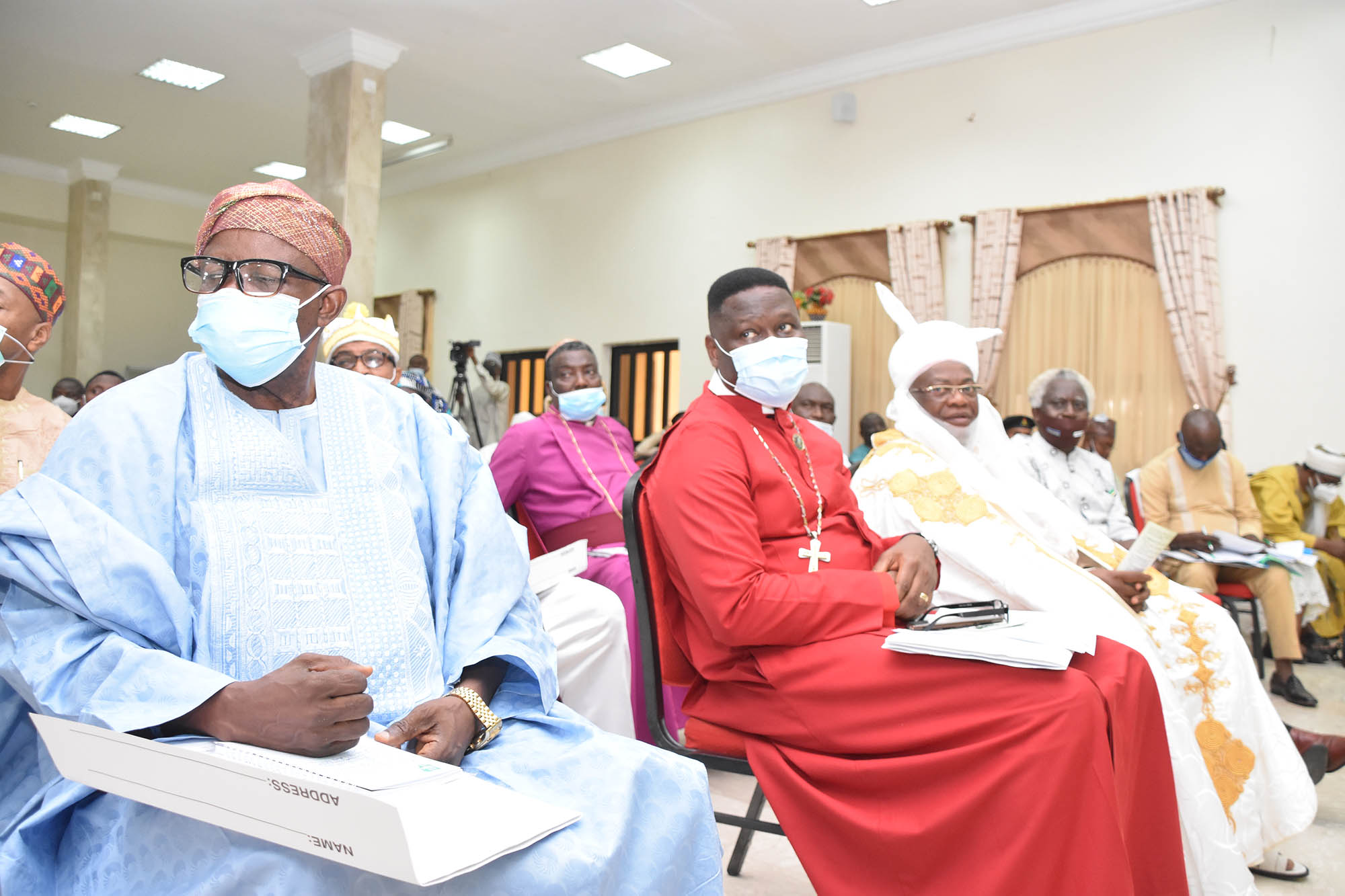
Governors of the 17 southern states under the auspices of the Southern Nigeria Governors Forum (SNGF) recently rose from a meeting in Asaba, Delta State, and made significant endorsements on security and the remodelling of the vulnerable Nigerian State. This is an act of courage needed to save the country at this critical moment.
Their recommendations included a call on the President, Muhammadu Buhari, to address the country on the ravaging insecurity, restore the confidence of the people, acknowledge the necessity of state policing and recognise Nigeria’s considerable diversity in federal appointments, including the security agencies.
Furthermore, the governors resolved to place a total ban on open grazing of cattle throughout the South, called on Buhari to convoke a national discussion in response to agitations for restructuring, want urgent and bold steps to fashion a true federation with state police, fiscal autonomy of the states and reforms of institutions that will promote true federalism.
Indeed, the timely intervention of the Southern Governors presents a watershed moment as the nation becomes a contested arena between the progressive will of the people and the regressive whims and caprices of a few. It is for this reason that the commendable display of audacity by the governors across party lines reflects the urgency and craving for relief as demanded by southerners of all affiliations.
Southern Governors must realise that now more than ever, regardless of party affiliations, their citizens look up to them for protection from rampaging marauders and bandits. They must, therefore, push forward their collective interests and hold many more positive conferences involving other Southern stakeholders in the immediate future for the sake of the rapidly deteriorating national state of affairs.
No doubt, Nigeria is bleeding following the activities of insurgents, bandits and kidnappers. No zone is spared from this grief map of the country. Some ethnic lords make matters worse by going about uttering provocative comments which jeopardise the peace and unity of the country. It is refreshing that Governors down the South have finally woken up to the existential threat to national survival.
The Pan-Niger Delta Forum (PANDEF) applauded the Southern Governors Forum for taking a position on issues of restructuring of the country, open grazing, and the alarming state of insecurity. It also hailed the governors for making far-reaching decisions on the question of skewed appointments into federal establishments, including security agencies.
Unfortunately, some federal officials are unhappy with the position of the Governors. The President of the Senate, Dr Ahmad Lawan, and Speaker of the House of Representatives, Femi Gbajabiamila, are particularly disappointed at the stance canvassed by the Southern Governors. They preferred that the governors sought an audience with the President or the National Assembly, especially with regards to restructuring the federation.
The Tide heartily agrees with the 17 governors that the state of the nation urgently requires scrutiny by various groups. Besides, the Northern Governors have consistently met and volunteered positions on issues agitating the polity. The Southern Governors’ meeting was only the second since President Muhammadu Buhari assumed office, the first having been held in 2017 in Lagos.
There are germane concerns to be considered from the decisions reached at the summit. First, the President must address the nation in a broadcast. If he finds that too cumbersome to perform, he could consult with groups like traditional rulers, religious leaders, women and youth groups. That will portray him as a man of the people. This he could do without waiting for a loud cry from Nigerians.
On restructuring, it is sad that President Buhari had severally dismissed calls for the realisation of this all-important issue, describing such calls as unwarranted and unpatriotic. Moreover, restructuring was part of what the ruling party, the All Progressives Congress (APC), promised Nigerians before the 2015 general election. The Federal Government should give up its tough stance and listen to Nigerians. It should act on the Nasir el-Rufai’s Committee’s report on restructuring.
Most Nigerians are not keen on the demand for a national dialogue as recommendations of previous discussions and conferences are gathering dust on the shelves. There are fears also that a national dialogue may end up becoming another talk shop and waste of money. In light of these, we request that the government goes through the submissions of previous conferences and take some resolutions which can be sent to the National Assembly as executive bills.
Also, our current constitution must be looked into since it is not a true manifestation of the wishes of many Nigerians. As it is, power is so much focused at the centre. Hence, there is a need for the devolution of more powers to the constituent states or regions as it is attainable in the United Kingdom (UK) where the Welsh, the Scots and the Irish exercise regional autonomy.
Since some of the decisions of the southern governors require constitutional amendments to actualise, due advantage should be taken of the ongoing amendment process to articulate those resolutions that will advance true federalism. Accordingly, the South-South region must fully participate and back the Governors’ proposals at the zonal public hearing on the amendment to be held in Port Harcourt next week.
Having publicly declared their stand on the pressing national issues, the Southern Governors must not wait for the Federal Government to effect their resolutions but should take specific and immediate steps to stem the criminality prevailing in their states and realise other aspirations since the federal authorities cannot contain the menace and return the country to lasting prosperity.



Nigeria stands at a critical juncture as the world marked World Press Freedom Day (WPFD) on May 3. This annual observance is a reminder that a free press is central to democratic life, good governance, and public accountability. For Nigeria, it is also a moment for sober reflection on how far the country has come and how far it still has to go in safeguarding the independence of its media.
World Press Freedom Day exists to highlight the fundamental importance of freedom of expression and to honour journalists who risk their lives in pursuit of truth. It underscores the idea that without a free press, societies cannot function transparently, nor can citizens make informed decisions. In countries like Nigeria, where democracy continues to evolve, the observance carries particular urgency.
This year’s theme, “Shaping a Future at Peace: Promoting Press Freedom for Human Rights, Development and Security”, places journalism at the heart of global stability. It emphasises that a peaceful society cannot be built on silence, fear, or manipulated information. Rather, it depends on the free flow of accurate, timely, and independent reporting.
At its core, the theme highlights the role of journalism in fostering accountability, dialogue, and trust. These are not abstract ideals. In Nigeria, where public confidence in institutions is often fragile, the media remains one of the few platforms through which citizens can question authority and demand transparency. When press freedom declines, so too does public trust.
Journalism serves as a foundation for peace, security, and economic recovery. Countries with robust media systems tend to attract greater investment, maintain stronger institutions, and resolve conflicts more effectively. Nigeria’s economic challenges, ranging from inflation to unemployment, require open scrutiny and informed debate, both of which depend on a free press.
However, the issue of information integrity has become increasingly complex in the digital age. Artificial Intelligence (AI) and online platforms have amplified the spread of misinformation and disinformation. In Nigeria, where internet penetration has grown rapidly, false narratives can travel faster than verified facts. This makes the role of credible journalism more vital than ever.
The challenge is not only technological but also ethical. AI-driven manipulation of information threatens to distort public discourse, influence elections, and deepen social divisions. In such an environment, professional journalism must act as a stabilising force, ensuring that truth prevails over sensationalism and propaganda.
Equally troubling is the safety of journalists. Across Nigeria, reporters face growing levels of online harassment, judicial intimidation, and physical threats. Self-censorship is becoming more common, as media practitioners weigh the risks of reporting sensitive issues. This trend undermines the very essence of journalism.
A particularly alarming incident involved a serving minister in the present administration, who openly threatened to shoot a journalist during a televised exchange. Such conduct, broadcast to the public, sends a dangerous signal that hostility towards the press is acceptable. It erodes the norms of democratic engagement and places journalists in harm’s way.
This year’s theme aligns closely with the United Nations Sustainable Development Goal (SDG)16, which promotes peace, justice, and strong institutions. Freedom of expression is a cornerstone of this goal. Without it, institutions weaken, corruption thrives, and justice becomes elusive. Nigeria’s commitment to SDG 16 must therefore include genuine protection for the media.
Historically, the Nigerian press has been a formidable force. From resisting colonial rule to challenging military dictatorships, our journalists have played a central role in shaping the nation’s political landscape. Today, however, that legacy appears to be under strain, as the media operates under what can best be described as a veneer of freedom.
Beneath this facade lies a troubling reality. Journalists are routinely harassed, detained, and prosecuted for performing their constitutional duties. Reports from media watchdogs indicate that dozens of Nigerian journalists face legal threats or arrest each year, often for exposing corruption or criticising those in power.
The Cybercrimes (Prohibition, Prevention, etc.) Act of 2015 has become a focal point of concern. Originally intended to combat cyber threats, it has increasingly been used to silence dissent. Sections 24 and 27(1)(b), in particular, have been invoked to target journalists, bloggers, and social commentators.
Although amendments introduced in February 2024 were meant to safeguard journalists, concerns persist. The law continues to be wielded in ways that stifle investigative reporting and restrict freedom of expression. Legal reforms must go beyond cosmetic changes to address the root causes of misuse.
To safeguard the future of journalism in Nigeria, decisive action is required. The Cybercrimes Act must be revisited to ensure it cannot be weaponised against the press. Law enforcement agencies must operate free from political influence, upholding the rule of law and protecting journalists’ rights. Civil society and international partners must also strengthen independent media through funding, training, and platforms for wider reach.
In this rapidly evolving world shaped by artificial intelligence and digital innovation, Nigeria faces a clear choice. It can either allow press freedom to erode under pressure, or it can champion a truly independent media landscape. The path it chooses will determine not only the future of journalism, but also the strength of its democracy and the peace it seeks to build.

-

 Featured3 days ago
WASSCE: RSG Distributes Science Materials To Secondary Schools
-
News3 days ago
Xenophobic Attacks: Nigerian Lives More Important Than Foreign Investment – Oshiomhole
-
Rivers3 days ago
MBA Forex Trial Adjourn To June 3, Amid Bereavement … As Court Declines Cost Application
-
News3 days ago
ActionAid Demands Probe Of Govs Using Public Funds For Campaign
-
Aviation3 days ago
Passengers Stranded As Delta Airline From Atlanta Route Back Eight Hours After
-
Business3 days ago
Customs Impound N2.35bn Cocaine, 15 Trailers of Rice
-
Politics3 days ago
2027: Bayelsa Senator Gets Critical Endorsement For Second Term
-
 Politics3 days ago
INEC Sets Rivers South-East Senatorial By-Election For June 20