
Editorial
May Day! May Day!! May Day!!!

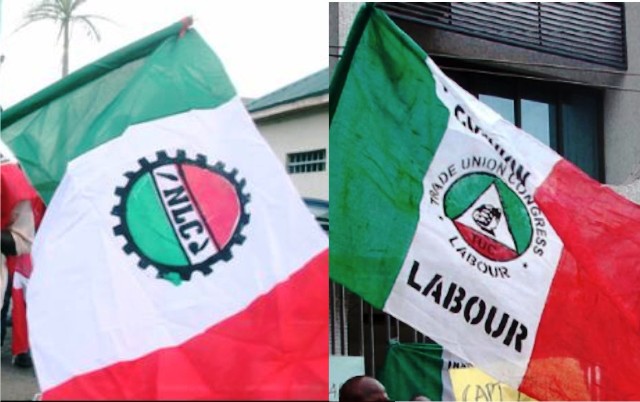
Nigerian workers will tomorrow be part of their counterparts worldwide to observe this year’s Workers’ Day popularly called May Day. Workers may also bemoan their deteriorating situations as they mark the 2021 version of the event tomorrow. May Day in Nigeria has constantly been used by the labour movement to spotlight problems that are threatening the industrial peace of the country.
It is a day workers have a good time and interface with their employers in a ceremonial mood. It is a day workers speak up and get answers on issues affecting them, even as the governments are expected to understand them. We join all well-meaning people to congratulate workers all over the world, especially Nigerian workers, on their contributions to humanity.
The most likely applicative issues this year may be the full implementation of the N30,000 minimum wage bill signed into law by President Muhammadu Buhari and the move by the National Assembly, particularly the House of Representatives, to change the minimum wage system in the country.
A bill now under discussion in the House of Representatives suggests a change wherein the country’s 36 states would each set their minimum wage rather than being decided by the Federal Government. Members of the Nigeria Labour Congress (NLC) and the Trade Union Congress (TUC), which constitute millions of workers across most sectors of Nigeria’s economy, filled the streets in Abuja as well as state capitals in protest at the proposed move.
Workers’ role in growing the economy, in addition to life and living as we have come to know it is huge. While the rest of the world may be celebrating that day, we strongly hope that the same will happen in Nigeria in earnest, where workers may have to come to terms with what they are up against. We think that labour may need to be circumspect and raise the mariners’ cry for help to save their straying and sinking ship.
The current state of insecurity in Nigeria has negatively impacted workers and their productivity. The insecurity variables range from theft to organised armed robbery, kidnapping and call for ransom, assassinations, repeated invasions and blockading of business installations, social injustice, lack of access to livelihood, the rising cost of living, and bombings. All these social maladies have made the Nigerian work environment complex.
Since the Covid-19 pandemic heat, the state of affairs of Nigerian workers has got worse. Several jobs were lost due to the pandemic. It is likely to be worsened given the impact the pandemic has had on trade globally. This is besides numerous government pronouncements that certain categories of workers remain at home. All of this means more Nigerians, especially in the lower class, could potentially be compelled to live below the poverty line.
Nobody goes dancing when his house is on fire. More than ever before, labour needs to wake up at least for the suffering families of Nigeria. In 2020, with Covid-19 disrupting everything in the world including relationships, with Nigeria suffering a debt and revenue crisis, the collapse of fiscal buffers, and sheer adversity, the Federal Government decided to pull the plugs. It blamed all of these factors and chose to announce the elimination of fuel subsidy.
The pump price of fuel, benchmarked to the spot price of crude oil in the international market, jumped through the roof and Nigerians groaned. The Federal Government argued that it was not left with any other option. Everyone expected that Organised Labour would intervene. But surprisingly they didn’t quite do so. Groups in civil society had to picket the Abuja headquarters of the NLC for the union to speak up and call the people out on the streets because life had become unbearable for the average Nigerian.
After being nudged, a combined team of the NLC and TUC finally declared that they would call out Labour on strike and shut down the country. They gave the Federal Government stringent conditions: a complete reversal of the hike in fuel price and electricity tariffs. Or else, Nigeria would be shut down indefinitely starting from September 28, 2020.
Labour’s sincerity of purpose was questioned. Nigerians felt they were just playing a game. The biggest tragedy that has befallen Organised Labour in the country is the thinking since 1999, that Labour’s leadership can be used as a stepping stone to a bigger role. Labour leaders use their positions to negotiate big benefits. They mouth revolutionary slogans and parrot aggressive rhetoric which has been confirmed to be a falsehood.
It is sad that since the paltry current minimum wage of N30,000 was signed into law by President Buhari, only a few states have started full implementation even though Nigeria has enough to save and much more for politicians to misappropriate. Added to the hardship faced by the worker, the value of the Naira has dropped beyond redemption and the prices of goods and services skyrocketed yet the survivability of the worker does not appear to matter.
In the private sector, Nigerians are in reality abused and treated as disposables and paid very ridiculous wages. They are disengaged without severance benefits. Some work for as long as 12 hours or more as casuals and Labour does nothing. The workers stand alone without help from any quarters, misunderstood and unsung. In the midst of this oddity, workers lose their voice, they cannot cry; they can neither speak to their employers nor reach their union leaders.
However, civil servants in Rivers State are exhilarated over the resolution of some pending labour concerns such as the full implementation of the minimum wage in the state. Governor Nyesom Wike deserves our commendation for his gesture in that regard. We urge the Beatrice Itubor led Labour to liaise with the government on the quick resolution of other issues recently considered by the tripartite committee.
Though it is inspiring that the governor has promised to look into the workers’ demands, we advise the tripartite committee to expedite action on the remainder of the assignment. Labour’s issues include arrears of minimum wage, promotion of civil servants from 2015, gratuity to pensioners, arrears of salaries to some civil servants who were not paid their February and March 2016 salaries due to the aborted biometric verification exercise of that year, etc.
As workers celebrate their day, Organised Labour in the country should realise that the current labour leadership has completely failed and exposed their gross incompetence and hypocrisy in the way labour matters are dealt with. Their lack of rigour, transparency and intellect provide a strong case for a pressing reform of labour leadership in Nigeria. Therefore, labour must reinvent itself or risk the tragedy of becoming insignificant.




