
Editorial
Still On Police Brutality

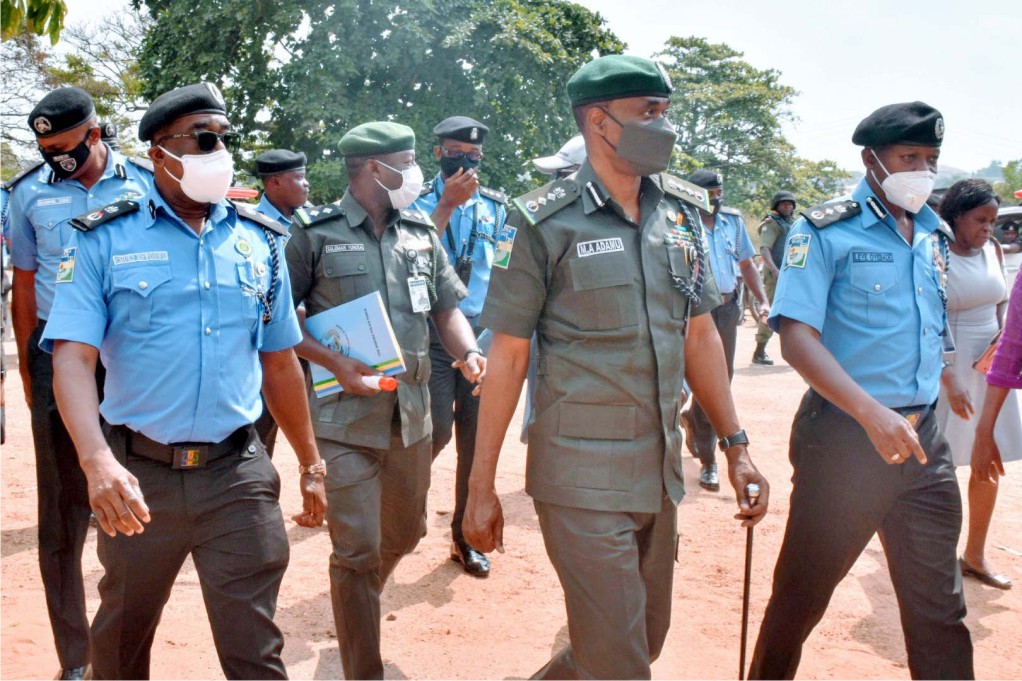
The immediate substitution of the infamous Special Anti-Robbery Squad (SARS), a component of the Nigeria Police Force, with the Special Weapons and Tactical Team (SWAT) in the aftermath of the October 2020 #EndSARS protests across the country, has turned out to be a repackaged old wine in a new bottle. The perdurable police savagery is a manifestation of that fact.
The former SARS officers operated like notorious gangsters, infamous for unlawful killings, extortion and torture marched only by the Nazi treatment of the Jews in the Concentration Camp. For years, human rights organisations and the media have documented cases of extra-judicial killings, torture, and other ill-treatment committed by SARS operatives and other units of the police.
When SWAT was set up by the Inspector-General of Police (IGP), Mohammed Adamu, in October, 2020 to appease protesting youths against SARS’ brutality, it was a superficial action to create the impression that the clamour by the youths for the abrogation of the Anti-Robbery Squad had been heeded. Many Nigerians queried the hurried action of the police and accused the force’s leadership of hypocrisy.
Several Nigerians, especially young persons, were either impaled or outrightly killed for insubstantial reasons which included accusations of being internet fraudsters. Many others were profiled for their indecent appearances, hairstyles and having tattoos on their bodies and subsequently apprehended by members of the disbanded police unit.
A few days after the so-called name-change that had no semblance of a fresh working direction and goals, the wear and tear activities of the very new SWAT demonstrated that indeed a leopard cannot change its spots. Not long after its formation, a monarch in the Nkanu East Local Government Area of Enugu State, Emmanuel Mba, was brutally killed by men suspected to be SWAT officials.
The story went that some AK-47 rifle-wielding officers dressed in mufti invaded a meeting being attended by the monarch and demanded to see him. The suspected SWAT operatives, led by an inspector, shot the monarch while he was addressing members of his community at the town hall meeting. He died before he could get medical help.
According to the account, three natives from the Oruku Community in the council area reportedly came with the SWAT officers and left with them soon after the operation. We expect the orchestrators of the harrowing act to have been fished out by now and made to face the full wrath of the law if the police were truly a force to be relied on.
In December last year, an ugly scene played out between a bus driver and some policemen in Port Harcourt, capital of Rivers State. The driver, identified as Emenike, was completely stripped for refusing to expend the usual “toll” to the police. Other drivers who witnessed the incident remonstrated along Ada George Road where the happenstance occurred, causing an unprecedented traffic jam.
Still, along Ada George Road, a policeman attached to a supermarket fired random shots at three persons who were admitted to the hospital for gunshot wounds. The trigger-happy police officer groused about the uncooperative attitude of some commercial vehicle and tricycle drivers along that route.
In November, 2020, a police officer, in a desperate attempt to clear the road for their patrol vehicle that was stuck in gridlock around the market along Yenagoa — Mbiama Road, openly shot at three women. Police brutality gained further height when, at Rukpokwu in Obio/Akpor Local Government Area, Rivers State, a tricycle driver was shot dead by a police officer over refusal to give a hundred naira gratification. That incident sparked off protests by angry drivers in the community.
Also, in the same local government area, one Abiodun Jimoh was shot dead by a policeman attached to the Elelenwo police division. It was ironic that an older brother of the deceased was an eye witness. He alleged that the killer-policeman was stupendously drunk on the day of the incident. Further reports claimed that the police officer shot the victim despite pleas by a senior colleague to release him.
These incidents and many others across the country have transpired despite the #EndSARS protests and assurances by the police authorities to check frequent police brutality and put an end to it. The animalistic conduct of the Nigerian police is a negation of modern global policing strategy. It is an absurdity unabashedly displayed by our ill-trained and flat-footed police while the citizens groan helplessly.
It is high time the Nigerian police was radically reformed by President Muhammadu Buhari’s administration for optimal performance. Since the Federal Government promised to carry out reforms in the force, no practical steps have been initiated in that direction. No doubt, Nigerians need SWAT to confront dangerous crimes, but not for routine policing as it exists currently.
This country cannot achieve much with a highly militarised police force. What is needed is a radical departure from the current centralised police structure to a decentralised force. The glaring inadequacies in the force arising from the unworkable configuration that came into effect since states were created in 1967, must be broken away from.
Enough of police brutality. Nigerians have been extorted, raped, tortured, and killed by the police, particularly the defunct SARS now SWAT. Although continued protests compelled the Nigerian government to scrap the infamous and dreaded police unit, that is not sufficient. It needs to be complemented by justice for victims of police brutality. It is a bitter reproach that police cruelty remains an issue in the country this time and age. Buhari must take immediate steps to halt this act of ignominy in the force.



Nigeria stands at a critical juncture as the world marked World Press Freedom Day (WPFD) on May 3. This annual observance is a reminder that a free press is central to democratic life, good governance, and public accountability. For Nigeria, it is also a moment for sober reflection on how far the country has come and how far it still has to go in safeguarding the independence of its media.
World Press Freedom Day exists to highlight the fundamental importance of freedom of expression and to honour journalists who risk their lives in pursuit of truth. It underscores the idea that without a free press, societies cannot function transparently, nor can citizens make informed decisions. In countries like Nigeria, where democracy continues to evolve, the observance carries particular urgency.
This year’s theme, “Shaping a Future at Peace: Promoting Press Freedom for Human Rights, Development and Security”, places journalism at the heart of global stability. It emphasises that a peaceful society cannot be built on silence, fear, or manipulated information. Rather, it depends on the free flow of accurate, timely, and independent reporting.
At its core, the theme highlights the role of journalism in fostering accountability, dialogue, and trust. These are not abstract ideals. In Nigeria, where public confidence in institutions is often fragile, the media remains one of the few platforms through which citizens can question authority and demand transparency. When press freedom declines, so too does public trust.
Journalism serves as a foundation for peace, security, and economic recovery. Countries with robust media systems tend to attract greater investment, maintain stronger institutions, and resolve conflicts more effectively. Nigeria’s economic challenges, ranging from inflation to unemployment, require open scrutiny and informed debate, both of which depend on a free press.
However, the issue of information integrity has become increasingly complex in the digital age. Artificial Intelligence (AI) and online platforms have amplified the spread of misinformation and disinformation. In Nigeria, where internet penetration has grown rapidly, false narratives can travel faster than verified facts. This makes the role of credible journalism more vital than ever.
The challenge is not only technological but also ethical. AI-driven manipulation of information threatens to distort public discourse, influence elections, and deepen social divisions. In such an environment, professional journalism must act as a stabilising force, ensuring that truth prevails over sensationalism and propaganda.
Equally troubling is the safety of journalists. Across Nigeria, reporters face growing levels of online harassment, judicial intimidation, and physical threats. Self-censorship is becoming more common, as media practitioners weigh the risks of reporting sensitive issues. This trend undermines the very essence of journalism.
A particularly alarming incident involved a serving minister in the present administration, who openly threatened to shoot a journalist during a televised exchange. Such conduct, broadcast to the public, sends a dangerous signal that hostility towards the press is acceptable. It erodes the norms of democratic engagement and places journalists in harm’s way.
This year’s theme aligns closely with the United Nations Sustainable Development Goal (SDG)16, which promotes peace, justice, and strong institutions. Freedom of expression is a cornerstone of this goal. Without it, institutions weaken, corruption thrives, and justice becomes elusive. Nigeria’s commitment to SDG 16 must therefore include genuine protection for the media.
Historically, the Nigerian press has been a formidable force. From resisting colonial rule to challenging military dictatorships, our journalists have played a central role in shaping the nation’s political landscape. Today, however, that legacy appears to be under strain, as the media operates under what can best be described as a veneer of freedom.
Beneath this facade lies a troubling reality. Journalists are routinely harassed, detained, and prosecuted for performing their constitutional duties. Reports from media watchdogs indicate that dozens of Nigerian journalists face legal threats or arrest each year, often for exposing corruption or criticising those in power.
The Cybercrimes (Prohibition, Prevention, etc.) Act of 2015 has become a focal point of concern. Originally intended to combat cyber threats, it has increasingly been used to silence dissent. Sections 24 and 27(1)(b), in particular, have been invoked to target journalists, bloggers, and social commentators.
Although amendments introduced in February 2024 were meant to safeguard journalists, concerns persist. The law continues to be wielded in ways that stifle investigative reporting and restrict freedom of expression. Legal reforms must go beyond cosmetic changes to address the root causes of misuse.
To safeguard the future of journalism in Nigeria, decisive action is required. The Cybercrimes Act must be revisited to ensure it cannot be weaponised against the press. Law enforcement agencies must operate free from political influence, upholding the rule of law and protecting journalists’ rights. Civil society and international partners must also strengthen independent media through funding, training, and platforms for wider reach.
In this rapidly evolving world shaped by artificial intelligence and digital innovation, Nigeria faces a clear choice. It can either allow press freedom to erode under pressure, or it can champion a truly independent media landscape. The path it chooses will determine not only the future of journalism, but also the strength of its democracy and the peace it seeks to build.

-

 Featured1 day ago
WASSCE: RSG Distributes Science Materials To Secondary Schools
-
News1 day ago
Xenophobic Attacks: Nigerian Lives More Important Than Foreign Investment – Oshiomhole
-
Rivers1 day ago
MBA Forex Trial Adjourn To June 3, Amid Bereavement … As Court Declines Cost Application
-
News1 day ago
ActionAid Demands Probe Of Govs Using Public Funds For Campaign
-
Aviation1 day ago
Passengers Stranded As Delta Airline From Atlanta Route Back Eight Hours After
-
Business1 day ago
Customs Impound N2.35bn Cocaine, 15 Trailers of Rice
-
Politics1 day ago
2027: Bayelsa Senator Gets Critical Endorsement For Second Term
-
 Politics1 day ago
INEC Sets Rivers South-East Senatorial By-Election For June 20