
Politics
Leveraging On Technology To Boost INEC Performance

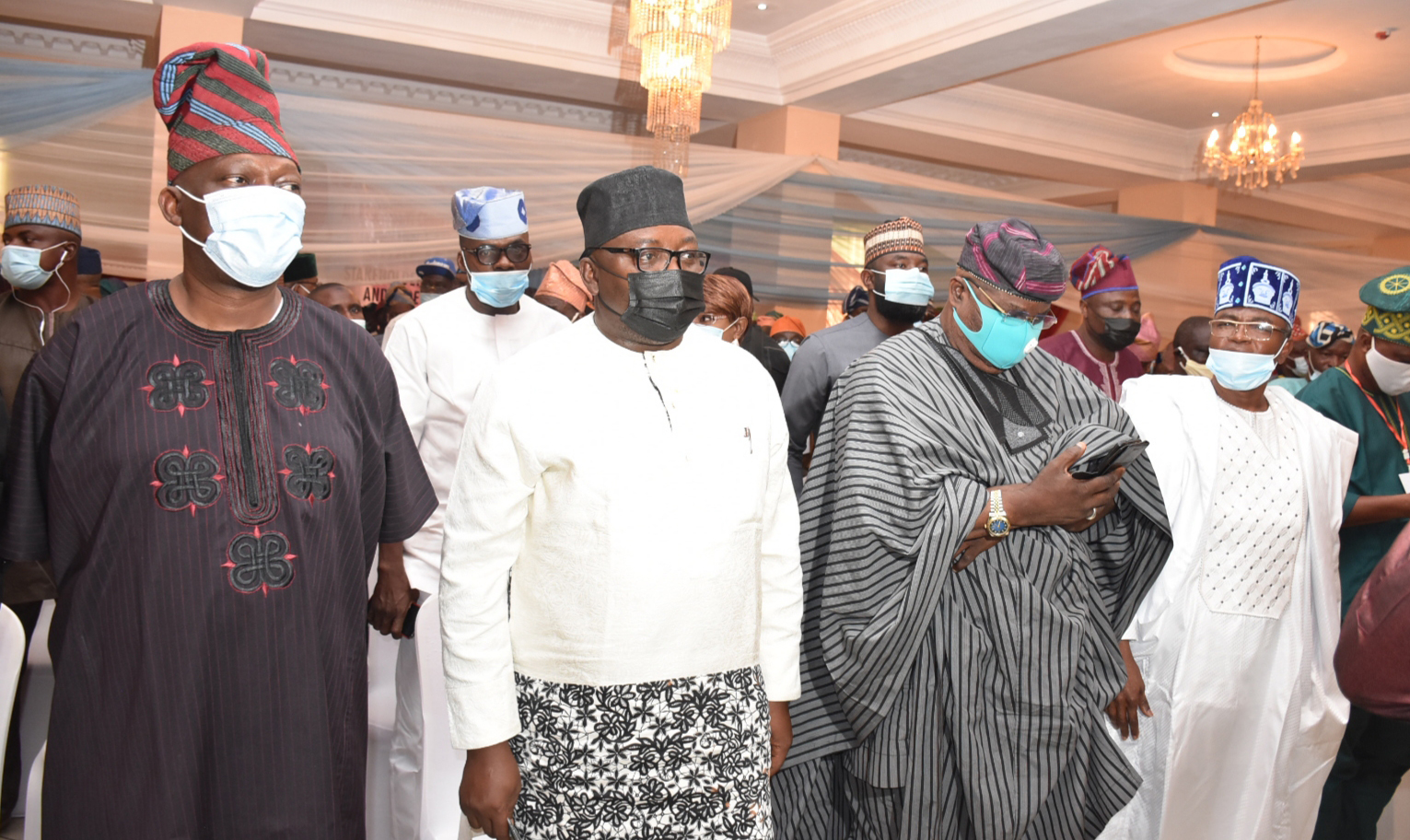
Globally, the use of different forms of technology in the election process has been on the rise as more countries use Information and Communication Technology (ICT) to improve their election and democratic processes.
Political analysts believe that appropriate application of technology to electoral processes can reduce long-term costs, increase administrative efficiency, increase credibility, transparency and voters participation.
Electoral Management Body (EMB) around the world uses technologies ranging from basic office automation tools such as word processing and spreadsheets, to more sophisticated data processing tools, such as database management systems, optical scanning and geographic information systems with the aim of improving the electoral process.
For example, technology is used for voter registration to compile voter lists/register, to draw electoral boundaries, to manage and train staff, to print ballots, to conduct voter education campaigns, to record cast votes, to count and consolidate vote results and to publish election results.
In many countries technology is present in activities related to the electoral process, in some cases, it is essential to the conduct of elections, while some have gone a step ahead with its application to e-voting, which is the use of electronic technology in casting or counting votes.
Though Nigeria has yet to adopt e-voting, the Independent National Electoral Commission (INEC), has continued to demonstrate its commitment to application of technology in line with existing legal frameworks, to improve on the country’s electoral system.
In recent times, the commission introduced some technology innovations to ensure transparency in the electoral process, including the Permanent Voter cards (PVC), Smart Card Readers (SCR) and regular update of voters register.
Others include the introduction of a dedicated public election result viewing portal, known as “The INEC Result Viewing (IReV) portal’’.
The portal which enables Nigerians to view polling unit results in real time on election day, can be accessed by login in to https://inecelectionresults.com.
The portal was introduced alongside Z-pad, a tablet with dual functions of uploading of scanned copies of election results at polling Units (PUs) to the portal, as well as a secondary authentication mechanism to support the smartcard readers on voters’ verification on election day.
The technology was first test-run at the August 8, 2020 Nasarawa Central State Constituency by-election in Nasarawa State, subsequently deployed for Edo and Ondo governorship elections held on September 19, 2020 and October 10, 2020 respectively as well as for 15 by-elections held in seven states.
INEC National Commissioner and Chairman, Information and Voter Education Committee, Mr Festus Okoye, announcing the introduction of the portal, said that the commission was aware that result management had remained a major source of mistrust in Nigeria’s electoral process.
“It is a fundamental principle of democracy that in elections, votes are not only correctly counted, but that they also count,’’ Okoye said.
He recalled that in consistent with INEC commitment to transparency in election management, the commission introduced the Form EC60E, which is a poster version of the primary result sheet, the Form EC8A that enables citizens take to photographs of election results.
“This replica of the polling unit result is pasted at the PU after votes are counted, recorded and announced. This poster, now widely known as the People’s Form EC8, has increased transparency in result management.
Okoye, however, stressed that the result view portal did not constitute electronic collation of results, adding that the collation of election results shall remain as provided for by law, a manual process.
Interestingly, various stakeholders including voters, political parties, civil society organisations, election observers and the international community, commend INEC’s performance in the Edo, Ondo State and the recent by-elections, describing them as credible and improved elections.
While some see the result viewing portal as a “magic wine’’ in the Nigeria electoral process, others describe it as a key innovation boosting citizens confidence in the electoral process.
According to the Nigeria Civil Society Situation Room (Situation Room), the election appeared to have been a marked improvement on recent previous governorship elections.
The Young Progressives Party (YPP) National Publicity Secretary, Mr Egbeola Martins, also described the innovations by INEC in the electoral process, especially the result viewing portal, as welcome development.
Martins admonished INEC to collaborate with the National Assembly to give legal backing to the innovation that has further enhanced the electoral process by making it more transparent.
To further strengthen election management process and enhance transparency of the system as well cope with the challenge of COVID-19 pandemic, INEC on August 6, 2020, released a policy document titled “Policy on Conducting Elections in the Context of the COVID-19 Pandemic’’.
The policy led to the creation of e-platforms for certain INEC activities, including accreditation of observer groups and deployment of their field observers.
Online submission of nomination forms for election candidates, submission of polling units’ agents list by political parties, tracking and reporting of campaigns and campaign finance by/for candidates and political parties.
Others include online accreditation of media for election coverage, and the use of online for the registration of members of the National Youth Service Corps (NYSC) as ad hoc staff for election.
The INEC Chairman, Prof. Mahmood Yakubu, making public presentation of the policy document, said that INEC recognised the critical role that ICT play in an electoral process.
He said that electoral process was being vastly reshaped by the COVID-19 pandemic, as well as the growing demands by Nigerians for the deepening of the use of technology in elections.
For instance, the commission on June 1, 2020, announced a dedicated portal designed by the commission through which political parties that contested Edo governorship submitted their nomination forms of their candidates.
The new procedure does not only make submission of political parties’ nominations seamless, it also helped to reduce unnecessary changes in the dates for the conduct of party primaries for the election, as the portal automatically shut down on the scheduled dates and at fixed hour.
As part of efforts for the future, in September 2020, INEC also received demonstration of Electronic Voting Machines (EVMs) from more than 40 original manufacturing companies on how their IT solutions met the commission’s specifications.
The commission had in May 2020 announced to pilot the use of electronic voting machines at the earliest time possible towards full introduction of electronic voting in major elections in 2021.
Yakubu, speaking at the opening of the demonstration on September 28, 2020, described the demonstration as another decisive step towards the full automation of the electoral process and INEC’s continuous effort to deepen electoral integrity in Nigeria through the deployment of technology.
He said that over the years, INEC had been automating the critical pillars of the process, including the continuous update of the country’s biometric register of voters.
Yakubu said that at the moment, the INEC register of voters was the largest data base of citizens in Nigeria.
“In addition, the combination of biometric voters’ cards commonly known as the Permanent Voter’s Card (PVC) and the Smart Card Reader (SCR) have revolutionised the accreditation of voters during elections.
“Recently, the introduction of a number of portals has facilitated the seamless nomination of candidates for elective offices by political parties as well as the accreditation of observers and the media.
“The commission now uploads polling unit level results in real-time on election day to a portal for public view. These are significant innovations that have deepened the transparency and credibility of elections and the electoral process in Nigeria,’’ he said.
Yakubu, however, emphasised that the occasion was only a demonstration that would enable the INEC to evaluate the available technology; and where necessary, fine tune its specifications before proceeding to the next stage.
He said that the early passage of the Electoral Act amendment bill, resumption of Continuous Voters Registration (CVR) across the country in the first quarter of 2021 and clean-up of the register of voters would be given priority.
“In doing so, we hope to introduce a new technology for voters enrolment in 2021, drawing from the lessons we learnt in the last exercise in 2017 and 2018.
Yakubu, therefore, urged stakeholders in the electoral process to join the commission in deepening the use of technology and instituting a regime of transparency in electoral process.
He said that the commission was fully aware that the old ways of doing things must gradually give way to the new by deepening the use of technology in the electoral process.
While Nigerians await amendment of the Electoral Act, other legal frameworks and the full automation of the electoral process, it is their hope that INEC will continue to introduce more technology to enhance transparency, credibility, seamless and participatory electoral process ahead of 2023 general elections and beyond.
By: Kayode Olaitan



The Independent National Electoral Commission (INEC) has extended the deadline for political parties to submit the list of candidates for the 2027 governorship and state Houses of Assembly elections from Saturday, August 8, to Tuesday, August 11, 2026.
The commission announced the extension in a statement issued on Saturday and signed by the National Commissioner and Chairman of its Information and Voter Education Committee, Mohammed Haruna.
According to INEC, the decision followed appeals by political parties for additional time to complete the submission process through the dedicated online portal.
“The submission window, which according to the revised Timetable and Schedule of Activities for the General Election was originally scheduled to close on Saturday, 8th August, 2026, has been extended to Tuesday, 11th August, 2026,” the commission said.
In a a related development, INEC announced the suspension of PVC collection in Osun State ahead of the August 15 governorship election.
The commission said voters who applied for replacement of lost, damaged or defaced Permanent Voter Cards would have until midnight on Sunday, August 9, to print downloadable copies of their cards.
The electoral body explained that the deadline was necessary to enable it compile data on downloaded PVCs and produce final statistics on the total number of cards collected ahead of the election.
INEC said PVC collection in Osun commenced at the Registration Area level from July 22 to 28, 2026, but was extended to July 31 following complaints about large crowds and difficulties experienced by voters at collection centres.
The exercise subsequently moved to the local government level and ran from August 1 to 7.
The commission also disclosed that replacement downloadable PVCs had been made available to voters in Odo-Otin and Ife Central Local Government Areas following the theft of cards during attacks on the two collection centres.
It stressed that the stolen cards could not be used to vote.
INEC reassured Osun residents of its preparedness for the August 15 governorship election.
“The commission reiterates that the stolen cards cannot be used to vote.
“INEC reassures the people of Osun State of its readiness to conduct a free, fair, credible and inclusive governorship election on 15th August, 2026,” the statement said.
The commission said the deadline, initially set for Saturday, 8 August, has been extended to Tuesday, 11 August 2026, following appeals from political parties for more time.
INEC also announced that the window for voters who applied to replace lost, damaged or defaced PVCs to download their replacement cards will close at midnight on Sunday, 9 August.
The move is to enable the commission compile final PVC collection figures ahead of the 15 August Osun governorship election.
INEC said replacement downloadable PVCs have also been provided to affected voters in Odo-Otin and Ife Central Local Government Areas after hoodlums carted away cards from two collection centres, stressing that the stolen cards cannot be used to vote.
The commission reaffirmed its readiness to conduct a free, fair, credible and inclusive election in Osun State.
Gov. Kefas made the remarks over the weekend at the Federal Medical Centre (FMC), Jalingo, during the flag-off of the second phase of the Renewed Hope Medical Outreach in Taraba State, organised as part of activities marking Prof. Yilwatda’s 58th birthday.
The governor commended Prof. Yilwatda for choosing to mark his birthday by providing medical care to people in need.
“What Professor Nentawe did is a powerful demonstration of what leadership should be,” Gov. Kefas said.
He assured that his administration would continue to support initiatives that complement government efforts to improve healthcare delivery and the wellbeing of residents.
Speaking at the event, Prof. Yilwatda called on Nigerian leaders to embrace the culture of giving and use their positions to touch the lives of the less privileged.
He said his decision to celebrate his 58th birthday in Taraba State was deliberate and informed by the needs of underserved communities, particularly people who face difficulties accessing healthcare because of distance and financial constraints.
According to him, the intervention followed a needs assessment and was extended across the three senatorial districts of the state.
He said the exercise commenced on August 3 at Takum General Hospital and covered the Federal University Teaching Hospital, Wukari; First Referral Hospital, Sunkani, Ardo-Kola Local Government Area; General Hospital, Bali; General Hospital, Gembu; and FMC Jalingo.
Prof. Yilwatda said the intervention provided medical services to thousands of beneficiaries, including people who required surgical procedures.
He said sustainable national development could only be achieved when strong institutions placed Nigerians at the centre of development.
“Leadership is about service,” he said, urging political and public leaders to make giving back to society an important part of their responsibilities.
He reaffirmed his commitment to serving Nigeria and its people, saying his personal vision was to make every day of his life useful to humanity.
“Every day that I live, the vision is: let it be useful to humanity,” he said.
The Taraba State Commissioner for Health, Dr. Bordiya Buma, commended the initiative, saying it was consistent with the Renewed Hope agenda and efforts to strengthen healthcare delivery in the state.
Dr Buma said the second phase followed the successful completion of the first phase, which was conducted simultaneously in six local government areas, with two LGAs selected from each of the three senatorial districts.
According to him, more than 10,000 patients were attended to during the first phase, including people with medical and surgical conditions.
He disclosed that 327 general surgeries, 71 eye surgeries and 575 dental procedures were carried out during the exercise.
The commissioner expressed appreciation to President Bola Tinubu for the Renewed Hope Medical Outreach and thanked Prof. Yilwatda for supporting the initiative and choosing Taraba State as a beneficiary.
The Minister of Health and Social Welfare, Prof. Muhammad Ali Pate, also commended Prof. Yilwatda for choosing Taraba State to mark his 58th birthday through a medical outreach.
Prof. Pate said making healthcare the centrepiece of the birthday celebration was significant because health affects everyone.
-

 Oil & Energy5 days ago
Aiyedatiwa Signs New Electricity Bill
-

 Oil & Energy5 days ago
NLNG Commissions Research And Innovation Centre In RSU
-

 Maritime5 days ago
Marine Minister Commends President Tinubu On NPERA Bill Assent
-

 Maritime5 days ago
NAGAFF Petitions IGP Over Alleged Maritime Police Harassment
-
 News5 days ago
College Of Bishops Endorses Tinubu, APC Candidates For 2027 Polls
-
Rivers5 days ago
Journalist Pledges To Build On Father’s Legacies
-

 Education5 days ago
UNIPORT VC Hails Postgraduate School Over Planned International Conference
-

 News5 days ago
Rivers DPOs Receive Awards For Outstanding Performance In Crime Prevention …As Students, Media Group Honour CSP Worgu, CSP Yusuf