Business
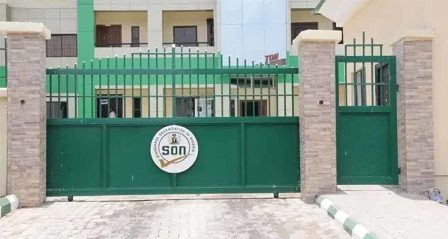
Substandard Goods Worse Than Terrorism -SON DG
The Director General of the Standard Organisation of Nigeria (SON), Alhaji Farouk Salim, says the manufacturing and importation of substandard goods into the country is worse than terrorism.
Salim made the remark at a training workshop organised by the Association of Maritime Journalists of Nigeria (AMJON) in Lagos, last Thursday with the theme:”An insight into Nigeria Blue Economic project”.
Represented by the SON’s Chief Technical Officer, Mr Benedict Preake, the SON boss described the manufacturing and importation of substandard goods as a heinous crime against humanity.
He said that the organisation, as a regulatory body, relied on and appreciated the input of stakeholders in standards elaboration and enforcement as well as other activities of the organisation.
Salim called on the Nigeria Customs Service to collaborate with the agency in a bid to streamline the NICIS2 portal for effective monitoring and compliance of shippers and freight agents.
The SON boss further said that the African continent had a long way in properly harnessing the economic power of its marine and maritime industry.
According to him, “African wealth that can be generated from the ocean is conservatively valued at USS4 trillion with estimated goods and services of $2.5 trillion annually.
He explained that the Blue Economy had the potentials to create both economic growth and development in the country.
Analysing the problems hampering sustainable Blue Economy in the maritime industry, Salim said Blue Economy would require competitive and efficient use of coastline resources.
Nigeria ports and maritime facilities are currently costlier to operate and manage than ports in neighbouring countries such as Togo, Cotonou, Lome ports and Tema port in Ghana, he said.
By: Nkpemenyie Mcdominic, Lagos

Business
SMEs Dev: Firms Launch N100m Loan Scheme
The facility will be disbursed through participating Microfinance Institutions (MFIs), which will in turn extend the loans to their customers, particularly SMEs, as they directly interface with businesses at the grassroots level.
The Executive Director of COMCIN, Mr. Micheal Ogbaa who represented the Chairman, Dr. Iredele Oyedele (FCA, FCCA), said the initiative is designed to strengthen micro-lending institutions and expand access to finance for grassroots entrepreneurs, particularly women and youths in the informal sector.
Ogbaa explained that COMCIN does not lend directly to individuals but works through its network of microfinance and cooperative institutions, which in turn provide loans to end users.
“We came together to advocate for the microfinance ecosystem. Commercial banks often exclude people at the grassroots, but our members are positioned to reach them. This facility will empower them to do more,” he said.
He noted that the loan scheme offers low interest rates and flexible repayment plans, making it more accessible to small business owners.
According to him, about 90 percent of beneficiaries are expected to be women, who play a key role in sustaining families and driving economic activities at the local level.
“Our focus is on traders, service providers, and players in the informal sector. These are the real movers of the economy. By supporting them, we are strengthening families and contributing to national development,” he added.
Ogbaa disclosed that eligible SMEs with proven integrity and business track records could access up to N5 million each through participating micro-lending institutions. The rollout has commenced in Lagos and will extend to Abuja, Enugu, and other regions, including the South-West, South-East, and North-East.
He said 12 micro-lending institutions have already benefited from the scheme, while 85 applications are currently being processed under the pilot phase.
“Our target is to reach at least 100,000 SMEs nationwide. We are building a platform that connects funding partners with credible micro-lending institutions, creating a reliable channel for financial inclusion,” Ogbaa said.
He added that COMCIN is also working to attract larger funding pools from development finance institutions and private investors, noting that successful implementation of the pilot phase would boost confidence and unlock more capital for SMEs.
“We have seen encouraging testimonies from early beneficiaries. As we demonstrate transparency and efficiency, more institutions will be willing to channel funds through us,” he said.
Business
Yenagoa’s Radisson Hotel Ready December — NCDMB, Other
Business
RIRS Sets Tomorrow As Deadline For Individual Tax Returns Filing
-
News8 hours agoRSG Reiterates Commitment To Youth Dev
-
Business5 hours agoNSCDC Discloses Illegal Dump Site In Ikwerre Community
-
Business5 hours agoYenagoa’s Radisson Hotel Ready December — NCDMB, Other
-
Maritime5 hours agoMWUN Raises Alarm Over Port Security Lapses In Lagos
-
Rivers5 hours agoPolice Launch Community-Centred National Day Celebration In Rivers, Today
-
News8 hours agoKwankwaso Dumps NNPP, May Join ADC Today
-
Rivers5 hours agoEducation Commissioner Lauds STAN Executive, Appreciates Support
-
Maritime6 hours agoMaritime Workers Demand Reinstatement Of Tally Clerks, Gangway Security Over Port Revenue Loss