News
60 Years In The Tinderbox?

As Nigeria marks its Diamond Jubilee Independence Anniversary, The Tide takes a look at various sectors of the nation’s economy. Since the outbreak of the Covid-19 pandemic, the nation’s economy has nose-dived more than ever before and masses subjected to abject poverty, hunger, deprivation and hyperinflation. The manufacturing sector seems to be the worst hit as stakeholders say they have been set back 60 years to pre-Independence level. Excerpts.
The Chairman, Manufacturers Association of Nigeria (MAN), Rivers State, Senator Adawari Michael Pepple, noted that in the past there were manufacturing concerns in almost all the major cities in their multiple numbers in the country.
Pepple lamented that those manufacturing concerns have either gone moribund or no longer in existence.
According to him, ’’Trans-Amadi used to be a bubbling hub for manufacturing, there were so many companies doing one thing or the other, but at the moment, we really do not have such a presence, all the companies have folded up, so effectively we have set ourselves back to pre-Independence level, it is unfortunate”.
He attributed the development to the lack of will on the part of government to place priority on manufacturing as a major source of employment.
The senator observed that the cost of power, which is 75 per cent of the cost of manufacturing has never been made available, saying that the situation had placed the manufacturing sector at a disadvantage.
He regretted that the future is bleak stating that Nigeria is at a loss as to what to do in post Covid-19 era, since government was still coming up with policies that were taking a way the capacity of local buyers to buy what little that was being manufactured through the increase of petrol pump price and electricity tariff.
On her part, a financial expert, Mrs Ekimini Gbole-Nwikina, said the aspiration of Nigeria using the Central Bank of Nigeria (CBN), was for Nigeria to attain financial independence.
Gbole-Nwikina recalled that prior to this time, the financial sector suffered so much as a result of failed banks due to poor governance, management style and cash based transactions.
She said these structures became the rallying point of the nation’s economy, “and the outcome was a strong and stable banking system where we now raised 25 solid banks from existing 89 banks, single digit inflation rate, debt reduction and exit from Paris Club, capital market explosion, liberation of foreign exchange market, among others”.
Gbole-Nwikina, lamented, however, that the country was yet to attain financial independence due to the many challenges that still plague the sector.
According to her, “poor governance, poor state of infrastructure, poor human capital development, low interest rate on savings and difficulty in accessing credit facility for SMEs remain the bane of Nigeria’s quest for financial independence”.
On the security architecture of the nation since 1960 when Nigeria gained independence, a peace building practitioner in Rivers State, Mr Cosmas Ndinee, noted that Nigeria has been challenged security wise, saying that a child born at independence would already be a grandparent by now and that in it is self goes with a lot of responsibility.
Ndinee, who is also the coordinator, Search for Common Ground, a non-governmental organisation in Rivers State, stated that Nigeria had not taken on much of this responsibility, particularly as it concerns corruption, pointing out that, “whenever corruption is so strong in a nation, you never can expect anything fine because the players would not handle things in the desired manner”.
He maintained that corruption remain the bane of peace, security and development in the nation stressing, “it is this corruption that has arisen to series of insurgencies, militancy, affecting the security architecture of the country”.
Sadly, he said, this development has resulted in the exit of investors and liquidation of some businesses, thereby creating unemployment, loss of jobs with an increased level of hardship and poverty in the country.
On the way forward, he said security was pivotal in the development of any nation, which he stated must be addressed by calling to the drawing table all the players especially those who feel excluded from the scheme of things and bring the nation to a peaceful position free from violence.
The Chairman of Inter-Party Advisory Council (IPAC), Nsirim Emmanuel Chima said Nigeria is yet to have true Independence and Democratic system that will work in accordance with our cultures.
According to him, Nigeria is still under neo- colonialism of the Western countries, where the nation system is being detected and determined by the influence of the Western countries.
“This Nigeria as country is yet to be a true independence nation, as Independence country, we are still going to abroad for Medical trip, we are also going to abroad for quality education, we are blessed with natural resources and human resources yet we still importing fuels, we supply electricity to other countries, yet Nigeria always have black out every moment, at 60th since Independence our refineries are not in perfect order.
“Nigeria at 60 is a failure and major factors responsible are corruption and bad leadership, if only we will be honest to ourselves and shunned corruption in our system we will move the nation to an enviable height”, Chima said.
Also speaking, former Auditor General in Rivers State and former State House of Assembly member, Chief Bob Frederick, said the only way Nigeria will achieved it desire development is to erased corruption from the governing system.
He said though Nigeria is a negotiated country that needs restructuring but that restructuring with corruption ravaging almost every sector, cannot move Nigeria to any level.
Those who also blamed corruption and bad leadership for the woes of the country were the Special Adviser to Rivers State Governor on NDDC, Barrister Erastus Awortu, and a Medical Doctor and National Chairman of Medical and Health Workers Association of Nigeria, Dr Biobelemoye J. Josiah.
Awortu said Nigeria need practical rule of law and not academic one.
Awortu, who is also a lawyer, said Nigeria must move higher, if the government at the centre would shun party politics and tackle corruption irrespective of party affiliation.
On his part, Josiah said the entire nation system needs to be restructuring, arguing that true democracy is the solution to the nation’s problems.
An Electrical Engineer, Mr Godwin Ekanem said, “Nigeria is a blessed country, and nobody in Nigeria should be suffering because everyone is in a good position to make wealth. Tourists should be happy to come and invest in the country and not the reverse. Those countries our big men and leaders travel to for pleasures and medical treatments are not as rich as our country Nigeria.
He said this Africans are not coming to invest, rather to tie the embezzled fund and keep in the bank there: Too bad for our leaders and for our dear country.”
A retired public servant, Mr Olali Seigha said, “This country can never be better so long as there is nepotism, tribalism, among others.
“This country is so divided in a way that there is no way that we can improve, except there is a division.
“If we can divide without a war, then its better, so the northerners and Southerners go their separate ways that is the only thing that can improve this country, otherwise there is no way somebody is 60 years like our country, Nigeria and is still very backward”.
Lecturer and author, Dr. Priye Elechi Amadi said, Nigeria needs to create new values.
“We are always learning and where we are now is a total conglomeration of what we have been” she said.
She challenged leaders to begin to set right priorities and such could make the country come out from the rot it’s now.
“So, we should be growing at this point with technology wise by improving our digital skills and move with the world”, she added.
Amadi, who is also the chairperson of the Reading Association of Nigeria, expressed optimism about Nigeria’s future, “Yes, we are 60 good and fine, and life can begin at 60. I am not losing hope in this country.”
For former Caretaker Committee Chairman of Opobo/Nkoro Local Government Area, Sir Boma Brown, the creation of Nigeria was the beginning of the woes for the people.
He submitted that Nigeria was a creation of British commercial and Colonial interest, recalling that even Sir James Roberston, the last Governor General of Nigeria admitted that the South and North had no similarities.
In the light of this, Brown called for deconstruction and restructuring, “If we restructure then we can move ahead.”
The Opobo-born politician maintained that unless there is a total reorganisation of the polity, Nigeria will remain stagnant.
“Our current political ideology is defective because it’s driven by ethnic and religious bias making it difficult to grow.”
Brown also recommended the need to see all groups as equal, “a system that views other ethnic group as superior to others cannot move forward.”
An activist and social critic, Mr. Ethelbert Agam, has stated that at 60, Nigeria is no longer a child, because a man at that age would have done who is expected of him or be regarded as a failure.
Agam averred that the county has come a long way and could have performed better than she does at the moment.
He observed that the country has fared too badly though, but blamed our snail-pace progress on most of nation’s greedy leaders (past and present) who cornered the wealth of the county to themselves.
According to him, “We need a social analysis to ascertain how we manage to fine ourselves in this unjustifiable socio-economic malady. We need to ask ourselves some questions.”
Also speaking, a trader at Watt market, Calabar, Mrs. Jennet Azu, said that Nigeria has come of age, but quickly note our politician dampened the spirit of Nigerians with their failed promises.
“We do not want anything from them rather than good road network to enable us carry our products from rural area to urban cities, may be water and electricity.
“They will come with their sweet talk during campaigns, as soon as they get into office, they forget the masses,” she lamented.
On his part, a road side mechanic, Mr. Dominic Etim, noted that Nigeria could have been better than it is now if some of our leaders have human feelings and stop the capital flight, but rather use our God given wealth to develop the country for the overall benefit of all.
The Coordinator, Western Zone, National Association of Government Approved Freight Forwarders (NAGAFF), Dr Fred Ajuzie: “Government need to support customs to drive the revenue profile. We want to see a situation whereby scanners are available to boost trade facilitation and encourage import and export.
“Lack of scanners has affected their operations. The maritime sector since the nation’s Independence. Firstly, port concession has failed because when Nigerian ports Authority was in charge of the ports, you will agree with me that things were a bit okay.
“However, since the ports were concessions to private investors things have been static”.
Market woman, Rose Afolabi said, “The government should show us human face. We are suffering so much in this country. The cost of living is high. Our government should provide us with good roads, electricity, and drinking water, nothing we need than that. If they like, let them pocket our money”.
By: Tonye Nria-Dappa, Enoch Epelle, John Bibor, Susan Serekara-Nwikhana, Kevin Nengia (Port Harcourt), Friday Nwagbara (Calabar), Canice Amadi (Enugu), Nkpemenyie Mcdominic (Lagos) & Nneka Amaechi-Nnadi (Abuja).


Rivers State Deputy Governor, Prof. Ngozi Odu, has called for renewed commitment, transparency, and collaboration among stakeholders in the health sector in the State.
The deputy governor particularly urged synergy between the Rivers State Contributory Health Protection Programme (RIVCHPP) and the Primary Health Care Management Board towards improved healthcare delivery in the State.
?Prof. Odu made this call during the 2026 First Quarter Review Meeting of the Task Force on Primary Health Care at the Government House, Port Harcourt, on Wednesday.
?She stressed the importance of honesty and urged all parties to be truthful and open in addressing challenges within the system.
?According to her, transparency remains critical to identifying and resolving underlying issues affecting healthcare delivery, noting that “if we are not truthful, we will not cure the disease, but merely cover it up.”
The deputy governor recounted a personal experience at a Primary Health Center where a patient, despite being duly registered under the RIVCIPP scheme with completed biometric capture, was still asked to make payment for services.
According to her, intervention by relevant authorities later confirmed the patient’s eligibility, exposing a communication gap between the scheme and healthcare providers.
Odu warned that such incidents could discourage community members from enrolling in the scheme, thereby undermining its objectives.
“When this happens, we are disenfranchising our people. The message that goes back to the community is that even when you register, you are still made to pay,” she stressed.
?While commending the leadership and staff of the Primary Health Care Management Board, Ministry of Health, Development Partners as well as other supporting units, for their efforts, ty deputy governor stressed that performance should not lead to complacency.
She urged stakeholders to continuously strive for improvement, raise standards, and leave lasting positive impacts within the system.
?
?
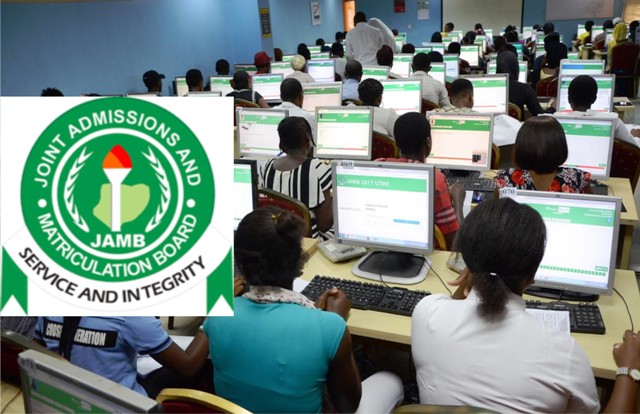
The Joint Admissions and Matriculation Board (JAMB) has announced the opening of examination slip printing for candidates registered for the 2026 Unified Tertiary Matriculation Examination (UTME).
JAMB made the announcement yesterday, urging candidates to visit its website to download their slips ahead of the examination.
“Examination Slip Printing is now available. The slip contains details of the venue, date and time of your examination and gives you access to the examination hall,” the board said.
Candidates are to visit jamb.gov.ng and click on “2026 Slip Printing” to print their slips.
The development comes after JAMB dismissed a viral press release falsely claiming the examination had been postponed.
The board described the notice as “malicious and fake” and urged candidates to disregard it.
The 2026 UTME is scheduled to hold from Thursday, April 16, to Saturday, April 25, 2026.
The examination follows a mock test conducted on Saturday, March 28, which recorded technical difficulties at some Computer-Based Test centres.
Of the 224,597 candidates who registered for the mock, 152,586 sat for the test across 989 CBT centres nationwide.
JAMB said over 20 centres were delisted for technical inadequacies.
The board also warned candidates against fraudsters on WhatsApp claiming to facilitate score inflation, describing such claims as “false and criminal”, and threatening cancellation of registration or withholding of results for any candidate found involved.
Over two million candidates, according to JAMB Registrar, Prof. Ishaq Oloyede, registered for this year’s UTME.
News
RSU Unveils Five-Year Strategic Dev Plan …Calls For Collective Commitment To Institutional Excellence


In a decisive step towards redefining its future, the Rivers State University, Port Harcourt, has formally unveiled its Third Five-Year (2026-2030) Strategic Development Plan.
The development plan is a comprehensive roadmap designed to strengthen the university’s position as a leading institution in Nigeria and beyond.
The unveiling took place during a high-level engagement with the Governing Council, Principal Officers and the university congregation, at the Convocation Arena, recently.
Delivering his remarks at the unveiling ceremony, the Pro-Chancellor of the university and Chairman of Council, Hon. Okey Wali, SAN, charged all members of the university community to align their activities with the strategic direction of the institution, emphasizing that the success of the plan depends on collective commitment.
He noted that the plan is not merely a document, but a working framework that requires discipline, accountability and unity of purpose.
According to the Pro-Chancellor, only through coordinated efforts from all stakeholders can the university fully realize its vision.
“I hereby invite the Visitor to the University, donor agencies, friends and well-wishers, and all stakeholders to support and fund the implementation of this strategic plan. We are confident that this plan will take RSU to greater heights in the comity of higher institutions,” he said.
The Vice-Chancellor of the University, Prof. Isaac Zeb-Obipi, described the Strategic Development Plan as a document that would enhance the university’s corporate strengths, mitigate current weaknesses, leverage its corporate opportunities and address perceived existential threats.
“This Five-Year Strategic Plan sets out RSU’s goals, strategic objectives, expected outcomes and impact, including intervention strategies,” he said.
On his part, the Chairman of the Strategic Development Planning Committee, Prof. Emeritus Joseph A. Ajienka, noted that the 2026-2030 Strategic Development Plan represents a bold reaffirmation of the university’s founding ideals of excellence, creativity, innovation and inclusivity, aimed at positioning the institution to respond effectively to contemporary challenges in higher education.
Prof. Ajienka, who is also a member of the Governing Council, disclosed that the plan was developed through an extensive and inclusive consultative process, which he said reflects contributions from Faculties, Departments, Satellite Campuses and Administrative Units.
At its core, the plan seeks to advance the university’s vision of becoming a “unique and uncommon” institution that is structurally and philosophically oriented towards solving practical societal problems and ranking among the top ten universities in Nigeria.
The strategic framework identifies six key challenges confronting the university, including funding constraints, infrastructure deficits, limited research collaboration, and service delivery inefficiencies.
A statement by the university’s Acting Director, Corporate Affairs, Victor G. Banigo, further stated that the university has articulated four broad strategic goals supported by eight targeted objectives.
A central priority of the plan, according to him, is the strengthening of governance and administrative systems, alongside deliberate efforts to expand the university’s funding base. Others include enhanced alumni engagement, strategic partnerships and innovative fundraising initiatives aimed at ensuring long-term financial sustainability.
“Equally significant is the commitment to upgrading physical infrastructure across all campuses. Plans are underway to modernize lecture halls and laboratories, expand student accommodation, improve campus security and deploy advanced ICT systems to support teaching, learning and research.
“Recognizing that human capital is the backbone of institutional success, the university has placed strong emphasis on staff development, recruitment and productivity enhancement. Through targeted training programmes, mentorship initiatives and performance management systems, the plan aims to foster a highly skilled and motivated workforce.
“In addition, the university is poised to deepen its focus on research, innovation and entrepreneurship. By reviewing academic curricula, strengthening industry partnerships and establishing innovation incubation centers, Rivers State University seeks to translate research outputs into practical solutions that address societal needs and drive economic growth,” he said.
The PRO disclosed that the implementation of the strategic plan is projected at ?110 billion, reflecting the scale of transformation envisioned.
“While the university is committed to funding a significant portion internally, additional resources will be mobilized through government support, donor agencies, alumni contributions, and public-private partnerships.
“This multi-channel funding strategy aligns with the university’s broader goal of building a resilient and self-sustaining financial model capable of supporting long-term development,” he explained.
To ensure effective implementation, he said, “the plan incorporates a comprehensive monitoring and evaluation framework, complete with performance and impact indicators. A mid-term review is scheduled within the first two years to assess progress and make necessary adjustments.
“Furthermore, the establishment of a dedicated Strategic Planning Office will provide oversight, coordination and accountability in executing the plan across all units of the university.”
According to the statement, “As the university embarks on this transformative journey, the message from leadership is clear: the Strategic Development Plan is a collective mandate.
“For staff, students, alumni and stakeholders, it represents an opportunity to contribute meaningfully to the growth and advancement of the institution. For the university, it is a pathway to consolidating its legacy while embracing innovation and global relevance.
“With a clear vision, defined priorities and a united community, Rivers State University stands poised to translate this strategic blueprint into measurable progress, advancing knowledge, empowering people and shaping the future of higher education in Nigeria.”