
News
Mali Crisis: Buhari, Jonathan Review Political Situation …As MutinAeers Arrest President, Prime Minister

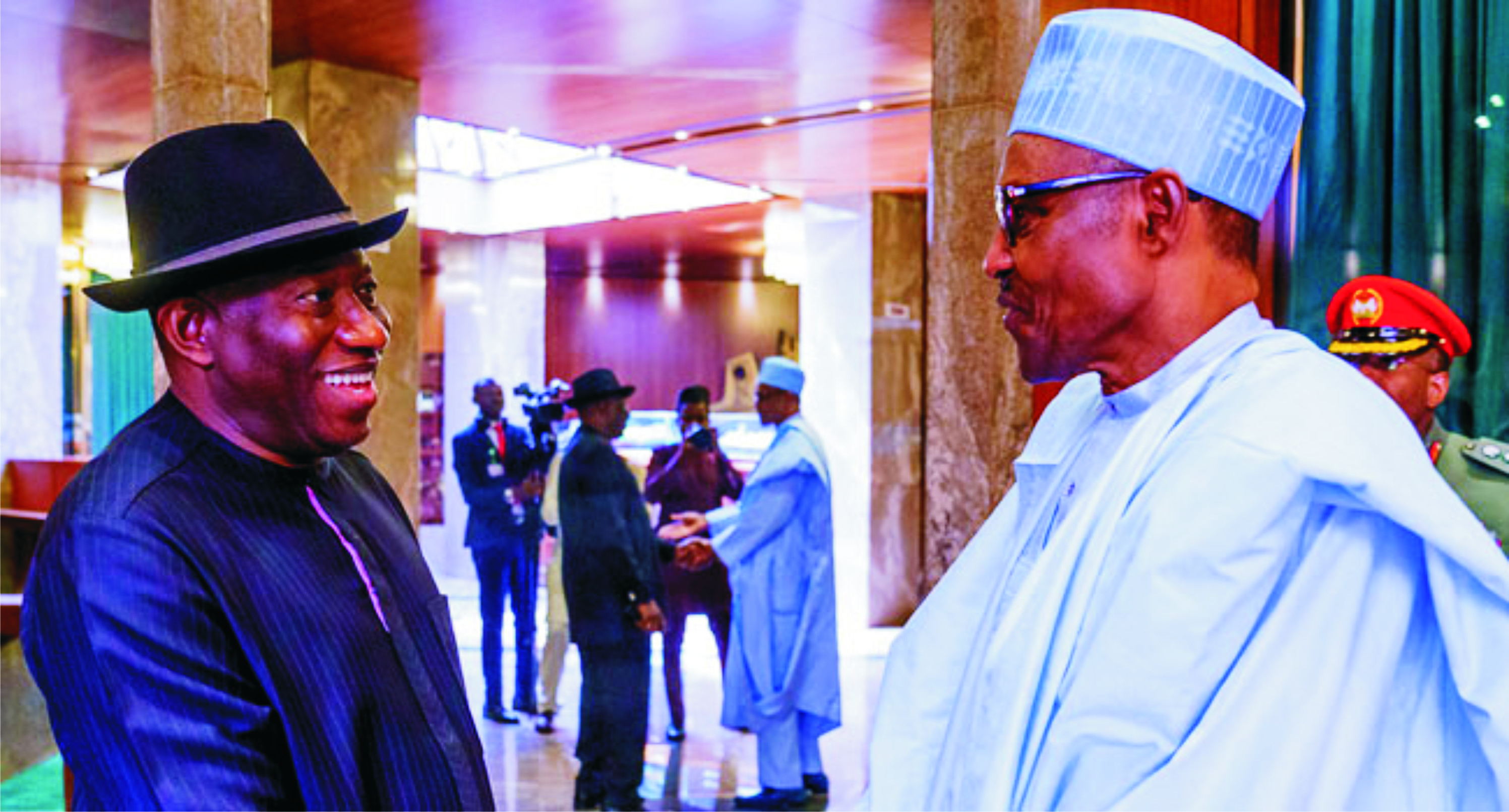
President Muhammadu Buhari, yesterday, received his predecessor in office, Dr Goodluck Jonathan, at State House, Abuja.
Jonathan, who is ECOWAS Special Envoy to the Republic of Mali, briefed the President on the political situation in the West African country, as a corollary to efforts by West African leaders to restore stability to the country.
It would be recalled that Buhari and four other ECOWAS leaders had visited Bamako, Mali, last month, followed by a virtual extraordinary summit of the sub-regional body.
Jonathan, who was in Mali from Monday to Thursday, last week, recounted his meetings with the stakeholders, including political and religious leaders, Ambassadors of US, France, Russia, Germany, European Union, and other important personalities key to peace and cohesion in the country.
The main opposition group, M5 has continued to insist on the resignation of President Ibrahim Boubacar Keita, a position not acceptable to ECOWAS, which insisted only on democratic process in change of power within its jurisdiction.
“We told them that no international organization, including the African Union (AU), United Nations (UN), and others, would agree with their position. We continued to emphasize the need for dialogue,” Jonathan stressed.
He added that the Constitutional Court had been reconstituted and inaugurated, while vacancies in the Supreme Court had been filled, thus sorting out the judicial arm of government.
Buhari, according to a statement issued by his Special Adviser on Media and Publicity, Chief Femi Adesina, thanked Jonathan for what he called “the stamina you have displayed” on the Mali issue, and counselled further consultations with the Chairman of ECOWAS, President Mahamadou Issoufou of Niger Republic.
Among the delegation at the Presidential Villa include Commissioner for Political Affairs, Peace and Security, General Francis Behanzin; and Dr. Remi Ajibewa.
It would be recalled that Jonathan was appointed Special Envoy to lead the mediation team to midwife a peace deal in the Malian political impasse.
The West African sub-regional leaders had been making moves to avert a full-blown civil war in the country, requesting all sides in the crisis to make some comprise in a bid to end hostilities.
Efforts made so far by ECOWAS mediator, Jonathan to bring together Mali’s President, Ibrahim Boubacar Keïta and leaders of the opposition movement for talks have failed.
The opposition leader in the country, Sumaila Cisse, who was detained, had among the conditions for the resolution of the political crisis, demanded the resignation of Keita.
However, ECOWAS leaders had kicked against the resignation call but recommended government of national unity, which the opposition rejected.
Mali has been witnessing political crisis as a result of parliamentary elections since April.
Meanwhile, mutineering soldiers in Mali, yesterday, detained President Ibrahim Boubacar Keita and Prime Minister Boubou Cisse, one of their leaders said.
“We can tell you that the president and the prime minister are under our control,” the leader, who requested anonymity, said.
He added that the pair had been “arrested” at Keita’s residence in the capital, Bamako.
Earlier, soldiers launched a mutiny from the nearby garrison town of Kati.
Another military official, who also declined to be named, said the president and prime minister were in an armoured vehicle en route to Kati.



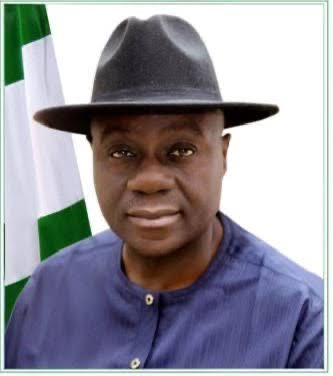
President Bola Tinubu has appointed Mr Abel Olumuyiwa Enitan as the Head of the Civil Service of the Federation, effective August 27, 2026.
Enitan succeeds Mrs Didi Esther Walson-Jack, who will retire soon from the Federal Civil Service upon attaining the statutory retirement age of 60.
Mr Enitan, from Osun State, is the most senior Permanent Secretary in the Federal Civil Service.
He has served as Permanent Secretary for seven years and seven months, working at the Ministry of Police Affairs, the Ministry of Humanitarian Affairs, and the Office of the Vice President. He is currently the Permanent Secretary in the Federal Ministry of Education.
Enitan, according to a statement by Special Adviser to the President on Information and Strategy, Bayo Onanuga, brings considerable institutional experience and a deep understanding of how the Federal Civil Service works to his new responsibility.
Tinubu expressed his profound appreciation to Mrs Walson-Jack for her distinguished service to the nation and for the reforms, impact and innovations witnessed in the Civil Service during her tenure.
“The President wishes her a fulfilling and successful life after service and conveys the nation’s gratitude for her years of dedicated and impactful public service,” the statement added.
Tinubu charged the incoming Head of the Civil Service of the Federation to consolidate on the reforms and innovations already underway, deepen professionalism and efficiency across the service, and build a more effective and responsive Civil Service capable of delivering on the administration’s Renewed Hope Agenda.
The President further urged Enitan to lead a Civil Service that is professional, merit-driven, accountable, innovative, and responsive to Nigerians’ needs and aspirations.
Enitan was born on December 12, 1966. He had his secondary education at Ajibode Grammar School, Ibadan and the College of Arts and Science, Ile-Ife. He later attended the University of Lagos and graduated in 1988 with a B.Sc. in Finance and Banking.
In 2015, Enitan obtained an M.Sc. in Public Policy Analysis from Nasarawa State University, Keffi.
The President of the Nigerian Bar Association (NBA), Maxi Afam Osigwe, SAN, has said the 66th Annual General Conference of the association will inject significant economic value into Rivers State, with more than 23,000 lawyers and other participants expected to converge in Port Harcourt today for the main event.
Osigwe stated this recently while speaking ahead of the conference that started last Friday at the Yakubu Gowon Stadium, Port Harcourt.
The NBA President pointed out that the gathering would provide an opportunity for lawyers from across the country and beyond to deliberate on issues affecting the legal profession and national development.
According to him, the influx of delegates, service providers, contractors and support personnel would stimulate business activities across the state, particularly in the hospitality, transportation, food and other service sectors.
Osigwe noted that the economic impact of the conference would extend beyond the venue, as delegates would patronise hotels, restaurants, transport operators, shops and other businesses during their stay in Port Harcourt.
He described Port Harcourt as a historic city with a significant place in the history of the legal profession, noting that the NBA rotates its annual conference among different cities to promote cultural exchange, unity and national integration.
He said the return of the conference to Rivers State also presented an opportunity for lawyers to reconnect with the city while contributing to its economic and social development through their presence.
Also speaking, the Chairman of the NBA Annual General Conference Committee, Abdul Mohammed, SAN, said the theme of the conference, “Beyond Limit,” was carefully chosen to reflect the need for Nigeria to unlock its vast potential and accelerate national progress.
Mohammed explained that the theme would provide a platform for critical conversations on how the country could overcome existing limitations and harness its human, economic, institutional and technological resources for sustainable development.
He said the conference would bring together legal practitioners, policymakers, academics, business leaders and other stakeholders to examine contemporary issues affecting the nation and the legal profession.
On his part, the Chairman of the Local Organising Committee for the 66th Annual General Conference, Tonye Krukrubo, SAN, commended the Rivers State Governor, Sir Siminalayi Fubara, for the hospitality extended to the association ahead of the annual gathering.
Krukrubo noted that the NBA’s decision to return its annual conference to Rivers State fulfilled a commitment made by the association to host the conference in the State once democratic governance was restored, expressing optimism that participants would have a memorable experience in Port Harcourt.
King Onunwor
The Nigerian Navy, in collaboration with the Nigerian Army, has intercepted two vehicles conveying about 8,500 litres of products suspected to be illegally refined petroleum products along the Ejemekuru–Obudi-Agwa axis of Imo State.
The operation, conducted on August 21, 2026, by personnel of Naval Base Oguta and the Nigerian Army, also led to the arrest of three suspects.
Director of Information, Nigerian Navy, Navy Captain Abiodun Folorunsho, disclosed this in a statement.
According to him, the personnel intercepted a tipper truck and a Toyota Hiace bus carrying about 150 bags of suspected illegally refined petroleum products.
“Three suspects were arrested during the operation, while some occupants of the second vehicle fled, abandoning the vehicle,” he said.
Folorunsho said the arrested suspects, vehicles and recovered products were subsequently taken into custody for further investigation and necessary action in accordance with established procedures.
He said the interception underscored the effectiveness of sustained inter-service cooperation and intelligence-led security operations in disrupting the illegal movement of petroleum products and denying criminal elements the opportunity to exploit established routes for economic crimes.
The Nigerian Navy, he added, remained committed to deepening collaboration with the Nigerian Army and other security agencies to combat crude oil theft, illegal refining and the illicit movement of petroleum products while protecting Nigeria’s critical economic interests.
-

 Oil & Energy4 hours ago
Oil Exploration Resumption: OYF Demands 500 Job Slots
-

 Business3 hours ago
Ogoni Oil Resumption: Group Demands Transparency, Full Jobs Disclosure, Contracts
-
Education4 hours ago
Rivers Wins 2026 Presidential Inter-School Debate: Govt Pledges To Institutionalise Competition
-
 Featured50 minutes ago
Tinubu Constitutes APC 2027 Presidential Campaign Council …Yari, Uzodimma Lead Team
-
 Politics4 hours ago
2027: INEC To Conduct Nationwide Electoral Equipment Test Run In November
-
 Editorial2 hours ago
Sustaining Legacies Of Rivers-Owned Media Outfits
-
Sports4 hours ago
Nigerian Keepers Show Impressive Forms In Europe
-
Sports3 hours ago
Arsenal Want Osimhen To Take Pay Cut