Connect with us

Business

Virgin Atlantic May Fold Without State Help-Branson

Published

on

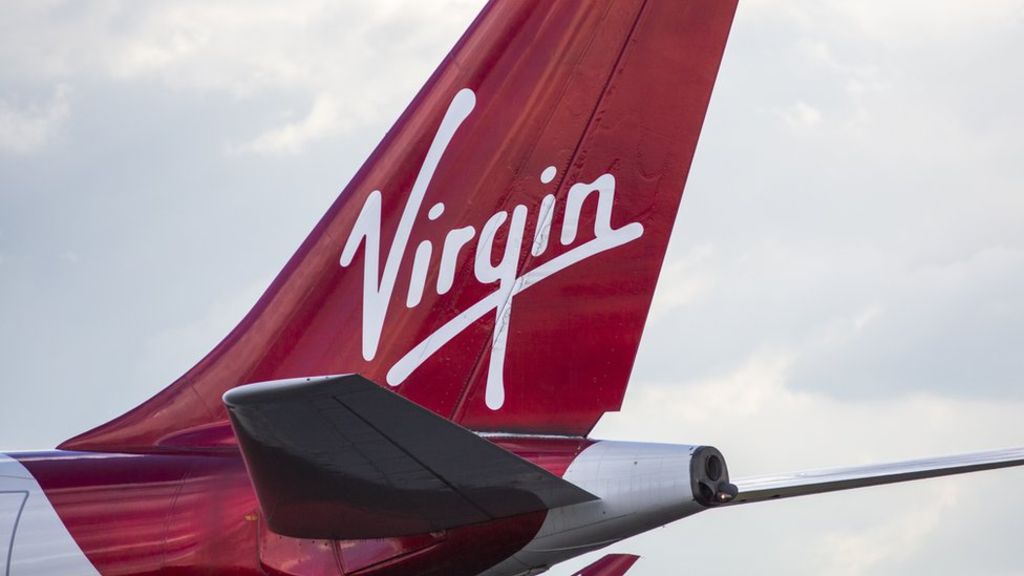
British tycoon, Richard Branson, has warned that his part-owned airline Virgin Atlantic will collapse unless it receives financial aid from the United Kingdom government to weather the coronavirus crisis.
“We will do everything we can to keep the airline going but we will need government support to achieve that in the face of the severe uncertainty surrounding travel today and not knowing how long the planes will be grounded for,” Branson said in a letter to employees seen by media.
Airlines around the world are on the financial ropes as government lockdown orders and border closures have forced them to ground most of their planes.
“This would be in the form of a commercial loan — it wouldn’t be free money and the airline would pay it back,” he added after the billionaire faced criticism following the airline demanding that staff take unpaid leave during the COVID-19 outbreak.
“The reality of this unprecedented crisis is that many airlines around the world need government support and many have already received it,” Branson added.
“Without it there won’t be any competition left and hundreds of thousands more jobs will be lost, along with critical connectivity and huge economic value,” the letter went on.
Virgin is reportedly seeking £500 million ($612 million, 564 million euros) in state help.
British no-frills, airline EasyJet, recently secured a £600-million loan from the British government, which is dealing with airlines on a case-by-case basis rather than heeding to Virgin’s demand for a multi-billion-pound state-funded pot for the entire UK airline sector.
In his letter to staff, Branson referred to “lots of comments” about his wealth and a duty to prop up Virgin Atlantic and offer financial help to staff from his own pocket.
But he insisted that figures being published regarding his net worth were based on the value of Virgin businesses before the coronavirus pandemic, rather than “cash in a bank account ready to withdraw”.
He added: “Today, the cash we have in the Virgin Group and my personal wealth is being invested across many companies around the world to protect as many jobs as possible, with a big part of that going to Virgin Atlantic.”


Continue Reading

Banking/ Finance

Ripple Survey Reveals Appetite for Digital Assets

Published

on

Cornerstone of Financial Services

A survey of more than 1 000 global finance leaders undertaken by digital payment network Ripple shows that 72% of respondents believe they need to offer a digital asset solution to remain competitive.

According to Ripple, leaders from the banking, fintech, corporate and asset management sector have made it clear that the “digital asset revolution is happening now.

“Digital assets are quickly becoming a cornerstone of financial services, underpinned by progressive regulation, growing interest from Tier-1 banks, a steady consumer shift from banks to fintech providers, and booming stablecoin adoption,” Ripple says.

The survey was conducted in early 2026 and the findings released in March.

Stablecoin Boon or Bane?

Ripple has experienced significant success in the stablecoin sector since launching its Ripple USD (RLUSD) stablecoin in 2024.

With a market cap of $1.56 billion, it is considered a major regulated player in the market.

No doubt the platform was pleased to learn through its own survey that financial leaders were most bullish about stablecoins.

Roughly three-quarters of respondents believed they could boost cash-flow efficiency and unlock trapped working capital.

Ripple noted that finance leaders were thinking about stablecoins as more than “just a new way to execute payments”; instead, they viewed them as effective tools for treasury management.

In March 2026, Ripple began testing a new trade finance model built around RLUSD in a bid to increase the speed of cross-border payments.

The pilot initiative, developed alongside supply chain finance company Unloq [https://unloq.com], is running on the XRP Ledger inside a testing framework developed by the Monetary Authority of Singapore.

The Asian city-state is one of the platform’s biggest growth markets.

The idea behind the project is to see whether stablecoin-based settlement can streamline trade finance, too often hampered by reliance on intermediaries and slow reconciliation.

The only potential drawback is that if the initiative takes off, the Ripple to USD price could be negatively affected.

Ripple has always championed its native XRP token as a bridge asset, the “middleman” in the process of a financial institution turning dollars in the US into pounds in the UK, for example.

Ripple converts dollars into XRP and then back into pounds.

If RLUSD can do exactly the same thing, questions will be asked about XRP’s relevance.

That is a bridge Ripple will have to cross if it gets to that point.

Tokenisation Partners

Another interesting finding from Ripple’s survey is that most banks and asset managers are seeking tokenisation partners to help execute their strategies.

Some 89% of respondents said digital asset storage and custody were top priority. “Token servicing/lifecycle management also ranks highly for banks at 82%, while asset managers place greater emphasis on primary distribution at 80%,” Ripple found.

The survey also revealed that just more than half of fintechs and financial institutions want an infrastructure provider that can offer a “one-stop-shop solution”. This rose to 71% among corporate financial leaders.

Ripple attributes this to institutions and firms wanting uncomplicated, cohesive systems.

Infrastructure Rules

In its final analysis, Ripple says companies across the board are looking for partners and solutions that are “secure, compliant, battle-tested and that enable growth and execution”.

“The message is clear: infrastructure decisions made today will shape competitive positioning tomorrow.”

No surprise that this is precisely where Ripple is placing much of its focus.

Continue Reading

Business

Niger Delta Investment Summit Targets $5bn Inflows, 500,000 Jobs

Published

on

The Niger Delta Chambers of Commerce, Industry, Trade, Mines and Agriculture (NDCCITMA) has unveiled the plans to host a major economic and investment summit aimed at attracting five billion dollars, ( N7 trillion) investments in addition to creating about 500,000 jobs over the next five years.
The Chairman of NDCCITMA Board, Ambassador Idaere Ogan, disclosed this in Port Harcourt, recently.
Ogan stated  that the initiative is designed to reposition the Niger Delta as a viable destination for sustainable economic growth and development.
He explained the summit would bring together investors, policymakers, manufacturers and business leaders from within and outside Nigeria to explore opportunities across key sectors of the regional economy.
According to him, the event is expected to attract high-profile participation, with President Bola Tinubu billed as Special Guest of Honour, while the Prime Minister of Barbados, Mia Amor Mottley, is expected to deliver the keynote address.
Ogan said the summit would focus on critical sectors including agriculture, manufacturing, logistics and the blue economy, which he described as areas with significant untapped potential.
He called on state governments, development partners and private sector stakeholders to support the initiative, stressing that collective efforts are required to unlock the region’s economic prospects.
 NDCCITMA chairman further stated that improving security conditions and increasing economic confidence in the Niger Delta have made the region more attractive to both local and foreign investors.
He emphasised that ongoing economic reforms at the national level have also contributed to creating a more favourable investment climate.
Also speaking, the Chairman of the Summit Organising Committee, Dr. Solomon Edebiri, said the event would prioritise the growth of small and medium-scale enterprises (SMEs) across the region.
He noted the summit would provide a strategic platform for networking, business partnership and policy dialogue aimed at strengthening the private sector.
Edebiri disclosed that findings from a recent business roundtable revealed significant untapped investment opportunities, which the summit seeks to harness through targeted collaborations.
He revealed that the event would feature exhibitions of viable projects, facilitate business-to-business and business-to-government engagements, and also promote innovations across multiple sectors.
According to him, the expected outcomes of the summit include job creation, increased industrial activity and improved livelihoods for people in the Niger Delta.
To build momentum ahead of the event, NDCCITMA said the body would embark on awareness roadshows across states in the Niger Delta, as well as in Lagos and Abuja, to attract broad participation.
King Onunwor
Continue Reading

Business

NPA Targets N1.489tn Revenue In 2026

Published

on

The Management  of Nigerian Ports Authority (NPA) has set N1.489 trillion as its Internally Generated Revenue (IGR) target for the 2026 fiscal year.
NPA says the figure represents an increase of N21 billion over the N1.468 trillion target for 2025, which the agency exceeded with an actual revenue of N1.97 trillion.
 The Managing Director NPA, Dr Abubakar Dantsoho, stated this  during the agency’s 2026 budget defence before the Senate Committee on Marine Transport.
Dantsoho said  the authority was set to begin groundbreaking projects for the modernisation of Apapa and Tin Can Island ports to enhance global competitiveness.
According to him, of the projected revenue: N945 billion is allocated for capital projects, N447.5 billion for operating expenses, and
N90.6 billion for remittance into the Consolidated Revenue Fund (CRF).
The MD explained that the budget was anchored on the mantra, “Consolidation, Renewed Resilience and Shared Prosperity.”
Dantsoho said that the modernisation of Apapa and Tin Can Island ports were flagship projects aimed at boosting revenue.
“Apapa and Tin Can Island ports are old and no longer adequate for modern global port operations.
“Apapa Port is about 100 years old, while Tin Can Island Port is over 50 years old, with limited capacity for handling modern vessels and cargo volumes.
“Groundbreaking for their modernisation will commence within the next two to three weeks,” he added.
On the Treasury Single Account (TSA), Dantsoho said all revenues generated by the NPA are paid directly into the account managed by the Central Bank of Nigeria (CBN).
“We do not retain any funds. The Central Bank is the signatory and we must apply for funds whenever needed,” he explained.
Earlier in his remarks,Chairman of the Senate Committee on Ports, Sen. Wasiu Eshinlokun (Lagos Central), said the committee’s oversight function was collaborative rather than adversarial.
“Our goal is to work with you to strengthen institutional capacity, eliminate inefficiencies and ensure that every naira appropriated serves the public interest,” he said.
Chinedu Wosu
Continue Reading

Trending