
Featured
Police Brutality And The Rest Of Us

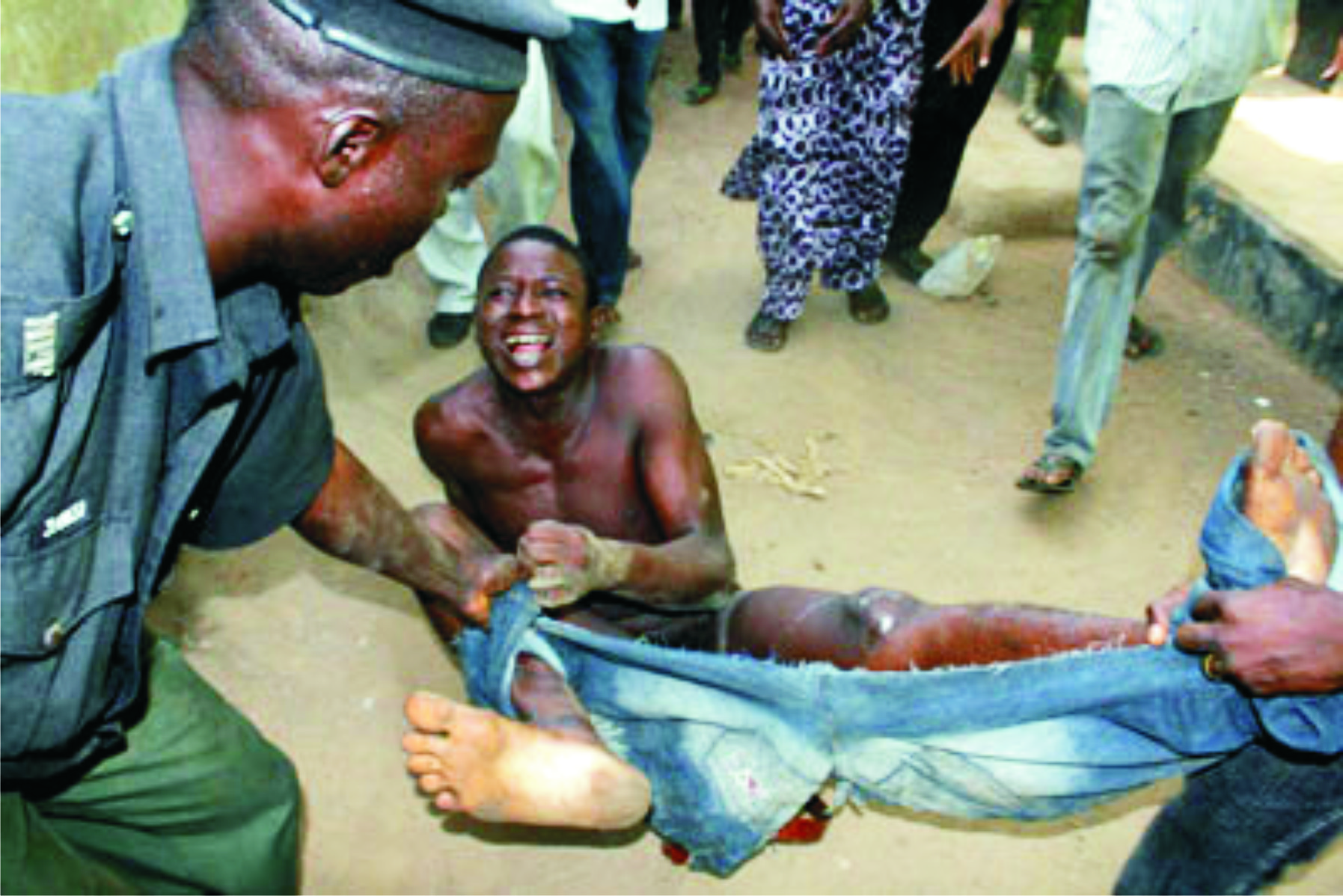
On December 23 last year, Chima Ikwunado, an automobile mechanic based in Port Harcourt, Rivers State, died in the custody of the Nigerian Police few days after he was apprehended by the police who whisked him away alongside four other colleagues after they reportedly failed to meet “bribe” demanded from them. Chima was allegedly killed by some policemen, after undergoing “severe torture in their custody”.
Victor Ogbonna, one of the victims arrested alongside the deceased, said “They tortured Chima, broke his legs and Chima died in pain. They (police) hung Chima in the air for two hours and went on patrol, only to return afterwards to lose him. By then, he merely fell down like a cocoyam, already dead,” “So, they took him inside their vehicle and drove off. Chima died on December 23, according to what the boys told me.”
The case of Chima is one out of the avalanche of incidents of torture and ill-treatment of suspects held in the custody of the police. Victims and witnesses have disclosed at several fora that the forms of torture and other ill-treatment committed by the police included the tying of arms and legs tightly behind the body, suspension by hands and legs from the ceiling or a pole, repeated and severe beatings with metal or wooden objects (including planks of wood, iron bars, and cable wire), resting of concrete blocks on the arms and back while suspended, spraying of tear gas on the face and eyes, rape of and other sexual violence against female detainees, use of pliers or electric shocks on the penis, shooting on the foot or leg, stoning, death threats, slapping and kicking with hands and boots and denial of food and water.
A 23-three year-old man who was arrested by the police in Enugu described his mal-treatment to Human Rights Watch thus: “They handcuffed me and tied me with my hands behind my knees, a wooden rod behind my knees, and hung me from hooks on the wall, like goal posts. Then, they started beating me. They got a broomstick hair [bristle] and inserted it into my penis until there was blood coming out. Then, they put tear gas powder in a cloth and tied it round my eyes. They said they were going to shoot me unless I admitted I was the robber. This went on for four hours.”
In another account, a 36-year-old trader who was detained at the Kano police headquarters told researchers: “Our arms were tied with handcuffs. One at a time we were hung by a chain from the ceiling fan hook. I was the first. They started beating me with a yam pounder, saying I should confess for the robbery. I didn’t know what they were talking about. I was beaten, beaten, beaten. They beat my knees, the soles of my feet, my back and my joints. This went on for 25 minutes. I was beaten too much. I shit and piss while I was hanging. Then, I became unconscious.”
One factor is clear, The Police disregard for due process of law, which fuels the abuse of power, is characteristic to all the cases. Amongst the main concerns are deliberate practice of not informing suspects of the reasons for their arrest, lack of legal representation, prolonged pre-trial detention and acceptance by Magistrates and Judges of confessions that were extracted under torture.
Impunity among men of the Nigerian Police is one of the biggest single obstacles to the reduction of torture and other serious abuses by the police in Nigeria. Deeply engrained societal attitudes that accept police torture and other abuses as legitimate tools to combat crime help sustain this impunity. For many Nigerians who have experienced decades of oppression and brutality by military rulers, the use of violence by the institutions of the state is often accepted, even seen as normal.
Even when they know the police action is wrong, indeed illegal, the victims seem utterly powerless to seek redress. The fact that in all but a handful of cases, there was no accountability for violations committed by the individual police officer, no doubt embolden the perpetrators and has perpetuated the culture of violence in the Nigerian Police Force. Also, victims of police torture who attempt to attain accountability face numerous obstacles.
Official channels for registering complaints, such as the Police Complaints Bureau and the National Human Rights Commission, are acutely under-resourced and lack political support. In addition, the failure to carry out legally required inquests and autopsies on suspects who died in custody further impedes accountability. In the unlikely event that a legal case is brought against an officer, obstruction or lack of co-operation from the police and connivance with the lower cadres of the judiciary ensure that prosecution is rare.
National efforts to reform the police have, to date, been largely symbolic and consistently failed to prioritise human rights issues, including torture. An ambitious new program, launched by the Inspector General of Police, which offered some hope that more comprehensive and meaningful reform is at last being considered has not yielded the desired result.
A review of the Police Act will certainly be a welcome opportunity to bring the laws governing the police into line with international standards, particularly the inclusion of a code of conduct that specifically prohibits the use of torture. However, whether the police leadership can rise to the challenge and contest the many vested interests opposing change – both from inside the police force and in the wider environment – squarely lies with President Muhammadu Buhari.
The international community, in particular the British and United States governments, both of whom have since 1999 invested millions of dollars into developing the Nigerian Police Force, must also take a stronger stance to pressure the Nigerian government to bring about an end to the torture of detainees, address impunity for police abuses and bring about genuine reforms.
Both governments have repeatedly assured human rights propagators that they are voicing concerns about human rights issues with the Nigerian authorities. However, this approach has proven to be largely ineffective as police abuses, including routine torture, persist.
Therefore, the British and the U.S. governments should at the very least condition continue the financial assistance, equipment and training they provide to the Nigerian police. Also, the British and U.S. governments should come forth to publicly denounce torture and killings by the Nigerian Police Force.
Amieyeofori Ibim



The Rivers State Government has distributed science equipment and materials to all senior secondary schools across the state to support students during the ongoing West African Examinations Council exams and to strengthen practical learning.
Flagging off the distribution at the Rivers State Senior Secondary Schools Board premises in Port Harcourt, on Monday, the State Commissioner for Education, Dr. Peters Nwagor, said the move demonstrates Governor Siminalayi Fubara’s commitment to improving education standards in the State.
Nwagor said the materials were approved and provided by the state government specifically to boost the teaching and learning of science subjects, describing science education as the foundation for technological advancement, innovation, and national development.
“No society can compete globally without deliberate investment in science and technology,” the Commissioner stated.
He commended the governor for consistently prioritising the education sector by providing tools needed for effective teaching and hands-on learning.
The Commissioner directed principals to ensure that the equipment are used strictly for practical lessons in their schools, warning that any principal or administrator found diverting, hoarding, or selling the materials wil face disciplinary action under public service regulations.
Nwagor also warned against examination malpractice, saying any principal found aiding or encouraging malpractices will be decisively sanctioned.
“We must collectively restore the dignity and credibility of our educational system,” he said.
Also speaking, Chairman, Rivers State Senior Secondary Schools Board, Tony Egwurugwu, urged school heads to make judicious use of the materials for students’ benefit.
He thanked the State Government for providing the resources, and assured that monitoring mechanisms would be put in place to ensure the materials serve their intended purpose.
In his own remarks, a Board Member for Technical Education, Nwisabari Bani Samuel, expressed appreciation to the governor for prioritising education and acknowledged the Commissioner’s role in advancing education development in the State.
He said the distribution covers all senior secondary schools in the State and is intended to improve students’ performance in both internal and external science examinations.
Akujobi Amadi

Rivers State Governor, Sir Siminalayi Fubara, has commended workers in the State for their resilience, dedication, and invaluable contributions to development in the State.
Fubara gave the commendation during the 2026 Workers’ Day celebration at Isaac Boro Park in Port Harcourt, last Friday.
Represented by his deputy, Prof. Ngozi Nma Odu, the governor noted that Workers’ Day, which originated from the struggle for an eight-hour workday in the United States, has evolved into a global event recognising the contributions of workers to national growth and development.
He described workers as the backbone of sustainable development, saying no society can thrive without their efforts.
Fubara commended Rivers workers for their loyalty and commitment to service, noting that workers play vital roles across key sectors, including education, healthcare, infrastructure and industry.
He noted that their contributions have enhanced access to quality education and healthcare, supported job creation, and stimulated economic activities across the State.
While acknowledging the economic challenges faced by many workers, including the rising cost of living, Fubara assured that the the State Government remains committed to implementing policies that will enhance workers’ welfare and overall well-being.
The governor also hailed the bold and daring economic reforms of President Bola Tinubu which, he said, have stabilized the economy, enhanced foreign exchange liquidity, lowered inflation, and achieved significant growth in the nation’s gross domestic product.
He noted that, in addition to raising the minimum wage, the President recently approved new welfare incentives for federal civil servants.
“Our economy is on an unstoppable positive path under our President, and it can only improve further for the nation and everyone. Let us continue supporting the policies and programmes of Mr President,” he said.
Fubara highlighted the importance of workers in revenue generation and governance, noting that taxes paid by workers enable government to provide security and essential social services.
He reaffirmed the State Government’s recognition of labour as a critical partner in achieving its development blueprint, appreciating workers’ daily contributions to building a peaceful, secure, and prosperous Rivers State.
The governor urged the organised labour to use the occasion to reaffirm its commitment to the progress of the State, while continuing to advocate for democracy, social justice, and improved welfare for workers.
He also expressed gratitude to workers for their service to the State and the nation, encouraging them to remain steadfast in their contributions to development.
In his address, the State Chairman of the Nigeria Labour Congress, Comrade Alex Agwanwor, commended Fubara for his steadfastness, genuine commitment, and passion for workers in the State.
He highlighted key achievements of the administration, including the implementation of the National Minimum Wage Act, the renovation of the State Secretariat, the reopening of the Rivers State Transport Company (RTC), and the consistent payment of end-of-year bonuses to public workers.
Comrade Agwanwor noted that workers, as drivers of productivity, understand the challenges involved in building a prosperous Rivers State, stressing that they are well-equipped to contribute meaningfully to the growth and development of the State.
“We have resolved not to continue complaining and lamenting while challenges persist. Instead, we must take the initiative, step out of relative obscurity, and rediscover the mission and destiny of our dear state,” he said.
Featured
Fubara Pledges Support For Corporate Organisations In Rivers …Says PPP Business Model Responsible For NLNG’s Success


Rivers State Governor, Sir Siminalayi Fubara, has pledged the continued support of his administration for the Nigeria Liquified Natural Gas (NLNG) Limited.
Fubara gave the assurance while receiving the new Managing Director and Chief Executive Officer of the NLNG, Mr Adeleye Falade, who paid him a courtesy visit at Government House, Port Harcourt.
He assured that his administration would continue to contribute its own quota in support of the NLNG.
According to him, the success of the organisation is equally the success of the government of Rivers State and the success of the Federal Government.
“Our duty is to make sure that we support whoever is operating in our state. We are the ones here. If we don’t support you and you don’t succeed, we also will not succeed and Mr President will also not succeed.
“So, the success of your establishment is the success of our state, and overall success of Nigeria. So you can count on our support. Wherever you think we need to come in to support you, please do not hesitate to call upon us.
“You just mentioned here that your predecessor left a handover note showcasing the level of support that he got from the state. It is not going to be different in your own case. I can assure you that. I will also ensure that other units of the government will liaise with you when necessary. So even if you can’t get to me, you can always get to them and if there is anything we can do to help your establishment succeed, we will do it for you,” he said.
The governor attributed the success of the NLNG to the Public Private Partnership ( PPP) business model adopted by the Federal Government and the multinational oil companies.
The NLNG is jointly owned by Nigerian National Petroleum Corporation (NNPC) with 49%, Shell Gas B.V. with 25.6%, Total LNG Nigeria Ltd with 15%, and Eni International with 10.4%.
The partnership model allows for shared risks, costs, and expertise in the LNG sector.
The governor noted that the NLNG has not only survived the difficult business environment but has made sustained progress in the nearly three decades of its existence.
According to him, the decision of the Federal Government to allow the multinational oil companies who have the needed expertise to run the establishment while government plays a supervisory role over it has largely been responsible for its success.
“I’m very proud to say that if there is one establishment that has shown resilience, that has survived in the face of all the political issues prevalent in this country, it is the NLNG. And what is the reason? The reason is very simple. Government has no business in business. That is the truth. Leave the business for those people who can operate it. Let the government play its supervisory role to ensure that there is compliance with the laws; ensure that standards are maintained and also ensure that the right people with the needed expertise are at the helm of affairs. That’s all. I think that is the reason why we still record a lot of successes in NLNG,” he said.
In his opening remark, the new NLNG boss, Mr Adeleye Falade, who led other top officials of the company on the visit, expressed appreciation to the governor for granting them audience, and appealed to the State Government to continue to support the organisation.
“We appreciate the opportunity to meet with you and deepen this important relationship.We deeply value the support the Rivers State Government continues to extend in fostering an enabling operating environment for businesses. NLNG remains deliberate in its contribution to Nigeria’s development, and Rivers State, our primary host, continues to be central to that commitment,” he said.
Falade said the company has continued to work with its host communities to strengthen their capacity to identify, prioritise, and deliver sustainable development initiatives that create lasting impact.
According to him, communities including Amadi-ama, Abua, Ekpeye, Okrika, Kalabari, and Emohua have continued to benefit from this model.
He said that beyond community infrastructure, the NLNG has sustained investments in economic empowerment through initiatives such as Vocational Innovation and Business Empowerment Scheme (VIBES) and Micro Small and Medium Enterprise (MSME) schemes.
These, he said, were designed to support small businesses, build capacity, and stimulate local enterprise across the state.
Among officials of the company who accompanied the Managing Director were General Manager, External Relations and Sustainable Development, Dr Sophia Horsfall; Manager, Government Relations, Mr Abdul Umar; Manager, Community Relations, Dr. Yemi Adeyemi; Head of Government Relations, Mr Mike Igoni; Head of Community Liaison and Engagement, Chief Ifeanyi Umeh.
Others are Technical Assistant to Executive Leadership, Mr Hassan Saleh; Senior Media and Publicity Advisor, Mr Emma Nwatu; Government Relations Advisor, Miss Homa Nmegbu; Senior Government Relations Advisor, Mrs Kate Allison, and Audio -Visual Advisor, Mr Dawood Ahmed.
-

 Editorial5 days ago
Enough Of Xenophobic Attacks On Nigerians
-

 Sports5 days ago
Oparaodu Urges Rivers United To Win Katsina United
-

 Education5 days ago
UNIPort Senate Grants Two-Year Amnesty to U2010–U2018 Students
-

 Nation4 days ago
RSU, Otonti Nduka Foundation Holds Centenary Conference, Unveil Book on Values in Nigeria
-

 Oil & Energy4 days ago
Rivers PETROAN Elects 12-Member Executive
-
Politics5 days ago
APC Group Protests Ex–Presidential Aspirant’s Disqualification From Rivers Senatorial Race
-

 Sports5 days ago
” Nigeria’s best domestic players are not in NPFL”
-
Politics5 days ago
Reps Speaker Secures APC Return Ticket For Fifth Term