Connect with us

Opinion

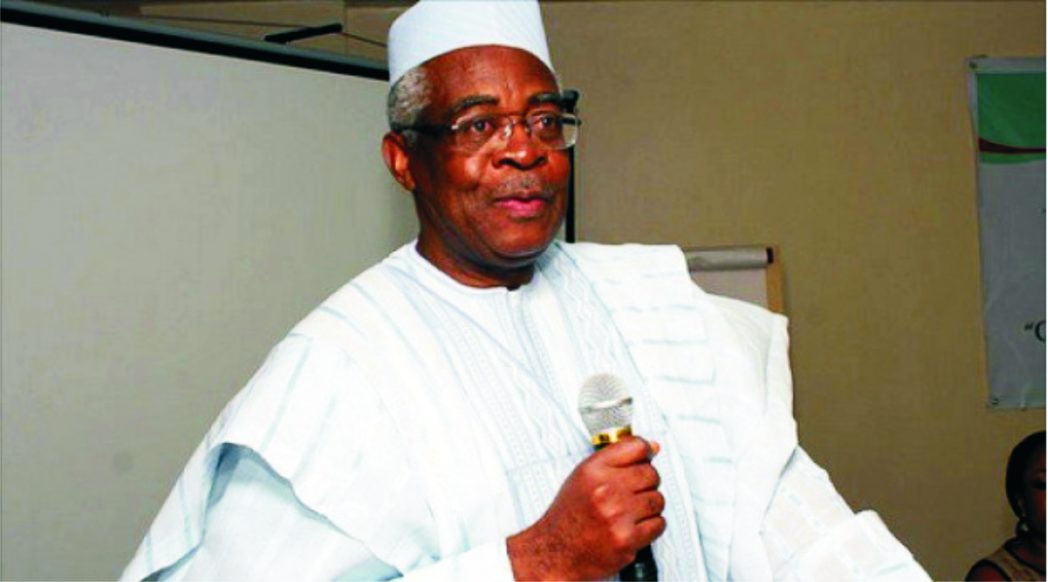
That Call By Danjuma

Published

on

Had the story originated from a different source, it would have been difficult to believe it. Had it been seen only on the social media; it would have been easy to discard it and regard it as one of the fake news circulating on the social media every day.
But coming from a respected retired army general, an elder statesman of high repute and having been carried by notable dailies, including The Tide, it must be a credible story that should be analyzed and acted upon.
The truth is that this is not the first time Rtd General Theophilus Dajuma is raising alarm over the unabating killings and general insecurity in the country, especially in the North. In 2018, he had called on people of Taraba and other Nigerians to rise and defend themselves against ethnic cleansing.
“You must rise to protect yourselves from these people, if you depend on the Arm Forces to protect you, you will all die. “This ethnic creasing must stop in Taraba, and it must stop in Nigeria. These killers have been protected by the military, they cover them and you must be watchful to guide and protect yourselves because you have no any other place to go.
“The ethnic cleansing must stop now otherwise Somalia will be a child play.
“I ask all of you to be on your alert and defend your country, defend your state”, he said.
Typical of the current government at the center, the warning was dismissed as false alarm and Danjuma called all manner of derogatory names. Two years later, the former defence minister is sounding the warning again. He alleged that the Army was working with President Muhammadu Buhari to grab lands from its original owners in the North, South, East and West and give same to Fulanis from West Africa and beyond and that if citizens do not rise up now to defend themselves and fight for their ancestral homes, they would regret it in future.
In his words, “The Nigerian Army under Buratai is working with President Buhari to grab lands from indigenous Nigerian owners and give it to Fulanis from West Africa and turn indigenous Nigerian people and land to modern-day Fulani colony”. He said using Boko Haram, herdsmen and the military, a jihad war is being waged against citizens of other ethnic nationalities by the federal government, repeating the call that citizens should rise up and fight for their lives and land before it is too late.
These are indeed weighty, scary, strong worded statements which must not be treated with levity. An Igbo adage has it that if a child is crying and pointing at a particular direction, if his mother is not there, his father will be there. A man of Danjuma’s standing cannot be saying all these from the blues. He must be privy to some confidential information about what is going on in the country which ordinary citizens do not know. Recall that former President Olusegun Obasanjo made a similar insinuation when he alleged that Boko Haram was an instrument of “Fulanization” and “Islamization” agenda of the current administration.
As usual, the Presidency, the military and those in government will tell Nigerians to disregard the warning. But much as we would want to listen to the federal government and believe that it has the best interest of the entire citizens at heart, realities on the ground tend to strongly support Danjuma’s claims. The daily killings across the country, the chasing away of people from their ancestral homes, allegedly with the help of military personnel sometimes, and taking over of these lands by Fulanis are pointers that something is indeed cooking. Major cities in the country are today filled with young people from the North East, North Central, Southern Kaduna and other places who lost their homes as a result of Boko Haram activities, farmers/herdsmen clashes in their various communities. Many of these people who were involved in different farming activities have turned to house helps, keke and okada riders in order to eke out a living. Many others with similar stories are taking refuge in Internally Displaced Persons (IDPs) camps across the country with slim hope of returning home.
It is, therefore, expected of government to sincerely analyze the rtd General’s statement and act positively on it in the interest of the country. If I may borrow a portion of Matthew Hasan Kukah, Catholic Bishop of Sokoto Diocese’s homily at the burial of Michael Nnadi, the 18 years old seminarian whose life was cut short by Boko Haram terrorists, “Nigeria needs to pause for a moment and think. No one more than the President of Nigeria, Major General Muhammadu Buhari was voted for in 2015 on the grounds of his own promises to rout Boko Haram and place the country on an even keel. In an address at the prestigious Policy Think Tank, Chatham House in London, just before the elections, Major General Buhari told his audience: “I as a retired General and a former Head of State have always known about our soldiers. They are capable and they are well trained, patriotic, brave and always ready to do their duty. If am elected President, the world will have no reason to worry about Nigeria. Nigeria will return to its stabilizing role in West Africa. We will pay sufficient attention to the welfare of our soldiers in and out of service. We will develop adequate and modern arms and ammunition. We will improve intelligence gathering and border patrols to choke Boko Haram’s financial and equipment channels. We will be tough on terrorism and tough on its root causes by initiating a comprehensive economic development and promoting infrastructural development…we will always act on time and not allow problems to irresponsibly fester. And I, Muhammadu Buhari, will always lead from the front.”
Many analysts have said that Nigeria is at a collapsing point; it is like a ship sinking deeper into the sea every day and it can only be saved by true governance at all levels of government, justice, equity and fair play, saying no to corruption, oppression, suppression, nepotism and favoritism and treating all citizens equally, irrespective of their religion, tribe or political affiliations. If we continue to rob Peter to pay Paul, or consider some ethnic group, religion or trade union more important that others, we may not have a peaceful, united, developed country of our dream.


Calista Ezeaku

Continue Reading

Opinion

Righteous Leadership Still Thrives

Published

on

Quote: “Institutional decay is not irreversible when integrity and action sit at the helm.”
In every institution, there comes a defining moment when leadership either deepens decline or inspires rebirth. For the Rivers State Newspaper Corporation (Publishers of The Tide), that defining moment arrived when the Permanent Secretary, Ministry of Information, Sir. Honour Sirawoo Ph.D, came to share the premises with the Staff of The Corporation due to the ongoing renovation work at the State Secretariat. For years, the physical condition of the corporation mirrored the uncertainty that hung in the air. Leaking roofs told silent stories during the rainy season, damaged floors bore the weight of neglect, and the once vibrant environment seemed to plead for urgent attention. Staff members worked under conditions that tested both resilience and commitment. Buckets placed strategically to catch dripping water became a routine sight at some quarters, while cracked tiles and weathered walls diminished the pride that should accompany service in a state-owned media institution.
Yet, in the midst of these challenges, hope was not entirely lost. There remained a collective belief that with purposeful leadership, restoration was possible. That hope found expression when Honour Sirawoo Ph.D., Permanent Secretary in the Rivers State Ministry of Information, assumed as a co-occupier. His arrival was quiet, but his impact would soon resonate loudly across the premises.Leadership, it is often said, is not about occupying an office but about occupying responsibility. From his earliest inspections of the corporation’s facilities, it became evident that he saw not just buildings in disrepair, but a workforce deserving of dignity.The transformation began swiftly. Contractors appeared on site. Assessments were carried out with precision. Plans were not merely announced; they were implemented. Leaking roofs that had long defied repair were carefully amended.
For the first time in years, staff could listen to rainfall without anxiety. Damaged floors were reconstructed, restoring both safety and aesthetics. Walking through the corridors no longer required cautious navigation around broken surfaces. The fencing of the premises, once a pressing security concern, became a priority. A properly secured environment now speaks of order, responsibility, and foresight. General maintenance, often overlooked in public institutions, was institutionalized. From structural reinforcements to aesthetic upgrades, the corporation began to wear a new look. But beyond bricks and mortar, something deeper changed. Morale improved. Staff productivity increased. The psychological boost of working in a conducive environment cannot be overstated. The transformation has not merely been cosmetic; it has been cultural.
 Workers now speak with renewed pride about their workplace. Visitors to the premises have noticed the difference. The once tired-looking structures now stand as testimony to what decisive leadership can accomplish. In governance, righteousness is reflected in fairness, diligence, and a genuine concern for people. These virtues have characterized the stewardship of Honour Sirawoo Ph.D.His approach demonstrates that public office is a sacred trust, not a ceremonial title. He has shown that administrative leadership can be both compassionate and result-driven.The improvements at the corporation align with a broader vision of strengthening information dissemination in Rivers State. A vibrant media institution is essential for democratic growth.By restoring the physical infrastructure of The Tide, he has indirectly strengthened the voice of the state. Journalists and editors now operate in an atmosphere that encourages excellence.
It is often said that environment influences output. The recent editions and renewed energy within the newsroom reflect this truth. When righteous leadership prevails, systems respond positively. Accountability replaces complacency, and progress becomes measurable. Honour Sirawoo Ph.D. has exemplified a leadership style rooted in integrity and practical action. He did not merely acknowledge problems; he confronted them. Such commitment deserves recognition beyond routine commendation. It speaks to a capacity for higher responsibilities within the state’s administrative architecture. Rivers State stands at a critical juncture where visionary administrators are needed across ministries and agencies. Leaders who understand that development begins with attention to detail are invaluable. The transformation at the Rivers State Newspaper Corporation serves as a case study in responsive governance. It proves that institutional decay is not irreversible.
Higher positions of trust demand proven competence, moral uprightness, and administrative foresight. In these respects, Honour Sirawoo Ph.D. has demonstrated remarkable readiness. His performance suggests suitability not only for continued leadership within the Ministry of Information but also for broader strategic roles that shape state policy. Beyond the state, Nigeria’s public service landscape requires administrators who combine academic depth with practical efficiency. His credentials and achievements place him in that league. “When the righteous bear rule, the people rejoice” is more than a biblical aphorism; it is a lived experience within the corporation today. The chapter of the Holy Bible that declares, “When the righteous are in authority, the people rejoice”, (Proverbs 29:2), is a timeless reminder that good governance brings joy and stability to the people.
The joy of the staff is visible in their renewed dedication. The pride of ownership has returned. The institution breathes again. History often remembers leaders not for speeches but for tangible impact. The restored roofs, repaired floors, secured fences, and ongoing maintenance are enduring symbols of purposeful governance. The place started its journey to new looks with the arrival of the acting General Manager, Stella Gbaraba, who in her little way, initiated and executed some repair works in the premises. It will be worthy to point out that the duo are of the Ogoni extraction of the state, it is then safe to say that the combination is superb in that it has produced some excellent results. Importantly, the Permanent Secretary did not stop at The Tide Newspaper premises alone. His vision of renewal extended beyond a single institution to embrace all the State owned media houses under the ministry’s supervision.
At Rivers State Television, he executed massive renovation works that redefined the operational environment. Offices were upgraded, structural defects corrected, and modern standards restored to a facility that serves as a visual voice of the state. State-of-the-art office equipment were procured to enhance efficiency, ensuring that staff members could perform their duties with contemporary tools befitting a modern broadcast station. Radio Rivers too also got its own share of the Permanent Secretary’s benevolence and team spirit. Understanding the strategic importance of radio in grassroots communication, he ensured that critical infrastructure received attention. He provided them with steady power supply, reducing the interruptions that once hampered seamless broadcasting and ensuring consistency in programming delivery.
A functional Out Broadcast Van (OB Van) was made available, expanding the station’s capacity for live coverage of events across the state and beyond. The studios were upgraded to be up-to-date, improving sound quality, technical operations, and overall broadcast standards in line with modern expectations. Garden City Radio equally got its own touch in a superlative way. Renovation, equipment upgrades, and operational enhancements positioned the station on a stronger footing. Across the board, his interventions were not selective but comprehensive, reflecting a leadership philosophy anchored on inclusiveness and institutional strengthening. His target generally is to leave the State-owned media houses in a better shape than he met them. That objective is not rhetorical; it is practical and measurable in bricks, cables, studios, offices, and renewed human confidence.
By strengthening television, radio, and print under one coordinated vision, he has reinforced the information architecture of Rivers State. The cumulative effect of these interventions is a more vibrant, responsive, and professional state media system capable of meeting contemporary communication demands. As the Rivers State Newspaper Corporation along side its sister state-owned media houses continue their journey, it does so strengthened by the evidence that righteous leadership still thrives. And indeed, when the righteous bear rule, the people truly rejoice.
By: King Onunwor
Continue Reading

Opinion

Incentives: Key to Police Morale

Published

on

Quote: “When a police officer rejects ?50 million in bribes to rescue over 100 victims, integrity stops being a slogan and becomes a standard.”
It is important we first commend the Commander-in-Chief of the Armed Forces of Nigeria, President Bola Ahmed Tinubu, for his policies that are geared towards eradicating terrorism and banditry in the country. In recent times, his policy on national security which resulted in strategic partnership with United States of America and other countries, has paid off. In the same vein, we commend the Inspector General of Police, IGP Kayode Egbetokun, for implementing the security policies of President Bola Ahmed Tinubu which has culminated into effective, proactive and result-oriented policing. Also worthy of note is the effective oversight function of the Police Service Commission (PSC) led by DIG Hashimu Argungu (Rtd) in terms of adequate monitoring and supervision of personnel. The Nigeria Police Force has been plagued by negative perceptions in recent years, with some officers engaging in unprofessional conducts.
 The Police high command and the Police Service Commission (PSC), in line with rules and regulations governing the Force, have being prompt in punishing erring officers. We have seen some officers dismissed from the service for gross misconduct while some others were punished depending on the gravity of their offense. While we commend the Police authority for their proactiveness in restoring discipline to the Force, they should also imbibe the culture of rewarding distinguished and outstanding Police officers. Very Senior Officers like the Assistant Inspector General of Police, AIG Auwal Musa Mohammed, in charge of Zone 6 Calabar, who ensured personnel and men in his zone comply and adhere fully to security tactics and instructions of IGP Egbekotun that translated to massive achievement over the weekend should be encouraged.
Meanwhile, the likes of Deputy Commissioner of Police, Zonal CID 6 Calabar, DCP Udu Moses Ogechi, PhD, who are working tirelessly to restore reputation to the Police Force should be rewarded to boost their morale, and inspire other officers to put in their best. DCP Ogechi is currently the Head of the Zonal Criminal Investigation Department (ZCID) in Zone 6, Calabar. He recently led a successful operation on Valentines Day (14th February) to dismantle a kidnapping and job-scam syndicate, rescuing over 100 victims. The syndicate had been exploiting Nigerians, particularly youths who are eager to relocate abroad, promising them fake job opportunities and visa.What is remarkable about DCP Ogechi’s achievement is not just the rescue of the victims, but also his refusal to be swayed by corruption. The syndicate attempted to bribe him with ?50 million, but he and his team rejected the offer, stood firm and demonstrated their commitment to professionalism and the rule of law.
This is commendable and deserving of recognition. DCP Ogechi’s patriotic action and his uncompromising stance especially at a time when the Police Force is working to regain public trust, deserves accolades and recognition by the police authorities. His bravery and integrity in the face of corruption are a shining example to other officers. DCP Ogechi’s sterling personality did not come as a surprise to us given his track record of excellent performance everywhere he goes. While serving in Rivers State as ACP Operations, he successfully flushed out cultists from the State. He led the team that apprehended notorious cultists led by Nwondi Onuigwe who were responsible for killing Police Officers, kidnapping and robbery of passengers along Emohua East West road. Recall that the Rivers State Government had placed millions of Naira bounty on Wordi.
It is on record that crime was reduced to its barest minimum during Ogechi’s reign as ACP Operations in Rivers State. His efforts earned him an award for excellent professionalism from the Nigeria Union of Journalists (NUJ), Rivers State Council. As Nigeria strives to strengthen its institutions and combat corruption, it is essential to acknowledge serving officers who have distinguished themselves. The reward system is a crucial aspect of motivating officers to perform their duties creditably. Rewarding deserving officers like DCP Ogechi will surely inspire other fine officers who are working tirelessly to rid our society of crimes and criminality.
By: Ike Wigodo
Continue Reading

Opinion

Time and Season Can Tell

Published

on

Quote:”In matters of the heart, seasons expose what emotions try to hide.”
There is a silent crisis unfolding in modern relationships—one that many people endure quietly but rarely articulate. It is the experience of emotional attachment without clarity. Unlike betrayal, which announces itself loudly, or conflict, which forces confrontation, this crisis creeps in softly. It begins with warmth, grows through shared vulnerability, and then dissolves into silence. In my observation, some of the deepest emotional wounds are not inflicted by harsh words or dramatic endings. They are caused by something far subtler: the gradual withdrawal of affection without explanation. Silence in relationships is often mistaken for neutrality, but it is not neutral. Silence communicates—only it does so in a language of confusion. When someone slowly retreats without offering clarity, they leave the other person suspended between hope and reality.
There is no clear goodbye, no decisive closure—only distance. The unanswered messages. The reduced enthusiasm. The subtle shift in tone. Emotional ambiguity can be more painful than open rejection because it denies finality while sustaining expectation. It leaves the heart in limbo. In today’s world of instant communication and digital closeness, emotional intensity is frequently mistaken for love. When someone gives us attention, listens attentively, checks in consistently, and offers companionship during vulnerable moments, it is natural to assume that something meaningful is forming. After all, connection feels like commitment. But attention is not always intention. Closeness is not always clarity. In emotionally complicated relationships, there is often an imbalance that goes unnoticed at first. One person invests deeply—emotionally, mentally, even spiritually—while the other remains cautiously detached.
The connection may feel mutual, but the level of commitment is not. And when investment is unequal, pain eventually follows. One of the most dangerous consequences of such relationships is how subtly we lose ourselves in them. It does not happen overnight. It begins with small shifts. We check our phones more often. We rearrange our schedules. We replay conversations in our minds. Gradually, our emotional world begins to orbit around one person. Friends grow distant. Personal goals lose urgency. Self-worth becomes tied—quietly but firmly—to someone else’s presence and validation. When that person withdraws, the collapse feels catastrophic. Yet the devastation is not solely because love has ended. It is because identity has been shaken. We are not grieving only the person; we are grieving the version of ourselves that depended on them.
Silence, I have come to believe, can function as a form of power. When one person controls communication through distance—responding selectively, appearing and disappearing unpredictably—they unintentionally gain emotional dominance. The other person is left waiting, interpreting, hoping. They analyze every word, every delay, every change in tone. This imbalance may not always be intentional. Sometimes it arises from emotional immaturity or fear of confrontation. Yet its impact is undeniable. It reveals an uncomfortable truth: emotional availability is not guaranteed simply because connection exists. Chemistry does not equal commitment. Attraction does not equal accountability. With time, I began to understand that not every relationship is meant to last. Some people enter our lives not as permanent partners, but as temporary teachers.
 They are not there to complete us, but to confront us—with our vulnerabilities, insecurities, and unmet needs. At first, this realization felt discouraging. It seemed to reduce love to a series of lessons. But eventually, it felt liberating. Emotional loss stopped looking like failure and started looking like revelation. Each experience—especially the painful ones—exposed areas where I needed growth. Where I needed stronger boundaries. Where I needed deeper self-awareness. Boundaries, I have learned, are not barriers against love; they are protections for it. Love without boundaries is not love—it is emotional exposure. Connection without clarity is not intimacy—it is uncertainty. Affection without commitment is not partnership—it is illusion. Healthy love requires mutual understanding, transparency, and intentionality. It demands that both individuals stand on equal emotional ground. Where one speaks, the other listens.
 Where one invests, the other reciprocates. Where one withdraws, the other communicates. Time, more than emotion, reveals truth. In the beginning, feelings are loud. They rush, they excite, they overwhelm. But time tests what emotions promise. It exposes inconsistency. It clarifies intention. It separates temporary attraction from sustainable partnership. Seasons, too, teach us something essential about relationships. No season lasts forever. Some bring growth. Others bring pruning. Some relationships stay long enough to build a foundation; others stay just long enough to teach resilience. Neither is wasted. When we accept that relationships operate in seasons, we release the need to force permanence. We stop chasing clarity from those unwilling to give it. We stop romanticizing inconsistency. We stop equating intensity with depth.
Instead, we begin to value emotional safety over emotional excitement. We learn that peace is more sustaining than passion without direction. We recognize that self-worth must never depend on someone else’s attention.In matters of the heart, time and season always tell.They reveal who is consistent and who is convenient. They expose what is genuine and what is temporary. They show whether a connection is rooted in intention—or merely in circumstance. And perhaps the greatest wisdom is this: not every silence deserves to be decoded. Some silences are answers. When we understand that, we stop fearing endings. We begin trusting timing. We stop clinging to uncertainty and start choosing clarity.Because in the end, the heart may feel quickly—but time always tells the truth.
By: Isiocha Kate
Continue Reading

Trending