
Business
‘Review Of National Policy On MSMEs’ll Engender Socio-Economic Dev’

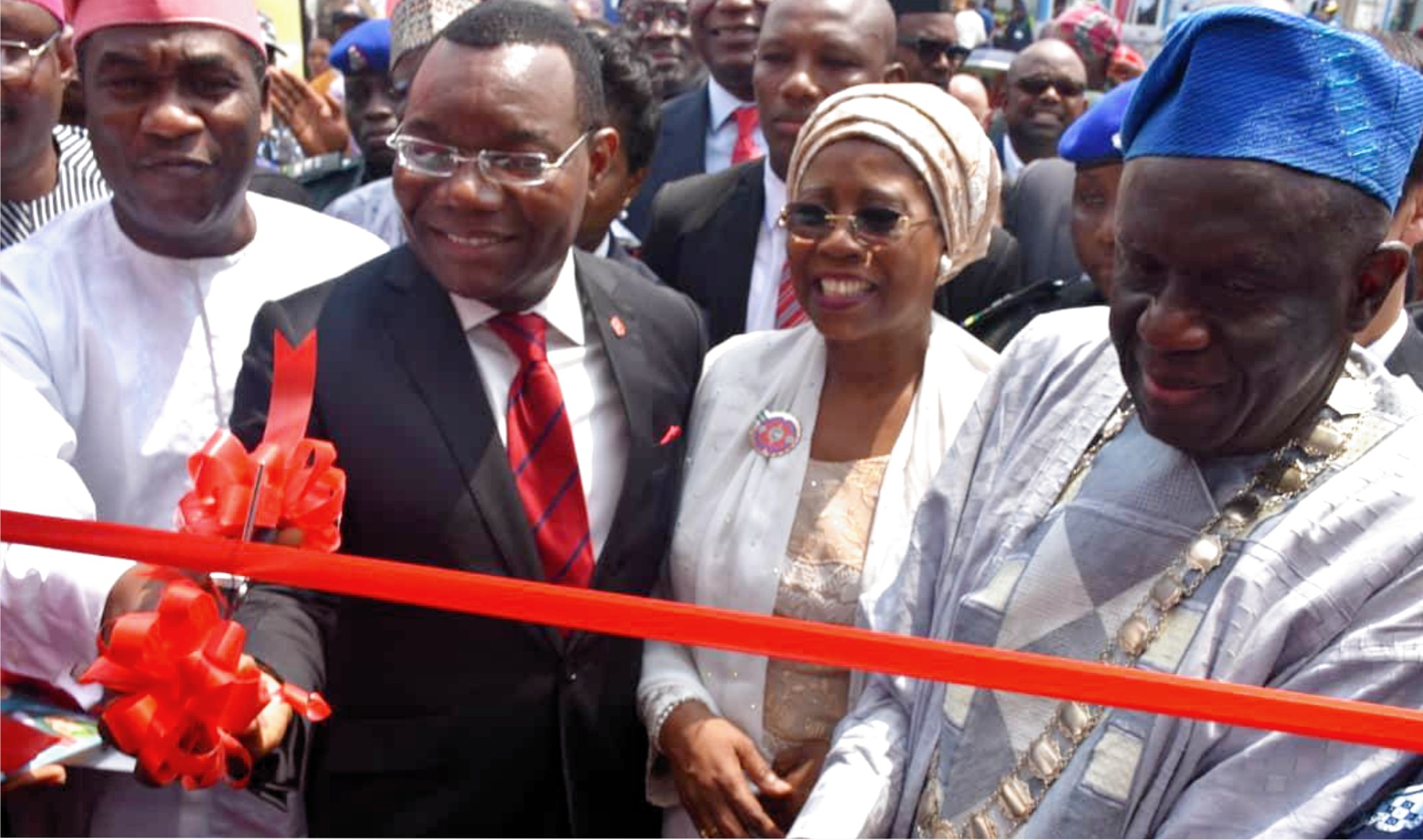
The Small and Medium Enterprises Developmnt Agency of Nigeria (SEMEDAN) says review of National Policy on Micro, Small and Medium Enterprises (MSMEs) will engender socio-economic development if seamlessly implemented at national and state levels.
The Director-General of SMEDAN, Mr Dikko Radda, made this observation at the National Stakeholders Engagement for “Review of the National Policy on MSMEs” organised by SMEDAN in Owerri, yesterday
He said that the recently released National Survey on MSMEs estimated that MSMEs in Nigeria contributed 49.78 per cent to the Gross Domestic Product (GDP) of Nigeria in the face of daunting challenges.
Radda was represented by the Director of Planning, Research, Policy Monitoring and Evaluation at SMEDAN, Mr Wale Fasanya.
He said the MSME sub-sector according to the survey, had created over 59,647 million employments across the country with the micro enterprises accounting for over 41,469 million, representing 99.8 per cent of the entire MSME of the populace.
He also said that if the government and all stakeholders collaborated to provide an enabling environment, the MSMEs could get the country out of “the present predicament of unacceptable rate of unemployment, illicit financial engagements, insecurity, political and social violence.”
The director-general said that the review of the national policy on MSMEs would fast-track the process for creating the much needed enabling environment, while the issue of unemployment would be resolved within the shortest possible time.
He noted there was the need for a cohesive public-private partnership in the implementation of the National Policy on MSMEs for it to be effective.
“The need for a long-term MSME strategy (provided by a national policy on MSMEs) as an imperative for national development cannot be over-emphasised.
“This is why emphasis is placed on reviewing the document every four years to be sure that the full potential that exist within the MSME space is fully explored and exploited,” he said.
The Senior Special Assistant to the Imo State Government on Ease of Doing Business, Mr Leonard Ugboaja, who represented Governor Emeka Ihedioha, commended the organisers for choosing Imo as the venue of the programme for the South East Zone.
He said the state government was passioinate about the growth of Small and Medium Scale Enterprises (SMSEs) and had initiated moves to empower the youths in the area of agriculture,– modern farming techniques-, ICT, and technical and vocational education, among others.
The South-East Zonal Coordinator for SMEDAN, Mr Levi Ayinkwa said that the agency had spearheaded some novel initiatives that had opened the doors of entrepreneurship development across the country in the last two years.
He said the National Policy on MSMEs, which was the maiden policy formulated in 2007, stipulated a review every four years.
He said the last review was in 2015, hence the need for a mandatory harvest of inputs from critical stakeholders to ensure the policy was robust, inclusive and implementable.



-

 Editorial4 days ago
Enough Of Xenophobic Attacks On Nigerians
-

 Sports4 days ago
Oparaodu Urges Rivers United To Win Katsina United
-

 Education4 days ago
UNIPort Senate Grants Two-Year Amnesty to U2010–U2018 Students
-

 Nation4 days ago
RSU, Otonti Nduka Foundation Holds Centenary Conference, Unveil Book on Values in Nigeria
-

 Oil & Energy4 days ago
Rivers PETROAN Elects 12-Member Executive
-
Politics4 days ago
APC Group Protests Ex–Presidential Aspirant’s Disqualification From Rivers Senatorial Race
-

 Sports4 days ago
” Nigeria’s best domestic players are not in NPFL”
-
Politics4 days ago
Reps Speaker Secures APC Return Ticket For Fifth Term