
Politics
Let There Be Reconciliation


In the realm of politics, when a man only sees himself as the centre of attraction and believes with arrogance that his actions are always right, then, he is yet to come out of his induced fantasy island.
Just recently in his Easter message, immediate past Governor of Rivers State and the Minister of Transportation, Rt. Hon. Rotimi Chibuike Amaechi called on Rivers people to fix the problems of the state irrespective of party affiliations. He also called on Rivers people to pray for forgiveness and stressed that the state is always in the news for the wrong reasons.
However, a critical look into the message as a whole leaves much to be desired, as his actions from 2015 during the twilight of his administration to date have not left anything encouraging to the discerning mind.
In May 2015 as a sitting governor, he refused to set up a transition committee to handle the handover process of the reins of government to his would-be successor, Chief Nyesom Wike and left the Government House porous and unsafe which resulted in the vandalisation and massive looting of government property.
Furthermore, his utterances from that period down to the just-concluded 2019 general elections heightened the security situation in the state in which many lives were lost.
Up till now as a former governor of the state who ruled for eight years and a serving minister, he has not deemed it fit to send message of condolence nor visit the families of those who died in the just-concluded general elections.
Yes, there is need for reconciliation, building a better society and putting an end to gangsterism and the security problems in Rivers State. But the solution does not lie with the common man on the street alone, but also the elite of which he, Rt. Hon. Rotimi Chibuike Amaechi belongs.
Security-wise, the last presidential election in Rivers State was so bad that the people of the state wished that if that was how elections were to be held, then, nobody is safe any longer ….and the problem could be traced to the role played by him.
So, when his message harps on forgiveness, we believe that the former governor should also lead by example by first of all paying a brotherly visit to his successor, Chief Nyesom Wike at Government House in Port Harcourt.
In every democratic society, there are always disagreements between political parties, individuals and interest groups, yet the problems are managed in a civilised way but in most parts of Africa and especially in Nigeria, this is not always the norm as those who lose out in the quest for power are mean and vindictive for the rest of their lives thereby creating more problems for the society.
Some examples will suffice. In Kenya, shortly after independence, President Jomo Kenyatta and his greatest opponent, Odinga Odinga were always at loggerheads. In Ghana, Guinea-Conakry, Uganda, Zambia, Nigeria, Angola, Rwanda, Zimbabwe, Malawi, etc, political opponents were either jailed, killed, victimised or sent on exile. Where these did not play out, a civil war erupted; all because of irreconcilable differences or greed for power.
In essence, for peace to prevail in Rivers State, Amaechi should imitate the example of the Late Joshua Nkomo of Zimbabwe who despite losing out in the election of 1980, later reconciled with Robert Mugabe all in the interest of peace.
What the people of Rivers State need is peace and this can only come about if those who lost out in the power struggle in the state heed the call of Governor Nyesom Wike to join him in ensuring the speedy development of the state as well as building and sustaining the existing peaceful environment.
The bickering and acrimony due to political differences had gone on for too long and what is needed now is new direction devoid of pettiness by all political gladiators.
Rivers State belongs to all of us, and we should see ourselves as Rivers people first before we can be categorised as members of a political party.
From 1999 to date, Rivers people have lost prominent sons to political differences and those that pilot our affairs should sit down and have a heart-to-heart talk on how to develop the state. The challenges we face as a minority are quite enormous. A lot of young people are without jobs, most of the manufacturing companies have left the state over ten years ago, no new one have replaced them for now.
What we should all work towards is how to ensure that more investors are attracted into the sate to ensure that the teeming unemployed population is reduced to the barest minimum.
Amaechi has made his call but that is not enough unless he marches his words with action. For him to be taken seriously, he should not hesitate to make the first move and tell all Nigerians that he is now a statesman and has grown beyond the partisan level of politicking, this is because when the founding fathers of Rivers state fought for its creation, they did not envisage a situation whereby prominent sons and daughters of the land will have disagreements at the detriment of the state.
As a Minister of the Federal Republic, his tenure will one day elapse, then, after that what next? For the people of the state to hold him in high esteem despite the problems associated with his style of politics, now is the time for him to do the needful by visiting Governor Wike and have either breakfast, lunch or dinner with him and hold a joint news conference that all is well; it is only then and then that we will know that his call for reconciliation and forgiveness is truly from the heart and not just a political rhetoric.
Tonye Ikiroma-Owiye

Politics
Alleged Coup: Protests Rock N’Assembly As Detained Officers’ Children, Wives Demand Justice

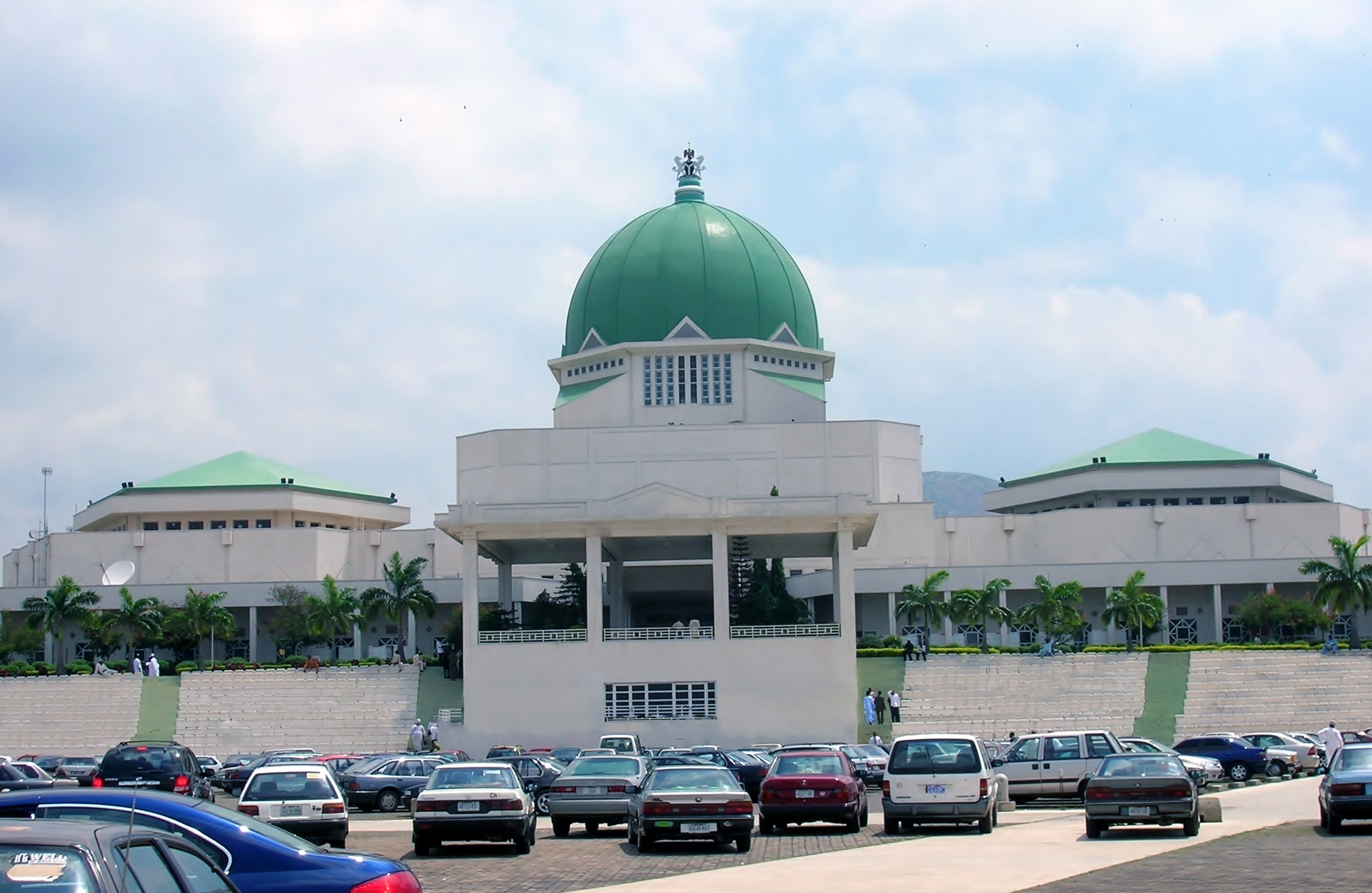
Scores of children and wives of military officers detained over an alleged coup plot yesterday staged a peaceful protest at the National Assembly, demanding a speedy trial and the release of the accused officials.
The protesters who gathered at the entrance of the National Assembly complex, moved in a slow procession while clutching placards with inscriptions such as “Don’t Kill Our Daddies,” “Detention Without Trial is Injustice,” and “Six Months of Torture: Enough Is Enough.”
Amid tears and trembling voices, the children appealed for justice and access to their detained fathers, many of whom they said they had not seen for months.
The appeal was made during a press briefing in Abuja attended by no fewer than 20 wives and several children of the detained officers, including a two-month-old baby.
The families were accompanied by human rights lawyer, Deji Adeyanju and activist Omoyele Sowore.
At the briefing, the families lamented that the officers had been held for over 160 days without trial or contact with their relatives, describing the situation as a violation of their fundamental rights.
Speaking on behalf of the families, Memuna Bashiru said the prolonged detention had thrown their households into uncertainty and emotional distress, noting that while allegations had been widely publicised, families remained in the dark about the fate of their loved ones.
The arrest of the indicted officers was first announced on October 4, 2025, by the then Director of Defense Information, Brigadier General Tukur Gusau, who disclosed that 16 officers were taken into custody for alleged breaches of military regulations and acts of indiscipline.
However, an interim investigation later suggested the existence of a clandestine network of officers, allegedly coordinated by a senior Army officer, which had begun preliminary planning for a coup.
According to the report, the alleged plot involved surveillance of key national assets, including the Presidential Villa, Armed Forces Complex, Niger Barracks in Abuja, and major international airports, with October 25, 2025, cited as the planned date for the operation.
Those reportedly in custody include Brig Gen M. A. Sadiq, Col M. A. Maaji, Lt Col S. Bappah, Lt Col A. A. Hayatu, Lt Col P. Dangnap, Lt Col M. Almakura, Maj A. J. Ibrahim, Maj M. M. Jiddah, Maj M. A. Usman, Maj D. Yusuf, Capt I. Bello, Capt A. A. Yusuf, Lt S. S. Felix, Lt Cdr D. B. Abdullahi, Sqn Ldr S. B. Adamu and Maj I. Dauda.
The alleged plot, according to findings, targeted senior government officials, including President Tinubu and Vice President Kashim Shettima.

In a statement issued yesterday, the party’s National Publicity Secretary, Mr Felix Morka, said the exercise would take place in all wards and designated centres nationwide.
He called on existing members to update their records, while encouraging new entrants to join the party through the digital platform.
“As the electronic membership registration exercise resumes in all wards and designated locations nationwide, we urge existing members to validate their membership while new members are encouraged to register and join the progressive family,” Mr Morka said.
According to him, eligibility for registration is limited to individuals aged 18 and above who possess a valid National Identification Number (NIN).
The party said the initiative is part of efforts to modernise its operations by transitioning to a digital database that would enhance record accuracy and accessibility.
Mr Morka noted that the e-registration would “digitise the party’s membership register, ensure the integrity of records, and enhance efficient access to membership data for planning and management decisions.”
He added that the move is also aimed at promoting internal democracy within the party and strengthening its commitment to democratic innovation.
The APC had previously introduced electronic registration as part of broader reforms to streamline its membership system and improve organisational efficiency.
-
Opinion3 days ago
Ozoro Festival: Tradition or Tyranny?
-

 News3 days ago
RSG Reiterates Commitment To Youth Dev
-
 Rivers10 hours ago
Court Rules Out Interim Administration In Jumbo House, Bonny
-
 Politics11 hours ago
APC Resumes Electronic Membership Registration Nationwide
-

 Oil & Energy3 days ago
Transcorp Energy, Renewvia Partner On Renewable Energy Gap
-
Politics3 days ago
RIVERS WOMEN RALLY SUPPORT, CONTINUOUS PRAYERS FOR TINUBU
-
Politics3 days ago
AKPABIO, DIRI, OBOREVWORI, OTHERS VOW TO REELECT TINUBU …AS GIADOM RETAINS APC ZONAL CHAIR
-

 Business3 days ago
NSCDC Discloses Illegal Dump Site In Ikwerre Community