
Education
Lecturer Wants Review Of Derivation Formula

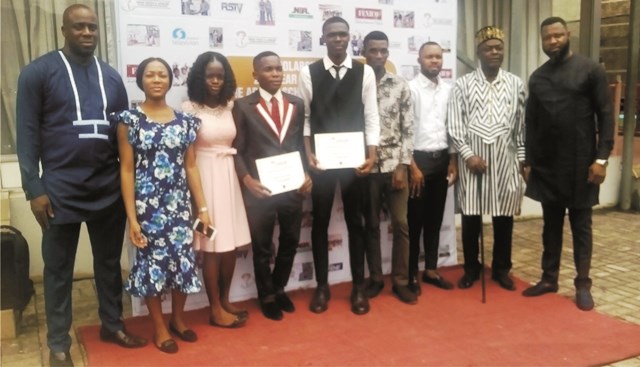
A Professor of African History at the Ignatius Ajuru University of Education (IAUOE), Rumuolumeni, Port Harcourt, Rivers State, Prof Kingdom Eke Orji, has advocate the review of the nation’s derivation formula, with the states receiving 70 percent while the federal government receives 30 percent.
Orji opined that the proposed recommended sharing formula, if approved, would not only boost local production of mineral resources in the States and increase their Internally Generated Revenue (IGR), also will make the political contest, at the “centre” less attractive.
He made this recommendation while delivering his lecture at the 14th inaugural lecture series of IAUOE held at the university’s main auditorium in Port Harcourt, Thursday.
The erudite professor of history who presented his lecture on the topic ‘Signature of the Sands of time: A Legacy for Human Survival Strategy in Nigerian Society” established the link between human labour (????) and the Environment (Sand) all through time (the past which is history) within the pre-colonial and post colonial era.
The discourse x-rayed the role of human labour represented by “signature” in harnessing the natural endowments of our environment and represented by “sand” in building the Nigerian nation through “time” which symbolises the historical dimension.
According to him, “the choice of the topic for investigation, was against the backdrop of his involvement in research and teaching comparative industrial growth and developed in both development and developing nations of the world at ancient and contemporary times which border on national building.
Prof Orji stated that the advent of colonialism marked a watershed in the history of human labour in Nigeria, adding that the reasons for colonial adventure have been subjected to what he described as “crucibles of rigorous scrutiny” with the resuit that economic argument appears more plausible.
“Within the pre-colonial indigenous polity of about 200 ethnic nationalities, the economy was diversified and sustained by human occupations like farming, fishing, hunting, trade and local manufacture, within and across regions”.
The professor of African History recommended among other things value re-orientation, His enthronement of visionary leadership, pursuit of economic diversification, value chain approach must be given attention as well as high premium on the dignity of labour, as factors that will enhance the nation’s economy. Earlier in his speech, the vice chancellor of IAUOE, Prof Ozo-Mekuri Ndimele, lauded Prof Orji for the lecture presentation and described the discourse as a well researched move that would advance and give the nation’s economy, even as he said, the nation development should be a collective responsibility of all citizens.



The River State Commissioner for Education, Dr Peters Nwagor has called on media practitioners in Rivers State to deploy their various communication platforms toward promoting government programmes and policies aimed at achieving sustainable development in the education sector. Dr. Nwagor made the appeal when members of the Etche Ethnic Practicing Journalists (EEPJ) paid him a courtesy visit in Office in Port Harcourt. The Commissioner emphasized the strategic role of the media in shaping public perception, promoting government initiatives, and supporting policies capable of improving the quality of education and human capital development in the state. According to him, constructive media engagement remains essential in creating public awareness on educational reforms, students’ welfare, infrastructural improvements, and other interventions being implemented by the state government. Speaking on the recent appro

-

 Editorial1 day ago
Enough Of Xenophobic Attacks On Nigerians
-

 Nation1 day ago
RSU, Otonti Nduka Foundation Hold Centenary Conference, Unveil Book on Values in Nigeria
-

 Oil & Energy1 day ago
Rivers PETROAN Elects 12-Member Executive
-

 Environment1 day ago
MOSOP – Tinubu Not Sincere With Ogoni People For Oil Resumption
-
Politics1 day ago
APC Group Protests Ex–Presidential Aspirant’s Disqualification From Rivers Senatorial Race
-

 News1 day ago
Fubara, Wife Hail Tinubu’s Renewed Hope Initiative …As Over 6,800 Families Benefit From Largesse In Rivers
-
Politics1 day ago
Reps Speaker Secures APC Return Ticket For Fifth Term
-

 Maritime1 day ago
Products, Others, To Arrive Lagos Ports Today — MPA