
Business
Transforming Transportation Sector: RTC Example

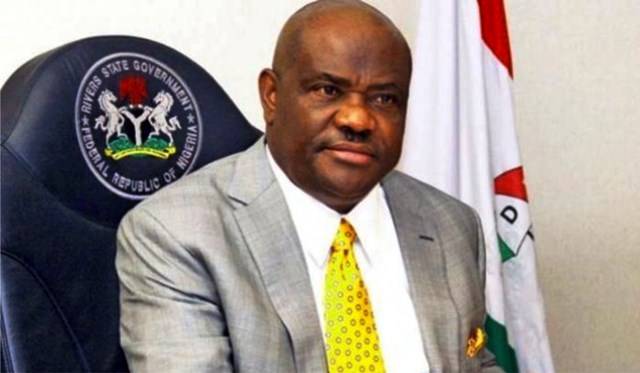
In the blueprint of his new vision for new Rivers State before assuming office as Governor, Chief Nyesom Wike had vowed “to build a State that is truly united, secure and prosperous with boundless opportunities for everyone who lives in it to peacefully pursue their goals and realize their full potentials in dignity and happiness’’.
He did not stop there. He had also insisted on actualising “the agitation of the people of Rivers State for a balanced development and an enhanced quality of life for the present and future generations through responsive governance guided by the fear of God’’.
To realise the new vision, some priorities which included the development of transport infrastructure were listed.
Demonstrating an uncommon and unwavering commitment to all that he enunciated in the blueprint, the Governor had, from the outset, worked relentlessly towards actualizing his vision and mission for a better Rivers State in the strong belief that ‘’together’’, as he puts it, ‘’we can create better opportunities and achieve more for our people’’.
Whatever may be the tensions and stresses of leadership challenges occasioned by the intervening variables that do discipline the untiring efforts of serious-minded chief executives as Wike in a democratic setting, it can be safely suggested, without fear of contradiction, that the Governor has acquitted himself creditably in the conceptualization and execution of projects and programmes to the admiration of many, including Vice President Yemi Osinbajo who rightly dubbed him ‘Mr Projects.’
Nothing really evinces this more than his rare show of interest in the development of transport infrastructure and the continuous existence and progress of the Rivers Transport Company (RTC) as exemplified in the appointment of the Board of Directors of the Company led by debonnaire gentleman and seasoned administrator, Chief Ibe Eresia-Eke.
The Tide’s review of the progress report of a few quasi-government enterprises and state-run firms, including sister corporations, many of which are dead or forgotten, shows that the anti-climax situations and the suffocating tradition of inefficiency and corruption which are the hallmark of many government parastatals, have dramatically turned to a prologue-a pointer to the fact the new board appointed for RTC holds the key to a brighter and promising future that will see the company regaining its lost glory and setting the pace for others to emulate.
Indeed, a visit to the corporate headquarters of the company and an inquest into its operation in the past two years confounds hardened critics and cynics, and proves that a government-owned enterprise can be viable and competitive like private firms controlled by hard-tested entrepreneurs.
There is no gainsaying the fact that the present board members, like the veteran task masters they are, are breathing life into their ideas, shoving complacency for sheer pragmatism, making good their solid reputation as turn-around prime managers with Midas touch to the maximum satisfaction of a hitherto despondent workforce.
It is apposite to state here that ninety percent of the board members are transport practitioners and logisticians who have brought their experience to bear on the administration of the company. The Chairman, Eresia-Eke, a transporter himself and one-time chairman of oil-rich Ogba/Egbema/Ndoni Local Government Area of Rivers State, is an author of a bestseller on local government administration with particular emphasis on transport. Apart from that, he had served as General Manager of RTC 14 years ago. After his stint there, he floated a driving school to lend credence to the fact that his line of thought has always been transport. And with a highly disciplined background, he has the vision of where a public transport company should be going, which is what he is bringing to bear on the administration of the company.
The Board Secretary, Sir Allwell Egwurugwu is a state officer of the National Union of Road Transport Workers (NURTW) and is into logistics services. Little wonder then that there is pleasant result in the form of physical and operational transformation of the company to the delight of staff who have adjudged the current board as the most prudent and worker-friendly in its 48-year history.
Professional expertise and financial prudence, investigations revealed, appear to be what set the Eresia-Eke led board apart from past ones. The judicious utilization of scarce resources, including a grant that was released to the company by the state government in the infrastructural revamp of its headquarter complex with befitting office accommodation for staff has elicited a confidence vote on the board and immense appreciation to Governor Wike for his foresight in putting square pegs in square holes.
The reason for that is not far-fetched. Most past boards were peopled with non-professionals whose only interest were just the collection of data of how much the company was getting, and not in staff welfare or vehicles maintenance and other overheads that are used to generate the money. Infact, the story was once told of how board members shared the buses that former Governor Rufus Ada George gave to the company.
Some other past boards did not fare any better. One of such boards wrecked the company to the extent that staff salaries could not be paid for several months after they left.
From all intent and purposes, past governments, many believe, had not been sensitive to what public transportation demand should be, hence certain persons who are appointed into a board ultimately clash with professionals who know the nitty gritty of running a transport company profitably.
From1991 till date, RTC has had five boards of directors who, as it were, represent the interest of government which is the owner of the business. So if government appoints a board, analyst insists, it is expected that the board should be interested in the prosperity and profitability of the business. But this had hardly been the case with the company until the present board took charge of affairs.
The Deputy General Manager, Chief Peter Borlo who joined the company 28 years ago as an Administrative officer said: ‘’as secretary of past boards I can tell you that we have the best board now. We have never had it this good. The Board has been addressing workers and corporate needs promptly’’
Illuminating the workings of the transport system, Borlo, who happens to be the chairman of the Chartered Institute of Logistics and Transport, Rivers and Bayelsa States, hinted that ‘’public transportation demands expects that you provide the buses that are needed with the way they are needed to ensure profitability’’.
Similarly, RTC’s Assistant General Manager (Operations), Mr Biedima Wariso said it is the first time the company was having a Board that has put in place policies that have impacted, and still impacting, positively on staff.
Apart from the prompt payment of staff salaries and emoluments, Borlo and Wariso hinted that the owing to the policies put in place by the Board which have also improved the monitoring system, things are now properly done as leakages and pilfering have stopped.
The Head, Courier and Logistics of the Company, Mr M.F. Oputa and the Acting Head, Health, Safety and Environment (HSE), Mr Kinikachi Chu ku spoke in similar vein.
Said Oputa: ‘’The Board is dedicated, God sent, and staff-friendly. They ensure that each staff is well taken care of. They give incentives in the form of promotions, increments and many more.’’
Oputa, who also revealed plans by the company to expand the frontiers of its service to foreign countries said the Board built a beautiful edifice for staff of his department who ‘’were confined in one small store’’.
Commending Governor Wike for his foresight in identifying the Eresia-Eke-led Board which he as well described as exceptional and God-sent, Chuku on his part, said the company has so far not recorded any fatality on the road as it ‘’has devices of getting feedback on any of our drivers who don’t adhere strictly to safety rules’’.
The chairman of the Monitoring Team, Mr Dappa Belema Soye was also full of praises for the Board for being favourably disposed to workers welfare among others. ‘’The Board in liaison with the union has been able to promote staff who were long due for promotion and also employed casual staff who have since been craving for gainful employment’’, he said.
As it is, it would certainly require the compilation of a compendium to record all the commentaries on the achievements of the Eresia-Eke led Board just as it would demand enormous intellectual rigours to completely unravel the mystery behind their somewhat magic wand.
Never the less, the challenge of getting more vehicles to improve on their services and earnings stare RTC’s Board and management in the face. Said Borlo: ‘’Our vehicles are depleted. Though we are doing relatively well, we need recapitalization to be able to do more’’.
Hinting that the company has about 270 staffers who have some 10 dependants each, Borlo divulged that the company also has international courier licence which requires adequate funding, arguing that a well funded RTC can contribute i immensely to the internally generated revenue of the state and also reduce its clan of unemployed.
Yet, RTC regularly and promptly pays staff salaries and other emoluments in spite of the difficult condition in which the company is operating due largely to lack of vehicles.
It was gathered however, that while the Board has made some requests to the Rivers State Government for grants in the form of loan, and graciously waiting for its approval, it has also reached out to the Bank of Industry for a facility to procure some 50 vehicles.
While approval for all these requests are being expected by the company, its highly appreciative and elated workforce hasexpressed its unalloyed support for Governor Wike’s second term bid to enable the government consolidate on its achievements, especially in the transport sector.
Victor Tew



Business
Jonathan, Diri, Others Laud Firm’s Milestone in Bayelsa …Says Project Will Drive Industrialisation, Create Jobs



-

 News2 days ago
RSG Targets Nine Million Residents in Mosquito Net Distribution Campaign
-

 Oil & Energy2 days ago
Aiyedatiwa Signs New Electricity Bill
-

 Maritime2 days ago
Marine Minister Commends President Tinubu On NPERA Bill Assent
-

 Oil & Energy2 days ago
NLNG Commissions Research And Innovation Centre In RSU
-

 News2 days ago
KenPoly Holds Eight Convocations, August 29
-

 News2 days ago
RSG Begins Another Phase of Projects Commissioning Today
-

 News2 days ago
RMAFC Completes Revenue Sharing Review, Proposes New Pay
-

 Maritime2 days ago
NAGAFF Petitions IGP Over Alleged Maritime Police Harassment