
Politics
Onnoghen’s Trial And Rule Of Law

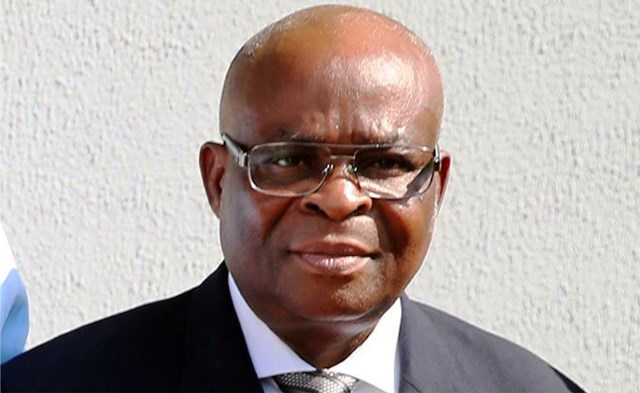
Nigerians woke up in the morning of January 7, 2019 to hear that the Chief Justice of Nigeria, Justice Walter Onnoghen was a very corrupt man and that he would be charged to court on the 11th of January, 2019.
The news initially was thought to be just a rumour but when it was confirmed, there was hues and cries across the country.
One funny allegation was that he did not declare one of his assets ..Domiciliary account, which did not hold water. For every public servant, asset declaration is done every four years. And if a person gets a political appointment or elective post, it is done twice, while taking the oath of office and when the person is about to leave or leaves. These are the only stipulated periods assets are declared.
So, if the Chief Justice buy shares in a company or invests his fund in a business venture, years or months after declaring his asset on assumption of office, it is not a crime, asset declaration is not done every month.
The question here is not whether Chief Justice is guilty or not guilty but in tackling issues of corruption, the Federal Government has continuously goofed and made itself look foolish in the eyes of the public and the international community.
This is the second attempt to assault and rubbish the judiciary. 2016, the residence of six justices were raided with crow bars, chisels and hammers, their doors broken, furniture thrashed and the justices were accused of corruption and illegal possession of arm and ammunition, all these deeds were done at midnight, but at the end of the day the government still goofed as noting substantial could be deduced from its action.
The disturbing feeling here is that this ugly trend is coming barely month to the presidential and general elections in the country. And to the discerning mind it has political undertones. this is because to some observers of Nigerian politics, Justice Walter Onneghen, was never at any time the preferred candidate for the position of Chief Justice of Nigeria by who rather believes in appointing people he could trust especially persons of Northern extraction, preferably his fellow Muslim.
This feeling cannot be easily dismissed as virtually all heads of the country’s security outfits are headed by people from one section of the country and the only arm of government that is still outside this reach is the office of the CJN.
In condemning the recent assault on the judiciary, eminent nigerians including governors, legal practitioners; human rights activists and opposition political parties said the action was not only nauseating but a shame on the government for ridiculing itself in the eyes of the public and the international community. They said under the 1999 constitution, section 158 (1) it is only the National Judicial Council, NJC, that has the ample powers to deal exhaustively with matters pertaining to allegations of misconduct and discipline of Judicial officers, adding that without following the laid down procedure those responsible for the infamous act are just wasting their time.
What makes the proposed arraignment of the chief justice before the Code of Conduct Tribunal (CCT) look picious To that the petition was submitted to the EFCC on 7th of January and within 48 hours investigation has been concluded and the Chief Justice was invited to appear before the CCT on the 11th of January.
The psychological warfare being waged by the All Progessives Congress-led Federal Government right from its inception in 2019 against its Progressives political opponents and those it disagrees with on constitutional issues has been unrelenting. All what is does is tag someone as being corrupt, leak the information to the social media and other selected media houses and fan the flames of disinformation and propaganda and the rest they say is history. But one thing we should understand is that in a democracy dissent, criticism opposition, legislative and judicial independence are virtually part of the system.
Nigerians should be grateful that we have a vibrant media, judiciary and active set of social justice advocates otherwise the country would have been like Uganda under the dictatorship of late President Idi Amin who brooked no criticism, dissent or opposition to his rule.
After killing over 300,000 people or sending hundreds of thousands into exile his next target was the judiciary. He even had the effrontery to order the killing of the Chief Justice of Ugunda, Justice Benedicto Luwum. The justice was kidnapped right in his office at the court premises in broad day light in 1972 in Kampala and was never seen again.
When some Nigerians expressed their long held view that General Buhari has not shed his military posture, is not a democrat and will not fit in well in a democratic culture the naive ones disagreed and today what do we have? Yesterday, it was former President Goodluck Jonathan who was vilified, almost on a daily basis, then it was the turn of the Senate President, Bukola Saraki Saraki was accused of not declaming his asset of which he was discharged and acquitted.
Later he was accused of sponsoring armed robbers and he is still battling with the police. After Saraka Dino Meleye was next. Today it is the Chief justice, Justice Walter Onneghen Don’t be surprised if tomorrow it wont be the turn of one prominent critic or presidential candidate being accused of running a prostitution ring or peddling hard drugs.
It seems that the present administration has a dirty tricks department where allegations are cooked up against potential threats to its interest. The notion could not be farfetched as its modus operandus has always been the same, no finess, same story corruption and nothing else. For God’s sake there are other teething problems bedeviling the country. The presidency and the APC should focus more on issues like job creation, rapid infrastructure education, power supply than sing the archaic song of corruption ! corruption ! corruption !!!.
There is no country where you don’t have corrupt elements but in Nigeria we seem to have lost focus and instead of being holistic in our approach to issues have become “Tunneled visioned”. We can’t think outside the pox that’s why the democratic culture in most African countries are by far better than that of Nigeria.
The Judiciary in Nigeria is well respected globally, that is why prominent Nigerian jurists have served in the Gambia, Sieme Leone, Uganda and even at the Hague. And if the corruption mantra is so widely spread will these jurists be called to serve in these places?
The Nigerian Bar Association and other well meaning Nigerians must speak out and act now otherwise our hard earned freedom for a democratic culture will eventually fizzle out. Not even under the military rule where judges riducled and harassed publicly. This action has really taken Nigeria to the stone age. Wake up Nigerians! Wake up !!
Tonye Ikiroma-Owiye




The Court of Appeal in a unanimous decision of a panel of three Justices had on May 22, 2026 directed the Federal High Court Judge not to proceed with the suit until an appeal pending before them and filed by Accord Party is resolved.
In a Certified True Copy Enrol Order of the Superior Court, Justices Mohammed Danjuma, Adebukola Banjoko and Oyejoju Oyewumi asked the lower Court Judge to stay proceedings until all issues on the appeal filed by the Accord Party were resolved
Governor Ademola Adeleke of Osun State had, through the Accord Party, applied to justice Lifu to join him as a defendant in the deregistration legal battle instituted by a group of former legislators.
The contention of the Osun State governor was that he had a stake in the Accord Party, being the platform he was seeking re-election in the August 15 gubernatorial poll in the state.
In his ruling, Justice Lifu on April 27 ruled against the Osun State governor, rejecting his request to be joined in the suit to defend his own position and interest.
Not satisfied with the Federal High Court decision, the Osun State governor, through his lawyer, Musibau Adetunbi (SAN), moved to the Court of Appeal in Abuja where he challenged the Justice Lifu decision to refuse to allow him join the suit.
After listening to the argument canvassed, especially that he has interest to protect as Accord Party gubernatorial candidate for Osun State governorship election, the three Justices of the Court of Appeal, unanimously directed Justice Lifu to allow them look into the grievances of the governor.
In specific terms, the Court of Appeal Justices directed Justice Lifu not to proceed further with the matter and fixed October 27 to determine the interlocutory appeal of the appellant.
However, when the certified enroll order and notice of appeal were served on Justice Peter Lifu by Mr Adetunbi (SAN), the judge rejected it on the ground that it was a ploy to arrest his judgment in the matter.
Although the judge had adjourned his judgment delivery in the matter indefinitely, he finally made a dramatic turn around on Monday and proceeded to deliver the judgment that has now proscribed the five political parties.

In a statement on Monday, Mallam Bolaji Abdulllahi, the National Publicity Secretary of the ADC, announced the party’s choice of Mr Amaechi.
However in a statement, Mr Okonkwo said that the choice of Mr Amaechi from the South South strengthens the continued marginalization of people from the South East.
According to the former spokesperson of the Labour Party, any arrangement that would not factor a person from the South East either as president or vice president in the party is anti-Igbo.
He contended that Chief Raph Nwosu, who founded the ADC in 2005 and willingly surrendered it’s leadership to Senator David Mark did not do so to entrench Igbo marginalization in the party.
The former actor said: “I heard from the social media that ADC has picked its vice presidential candidate from the South-South. If this is true, it is unfortunate, as this will continue the crude marginalisation of the South-East.
“This geo-political zone has neither produced a president or vice president since 1999. To deny the South-East the opportunity to produce the president or vice president in the ADC in 2027, will amount to perpetuating the marginalisation.
“The ADC was founded by Ralphs Nwosu from the South-East in 2005. He made the sacrifice to give up the party in 2025 for the coalition to usher in a better Nigeria. He couldn’t have made that sacrifice to marginalise his own people.
“I did not join the coalition to assist in marginalisation of my own people further. I am of the opinion that if we made a sacrifice to give up the national chairman and the president, it will amount to unpardonable injustice to deny us the vice president in 2027.
“I joined politics to fight for a better Nigeria where no region, geo-political zone, or person will be marginalised.
“The only favour I asked Atiku Abubakar, who openly declared that he is the pathway to the presidency of the South-East, is to show it by choosing someone from the South-East to be his vice.
“If it is confirmed that he has chosen a candidate from the South-South, I wish him well. I am not favourably disposed to campaigning for any presidential ticket that does not have a person of South-East origin as president or vice in 2027”

Prof. Yilwatda stated this at the Abakaliki Township Stadium during a mega rally organized by the Ebonyi State government and Minister of Works, Senator David Umahi, during which President Tinubu and other APC candidates for the 2027 general elections were adopted.
According to the APC National Chairman, no President had done for the southeast region what President Tinubu has done for them and expressed the confidence that the president would not only win in Ebonyi State but in the entire South East.
Prof. Yilwatda also used the occasion to address growing insinuations in some quarters that Ebonyi State had been conceded to the Peoples Democratic Party (PDP) ahead of the 2027 general elections.
Dismissing the claim, Prof. Yilwatda said the state would not allow the PDP to win any position in the forthcoming general election.
“We will return President Bola Ahmed Tinubu and Francis Nwifuru as Governor of Ebonyi State in 2027.
“We want to return all APC senators, members of the House of Representatives and House of Assembly candidates in 2027.
“Nobody has conceded Ebonyi to the PDP. Therefore, there is no vacancy in Ebonyi State. Ebonyi PDP has no place, and there is no vacancy at all in the Government House come 2027,” the APC National Chairman declared.
He commended the people of the state for their support for President Tinubu and urged them to re-elect him in the next presidential election in appreciation of what he has done for the state and the entire South-East through infrastructural transformation and human capital development.
Governor Francis Nwifuru, who also spoke at the event, said the state had no other presidential candidate for the 2027 general elections apart from President Tinubu.
He declared that Ebonyi remained a stronghold of the APC and vowed that the party would deliver the President in the state.
Gov. Nwifuru said President Tinubu had shown exceptional commitment to the state and deserved total support for appointing Senator Umahi as Minister of Works, a role he said Senator Umahi had performed creditably.
“Ebonyi has no other presidential candidate apart from President Bola Ahmed Tinubu, and we will return him in the presidential election.
“We are standing here today to tell the whole world, especially those using the President’s name to orchestrate division and confusion in this great state, that we have only one party, and that is the APC.
“This statement became necessary because some people are going around claiming they have discussed with Mr President and that he has handed Ebonyi over to the PDP. They are also saying that Chief Nyesom Wike is their leader and that Wike said the President has given Ebonyi to him.
“Ebonyi is not for sale. We are restraining ourselves because the people are with us. Nobody should push us because we have what it takes to confront anyone trying to destabilise us.
“We want to tell Mr President that he has earned our votes. He gave us what we had never had in Eastern Nigeria — the office of the Minister of Works. And this Minister of Works is not sitting idle; he is working,” he stated.
Senator Umahi, in his remarks, said President Tinubu had done what no other President had done for Ebonyi State and the entire South-East by executing numerous projects across the state and the region.
“Ebonyi State is a one-party state under Governor Francis Ogbonna Nwifuru. We are not going to repeat the mistakes of the past.
“President Bola Ahmed Tinubu has done a lot, not just for Ebonyi State but for the entire South-East and other geopolitical zones,” he said.