
News
Presidency: Atiku Sets Up Anti-Rigging C’ttee

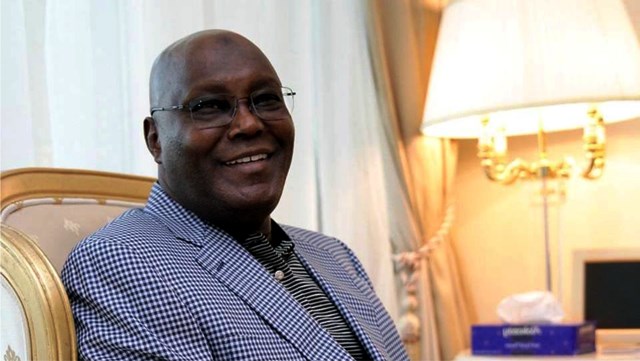
Presidential candidate of the Peoples Democratic Party (PDP), Alhaji Atiku Abubakar, has constituted an anti-rigging committee to counter alleged plans by the All Progressives Congress (APC) to suppress votes in his stronghold in the February 16, 2019 election.
A source close to the former vice president told newsmen that Atiku’s major concerns about the 2019 presidential election are the security agencies and the Independent National Electoral Commission (INEC).
“In a free and fair election, Atiku is confident of defeating President Muhammadu Buhari. However, given the intelligence reports at his disposal, INEC and security agencies are the main obstacle to his winning the 2019 election. This informed the setting up of the anti-rigging committee,” the source said.
The identities of the anti-rigging committee are still being guarded.
Atiku is hoping to make a big haul of votes from South-South, South-East and North-Central geo-political zones in the presidential election.
But there are fears that APC might militarise the zones to whittle down the chances of the party in these areas to favour President Buhari.
The anti-rigging committee is to work directly with the presidential candidate, the PDP Presidential Campaign Council and the organs of the party.
Its duty is to, among other things, pre-empt any rigging strategy of APC, raise early rigging alert, check plot by the ruling party to rig the election, as well as mobilise local and international groups against electoral malpractice.
According to the source, PDP’s fears that the election might not be free and fair were heightened by President Buhari’s refusal to assent to the 2010 Electoral Amendment Bill passed by the National Assembly.
He further disclosed that the party does not have confidence that the electoral umpire will conduct free and fair elections.
“What happened in Ekiti and Osun states is clear to everybody. Buhari is not ready for free and fair election. That is why we are taking pre-emptive measure,” he stated.
Another source stated that PDP has uncovered plot by the ruling party to suppress the support base of its presidential candidate.
“We know that the Operation Python Dance campaign by the military is to help APC rig the presidential election.
“There will be heavy military presence mostly in the South-South, South-East and then, North-Central. These are PDP areas.
“That is why our party is rejecting it. We are not in a war situation. The military should go to North-East and Zamfara State where there are insurgents and cattle rustlers.
“There is no threat to peace in the South and North Central zones,” the source who asked not to be named, said.
Kola Ologbondiyan, Director, Media and Publicity of PDP, however, said he was not aware of any plan by the party to create anti-rigging committee.
He disclosed that what the party is demanding from INEC is transparency in the conduct of the election.
“We are demanding that international and local observers should be allowed into INEC’s situation room where the transmission of votes will take place.
“You recall in 1993, it was clear that Abiola was winning because of transparency.
“So, instead of INEC locking themselves in one situation room and manipulate the election, they should allow the European Union (EU) and United States (U.S.) observers to participate in the collation of results. That is how we can guarantee transparency,” Ologbondiyan stated
Spokesperson of APC presidential campaign, Festus Keyamo (SAN), said PDP is suffering from depression.
“They have ran out of ideas, ran out of what to say. They are now talking like demented fellows. They have said this million times without proof. That is sign of depression,” Keyamo said.
INEC said the position of PDP did not represent the general opinion of Nigerians.
Chief Press Secretary to INEC Chairman, Rotimi Oyekanmi, said the allegation has become the familiar song by the party, which Nigerians were tired of hearing.
Oyekanmi advised PDP that it is not compulsory for any political party to field candidates in the 2019 general elections, especially if that political party does not have confidence in the electoral body organizing it.
“If you are a student who wants to sit for the Senior School Certificate Examination (SSCE) and you don’t have confidence in the West African Examinations Council (WAEC), then you don’t have any business sitting for the examination. You can go to Ghana, Sierra Leone or the Sudan to sit for an equivalent examination.
“There are 74 political parties taking part in the presidential election. Let those who have confidence in INEC participate and we will not disappoint them.
“Nigerians have confidence in the Commission and we are happy about the feedback we are getting,” he added.
Also, INEC said it is not considering the party’s demand at the moment.
INEC’s Director, Voter Education and Publicity (VEP), Oluwole Osaze-Uzzi, said that there is no country that allows international observers in its situation room.
Meanwhile, our correspondent learnt that disbursement of PDP’s campaign funds would be done at ward level and “not to an individual.”
“Other members of the ward will have to be present and the money has to be accounted for.
“We discovered that in 2015, many people collected campaign money and disappeared. We don’t want it to happen this time around.
“The national chairman has given orders that every party member must deliver his or her ward. If you are strong go to your ward and work. We don’t want Abuja politicians. Many of these people hanging around Wadata Plaza (PDP National Secretariat) are not known in their wards,” the source said.
Before now, PDP had declared “operation deliver your ward” to its members as basis for political reward.
Atiku, at a meeting with members of the Board of Trustees (BoT) immediately after securing the party’s ticket, insisted that reward system would be based on electoral performance of members.



The Rivers State chapter of the All Progressives Congress Christian Leaders Forum has expressed strong confidence in the capacity of All Progressives Congress (All Progressives Congress) candidates in the state to deliver effective governance if elected into office in the coming elections.
The State Coordinator of the forum, Archbishop Lucky Aroh, made this known during a breakfast and thanksgiving meeting held in Port Harcourt, where leaders gathered to pray for the stability of the party and the safety of its candidates ahead of the 2027 general elections.According to him, the meeting was convened to seek divine intervention for peace, unity, and security among APC candidates across Rivers State.
“Today we are praying for APC stability in Rivers State and the security of our candidates that have been elected to contest the 2027 elections. It is a breakfast meeting,” Aroh said.
He further expressed optimism that the party’s candidates would not disappoint the people if entrusted with leadership responsibilities.
“They will not fail when elected into office. We are here as fathers of the land to let them know, and I must tell you the truth that these are the authentic people that will do well in Rivers State,” he added.
Speaking earlier, the National Chairman of the forum, Professor Olanrewaju Abraham, commended the Rivers State chapter for organizing the programme, noting that the national body of the forum believes strongly in the power of prayer.
He stated that political leadership provides an opportunity to influence society positively, including advancing moral and spiritual values, while expressing confidence that APC candidates at all levels would emerge victorious in the upcoming elections.
Also speaking, the Rivers State Women Leader of the APC, Hon. Darling Amadi, praised the forum for its commitment to prayers for peace, stability, and the protection of party candidates.
Represented by the Deputy Women Leader of the party in the state, she described the initiative as commendable and urged other political and support groups within the party to emulate the gesture in promoting unity and stability.
By: John Bibor, Menebe Emmanuel & Fortune Paibi
Prominent businessman and philanthropist, Elder Anthony Osagwe-Ogo, was celebrated in grand style as he marked his 70th birthday anniversary, with distinguished Nigerians, business leaders, and golf enthusiasts gathering to honour his remarkable contributions to society.
The colourful celebration took place at the Port Harcourt Golf Club, where friends, associates, and well-wishers converged to pay tribute to the revered elder statesman.
Chairman of the occasion, High Chief (Dr.) Ikenna Okafor, described the celebrant as a detribalised Nigerian whose generosity, humility, and commitment to humanity have earned him admiration across different communities and backgrounds.
According to Dr. Okafor, Pa Osagwe-Ogo’s impact on society and the development of his community remains unparalleled. He noted that members of the golfing community are proud to be associated with a father figure who consistently promotes the welfare and well-being of those around him.
He further stated that the history and growth of the Port Harcourt Golf Club cannot be told without acknowledging the significant role played by the celebrant, whose wisdom, encouragement, and leadership have helped sustain the club over the years.
“We are here to celebrate a man who has impacted humanity positively, a peace-loving individual and an epitome of hope for the younger generation. We pray to emulate his virtues. Today, we celebrate a bridge-builder, a trailblazer, and an iconic leader whose life continues to inspire many,” Dr. Okafor said.
He expressed delight at the large turnout of guests from various walks of life, describing it as a testament to the respect and affection Pa Osagwe-Ogo commands within and beyond Rivers State.
In his response, the celebrant, Pa Anthony Osagwe-Ogo, expressed profound gratitude to God for preserving his life and granting him the privilege of attaining the milestone age of 70.
He also thanked members of the Port Harcourt Golf Club, family members, friends, and associates for identifying with him during the celebration and for their unwavering support over the years.
The event featured the cutting of the birthday cake, presentation of awards to deserving members of the club, goodwill messages, and moments of celebration among guests.
The ceremony was attended by notable personalities from the business community, the golfing fraternity, and other sectors, all of whom joined in celebrating the life and legacy of the respected elder statesman.
Rivers State Governor, Sir Siminalayi Fubara, and the Permanent Secretary of the Rivers State Ministry of Information and Communications, Dr. Honour Kuru Sirawoo, have been honoured with awards of recognition in connection with the 2026 Democracy Day celebrations held in Port Harcourt.
The awards, which formed part of activities marking Nigeria’s Democracy Day on June 12, were formally presented on Tuesday at the Ministry of Information and Communications in Port Harcourt.
Presenting the awards was Hon. Abdul Hameed Oladipupo Alli, popularly known as “Mr. Nigeria,” Publisher of Asiwaju Trumpet Magazine and Achievers World International Magazine.
Governor Fubara was recognised for his efforts in sustaining peace, stability, and a conducive political atmospherJohn Bibor / Menebe Emmanuel / Fortune Paibie in Rivers State. The organisers noted that his administration has fostered harmony and strengthened civic participation across the state.
Dr. Sirawoo, on the other hand, was honoured for his exemplary administrative leadership and significant contributions to effective information management within the Ministry of Information and Communications.
Representing Dr. Sirawoo at the presentation ceremony, Dr. Christian Davies received the award on his behalf and expressed gratitude for the recognition. He described the honour as a reflection of Dr. Sirawoo’s unwavering commitment to professionalism, excellence, and dedicated public service.
Dr. Davies assured the organisers that the award would be formally conveyed to the Permanent Secretary.
The event also featured the presentation of commemorative publications highlighting major governance and civic milestones in Rivers State, including Easter celebrations, Workers’ Day activities, the Governor’s third anniversary in office, and Democracy Day programmes.
Organisers of the awards commended the Rivers State administration for what they described as sustained peace, political stability, and improved civic engagement, noting that these achievements have contributed significantly to the state’s continued development.
By: Jessica Sambol