
News
Dino Melaye: NGO Drags FG To Hague …Call Buhari To Order -Frank

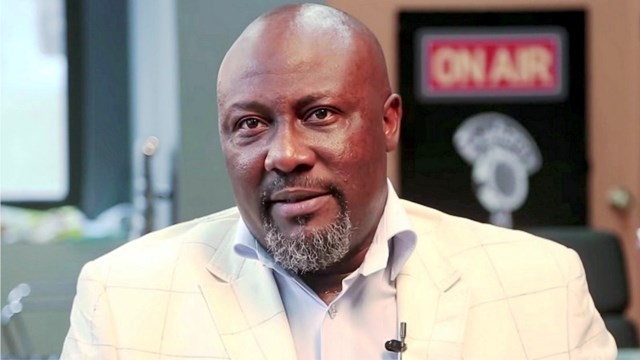
Justice Helpine Foundation, a Non-Governmental Organisation (NGO), has threatened to drag the Federal Government and the Nigeria Police to the International Court of Justice (ICJ) over the continued molestation, harassment and occupation of the residence of Dino Melaye, the Senator representing Kogi East, by the police and the personnel of Department of State Service (DSS).
Ayo Desmond Jonathan , Director of Litigation with the NGO, in a statement issued in Lokoja and made available to our correspondent said the organisation would have no other choice than to drag the Federal Government and the police to the Hague if within seven days, they did not vacate the lawmaker’s residence in Abuja.
The Justice Help line foundation berated President Mohammadu Buhari for turning a deaf ear, and chooses to look the other way regarding the inhuman atrocities of the police while pretending not to be aware of the harassment and intimidation of innocent citizens.
The foundation lamented several cases involving the police in which citizens’ rights were infringed upon, with the president turning deaf ears.
According to Ayo, “in a country where several members of the ruling APC, who were alleged to have been involved in corrupt practice, were shielded by the president,” saying that his anti-corruption fight is only potent with the opposition.
He gave example of the Mrs. Kemi Adeosun and Governor Ganduje’s saga, amongst several other cases of corruption, in which the president allegedly provided cover for such persons, amidst the much talked about integrity and fight against corruption.
Meanwhile, a former Deputy National Publicity Secretary of the All Progressives Congress, APC, Timi Frank, yesterday gave the General Abdulsalami Abubakar-led National Peace Committee, a 72-hour ultimatum to call President Muhammadu Buhari to order.
Frank made the call over Buhari’s alleged “gross violation of the recently signed peace accord by presidential candidates towards the forthcoming 2019 general elections.”
He said the failure to make Buhari to respect the peace accord within the stipulated period would force the “opposition political parties to pull out of the peace accord and subsequently direct their supporters to massively resist the ongoing aggression against them.”
In a statement signed and sent to media houses, Frank said the call became imperative due to the “ongoing campaign of terror against leaders of opposition political parties aimed at actualizing a wicked conspiracy already hatched between the agents of the Buhari administration, security forces and the Independent National Electoral Commission (INEC) to brazenly rig the 2019 general elections.”
He stated that the alleged “ongoing crackdown against top members of the main opposition political party – the Peoples Democratic Party – grossly negates the spirit and letters of the accord – “as there can be no peace without justice, equity and fairness.”
Frank described the “ongoing use of the police and anti-graft agencies to hound prominent members of the PDP as an act of aggression that cannot be further tolerated as the elections draw near.”
He stated that the “intimidation and hounding of key opposition figures across the country and the attempts to deny opposition parties access to legitimate finances by anti-graft and security agencies show that the APC and Buhari have begun to violate the tenets of the peace accord few weeks after it was signed.”
The former APC spokesperson insisted that “it is now clear that the President and his party are out to rig the 2019 polls, or in the alternative, refuse to respect the will of Nigerians which is to hand over the reins of power to the eventual winner of the poll, should he be defeated as he is sure to be.”
He said that “top presidential aides are currently boasting that they already have results of elections that has not been conducted in their kitty with which they will declare the President and all APC’s candidates vying for various offices across the country winners irrespective of the actual results of the next polls.”
He lamented that the Nigeria Police was leading Buhari’s onslaught against the opposition ahead of the polls while the entire security apparatus of the country has shamefully bought into the plot to upturn the will of the people and rob the opposition candidates of victory.
Frank further added that the “illegal extension of the tenure of the current Service Chiefs and the planed elongation of the tenure of the Inspector General of Police, Ibrahim Idris, speaks volume about the intention of the present administration to use the nation’s security forces to rig the February elections and illegally perpetuate itself in power.”
He said that the “siege on Senator Dino Melaye’s house by the police, the unlawful detention of activist, Deji Adeyanju, and the harassment and intimidation of businessmen believed to be sympathetic to the cause of the opposition is a clear violation of the peace accord at this pre-election stage.” He noted that failure by the Abdulsalami’s peace committee and members of the international community to prevail on Buhari to allow for free, fair and credible elections in the country will lead to a catastrophic upheaval never witnessed in any of the African continent.
He described the much trumpeted “integrity” of Buhari as phony because events have since shown him to have encouraged, condoned and perpetuated corrupt activities while deceiving gullible Nigerians that he is an anti-corruption czar.
He wondered how a President that has corrupted the nation’s governance system and security forces – preparatory to use them to rig the forthcoming elections – continue to lay claim to integrity.
“How can a President that has sanctioned the diversion of state funds to finance his election say he has integrity? How can a President that is using state-funded security forces to intimidate, harass, detain and incarcerate members of the opposition say he has integrity? How can a President who continuously disdains and disregards lawful judicial pronouncements lay claims to integrity?
“How can a President who has ordered his men to monitor banks and block the source of funds for opposition political parties say he has integrity?
“Let the Presidency be warned. Nigerians are ready to take their destiny in their hands should the government not conduct itself properly to free the country from his clueless and inept administration.
“Any attempt to rig, truncate, or declare the next presidential election inconclusive – like the case of Osun State – or refuse to relinquish power after defeat would be tantamount to reversing the massive democratic gains the country has recorded since 1999.
“However, Nigerians are well prepared to resist any such draconian actions with the last drop of their blood,” he said.


The Rivers State chapter of the All Progressives Congress Christian Leaders Forum has expressed strong confidence in the capacity of All Progressives Congress (All Progressives Congress) candidates in the state to deliver effective governance if elected into office in the coming elections.
The State Coordinator of the forum, Archbishop Lucky Aroh, made this known during a breakfast and thanksgiving meeting held in Port Harcourt, where leaders gathered to pray for the stability of the party and the safety of its candidates ahead of the 2027 general elections.According to him, the meeting was convened to seek divine intervention for peace, unity, and security among APC candidates across Rivers State.
“Today we are praying for APC stability in Rivers State and the security of our candidates that have been elected to contest the 2027 elections. It is a breakfast meeting,” Aroh said.
He further expressed optimism that the party’s candidates would not disappoint the people if entrusted with leadership responsibilities.
“They will not fail when elected into office. We are here as fathers of the land to let them know, and I must tell you the truth that these are the authentic people that will do well in Rivers State,” he added.
Speaking earlier, the National Chairman of the forum, Professor Olanrewaju Abraham, commended the Rivers State chapter for organizing the programme, noting that the national body of the forum believes strongly in the power of prayer.
He stated that political leadership provides an opportunity to influence society positively, including advancing moral and spiritual values, while expressing confidence that APC candidates at all levels would emerge victorious in the upcoming elections.
Also speaking, the Rivers State Women Leader of the APC, Hon. Darling Amadi, praised the forum for its commitment to prayers for peace, stability, and the protection of party candidates.
Represented by the Deputy Women Leader of the party in the state, she described the initiative as commendable and urged other political and support groups within the party to emulate the gesture in promoting unity and stability.
By: John Bibor, Menebe Emmanuel & Fortune Paibi
Prominent businessman and philanthropist, Elder Anthony Osagwe-Ogo, was celebrated in grand style as he marked his 70th birthday anniversary, with distinguished Nigerians, business leaders, and golf enthusiasts gathering to honour his remarkable contributions to society.
The colourful celebration took place at the Port Harcourt Golf Club, where friends, associates, and well-wishers converged to pay tribute to the revered elder statesman.
Chairman of the occasion, High Chief (Dr.) Ikenna Okafor, described the celebrant as a detribalised Nigerian whose generosity, humility, and commitment to humanity have earned him admiration across different communities and backgrounds.
According to Dr. Okafor, Pa Osagwe-Ogo’s impact on society and the development of his community remains unparalleled. He noted that members of the golfing community are proud to be associated with a father figure who consistently promotes the welfare and well-being of those around him.
He further stated that the history and growth of the Port Harcourt Golf Club cannot be told without acknowledging the significant role played by the celebrant, whose wisdom, encouragement, and leadership have helped sustain the club over the years.
“We are here to celebrate a man who has impacted humanity positively, a peace-loving individual and an epitome of hope for the younger generation. We pray to emulate his virtues. Today, we celebrate a bridge-builder, a trailblazer, and an iconic leader whose life continues to inspire many,” Dr. Okafor said.
He expressed delight at the large turnout of guests from various walks of life, describing it as a testament to the respect and affection Pa Osagwe-Ogo commands within and beyond Rivers State.
In his response, the celebrant, Pa Anthony Osagwe-Ogo, expressed profound gratitude to God for preserving his life and granting him the privilege of attaining the milestone age of 70.
He also thanked members of the Port Harcourt Golf Club, family members, friends, and associates for identifying with him during the celebration and for their unwavering support over the years.
The event featured the cutting of the birthday cake, presentation of awards to deserving members of the club, goodwill messages, and moments of celebration among guests.
The ceremony was attended by notable personalities from the business community, the golfing fraternity, and other sectors, all of whom joined in celebrating the life and legacy of the respected elder statesman.
Rivers State Governor, Sir Siminalayi Fubara, and the Permanent Secretary of the Rivers State Ministry of Information and Communications, Dr. Honour Kuru Sirawoo, have been honoured with awards of recognition in connection with the 2026 Democracy Day celebrations held in Port Harcourt.
The awards, which formed part of activities marking Nigeria’s Democracy Day on June 12, were formally presented on Tuesday at the Ministry of Information and Communications in Port Harcourt.
Presenting the awards was Hon. Abdul Hameed Oladipupo Alli, popularly known as “Mr. Nigeria,” Publisher of Asiwaju Trumpet Magazine and Achievers World International Magazine.
Governor Fubara was recognised for his efforts in sustaining peace, stability, and a conducive political atmospherJohn Bibor / Menebe Emmanuel / Fortune Paibie in Rivers State. The organisers noted that his administration has fostered harmony and strengthened civic participation across the state.
Dr. Sirawoo, on the other hand, was honoured for his exemplary administrative leadership and significant contributions to effective information management within the Ministry of Information and Communications.
Representing Dr. Sirawoo at the presentation ceremony, Dr. Christian Davies received the award on his behalf and expressed gratitude for the recognition. He described the honour as a reflection of Dr. Sirawoo’s unwavering commitment to professionalism, excellence, and dedicated public service.
Dr. Davies assured the organisers that the award would be formally conveyed to the Permanent Secretary.
The event also featured the presentation of commemorative publications highlighting major governance and civic milestones in Rivers State, including Easter celebrations, Workers’ Day activities, the Governor’s third anniversary in office, and Democracy Day programmes.
Organisers of the awards commended the Rivers State administration for what they described as sustained peace, political stability, and improved civic engagement, noting that these achievements have contributed significantly to the state’s continued development.
By: Jessica Sambol
-

 News9 hours ago
FG Begins Trial Of Over 600 Terrorism Suspects
-

 News9 hours ago
Nigeria Won’t Surrender Any Territory To Criminals -Tinubu
-

 Niger Delta6 hours ago
Warri Airport Manager Disputes Air Peace Bird Strike Claim
-

 Rivers6 hours ago
79th IAUE Inaugural Lecture: Prof Anero Advoctes Tuition-Free Education For Children
-

 News9 hours ago
Rivers Judges Commence Annual Vacation, July 20
-

 News9 hours ago
RSG Reaffirms Commitment To Women’s Empowerment
-

 News9 hours ago
NDLEA Nets N6.15bn From Hotel, Seized Assets Auction
-

 Politics5 hours ago
Parties’ Deregistration: How Justice Lifu Overruled Appeal Court Justices