
News
APC In Turmoil …Abe Dares Amaechi In Rivers …Delegates, Gov Battle Buhari, Oshiomhole

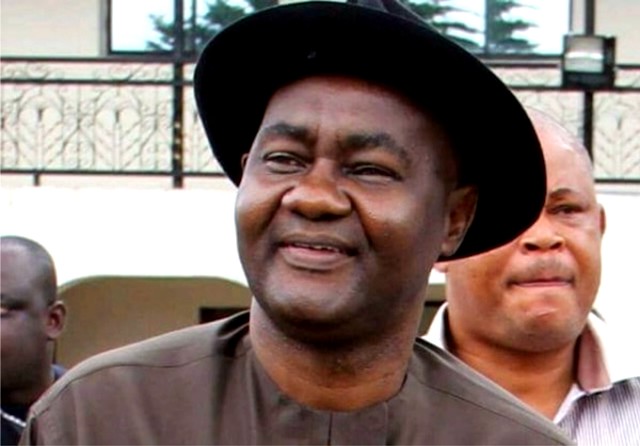
Senator Magnus Abe says only direct primaries could guarantee a level-playing field for the All Progressives Congress, APC, in Rivers State amid the lingering conflict between his camp and that loyal to Transportation Minister, Rotimi Amaechi in the state.
The Ojukaye Flag-Amachree chaired faction of the Rivers APC, loyal to Amaechi, had, three days ago, adopted indirect primaries to determine Rivers APC 2019 flag-bearers, but Abe, speaking in Port Harcourt, yesterday, countered that decision as unworkable.
The senator, the first aspirant to declare for the 2019 Rivers APC governorship ticket, said, “Rivers is one of those states where we can’t have indirect primaries because the entire structure in the state is embroiled in legal controversies.
“We have more than four, five court cases; so if you want to use indirect primaries, which particular delegates list are you going to use, based on which congress? All these issues are in legal tussles, so you can’t at this stage pick one above the other.
“So for safety and legal comfort of those to contest the election in Rivers, we just have to use direct primaries. Whatever objection anybody may have with direct primaries, be it lack of proper data base, security or whatever it is, these are all defects curable in our system”.
Meanwhile, delegates who emerged through the congresses of the All Progressives Congress (APC) at the ward and local governments levels earlier this year have joined their state party executives and governors to reject the direct primary option proposed by the National Working Committee of the party.
Investigations revealed that delegates, who bought forms and contested elections before they emerged as party officials at all levels, had vowed to work against the interest of the governors if they embraced the direct primary option.
A leader of the APC in one of the South-West states, who is also a delegate, told one of our correspondents that it would be unfair to deny ward and local government officers of the party the opportunity to “reap from their investments” during the general elections.
He said, “There are lots of advantages in being a delegate. At least, you are assured that you will make enough money to defray the expenses you incurred in the course of your election.
“Where do they expect this to happen now with the direct primary option? The aspirant will expect you as ward leader to share the money given to you among all your members. That does not make sense at all.”
A source, who was a delegate in the last governorship election primary in Ondo State last year, alleged that two leading aspirants of the APC gave out N200,000 each to every delegate while three others spent N150,000 each to settle each of the delegates.
He said, “The implication of this is that a very smart delegate could pocket about N700,000 without much stress. It would be impossible to make such money in a direct primary arrangement.”
Another delegate in the last Ekiti governorship election also confirmed to one of our correspondents that each leading aspirant, who contested the APC primary, also spent between N150,000 and N200,000 to bribe each of the delegates.
He said, “That is why we are on the same page with the governors to fight the senators who are pushing for direct primary in order to secure automatic tickets from President Muhammadu Buhari and our National Chairman, Comrade Adams Oshiomhole.”
The party’s National Organising Secretary, Senator Osita Izunaso, had, in a statement in April, said ward chairmanship aspirants would pay N10,000 each to obtain the nomination form and that aspirants for other ward offices would pay N2,000.
Local government chairmanship aspirants were expected to pay N25,000 for the nomination form while aspirants for other local government offices would purchase the form for N10,000.
State chairmanship aspirants were to pay N100,000 while the form for other state offices went for N30,000.
According to the guidelines, all females and physically challenged aspirants shall pay 50 per cent of the prescribed fees.
Speaking on the issue, the Chairman, Ondo State chapter of the APC, Mr. Ade Adetimehin, said, the decision of the National Executive Committee of the party in Abuja, actually authorised states to use indirect primaries.
He said, “At the NEC meeting, held penultimate Thursday, the resolution was that the election of the President would be by direct primary while other candidates of the party would be picked through the indirect option.
“There was, however, a caveat that each state could still determine the method that suits them. However from the opinion poll there, the majority settled for the indirect primary.
“No one is afraid of the direct primary. The problem is that there is no correct data across the country for the APC members. If we leave it open, many people will just show up at the primary venue and claim to be members.
“What the NWC wants to do is to cause confusion in all the states. We don’t have security to man the 203 wards in Ondo State. People will just invade the primary venues with fake membership cards and they will destroy the entire process if we try to stop them.”
A delegate from the Oredo Local Government Area of Edo State, who pleaded not to be named, said direct primary would be cumbersome to handle.
“If the party decides to adopt direct primaries, it would be too difficult to control the crowd for security reasons. The process could even be infiltrated by members of the opposition,” the delegate stated.
Another Edo delegate, who spoke on condition of anonymity as he was not authorised to speak on the issue, told newsmen that direct primary was not only expensive to manage but also time-consuming.
He said, “If the primaries are done directly, aspirants will spend more money because people are hungry. So, the highest bidder would have the day.”
As of Saturday, the states that had adopted the direct primary option, as proposed by the NWC of the party, are Abia, Benue, Cross River, Delta, Enugu, Jigawa, Kano, Kwara, Lagos and Niger.
Those that had embraced the indirect option are Adamawa, Bauchi, Borno, Imo, Kaduna, Katsina, Kogi, Nasarawa, Ondo, Plateau, Rivers, Sokoto, Yobe and Zamfara states.
However, another faction of the party in Rivers State has opted for the direct primary approach to elect delegates, thereby further deepening the already polarised party in the state.
Further investigations revealed that Ebonyi, Kebbi, Ogun, Oyo, Akwa Ibom, Anambra, Bayelsa, Edo, Ekiti, Gombe, Osun and Taraba states had yet to take a decision on the issue.
Meanwhile, some of the affected senators have refused to be specific on their chances of getting their dream tickets.
Those who declined to be specific on the matter include Senator Shehu Sani, (Kadunal Central) Lanre Tejuoso (Ogun Central) and Ajayi Borofice (Ondo North).
When contacted on the telephone, Borofice said he didn’t want to talk about the issue at all.
Tejuoso avoided the questions posed to him by one of our correspondents.
He listened to questions bordering on his fate in 2019 and asked that the questions be sent to him through WhatsApp.
He promised to respond to them in writing, saying he did not want to be misquoted.
When he was called again last Friday night, Tejuoso said he could not speak on the matter “for now” until the pending issues had been resolved.
Similarly, Sani refused to be specific on his political future.
He said, “I don’t want to comment on that. I have already made enough statements on my support for direct primary. I don’t want to be specific. In the coming days, we will take a position on that. But now, what I can say it that I want direct primary.”
Speaking to one of our correspondents, a senator from a state in the North-East, who spoke on condition of anonymity, pointed out that the governors would determine the fate of the lawmakers.
According to him, some of the lawmakers made a mistake by engaging their governors in political battles, noting that the governors were the state leaders and financiers of the parties.
The senator said, “If you are a well-grounded politician, why should you worry about whether the primary is direct or indirect? That means you must have a good relationship, rapport and acceptability of the electorate or delegates.
“However, he who pays the piper calls the tune. The governors are the ones who fund the party. In the APC, they are the leaders of the party in the states. If they are the state leaders, they should be in a position to decide which is more appropriate for the primary.
“Some of the senators, who made the mistake of fighting their governors, don’t have the reason to do that. Every state has three senators but every state has only one governor. There are some governors who are the ones going after senators’ seats. Even with that, they can settle the issue amicably.”
Also, Senator Kabiru Marafa, who hailed the decision by the APC NEC, said the choice of direct method for the presidential primary was a ‘vote of no confidence’ in the state executives elected by the congresses supervised by the governors.
He said, “The NEC’s decision passed a vote of no confidence in the congresses conducted by the former National Working Committee and the leadership of the APC.
“The fact that they were specific on the presidential primary, that it should be conducted through the direct method, tells you that they don’t have confidence in the congresses conducted in the states.”
According to Marafa, (Zamfara) lawmakers, who opposed governors on the conduct of the APC congresses, have been vindicated by the NEC’s decision.
He noted that the leadership of the party, particularly the National Chairman, Comrade Adams Oshiomhole; and national leader, Asiwaju Bola Tinubu, pushed for direct primary to protect President Muhammadu Buhari’s candidacy.
He said, “The intelligence of Adams Oshiomhole and his commitment to the President came to the fore yesterday.
“If indirect primary is done and issues later come up – as a lot of the congresses (that produced the executives who will serve as delegates) are being challenged in court.
“If the courts nullify these congresses and these executives are the ones who elected the presidential candidate, then the candidate has a problem. So, they want to protect the (candidacy of the) President and I am very happy about that.”
Senator Adesoji Akanbi (Oyo Central), however, said that the leaders of the APC in Oyo State were to meet yesterday to adopt either of the two primary options.
“We are having a meeting on Sunday to decide which mode – whether direct or indirect,” the senator said.



The Africa Global Development For Positive Change Initiative (ADIAfrica), in collaboration with Stephen Igwe and Judith Igwe International Educational System, has concluded a free eye screening outreach for residents of Rivers State.
The outreach, which was flagged off in Port Harcourt, targeted more than 300 individuals with various eye conditions. Speaking at the event, the International President of ADIAfrica, Prince Dan Mbachi, said the initiative was designed to provide access to essential eye care services for underserved communities.
According to him, the first phase of the exercise commenced in Obio/Akpor Local Government Area and is expected to extend to Etche and Ikwerre Local Government Areas, while the second phase will cover other parts of the state.
Mbachi described the outreach as part of the organization’s commitment to promoting quality healthcare, equity, human dignity, and sustainable development. He emphasized that vision challenges go beyond medical concerns, noting their impact on education, economic productivity, and family wellbeing.
“At ADIAfrica International, we recognize that vision is not merely a medical issue; it is also economic, educational, and social. A child who cannot see clearly struggles to learn. A trader with impaired vision struggles to work. When sight is compromised, opportunity is limited,” he said.
He explained that the exercise provided eye tests, medications, visual field assessments, eyeglasses, contact lenses, and related accessories, stressing that the intervention was aimed at transforming lives rather than serving as a mere charitable gesture.
Mbachi further noted that the initiative aligns with ADIAfrica’s broader mission of advancing sustainable development through practical and people-centered solutions.
Also speaking at the event, a chief from Rumueme Kingdom in Obio/Akpor Local Government Area, Chief Livingston Akaninwo, commended the organisation and its partners for supporting vulnerable members of society. The traditional ruler expressed concern that many people with eye conditions suffer silently due to poverty and limited access to healthcare.
He called on the government and well-meaning individuals to support ADIAfrica’s efforts to enable the outreach to reach more communities across the state.Some beneficiaries, including Mrs. Veronica Peters Olera Pere, expressed gratitude to the organizers for the initiative and appealed for the programme to be extended to other parts of Rivers State to benefit more residents.
By: John Bibor

A three-day intensive training programme aimed at empowering adolescent girls with knowledge, life skills, and advocacy tools to eliminate Female Genital Mutilation (FGM) and promote their wellbeing has ended at Okogbe Community in Ahoada West Local Government Area of Rivers State.
The programme, which held from February 26 to February 28, 2026, was organised by the United Nations Children’s Fund (UNICEF) in partnership with the United Nations Population Fund (UNFPA) and the Rivers State Ministry of Social Welfare and Rehabilitation. It brought together adolescent girls aged between 10 and 19 years drawn from five communities in the area, including Ubeta, Okogbe, Okaki, Akinima, and Akoh.
The training was designed to reactivate and strengthen girls’ clubs across Ahoada West, Abua/Odual, and Emohua Local Government Areas, with a strong focus on ending harmful traditional practices and equipping participants with knowledge to improve their health, safety, and social wellbeing.
Throughout the three days, facilitators engaged the girls in interactive sessions covering a wide range of topics such as menstrual hygiene, puberty education, communication skills, gender-based violence, child rights, personal hygiene, emotional intelligence, and the importance of empathy and peer support. Particular attention was given to the dangers and long-term consequences of FGM, which experts described as a serious violation of the rights of women and girls.
One of the facilitators, child protection advocate, Inyingi Irimagha, specifically of the Child Protection Network(CPN), emphasised the need to challenge harmful cultural practices that negatively affect girls, noting that culture should evolve when it threatens human dignity and health.
UNICEF Desk Officer at the Rivers State Ministry of Social Welfare and Rehabilitation, Victor Iseberetonma, also stressed that empowering young girls with knowledge and confidence remains one of the most effective strategies for eliminating FGM.
He attributed the successful organisation of the programme to the doggedness and commitment demonstrated by UNICEF, the Permanent Secretary of the Ministry, Mrs Lauretta Davies-Dimkpa, and others in making sure that no stone was left unturned for the smooth take-off of the programme, and particularly thanked UNICEF for the great work it is doing in the State.
Other facilitators, including Mr Unah Uchenna and Miss Lucy Uzodinma shared similar sentiments, and called for total elimination of FGM in the society.
Many of the participants described the training as enlightening and transformative, saying, it exposed them to important life lessons they had never received before. One of the girls said the programme helped her understand not only the dangers of FGM but also how to support others emotionally.
“It has educated us about what is wrong, especially about FGM and other issues affecting girls.
“We learned how to talk to people, how to empathise, how to console someone, and how to make others feel relaxed and understood,” Morrow Onisokien Burebure said.
Another participant explained that the programme went beyond discussions on harmful practices to include personal development and daily living skills.
“We learned about our values and how we should live our lives,” she said. “They taught us about menstrual hygiene, how to use sanitary materials properly, how to keep our bodies clean, wash our hands, and how to be friendly even with people we don’t know,” said Dowel Victory Bakewari of Community Secondary School, Akinima.
The participants also pledged to become advocates for change in their communities. One of them stated that she would share the knowledge gained during the training with others back home.
“I will tell people about the effects of FGM and how to stop it.We need to create awareness so that people will understand why it should not continue,” Ake Beauty enthused.
Another participant noted that the training gave her a better understanding of her body and the responsibilities that come with adolescence.
“It is good because we were taught what we need to know about our bodies as girls,” she said. We learned things we should do and things we should not do, and the dangers of FGM. I will tell people in my community that they should stop practising it,” Ebere Testimony Kenneth of Akala-Olu Community Secondary School, Ula-Upata said.
Some participants also expressed appreciation to the organisers for bringing the programme to their in communities, describing it as a life-changing opportunity. One of them simply said, “We thank the organisers for what they have done so far. They have helped us learn things that will protect our future.”
Facilitators at the programme explained that FGM remains deeply rooted in cultural traditions in some communities, which makes sustained awareness and community engagement essential. They noted that while culture plays an important role in society, harmful practices must be abandoned once they are recognised as dangerous.
According to the organisers, the programme successfully met its objectives by equipping participants with practical knowledge, leadership skills, and the confidence needed to speak out against harmful practices. They emphasised that the girls trained would serve as peer educators and change agents within their communities.
The organisers furthermore reaffirmed their commitment to continuing advocacy in efforts, strengthening girls’ clubs, and expanding grassroots awareness campaigns across Rivers State.
As the programme came to a close, the atmosphere was filled with optimism and determination. For the young participants, the training was not just an educational exercise but a call to action — one that has placed them at the forefront of effort to protect the rights, health, and future of girls in their communities.
By: Donatus Ebi

The Rivers State Government has officially opened the Dr Peter Odili Cancer and Cardiovascular Centre in Port Harcourt for public use, commencing free screening for cancer and various cardiovascular diseases.
The disclosure was made by the Permanent Secretary of the Rivers State Ministry of Health, Professor Justinah Jumbo, during a cancer awareness walk held in Port Harcourt to mark the 2026 World Cancer Day.
The awareness walk, which began at the centre located in Rumuepirikom, formed part of activities to celebrate World Cancer Day and to sensitise residents about the availability of cancer screening and treatment services at the newly opened facility.
Professor Jumbo explained that the event was designed to inform the public that the centre is now fully operational for cancer screening and treatment. She noted that the facility, constructed by the immediate past administration in the state, is aimed at reducing the need for residents to travel abroad for cancer diagnosis and treatment.
Also speaking at the event, Permanent Secretary-designate and Director of Medical Services at the Ministry of Health, Dr. Vincent Wachuku, said the walk was not only to commemorate World Cancer Day but also to draw attention to the centre’s readiness to serve patients within and outside Rivers State.
“We are here today because it is World Cancer Day. Beyond the walk, we want to let everyone know that this centre is open and ready to provide services to people suffering from any form of cancer, whether they are from within the state, outside the state, or anywhere in the world,” he said.
Dr. Wachuku added that, as part of the launch activities, the government has approved free screening for breast cancer, cervical cancer, prostate cancer and other related conditions for an initial period. He noted that while the free services may not be permanent, future charges would be highly subsidised.
According to him, the government is also putting measures in place to support patients who may not be able to afford treatment at the centre.
The Chief Executive Officer of the facility, Tony Rahme, assured residents that the centre would provide services comparable to global standards. He stated that the hospital currently has 65 bed spaces and is staffed by a multidisciplinary team of experts from different countries, including Filipino nurses, to manage cancer and cardiovascular cases.
Rahme explained that the centre is equipped to handle advanced oncology surgeries, cardiovascular procedures, kidney treatment, cardiothoracic surgery, and a wide range of nephrology services.
He disclosed that over 70 to 100 individuals had already been screened as part of the commencement activities, reaffirming the hospital’s commitment to delivering quality healthcare services to all segments of society.
By: John Bibor
-

 News5 days ago
Amend Constitution To Accommodate State Police, Tinubu Tells Senators
-
 Politics5 days ago
Senate Urges Tinubu To Sack CAC Boss
-

 News5 days ago
Disu Takes Over As New IGP …Declares Total War On Corruption, Impunity
-
Politics2 days ago
2027: NIGERIANS FAULT INEC ON DIGITAL MEMBERSHIP REGISTER DIRECTIVE
-

 Environment2 days ago
LAWMA Director Says Sweeping Reforms Have Improved Waste Collection
-

 Featured5 days ago
Fubara Reads Riot Act To New SSG, CoS …Warns Against Unauthorized Meetings
-
Rivers5 days ago
Etche Clan Urges Govt On Chieftaincy Recognition
-
News5 days ago
25 Killed In Adamawa Jihadist Attacks