
News
NDDC Scholars Lament FG’s Neglect

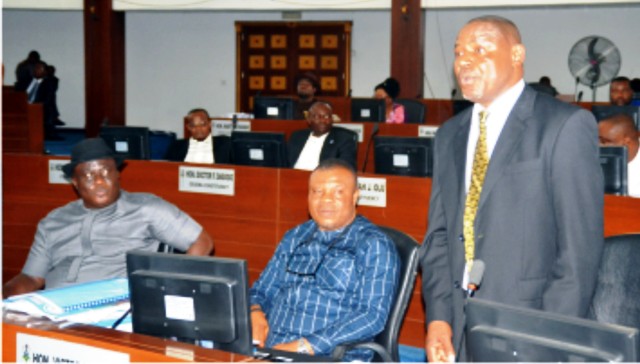
Some beneficiaries of the scholarship scheme put in place by the Federal Government through the Niger Delta Development Commission (NDDC), have alleged that the commission has abandoned them.
In interviews with newsmen, the scholars who craved anonymity said they had been subjected to unfair and inhuman treatment by the commission since 2016.
The affected beneficiaries are Masters and PhD students of Niger Delta origin who won the scholarship awards in 2014 and 2015.
They alleged that their ordeals started when the leadership of the current NDDC board assumed office in November, 2016.
The beneficiaries were also carefully positioned to study courses considered to be of developmental benefit to the region; such as Engineering, Law, Environmental Sciences, Public Health, ICT, among others.
In January 2015, the NDDC advertised for scholarship vacancies in several national dailies and on its website.
Successful candidates were consequently issued award letters, a copy of which was made available to our source.
The value of the scholarship, according to the aggrieved scholars, was put at $30,000.
A successful scholar on arrival and registration at the foreign university was expected to ask the university to send an invoice for tuition fees to the NDDC via designated email addresses of officials in the education unit.
According to one of the scholars, “After settlement of tuition fees, the balance left (if any) out of the $30,000 was paid simultaneously to the scholar’s bank account in the local currency of the scholar’s country of study.
“A PhD scholarship is worth $30,000 per annum for three years making a total of $90,000, while a Masters scholarship is worth $30,000 for just one year.
“This has been the standard practice since the inception of the scholarship; albeit there are always delays as the NDDC has become very notorious for shabby treatment of her scholars among all national scholarship bodies,” the source said.
But some of the affected scholars, in email correspondence, said the last payments were made in March and August, 2016, under the interim management of Mrs Ibim Semenitari.
“Scholars were asked to provide invoices from their universities as far back as August, 2016, to prevent the usual delays,” they said in the correspondence.
“Sadly, payment was not effected until she was removed, and the substantive board led by its Chairman, Senator Victor Ndoma-Egba and Managing Director, Mr Nsima Ekere came on board in November, 2016. The scholarship funds have been set aside in the NDDC budget as stated in the 2015 and 2016 Appropriation Act.”
The aggrieved scholars, however, alleged that they have been labelled ‘ghost scholars’ and ‘PDP scholars.’
Investigations show that at some point in June, 2016, the beneficiaries wrote in a jointly signed petition, the Education Unit of the NDDC asked scholars to send in valid proof of current study status which most of them complied with.
“The MD has granted several press interviews alluding to the fact that he is investigating monumental corruption in the administration of the scholarship,” they wrote.
“Numerous committees have been set up and it seems that they have run out of excuses to pay us our monies. We wonder how long it takes to investigate cases of authentic scholars from fake ones in this time and age when any information is available at the click of an email,” they queried.
Our correspondent gathered that some of the PhD scholars have abandoned their programmes due to withdrawal of their student visas as a result of non-payment, while some of the Masters students who completed their studies without the scholarship payment have had their certificates withheld by the university.
The affected scholars also alleged that appeals made to the NDDC management, and the minister for Niger Delta Affairs have yielded no positive result as the respective foreign universities with students from the NDDC have made countless appeals for payment without success.
“Most times, they have had to fly in their representatives to NDDC Headquarters at Port Harcourt-Aba Road, Port Harcourt, in Rivers State, to personally beg for settlement because their emails and phone calls are shunned by the NDDC,” the scholars claimed in their petition.
One of the beneficiaries of the Masters scholarship scheme, Maryleen Ndubuaku, narrated her ordeal:”I am expected to graduate with excellent grades to help me actualise the goal of this scheme which is to contribute to building our great nation.
“This is really difficult considering that I have to think of how to survive and pay my bills; the thought of which constantly distracts my focus from my daily academic duties,” the M.Sc. student of Embedded Microelectronics and Wireless Systems, at the Coventry University, United Kingdom said.
But when contacted, Special Assistant on Media to the Minister of Niger Delta Affairs, Ojifo-Raphael Undiandeye, debunked claims that the scholars had been abandoned.
“They wrote the honourable minister, he minuted on their letter and forwarded it to the MD of NDDC. At one other time, he (the minister) said he went to the NDDC commission itself in Port Harcourt and saw a list where the MD was making approvals for payment of scholars,” Undiandeye said.
“To the best of my knowledge, a good number of them have been paid but we are still surprised that some of them are still complaining that they have not been paid. The challenge we are having is that, the commission is saying some of them are not authentic scholars or that some of them actually transferred in the process of admission: that is to say, someone in the NDDC records, for instance, were given scholarship in, say, University of Port Harcourt in Rivers State and they are bringing the receipts of University of Ibadan, Oyo State.
“They may be authentic scholars, but because they changed schools (and courses) without due information or without due recognition of the commission, the commission is lost as to whether they are authentic scholars or not. But for those ones who did not tamper with their admission processes, they don’t have issues,” the minister’s aide said.
Commenting further, he said that the NDDC “feels that in this era of change, some people are defrauding the commission of funds.”
He, however, advised the affected scholars to table their concerns before the commission rather than resort to social media attacks.
“Rather than going to the social media to create the impression that the NDDC is corrupt and refusing to pay their fees, let them tackle the problems properly because the MD has said that those who the commission owed fees, he has paid.
“Definitely, there would be few skirmishes here and there; people who have not been paid as a result of one or two difficulties, their cases should actually be addressed, if they are attending the school approved by NDDC. That is not a serious issue,” he added.
When told that the scholars had alleged that they were authentic scholars genuinely certified by the NDDC, he attributed further skirmishes to gaps in communication.
“If that is true, then there is a breach of communication between the commission, the students and the universities, and that has to be reconciled,” he said.
“I can’t authoritatively say that they have made all outstanding payments. All I can authoritatively say is that the commission has started paying to a good number of them; that was because my principal said that he saw when the MD (of NDDC) brought a list to approve payment for a good number of them. Whether that was all of them, I do not know.
“Let them cool down and write in details what the challenge is because the truth is that, people are defrauding the NDDC and NDDC is trying to stop it. I hear someone said that the commission claimed that several people were laying claims to scholarship funds over scholarship awards they did not receive. And that’s why the commission is being very careful, especially in this era of change.”
On allegations that some of the scholars were being treated badly because they were beneficiaries of the scheme in the last administration, Undiandeye dismissed the claim as untrue.
“It has absolutely nothing to do with that. I think the major challenge is documentation skirmishes here and there, otherwise the commission in this era is responsible,” he explained.
Efforts to ascertain whether all outstanding payments being owed the scholars had been made by the NDDC were futile.
However, when contacted, one of the commission’s media officers, Dayo Ibitoye, declined to speak on telephone.
When probed further, he requested a text message.
Several days after the text messages were sent, he has not replied.
The Tide reports that the NDDC is an interventionist agency that was set up in 2000 by the Olusegun Obasanjo administration as a replacement to the defunct Oil Minerals Producing Areas Development Commission (OMPADEC).
The NDDC Act 2000 empowers the commission to receive statutory appropriation of three per cent from oil derivation revenues as special allocation in addition to 0ne per cent Ecological Fund from the nine states of Abia, Akwa Ibom, Bayelsa, Cross River, Delta, Edo, Imo, Ondo and Rivers, to enable it improve the welfare of the people of the oil-rich Niger Delta region.
As part of its mandate, the NDDC scholarship scheme was set up to improve the manpower capacity of Niger Delta youth by sponsoring them for Masters and PhD programmes in universities abroad.
Susan Serekara-Nwikhana

News
Fubara Reaffirms Commitment To Peace, Unity And Development As Rivers State Marks 59TH Anniversary


Governor of Rivers State, His Excellency, Sir Siminalayi Fubara, has reaffirmed the unwavering commitment of his administration to peace, unity, security, and inclusive development as Rivers State marks its 59th anniversary.
In a goodwill message issued on Wednesday to commemorate the anniversary, Governor Fubara stated that despite the challenges faced over the years, the people of Rivers State have continued to demonstrate resilience, strength, and an enduring spirit of unity that has sustained the state since its creation.
The Governor noted that the strong bond of brotherhood among the various ethnic nationalities of the state, including the Ijaw, Ikwerre, Ogoni, Etche, Ekpeye, Andoni, Kalabari, and others, remains one of Rivers State’s greatest strengths and a critical foundation for peace, stability, and progress.
He further observed that Rivers State has remained a major driver of Nigeria’s economy for decades, not only because of its abundant oil and gas resources, but also because of the exceptional contributions of its people across diverse sectors including academia, jurisprudence, business, entertainment, public service, and sports.
Governor Fubara assured the people that his administration will continue to prioritize policies and programmes that promote peace, protect lives and property, and expand development across all parts of the state. He emphasized that governance must be people centered and impactful, with equal attention given to every Local Government Area of the state.
The Governor also paid tribute to the elders and founding leaders of the state for preserving the spirit of unity and coexistence over the years, while urging the youths to remain hopeful, responsible, and actively committed to building a greater Rivers State through innovation, hard work, and patriotism.
He equally acknowledged the invaluable role of women in strengthening families, communities, and society, describing them as indispensable partners in the continued growth and stability of the state.
Governor Fubara called on all Rivers people to use the occasion of the anniversary as a moment of reflection and renewed commitment to peaceful coexistence, mutual respect, dialogue, and collective progress, stressing that the unity and future of Rivers State must always rise above personal interests and political differences.
Rivers State was created on May 27, 1967, when the administration of General Yakubu Gowon (Rtd.) created twelve states out of the former four regions of Nigeria, with Rivers State carved out of the defunct Eastern Region.

Rivers State Governor, Sir Siminalayi Fubara, has commended the leadership of the All Progressives Congress (APC) in Rivers State over the outcome of last Saturday’s presidential primary election that saw President Bola Ahmed Tinubu sweeping the poll with a total of 280,082 votes.
Fubara, who served as the State Collation Officer for the primary election, said that while the APC had a total of 297,068 registered members, the number of those accredited for the election was 280,082.
According to him, all those accredited for the election, cast their ballot for Tinubu, leaving Stanley Osifo, his only opponent, with no votes.
Fubara expressed delight at the peaceful and seamless process which he said was as a result of good planning by the party.
“I feel that this process has recorded one of the most organised outings of our great party in recent times. The only reason it came out this way has to do with good planning. In all, I want to say that I’m really impressed with the process.
“So, I can say here that having taken time to go through the figures diligently, I, Siminalayi Fubara, who is standing as the State Collation Officer, hereby certify that the information contained in my own spreadsheet represents the true, correct and accurate record of the summary of results from the 23 LGAs of Rivers State,” he said.
The governor said that while it was evident that President Tinubu defeated his opponent in the primary election in the State, the report would be sent to the APC headquarters in Abuja where the results will be formally declared.

The Federal Government has called for increased private sector participation and donor funding to sustain ongoing gains in the Ogoni environmental restoration project under the Hydrocarbon Pollution Remediation Project.
Speaking at a conference on donor facilitation and diplomatic support for HYPREP in Abuja, yesterday, the Minister of Environment, Balarabe Lawal, stressed that the Ogoni cleanup programme was designed as a long-term intervention requiring sustained funding, technical support, and international cooperation.
“The project is supposed to be a lifespan project. We must move towards achieving its main aim, which is environmental restoration and sustainable development,” he added.
Lawal acknowledged the contributions of the United Nations Environment Programme, describing its assessment as the scientific foundation of the ongoing remediation efforts in Ogoni land.
“We are all here because of that UNEP report. It provided the scientific foundation for what has become one of the world’s most ambitious environmental remediation programmes,” he said.
According to him, hundreds of hectares of hydrocarbon-polluted land have been remediated, while additional sites are currently undergoing cleanup operations.
“We have remediated hundreds of hectares of polluted land, and more sites are still being worked on. Water schemes have also been delivered to affected communities,” he stated.
He added that ecosystem restoration, livelihood support programmes, and healthcare projects were ongoing across affected communities.
“Body health facilities are being constructed, livelihood programmes are empowering thousands, and we are also restoring access to safe drinking water because the first victim of pollution is water,” he said.
The minister also disclosed that the Centre of Excellence for Environmental Restoration was nearing completion, describing it as a major milestone in the project.
“If you go there, you will see one of the biggest edifices being constructed under HYPREP. It will serve as a postgraduate and research institute for environmental remediation,” Lawal said.
Despite the progress, he warned that funding challenges remain a major threat to sustaining the project.
“While substantial progress has been made, the journey is not yet complete. The implementation of UNEP recommendations requires long-term commitment and sustained financial and technical support,” he said.
Lawal therefore, appealed to development partners, donor agencies, international financial institutions, foundations, and private sector players to scale up their support.
“We need your support—financial, technical, scientific, and strategic. No organisation or government can do it alone,” he said.
He further described the Ogoni cleanup as a global model for environmental recovery, climate resilience, and international cooperation.
“The restoration of Ogoni land is not merely a Nigerian undertaking; it is a global model. Its success will show what is possible when governments, communities, and partners work together,” he added.
Also speaking, the Chairman of the Board of Trustees of the Ogoni Trust Fund, Emmanuel Deeyah, said the conference was organised to attract financial, technical, and institutional support for the cleanup exercise.
“We are looking for resources, financial support, expertise, partnership, and collaboration. Government cannot do everything alone,” he said.
Deeyah said the agitation for environmental justice in Ogoni dated back to 1991 when residents drew global attention to the environmental degradation caused by oil exploration activities.
“We farm in Ogoni land and we also fish, but our waters were polluted and the land could no longer support farming activities,” he said.
He explained that the UNEP report recommended that oil companies should contribute $1bn every five years for 30 years to support the remediation programme.
“We have done 10 years now and we have not even received the full $1bn that was supposed to be contributed. The refineries and local operators have not contributed a dime,” he stated.
Last week, the Hydrocarbon Pollution Remediation Project announced the closure of 30 contaminated sites in Ogoniland, Rivers State, while investigations have commenced on 18 high-risk polluted locations in residential communities.
-

 News17 hours ago
Court Sentences Seven To Death Over Murder Of Cleric In Rivers
-
 Politics15 hours ago
APC PRIMARIES: FUBARA’S WITHDRAWAL, HISTORIC SACRIFICE FOR NATIONAL STABILITY ……. GROUP
-

 Sports14 hours ago
PH Arsenal Community Set For Streets Procession, Saturday
-

 News1 day ago
Group Hails Tinubu, Chinda Emergence
-

 Politics15 hours ago
IPAC Flays INEC Over Election Guidelines Judgement
-

 Sports15 hours ago
NPFL: Rivers United Finishes Second, Secures Continental Ticket
-

 Politics15 hours ago
NDC To Adopt Electronic Voting For Future Primaries
-

 Sports15 hours ago
Stakeholders Laud GTI On NPFL Partnership