Connect with us

Education

‘Reading Culture, Key To Success In Life’

Published

on

A specialist in youth development, founder and coordinator, Young Minds International (YMI), a non-governmental organisation,  Mrs Ibinabo Celestine Ogolo, has identified the culture of reading among secondary school students as key to achieving  success and greatness in life.
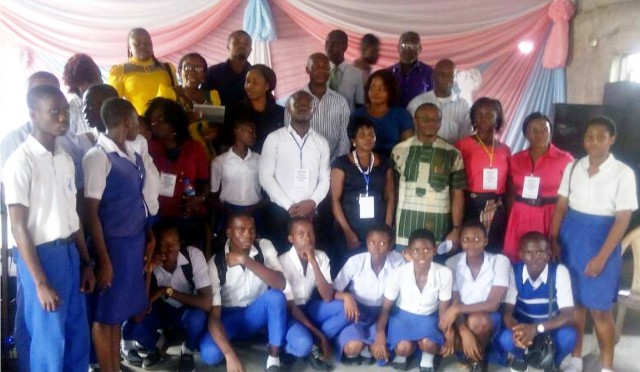
Ogolo, stated this at a one-day seminar tagged, “The Importance of Education and the Nigerian Child: What Hope for the Future,” organised by the Vision of Effective Education Advocacy (EEAG), at Community Senior Secondary School, Kalio-Ama, last Tuesday.
She explained that what can change a person’s life was in a book, and enjoined young people to imbibe reading culture in order to be successful in life.
Represented at the occasion by the Treasurer, Nigeria Association of Women Journalists (NAWOJ), Rivers State Chapter, Mrs Susan Serekara-Nwikhana, said that true greatness resides in the determination to achieve excellence in one’s chosen career.
In her keynote address titled: “Think Great, Choose Right,” Ogolo stated that: “A great life can be acquired as a result of allocating your time, energy, thoughts and hard work towards what you want to be in life, ever remaining focused, dedicated and committed to harnessing the great potentials deposited in you in order to attain greatness in life”.
“It is not about wasting precious time indulging in negative vices such as disobedience to parents and the elderly, stealing, examination malpractice, cultism, premarital sex, watching of pornographic movies, abortion, negative peer influence, among others,” she added.
She emphasised that a great life does not happen by chance, but through God’s wisdom to think, resourceful, adding that embedded in man are natural abilities, skills, talents and spiritual gifts that could make one great and successful in life.
While exploring the theme of the seminar, Ogolo said it can transform the educational system in Nigeria, if everyone, especially among primary, secondary, tertiary institutions’ students imbibes the culture of reading.
“Education and reading are a sine-qua-non to good life. They are two trending words that could easily transform the fortunes and status of an individual, society and country at large, if properly imbibed by everyone, especially those who have the capacity to become great,” Ogolo said.
In his opening remarks, Chairman of the occasion and Director, Rivers State Secondary Schools Board, Okrika Zone, Mr Mpaka Daniels, thanked the organizers, Daniels commended the EEAG for the noble idea, adding that since they came on board, the Senior Secondary School, Kalio-Ama, has remained the best  and described the group as trail-blazers.
In his address of welcome, the Principal of Community Secondary School (CSS), Kalio-Ama, Mr Dafuro Papamie George, said the seminar was aimed at sensitizing and encouraging the students to discover, and actualise those inherent positive potential in them, adding that it was very important that they become useful to themselves, and contribut, meaningfully to the society and the country at large.
Also speaking, the Chairperson, EEAG, Mrs Asikiye Promise, said the group was formed to address the poor attitude of students as well as assist them to develop the boundless opportunities education offers, and  expressed optimism that having discovered the solution to the above challenges; the body was hopeful that it would reverse the ugly trend.
In their various presentations, Dr Dumoateli Iboroma, who delivered a lecture on the  “Dangers of Unwanted Pregnancies and Prevention from Sexually Transmitted Diseases and Infections (STDs and STIs),” described unwanted pregnancy as ‘one that is not planned or ready to have,’ and enjoined students to have positive dreams and work towards actualizing them.
He urged them to desist from acts capable of resulting into early or unwanted pregnancies, and infections, especially STDs, STIs, and Vesico Virginal Fistula (VVF).
In their presentation, Old Girls of  Government Girls Secondary School, Harbour Road, 1983 set, Miss Adiki Ndamioku and Mrs Grace Manson Endeboh, who spoke on the topic “Problems Associated with Adolescent Sexuality,” attributed the increase in premarital sexual activities to the high level of poverty, hunger, lack of unemployment and large population of unskilled youth in the society.
Some students who spoke at the end of the seminar described the programme as good one that would impacted positively in their lives.

Susan Serekara-Nwikhana

Continue Reading

Education

Professor Olonisakin Seeks More Funding for Research On Medicinal Plants, Laboratories

Published

on

An organic chemist at Adekunle Ajasin University, Akungba Akoko, Professor Adebisi Olonisakin has charged the government and relevant stakeholders to strengthen investment in research that explores the various known and undiscovered health and industrial potentials of plant secondary metabolites, in order for ‘Africa to evolve organic, home-grown methods of tackling health challenges if it must preserve its population and save its economy’.
He made this call on Tuesday, March 24, 2026, while delivering the 57th inaugural lecture of the institution titled ‘Nature’s Pharmacy: Unlocking the Secrets of Plant Secondary Metabolites’.
He further advocated sustainable governance principles, encouragement of conservation efforts and clubs, establishment of botanical gardens, biotechnology research units, approval of complementary herbal medicine, and setting up of laboratory infrastructure and central analytical facilities as avenues to getting the most from nature.
Prof. Olonisakin posited: ‘Secondary metabolites are nature’s valuable compounds that have contributed significantly to human well-being, safety and economic activities. These compounds have been a rich source of medicines, food additives, and other valuable products. Their diverse biological activities and potential applications make them an important area of research, offering new opportunities for improving human health and quality of life.
‘The isolation of secondary metabolites from plants has led to the discovery of numerous bioactive compounds with potential applications in medicines, agriculture and other industries. These compounds have shown promising results, making them attractive candidates for further research and development in order to uncover more of nature’s hidden treasures.’
Professor Olonisakin said secondary metabolites are natural compounds found in leaves, roots, bark and seeds of plants that protect them from insects and infection, adding that scientists study these plant chemicals to produce drugs for treating illnesses.
While affirming that nature can be seen as a pharmacy because it provides healing substances, the organic chemist urged students and researchers to pay attention to local plants, saying that Nigeria is blessed with many medicinal plants whose properties are yet to be fully discovered and utilised to help improve healthcare and boost the country’s economy.
Prof. Olonisakin noted that mosquito-borne viral diseases such as malaria continue to pose significant global health challenges with increasing resistance of mosquitoes to conventional insecticides. This, he said, has created an urgent need for alternative vector-control strategies through further research and development of plant secondary metabolites.
He, however, stressed the need for intentional scientific research into beneficial and safe plant-derived compounds, noting that genetic and environmental factors significantly influence the efficacy and chemical composition of plant secondary metabolites.
The chemist highlighted some of the challenges associated with secondary metabolites research to include complicated extraction process, low yield of secondary metabolites in sources, compound instability, structural diversity, high-demanding purification techniques, and limitations in analytical techniques.
To address these challenges, Prof. Olonisakin called on the Nigerian government to adopt integrated management principles that include responsibility, scale-matching, precaution, adaptive management, full cost allocation and stakeholder participation. He added that large-scale botanical gardens be established in all Nigerian states to conserve and manage useful plants effectively.
He also urged relevant stakeholders to encourage the establishment of conservation awareness and clubs from primary schools to universities and across local communities.
While presenting the inaugural lecturer, the Vice Chancellor and Chairman of the occasion, Prof. Olugbenga Ige, described Prof. Olonisakin as a distinguished scholar whose work sits at the intersection of tradition and science, as well as nature and human well-being. He commended him for his unwavering commitment to solution-driven research that advances knowledge within the university and benefits society at large.
Continue Reading

Education

Over 10,000 Teachers Register for TRCN Exam

Published

on

The Teachers Registration Council of Nigeria (TRCN) on Wednesday, March 25, 2026, announced that over 10,000 teachers across the country have successfully registered for its upcoming Professional Qualifying Examination (PQE) scheduled for May 14 to 16, 2026. The development is being seen as a major sign of growing confidence in the council’s digital registration platform, which has become central to teacher licensing and certification in Nigeria.
According to TRCN Registrar and Chief Executive, Dr. Ronke Soyombo, the high turnout reflects increasing trust in the portal’s ability to manage registration, licensing, and certification efficiently on a national scale. She explained that although the system faced early technical difficulties after its September 2025 launch, those issues were largely caused by heavy traffic, system upgrades, and users adjusting from manual to digital processes.
Soyombo further stressed that the portal is now operating smoothly and remains the only approved channel for TRCN registration, warning teachers against unofficial third-party agents or fraudulent form sales.
Beyond the numbers, the milestone represents a broader shift in Nigeria’s education sector toward digital efficiency, transparency, and professional standardisation, with the TRCN positioning itself as a key driver of modern teacher regulation.
Continue Reading

Education

ESUT flags off construction of 1,600-capacity ultramodern students hostel

Published

on

The Enugu State University of Science and Technology (ESUT) has flagged off the construction of a 1,600-bed ultramodern students’ hostel as part of efforts to tackle the growing demand for accommodation driven by rising student enrolment.
Speaking at the event, the Vice Chancellor, Prof. Aloysius-Michaels Okolie, disclosed that the project had a completion timeline of 12 months, describing it as a strategic intervention aimed at improving students’ welfare and enhancing academic productivity.
He attributed the university’s recent strides to what he termed the “disruptive innovation” model of Governor Mbah’s administration, noting that ESUT’s management had aligned with the vision to deliver measurable results rather than mere promises.
“This is a management driven by demonstration and practicality. We have keyed into the governor’s philosophy of innovation, and that is why we are recording visible progress,” Okolie said.
The Vice Chancellor particularly lauded Governor Mbah for his forward-looking investments in technology and education, highlighting the approval of an Artificial Intelligence Application Centre at the former NCC facility in Nike.
According to him, the centre will serve as a practical hub for research, training, and certification in emerging technologies, positioning ESUT at the forefront of digital transformation in Nigeria’s tertiary education space.Nigeria investment guide
He further disclosed that, with the governor’s backing, the university had commenced plans to send selected academic staff to leading global centres in cities such as Doha and Dubai for specialised training in Artificial Intelligence, adding that the initiative would enable the institution to import global best practices and build a critical mass of experts capable of driving innovation and research.
Okolie also commended the governor for providing consistent and massive support to the institution, including funding for critical infrastructure, recruitment of academic and non-academic staff, and ongoing interventions at the College of Medicine and Teaching Hospital.
According to him, ESUT has witnessed a sharp increase in its admission quota, rising from about 2,842 in 2022 to over 8,700 currently, a development that has intensified the need for expanded accommodation facilities.
Okolie added that the university was repositioning itself as a model of a modern institution, citing ongoing reforms, completion of previously stalled projects, and a renewed focus on quality delivery.
In his goodwill message, the TETFund Executive Secretary, Arc. Sonny Echono, said the hostel project reflected the agency’s commitment to strengthening tertiary education through impactful interventions, noting that the initiative would significantly improve student accommodation and enhance teaching and learning outcomes.
Echono, who was represented by the South East Zonal Coordinator, Mrs Catherine Onuoha, also commended the governor for fostering an enabling environment for educational development and urged contractors to adhere strictly to approved standards and timelines.
Also speaking, the representative of Africa Plus Nigeria Ltd, Dipo Lawore, described the project as part of a broader national programme to address the acute shortage of student housing across tertiary institutions, stressing that the ESUT hostel would feature modern facilities including reading rooms, a cafeteria, 24-hour security, laundromat, and en-suite rooms designed to provide comfort and safety for students.Nigeria investment guide
The firm noted that the project was being funded through a partnership involving TETFund, Family Homes Funds Limited, and Africa Plus Partners, with TETFund providing 25 per cent of the funding, while the private partners cover the remaining 75 per cent.
The Student Union Government representative, Comrade Okeke Raphael, praised both the governor and the Vice Chancellor for their commitment to transforming ESUT into a world-class institution.
He noted that the new hostel would significantly ease the burden of rising accommodation costs on students and improve their learning environment.
In a similar vein, the host community, represented by the traditional ruler of Umueze Community, Igwe Emeka Ani, described the project as timely and inspiring.
He commended the governor’s developmental strides across the state and assured the university management of continued support and cooperation from the community.
Performing the foundation-laying ceremony, Governor Mbah lauded the Vice Chancellor for what he described as proactive and result-oriented leadership, noting that the university’s progress was a reflection of effective alignment with his administration’s vision.
“I must commend the Vice Chancellor for being a strategic game changer. The success stories we have heard today show clear alignment with our governance philosophy,” the governor said.
He also expressed appreciation to TETFund and other development partners for their contributions, assuring that his administration would continue to prioritise education by providing the right infrastructure and support systems.
Mbah added that the project underscored the state’s commitment to innovation, academic excellence, and community development, expressing optimism that ESUT would continue to evolve as a hub for knowledge, research, and progress.
Continue Reading

Trending