Connect with us

Business

Experts To Develop Commercial Models For Cassava

Published

on

Experts working on the project to develop commercial models for cassava seed system in Nigeria will meet at International Institute of Tropical Agriculture (IITA), Ibadan, tomorrow to map out strategies for development.
A statement by the IITA Communication Specialist, Mrs Adaobi Umeokoro, said that the experts would meet to strategise on how the potential of emerging cassava technologies could harnessed to create wealth for all.
The statement said that the experts were planning to develop a sustainable mechanism through which smallholder farmers could get timely and affordable access to high-quality planting materials such as improved cassava varieties.
It said that they would consider how to make cassava, an important staple crop for millions of families in sub-Saharan Africa, more profitable for those whose livelihoods and sustenance depended on it.
“ Building a Sustainable, Integrated Seed System for Cassava in Nigeria (BASICS) project will hold its first annual review and planning meeting.
“It promises to strategise on the best available options for making planting materials of superior variety and quality readily available and accessible to Nigerian farmers at the appropriate time, place, and price,” it said.
The statement quoted the Project Director, Dr Hemant Nitturkar, as saying that although Nigeria was the largest cassava producer in the world, its average yield of about 14 tonnes/ha was less than half of what could be produced in a realistic way.
“Given the potential of this crop and the vast number of Nigerians depending on it, there is an urgent need for improvement at all levels of the cassava value chain.
“Increased adoption of improved varieties and usage of quality materials have the potential to improve the productivity of cassava, thus positively impacting on food security and livelihoods in Nigeria.
“It can earn valuable foreign exchange for the country through increased exports and import substitution; BASICS is catalysing the build-up of a sustainable seed value chain in Nigeria,” he reportedly said.
The statement said that Nitturkar stressed that BASICS would sensitise farmers to the need to use high-quality seeds of improved varieties to achieve higher net profits from cassava cultivation.
“BASICS is piloting two business models for seed multiplication and distribution.  The first is a decentralised Village Seed Entrepreneur (VSE) model, where over 130 VSEs will be developed in Benue, Abia, Imo, Akwa-Ibom, and Cross River states.
“The second is the Processor Led Model (PLM), where cassava processors will multiply good quality improved cassava varieties for supply to outgrowers to plant under a buy-back arrangement for the roots produced.
“The project has developed an online platform called Cassava Seed Tracker (CST) to facilitate easy registration of seed producers and real time monitoring of field inspections and certification by National Agricultural Seed Council (NASC).
“CST is also designed to link seed producers with needy farmers and many more features will be added to this platform over time.’’
The statement said that Nitturkar emphasised that the project would also address one of the key bottlenecks of cassava seed system, which was slow and low seed multiplication ratio.
“It is piloting the use of an innovative rapid seed multiplication technology called Semi Autotrophic Hydroponics (SAH), which has been successfully used in commercial potato seed multiplication in Argentina.
“SAH is expected to significantly help the cassava seed system by enhancing the capacity of pre-BASICS and BASICs seed producers to make available adequate quantities of certified planting materials of improved varieties for further multiplication by certified seed producers.
“The technologies and models being piloted in this initiative are tailored towards creating a win-win scenario for farmers, processors and seed entrepreneurs in Nigeria.
“The processors benefit from an assured supply of better quality cassava roots for processing.
“Youths and women, among other seed entrepreneurs, benefit from an expanding cassava seed market as an economic opportunity and the nation benefits from the resulting enhanced productivity across the cassava value chain,” Nitturkar said in the statement.
The project director said in the statement that BASICS, a four-year project (2016-2019), was funded by the Bill & Melinda Gates Foundation.
“The project partners include the NASC, National Root Crops Research Institute (NRCRI), Context Global Development, Food and Environment Research Agency of the UK (FERA), among others,” Nitturkar was quoted as saying.


Continue Reading

Business

Niger Delta Investment Summit Targets $5bn Inflows, 500,000 Jobs

Published

on

The Niger Delta Chambers of Commerce, Industry, Trade, Mines and Agriculture (NDCCITMA) has unveiled the plans to host a major economic and investment summit aimed at attracting five billion dollars, ( N7 trillion) investments in addition to creating about 500,000 jobs over the next five years.
The Chairman of NDCCITMA Board, Ambassador Idaere Ogan, disclosed this in Port Harcourt, recently.
Ogan stated  that the initiative is designed to reposition the Niger Delta as a viable destination for sustainable economic growth and development.
He explained the summit would bring together investors, policymakers, manufacturers and business leaders from within and outside Nigeria to explore opportunities across key sectors of the regional economy.
According to him, the event is expected to attract high-profile participation, with President Bola Tinubu billed as Special Guest of Honour, while the Prime Minister of Barbados, Mia Amor Mottley, is expected to deliver the keynote address.
Ogan said the summit would focus on critical sectors including agriculture, manufacturing, logistics and the blue economy, which he described as areas with significant untapped potential.
He called on state governments, development partners and private sector stakeholders to support the initiative, stressing that collective efforts are required to unlock the region’s economic prospects.
 NDCCITMA chairman further stated that improving security conditions and increasing economic confidence in the Niger Delta have made the region more attractive to both local and foreign investors.
He emphasised that ongoing economic reforms at the national level have also contributed to creating a more favourable investment climate.
Also speaking, the Chairman of the Summit Organising Committee, Dr. Solomon Edebiri, said the event would prioritise the growth of small and medium-scale enterprises (SMEs) across the region.
He noted the summit would provide a strategic platform for networking, business partnership and policy dialogue aimed at strengthening the private sector.
Edebiri disclosed that findings from a recent business roundtable revealed significant untapped investment opportunities, which the summit seeks to harness through targeted collaborations.
He revealed that the event would feature exhibitions of viable projects, facilitate business-to-business and business-to-government engagements, and also promote innovations across multiple sectors.
According to him, the expected outcomes of the summit include job creation, increased industrial activity and improved livelihoods for people in the Niger Delta.
To build momentum ahead of the event, NDCCITMA said the body would embark on awareness roadshows across states in the Niger Delta, as well as in Lagos and Abuja, to attract broad participation.
King Onunwor
Continue Reading

Business

NPA Targets N1.489tn Revenue In 2026

Published

on

The Management  of Nigerian Ports Authority (NPA) has set N1.489 trillion as its Internally Generated Revenue (IGR) target for the 2026 fiscal year.
NPA says the figure represents an increase of N21 billion over the N1.468 trillion target for 2025, which the agency exceeded with an actual revenue of N1.97 trillion.
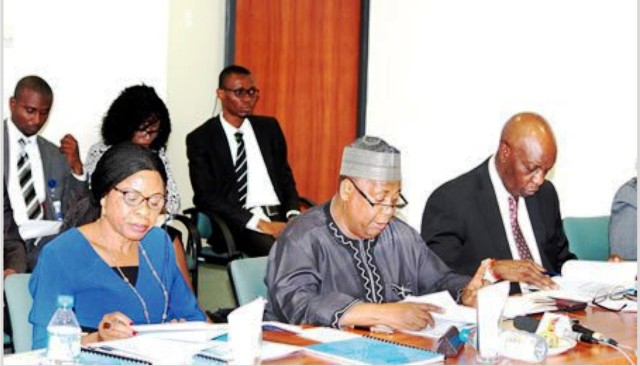
 The Managing Director NPA, Dr Abubakar Dantsoho, stated this  during the agency’s 2026 budget defence before the Senate Committee on Marine Transport.
Dantsoho said  the authority was set to begin groundbreaking projects for the modernisation of Apapa and Tin Can Island ports to enhance global competitiveness.
According to him, of the projected revenue: N945 billion is allocated for capital projects, N447.5 billion for operating expenses, and
N90.6 billion for remittance into the Consolidated Revenue Fund (CRF).
The MD explained that the budget was anchored on the mantra, “Consolidation, Renewed Resilience and Shared Prosperity.”
Dantsoho said that the modernisation of Apapa and Tin Can Island ports were flagship projects aimed at boosting revenue.
“Apapa and Tin Can Island ports are old and no longer adequate for modern global port operations.
“Apapa Port is about 100 years old, while Tin Can Island Port is over 50 years old, with limited capacity for handling modern vessels and cargo volumes.
“Groundbreaking for their modernisation will commence within the next two to three weeks,” he added.
On the Treasury Single Account (TSA), Dantsoho said all revenues generated by the NPA are paid directly into the account managed by the Central Bank of Nigeria (CBN).
“We do not retain any funds. The Central Bank is the signatory and we must apply for funds whenever needed,” he explained.
Earlier in his remarks,Chairman of the Senate Committee on Ports, Sen. Wasiu Eshinlokun (Lagos Central), said the committee’s oversight function was collaborative rather than adversarial.
“Our goal is to work with you to strengthen institutional capacity, eliminate inefficiencies and ensure that every naira appropriated serves the public interest,” he said.
Chinedu Wosu
Continue Reading

Business

NPF Disburses ?21.68m  To Fallen Heros’ Families …Reinforce Welfare Commitment 

Published

on

Nigeria Police Force has disbursed a total of ?21,678,120 to the deceased police officers families in Rivers State as part of ongoing welfare interventions by the force.
The gesture formed a major highlight of the activities marking  the 2026 National Police Day celebration in the state, underscoring renewed institutional focus on personnel welfare and post-service support systems.
The Commissioner of Police, Olugbenga Adepoju, who presided over the cheque presentation ceremony, said the initiative reflects the Force’s commitment to honouring officers who paid the ultimate price in their line of duty.
He explained that the financial support is designed to cushion the economic burden faced by bereaved families, while also reinforcing confidence among serving personnel about the Force’s long-term welfare structure.
Adepoju conveyed the sympathy of the leadership of the Nigeria Police Force to the beneficiaries, noting that the sacrifices of fallen officers remain invaluable to national security and public safety.
The police boss further stressed that sustained welfare interventions are critical to boosting morale, enhancing productivity, and strengthening institutional loyalty within the Force.
He reiterated that the welfare scheme aligns with broader reforms aimed at repositioning the Nigeria Police Force as a responsive and people-oriented institution.
Beneficiaries of the cheques commended the Inspector-General of Police, Olatunji Rilwan Disu, for prioritising the welfare of officers and their families through consistent and impactful interventions.
They described the initiative as timely and compassionate, noting that it would go a long way in alleviating financial pressures arising from the loss of their loved ones.
The families also acknowledged ongoing reforms under the current police leadership, which they said have strengthened trust, improved service delivery, and enhanced the overall image of the Force.
The Rivers State Police Command reaffirmed its commitment to sustaining similar initiatives as part of efforts to uphold the dignity, sacrifice, and legacy of officers who served the nation with distinction.
King Onunwor
Continue Reading

Trending