
Business
Investments: NNPC Boss Tasks Firms On Collaboration

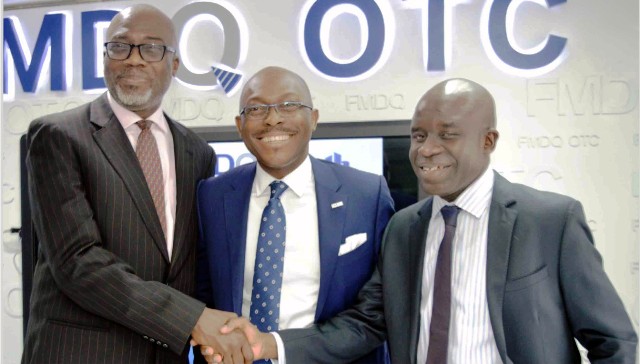
The Group Managing Director (GMD) of NNPC, Dr Maikanti Baru has advised indigenous oil companies to collaborate to drive oil and gas investments.
Baru gave the advice during the first edition of West African International Petroleum Exhibition and Conference (WAIPEC) organised by Petroleum Technology Association of Nigeria (PETAN) in Lagos last Wednesday.
The NNPC chief gave a keynote speech on ”Collaboration and Local Capacity Development as an Enduring Strategy in a Low Oil Price Environment’’.
Baru, who was represented by Dr Siky Aliyu, Managing Director, National Engineering and Technical Company (NETCO), said that indigenous companies should work together to weather the ongoing low oil prices.
According to him, the only way to weather the oil and gas sector challenges and stiffer international competition from international companies is for indigenous companies to collaborate.
He said that collaboration was also imperative for indigenous companies to reduce their cost of production and prices.
“Local companies must emulate the engineering companies in effective collaboration as there is the need to come together to position themselves for effective competition with international companies.
“The Nigerian oil and gas industry has been fortunate to have had previous and current regimes that recognised and promoted the establishment of institutions and enacted laws,’’ the NNPC chief said.
According to him, the success story of the Detailed Engineering Design (DED) of Topside of TUPNI’s Egina FPSO project delivered safely on time and within budget was an example of effective collaboration.
“A consortium of Nigerian engineering companies led by NETCO is a good example of successful collaboration and capacity development.
“Hitherto, no engineering project of this magnitude has been handled locally because no single local company had the capacity to do so.
“The NNPC management, in its wisdom, approved for three local companies to collaborate and support the local execution of this project.
“This decision paid-off.
“It has placed on record that over 80 per cent of the associated man-hours which was in excess of one million man-hours on a single project can be effectively executed in one project location in Nigeria.
“The collaborative success story of the DED of Egina FPSO project, which represents only a maximum of 10 per cent value chain of the FPSO, has indeed repositioned the Nigerian engineering companies.
“Rather than being the traditional competitors, they are now partners in progress and they are expanding their synergetic arrangements in readiness to take up other projects of this magnitude,’’ Baru stressed.
He listed other upcoming collaborative projects to include: SNEPCO’s Bonga South-West FPSO projects, NAE’s Zabazaba FPSO project, ExxonMobil’s Bosi FPSO Project, NLNG Train 7 or NLNG Debottlenecking Project.
“So much was achieved with DED which represents just about 10 per cent of a typical FPSO project.
“One can only imagine what other opportunities exist in the remaining 90 per cent of the project value chains in the procurement and construction scope of work,’’ the NNPC chief noted.
Baru said that the key to successful collaborations was to set shared goals, agree on rules of engagement at the onset and play by the rules to achieve a successful outcome.
Mr Anthony Okoroafor, the PETAN Chairman, said that the essence of the conference was to promote the region’s oil and gas industry.
Okoroafor said that it was also to set and seek industry best practices as well as to develop commercial opportunities for business and international investments.
He said the association appreciated the support of all exhibitors, adding that they were working to provide a cost-effective business platform.



Business
Jonathan, Diri, Others Laud Firm’s Milestone in Bayelsa …Says Project Will Drive Industrialisation, Create Jobs



-

 News2 days ago
RSG Targets Nine Million Residents in Mosquito Net Distribution Campaign
-

 Oil & Energy2 days ago
Aiyedatiwa Signs New Electricity Bill
-

 Maritime2 days ago
Marine Minister Commends President Tinubu On NPERA Bill Assent
-

 Oil & Energy2 days ago
NLNG Commissions Research And Innovation Centre In RSU
-

 News2 days ago
KenPoly Holds Eight Convocations, August 29
-

 News2 days ago
RSG Begins Another Phase of Projects Commissioning Today
-

 News2 days ago
RMAFC Completes Revenue Sharing Review, Proposes New Pay
-

 Maritime2 days ago
NAGAFF Petitions IGP Over Alleged Maritime Police Harassment