
Business
Disseminating Information For National Development

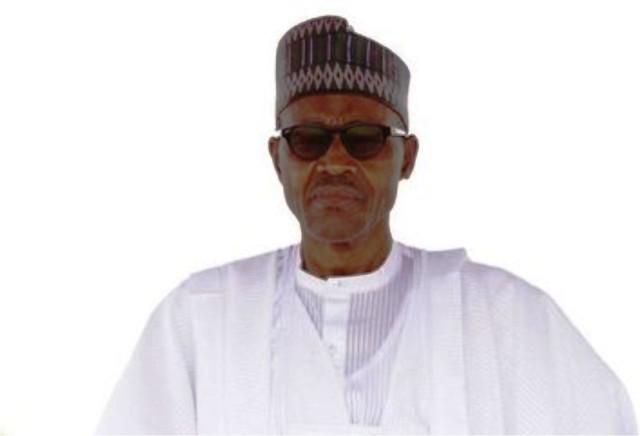
On November 11, 2015, President Muhammadu assigned 36 ministers with portfolios.
Buhari’s administration had compressed about 48 federal ministries it inherited from the immediate past administration of former President Goodluck Jonathan to 24 ministries.
With that, ministries such as Information, Culture, National Orientation and Tourism became one — Information and Culture — with Alhaji Lai Mohammed as the minister.
Though, the inauguration of the cabinet came after several months of Buhari’s swearing in as President on May 29, 2015, the ministers were directed to hit the ground running by decisive implementation of the government policies.
“Our new ministers must proceed to work speedily and do their utmost to justify the confidence we have placed in them not only by their conduct but also by their performance in their various positions,’’ the president said.
One year after, Nigerians have been asking how much has the Ministry of Information and Culture done in communicating and disseminating government programmes, activities and policies as well as in repositioning the culture and tourism sector.
In response to this, the minister said he had been able to inaugurate sensitisation campaigns on the fight against corruption, fight against insecurity and the need to revamp the economy and create jobs and wealth, among others.
“If you recollect, the first thing we did was to change the narrative on the Boko Haram crisis.
“Having realised that the determined effort of the government to turn the table against the insurgents was not receiving the necessary support and understanding from the people, we took a very dangerous but necessary trip to the heart of the Boko Haram crisis in the North-East.
“I led more than 30 local and foreign journalists to visit Bama, which was the headquarters of the self-declared caliphate of the insurgents, Konduga and Kaure.
“We, thereafter, returned to tell Nigerians that our gallant troops had massively degraded the capacity of the insurgents to carry out the kind of spectacular attacks that they used to carry out.
“Many accused us of engaging in propaganda. But the rare feat achieved by our military in decimating an insurgency has today become the subject of global acclaim,’’ he said.
The minister noted that the rare step he took and subsequent regular briefing and engagement of Nigerians on the efforts of the government at fighting the insurgents played significant role in the defeat of Boko Haram insurgents.
“Nigerians have taken ownership of the war and the insurgents are on the run, only throwing a few bombs here and there at vulnerable targets — what we call the last kicks of a dying horse,’’ he said.
Mohammed also said that the ministry had inaugurated the sensitisation campaign aimed at alerting Nigerians to the evils of corruption and the need to spare no effort in fighting it.
“The campaign strategy was to ensure that Nigerians got to know how corruption has affected their lives.
“For example, we told Nigerians that it was corruption that prolonged the war against Boko Haram and dispatched many soldiers and civilians to their early graves.
“We also told them that it was corruption that ensured that while oil was selling for more than 100 dollars per barrel, the country had nothing to show for the windfall, a situation that resulted in economic recession.
“We sensitised Nigerians to the fact that it was corruption that gave them darkness, instead of light, while successive governments pumped millions of naira into the power sector,’’ he said.
Mohammed recalled that with the efforts of the ministry in keeping the people informed using all available channels of communication; most Nigerian knew the effects of corruption and talked more negatively against it than at any other time.
He said the ministry also championed the campaign on the economy in an effort to keep Nigerians abreast of the various measures the government was using to end the recession as quickly as possible.
The minister, however, disclosed that in the last one year, the biggest challenge the ministry had faced in efforts to communicate with Nigerians had been the propensity of a group of “naysayers’’ who constantly used fake information to discredit the government by using the social media.
“Everyday, these groups of people deliberately distort our messages while also suffusing the atmosphere with their own version of information,’’ he said.
To counter the activities of the group, Mohammed said that the ministry initiated Town Hall meetings that allowed government officials to speak with Nigerians directly and also get the necessary feedback.
“We have held such meetings in Lagos, Kaduna, Kano, Uyo, Enugu and Abuja, during which ministers interacted directly with a cross section of Nigerians.
Considering its effectiveness, the minister said the ministry had lined up a series of more Town Hall meetings across the country.
With the breakdown of societal core values in the past year, Mohammed said that the ministry also initiated a national reorientation campaign entitled “Change Begins With Me’’ to restore the time tested values.
Mohammed said the campaign, inaugurated by the president on September 8, aimed at “achieving a paradigm shift in the way we do things and geared towards achieving attitudinal change’’.
He said the campaign would be inaugurated in all the states with the support of governors and would also be taken down to the grassroots and schools.
Similarly, he said the nation made history on April 30 with the successful inauguration of the pilot phase of Digital Broadcasting Switch Over in Jos.
He said the event was monumental considering the fact that the country had missed two previous switch-over deadlines.
“What we have dreamt of, imagined, attempted and what even seemed impossible at a stage, happened right before our very eyes.
“The journey that started in 2004, when the International Telecommunications Union Council adopted Resolution 1185 on transition from analogue to digital terrestrial broadcasting, is finally nearing its destination.
“When we came in, we found that everyone seemed to be working at cross purposes and the postponement of the pilot scheme seemed inevitable.
“But we said no, especially because we have missed two previous switch-over deadlines.
“We put our shoulder to the wheel and here we are! Now, we are ready to go from city to city until we have covered the entire length and breadth of our country by the June 2017 deadline,” he said.
Mohammed said that the ministry was targeting 30 million viewers across the country, which would make Nigeria the biggest free television market in the world.
He said, when completed, the switch over would revolutionise the broadcast landscape and architecture, democratised the right to be informed and also become the much-needed panacea to the menace of piracy dogging the music and movie industries.
The minister noted that the directive to all licensed Set Top Box manufacturers to establish manufacturing companies in the country to produce the boxes locally would create massive employment and ensure the transfer of technology.
The minister noted that the ministry had similarly developed the tourism sector, announcing that he had secured a two-year technical assistance programme with the United Nations World Tourism Organisation (UNWTO) to boost the sector.
He said the agreement also included, granting of unlimited access to designated Nigerian officials to the UNWTO’s e-library, and seconding of relevant Nigerian officials to the organisation’s headquarters under their internship programme.
“The UNWTO will soon deploy a needs-assessment mission to Nigeria, to be followed by the deployment of experts to train tourism officials.
“In the area of capacity building, the focus will be on the empowerment of women in tourism through the centres being planned for the six geo-political zones.
“They will help in training tour guides and festival managers while they have agreed on a special training workshop for tourism correspondents in Nigeria,’’ he said.
The minister insisted that the ministry had achieved more in the Culture, Tourism and the Creative sector of its portfolio.
He said among other sectors identified by the government as the veritable sources of revenue in the diversification programme were culture, tourism and the creative sector.
Mohammed said that the ministry had been, in the past one year, to move these sectors from the margins to the mainstream and ensure that the rural poor, in particular, were factored into the sector’s scheme of things.
Conscious of the challenges involved in repositioning the sectors and the need to carry along the strategic stakeholders in the reform process, he said the ministry called a national Summit on Culture and Tourism in April which he said was inaugurated by Buhari.
He said that in line with the decision reached at the summit, the ministry was far gone in the process of resuscitation of Presidential Council on Tourism, to lead the reform in the sector.
Mohammed also recalled that the ministry signed a memorandum of understanding with the British Council and the Tony Elumelu Foundation to create employment opportunities and promote sustainable grassroots development.
The Minister said that the agreement with the British Council signed in August in Edinburg, Scotland, aimed at reviving dormant cultural festivals and traditional games in the country.
“The agreement signed with the Chief Executive of the British Council, Sir Ciaran Devane, includes partnership to help train festival managers, revive the country’s major festivals and prevent traditional games from dying.
The minister said that the agreement with Tony Elumelu Foundation signed in October in Lagos aimed at transforming the creative industry to a source of foreign exchange earnings for the country.
He said that the areas of collaboration in the agreement included the creation of an enabling business environment for the creative industries with such incentives as easy access to finance.
Mohammed explained that the agreement included the structuring of the creative industries to enable it generate independent revenues locally and also boost exports to increase Nigeria’s foreign exchange earnings.
Considering the numerous achievements enumerated by the minister, concerned citizens observe that the ministry has done a lot in the development of the country.
They, therefore, urge the public to support the programmes of the Federal Government as presented by the Federal Ministry of Information, Culture and Tourism.
Ijikanmi writes for News Agency of Nigeria (NAN).
Rotimi Ijikanmi



