
Politics
Citizens’ Participation In A Democratic Government (lll)

The second part of this trilogy was published on Monday, August 22, 2016.
The operative word there
is “sustained” because it is possible to relapse from being a citizen to being a subject. Our experience in Nigeria and in Africa generally demonstrates this only too well. Through intensive political education and mobilization, the nationalist parties had rekindled the citizenship in the people which first manifested in their resistance to colonialism. But especially with the many years of military dictatorship, the people slipped back. Of course the people do come out to vote but this is only a perfunctory duty to fulfill all righteousness. The political parties have been only too comfortable to have the people return to the status of subjects. And this is because these politicians now behave like the colonial masters of our nightmares. Here we can paraphrase the late Claude Ake in lamenting that in Nigeria and Africa generally, we have democracies without citizens. That is, the people are not conscious of the tension that should be the hallmark of the democratic space.
Even among the political elite, we have only “half citizens”, people who, no sooner than they are voted into power, lose their political freedom to the god-father. Thenceforth they make no effort to take the interest of the people seriously. We seem to lament this when we recognize Governors who must do the bidding of the god-father, perhaps the same person who they succeeded. The matter is worsened when these governors themselves play god-father to the members of the state assemblies where the matter that concerns them most are not those of the people of the god-father and themselves. Otherwise why would an Assembly provide retirement benefits for a man who held office for at most eight years but pay little heed to the pension of thousands of men and women who served all their working lives? The budget padding crisis currently playing out at the National Assembly is possible only in a democracy where the people are treated as subjects by their so-called representatives.
So, to participate in a democracy the people must first be citizens. But this is not enough, as we can see from the history of the older democracies where I believe most of the people are active citizens. It is just as important that the citizen is well-informed through being aware of developments in his or her environment. If this is to be helpful, the citizen must review any information from critical perspectives: subjecting information to objective scrutiny, reviewing and weighing what is received until one is satisfied with its veracity or otherwise, it means that the citizens should not be gullible. She must recognize that the purveyors of all political information usually (and legitimately) want to advance a particular agenda. It is up to each citizen to satisfy herself that the agenda advances her own welfare as well.
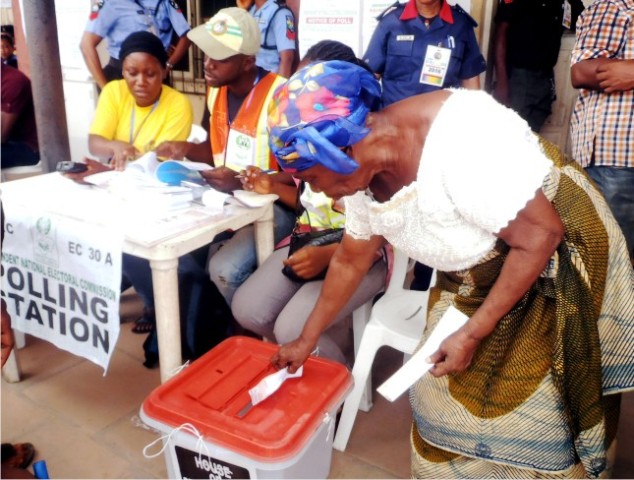
This critical disposition in participation is especially important for marginalized groups in the community, women and minorities. They must be aware that their domination and marginalization can easily be clothed in legal and democratic garbs. Without a critical disposition that asks questions and demands answer, they may end up being complicit in their domination. If they were more critically disposed they could see when the wool is being pulled over their eyes. In Nigeria, voters often go to the polls uncritically , they are governed more by sentiments than by hard facts. They tend to accept or reject parties, policies or persons based mainly on their primordial links. It only serves the politician who exploits those sentiments. These sentiments too shield government and politicians from being held to account; the people tend to shield the politician who is from their circle of ethnicity or religion. Such participation is most unhelpful in a democracy. Indeed, it makes the people complicit in their domination.
It is of course the case that in all democracies the state and capital have worked hand in glove to dominate the majority of the people that they should serve. What makes the difference in some entities is the fact that now and then a group or individuals rouse the people to remain active as citizens. The older democracies seem-but only seem? – to work better because of the existence of many civil society groups (think thanks and critical academics, faith-based groups that take interest in the political wellbeing of their members, pressure and interest groups and coalitions) that serve as the conscience and voice of the people. Otherwise those same people would lapse into being at best half-citizens such as we have in these parts.
Being critical of the information available to him means that the citizen should also be aware that even the media conveying that information is not always neutral. Studies abound to show that in the United States, for instance, the media are biased in favour of the state and capital. The citizens must be able to filter these media because they provide the oppressors the avenue for creating the generally false impression that interests of all segments of society align with those of the rich and powerful. In the event, the tendency has been for some people to think that social media provides the solution to the shenanigans of the traditional media. This is false, in my view. Social media has become a sort of echo chamber and susceptible to carrying falsehood an outright misinformation. It is not as progressive a its admirers would like one to believe. It should also be treated with circumspection.
Being critical participants in a democracy is getting increasingly difficult because of the tons of information that each citizens must process in a day. Therefore it helps if the citizen concentrates on those sectors most critical for his or her welfare or issues that rouse the passion.
To summarise, I believe we can see from the foregoing that when the people are able to truly see themselves as citizens, their participation in democratic government will be all the more fruitful and fulfilling. But this is also easier said than done, what with all the pressures of daily life. We realize, however, that every effort should be made to encourage critical perspectives in participation; otherwise the people become pawns in the hands of the state and its agents.
Because we do not truly participate in this country, we have state and national assemblies that represent only themselves and not the people and we do not give them the opportunity to earn the bogus titles of being honourable and distinguished.
What has been said here implies that the civil society groups have an urgent task of helping to give the people political education, such that we being the process of returning them to their rightful citizen status. This something which the parties have failed woefully to do. In any case it may not be in their interest to do so. Unfortunately, many of the civil society groups have fallen for the mess of pottage. Just how bad the situation is could be gleaned from what happened in the dying days of the last state government and the early days of the current government. Many civil society groups in the state became so partisan that they added to the confusion in the people’s minds. Those who should help citizen participation failed.
One of the most critical organs that could help bring political education to the people and thus add value to their participation in our democracy is I believe, the National Orientation Agency (NOA). Of course it is somewhat handicapped because it is an arm of the state and therefore can only be limited in its effect. But it has not, in my view, recognized its proper role. I mentioned earlier that for democracy to be meaningful the citizens must acquire its ethics. The NOA is in a unique position to help the people of this country acquire deep democratic culture. It is to be hoped that the imagination required for this can be found in the agency.
Finally, it is also very necessary that academics like me should engage in more research on issues that affect our common interest because we want Nigeria to succeed and be the democratic powerhouse of the black man and the African continent. Like the politicians, we have not done well in representing the cause of the people, what remains of our progressive or radical streak has been weakened. This is where the Claude Ake School of Government, the NOA and civil society groups can make common cause to improve the quality of Nigerian citizens’ participation in their democratic government. For instance, we can collaborate to help student unions which comprise a base for leadership recruitment and has wide social reach, to improve their knowledge of democracy and its culture. As all who know him will recall, the late Professor Claude Ake placed his awesome intellectual capability at the disposal of the African people, speaking and writing on their plight and their engagement with development and democracy. This is the legacy that energises the Claude Ake School of Government and gives meaning to its mission.
I sincerely thank the NOA for giving me the privilege of this opportunity to share ideas with you.
Concluded.
Prof Ekekwe, Executive Director, Claude Ake School of Government, UNIPORT, delivered this paper, at a forum organised by the National Orientation Agency in Port Harcourt on Thursday.
Eme Ekekwe



The Independent National Electoral Commission (INEC) has extended the deadline for political parties to submit the list of candidates for the 2027 governorship and state Houses of Assembly elections from Saturday, August 8, to Tuesday, August 11, 2026.
The commission announced the extension in a statement issued on Saturday and signed by the National Commissioner and Chairman of its Information and Voter Education Committee, Mohammed Haruna.
According to INEC, the decision followed appeals by political parties for additional time to complete the submission process through the dedicated online portal.
“The submission window, which according to the revised Timetable and Schedule of Activities for the General Election was originally scheduled to close on Saturday, 8th August, 2026, has been extended to Tuesday, 11th August, 2026,” the commission said.
In a a related development, INEC announced the suspension of PVC collection in Osun State ahead of the August 15 governorship election.
The commission said voters who applied for replacement of lost, damaged or defaced Permanent Voter Cards would have until midnight on Sunday, August 9, to print downloadable copies of their cards.
The electoral body explained that the deadline was necessary to enable it compile data on downloaded PVCs and produce final statistics on the total number of cards collected ahead of the election.
INEC said PVC collection in Osun commenced at the Registration Area level from July 22 to 28, 2026, but was extended to July 31 following complaints about large crowds and difficulties experienced by voters at collection centres.
The exercise subsequently moved to the local government level and ran from August 1 to 7.
The commission also disclosed that replacement downloadable PVCs had been made available to voters in Odo-Otin and Ife Central Local Government Areas following the theft of cards during attacks on the two collection centres.
It stressed that the stolen cards could not be used to vote.
INEC reassured Osun residents of its preparedness for the August 15 governorship election.
“The commission reiterates that the stolen cards cannot be used to vote.
“INEC reassures the people of Osun State of its readiness to conduct a free, fair, credible and inclusive governorship election on 15th August, 2026,” the statement said.
The commission said the deadline, initially set for Saturday, 8 August, has been extended to Tuesday, 11 August 2026, following appeals from political parties for more time.
INEC also announced that the window for voters who applied to replace lost, damaged or defaced PVCs to download their replacement cards will close at midnight on Sunday, 9 August.
The move is to enable the commission compile final PVC collection figures ahead of the 15 August Osun governorship election.
INEC said replacement downloadable PVCs have also been provided to affected voters in Odo-Otin and Ife Central Local Government Areas after hoodlums carted away cards from two collection centres, stressing that the stolen cards cannot be used to vote.
The commission reaffirmed its readiness to conduct a free, fair, credible and inclusive election in Osun State.
Gov. Kefas made the remarks over the weekend at the Federal Medical Centre (FMC), Jalingo, during the flag-off of the second phase of the Renewed Hope Medical Outreach in Taraba State, organised as part of activities marking Prof. Yilwatda’s 58th birthday.
The governor commended Prof. Yilwatda for choosing to mark his birthday by providing medical care to people in need.
“What Professor Nentawe did is a powerful demonstration of what leadership should be,” Gov. Kefas said.
He assured that his administration would continue to support initiatives that complement government efforts to improve healthcare delivery and the wellbeing of residents.
Speaking at the event, Prof. Yilwatda called on Nigerian leaders to embrace the culture of giving and use their positions to touch the lives of the less privileged.
He said his decision to celebrate his 58th birthday in Taraba State was deliberate and informed by the needs of underserved communities, particularly people who face difficulties accessing healthcare because of distance and financial constraints.
According to him, the intervention followed a needs assessment and was extended across the three senatorial districts of the state.
He said the exercise commenced on August 3 at Takum General Hospital and covered the Federal University Teaching Hospital, Wukari; First Referral Hospital, Sunkani, Ardo-Kola Local Government Area; General Hospital, Bali; General Hospital, Gembu; and FMC Jalingo.
Prof. Yilwatda said the intervention provided medical services to thousands of beneficiaries, including people who required surgical procedures.
He said sustainable national development could only be achieved when strong institutions placed Nigerians at the centre of development.
“Leadership is about service,” he said, urging political and public leaders to make giving back to society an important part of their responsibilities.
He reaffirmed his commitment to serving Nigeria and its people, saying his personal vision was to make every day of his life useful to humanity.
“Every day that I live, the vision is: let it be useful to humanity,” he said.
The Taraba State Commissioner for Health, Dr. Bordiya Buma, commended the initiative, saying it was consistent with the Renewed Hope agenda and efforts to strengthen healthcare delivery in the state.
Dr Buma said the second phase followed the successful completion of the first phase, which was conducted simultaneously in six local government areas, with two LGAs selected from each of the three senatorial districts.
According to him, more than 10,000 patients were attended to during the first phase, including people with medical and surgical conditions.
He disclosed that 327 general surgeries, 71 eye surgeries and 575 dental procedures were carried out during the exercise.
The commissioner expressed appreciation to President Bola Tinubu for the Renewed Hope Medical Outreach and thanked Prof. Yilwatda for supporting the initiative and choosing Taraba State as a beneficiary.
The Minister of Health and Social Welfare, Prof. Muhammad Ali Pate, also commended Prof. Yilwatda for choosing Taraba State to mark his 58th birthday through a medical outreach.
Prof. Pate said making healthcare the centrepiece of the birthday celebration was significant because health affects everyone.
-

 News3 days ago
RSG Targets Nine Million Residents in Mosquito Net Distribution Campaign
-

 Oil & Energy3 days ago
Aiyedatiwa Signs New Electricity Bill
-

 Maritime3 days ago
Marine Minister Commends President Tinubu On NPERA Bill Assent
-

 Oil & Energy3 days ago
NLNG Commissions Research And Innovation Centre In RSU
-

 News3 days ago
KenPoly Holds Eight Convocations, August 29
-

 News3 days ago
RSG Begins Another Phase of Projects Commissioning Today
-

 News3 days ago
RMAFC Completes Revenue Sharing Review, Proposes New Pay
-

 Maritime3 days ago
NAGAFF Petitions IGP Over Alleged Maritime Police Harassment