
News
Buhari Commissions $1.457bn Rail Line …Rejects Fashola’s NERC Chair Choice

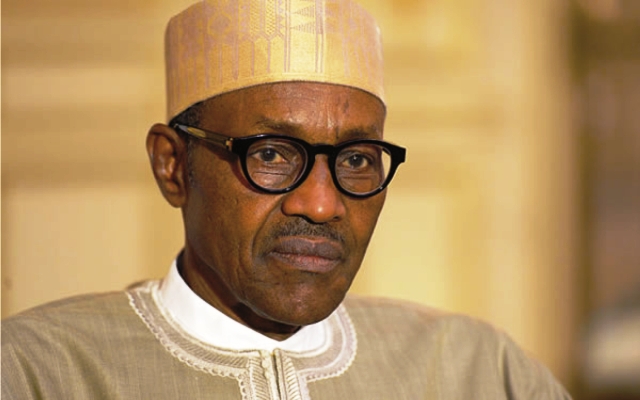
President Muhammadu Buhari has commissioned the $1.457 billion Abuja- Kaduna rail services.
The President, during the commissioning at Idu Station in Abuja, yesterday, promised that the Federal Government would link all states and commercial centres in the country with rail lines.
The president later took a train ride from Idu to Kubwa, a suburb of Abuja.
The modernisation phase of the project commenced with the signing of the contract for the construction of Abuja (Idu) to Kaduna (Rigasa) rail line in 2009.
Buhari said the new rail line would significantly enhance and provide affordable and safe movement of passengers and freight between the Federal Capital Territory and Kaduna State.
He noted that the train operation would also serve as a major catalyst for industrialisation and generation of employment.
Nigeria’s first high speed rails system, which connects the Federal Capital City of Abuja and northern commercial capital, Kaduna, yesterday began commercial operations as President Muhammadu Buhari inaugurated the train service.
Meanwhile, President Buhari reportedly stunned the Minister of Works, Power and Housing, Babatunde Fashola, following his decision to nominate Akintunde Ibitayo Akinwande, as the executive chairman of the Nigerian Electricity Regulatory Commission (NERC).
According to a report, Akinwade, a professor in the Electrical Engineering and Computer Science Department of the Massachusetts Institute of Technology (MIT), was nominated ahead of Fashola’s preferred candidate, Olasupo Shasore.
However, he and Femi Amzat, Fashola’s commissioner for works, were defeated by Akinwunmi Ambode, the preferred candidate of Bola Tinubu, a national leader of APC.
Following Ambode’s victory at the poll, the relationship between Tinubu and Fashola has not improved since then, and it was widely reported last year that Tinubu did not support the appointment of Fashola as minister because of their strained relationship.
But a Presidency insider told newsmen: “Shasore was dropped because the president does not want anything that will stoke tension in the Lagos axis again.”
According to the source, Buhari personally sought out the NERC nominees as he is doing in critical areas of his administration.
He said: “The president’s expectation is that with more professionals in his team, including those from the Diaspora, he will be able to deliver the goods in these critical areas.”
With his nomination, Akinwande will succeed Sam Amadi whose tenure ended in 2015.
It was gathered that Buhari sent Akinwande’s name and other nominees to the Senate for confirmation before they embarked on their long recess last Thursday.
Other nominees include: Musiliu Olalekan Oseni (South-West), Dafe C. Akpeneye (South-South), Okafor Frank Nwoye (South-East), Sanusi Garba (North-West), Nathan Rogers Shatti (North-East), and Moses Arigu (North-Central).
NERC, which regulates the power sector, is key to the resolution of the electricity crisis as the government has already privatised distribution and generation entities.
It is under the control of the Federal Government and is currently being managed by Manitoba of Canada on contractual basis.



Nigerians were among more than 140 residents injured after Iran launched multiple ballistic missiles and unmanned aerial vehicles at the United Arab Emirates, at the weekend.
This raised fresh fears for thousands of Nigerians living and working in the Gulf nation.
The UAE Ministry of Defence disclosed last Saturday that its air defence systems intercepted several missiles and drones fired from Iran, describing the attack as a major escalation in the ongoing regional tensions.
In a statement posted on its official X handle, the ministry said its air defence units engaged nine ballistic missiles and 33 drones during the latest assault on March 14.
It added that the attacks left six people dead and 141 others injured, including foreign nationals.
“The UAE air defence systems on March 14 engaged nine ballistic missiles and 33 UAVs launched from Iran,” the ministry stated.
“Since the onset of this blatant Iranian aggression, UAE air defences have engaged 294 ballistic missiles, 15 cruise missiles, and 1,600 UAVs launched from Iran,” UAE added.
According to the ministry, those killed in the attacks included citizens of the UAE as well as foreign nationals from Pakistan, Nepal and Bangladesh.
“Although the authorities did not specify the exact locations where the casualties occurred, the ministry said the injured victims were from several countries, including Nigeria.
Others affected include residents from Egypt, Sudan, Ethiopia, the Philippines, Pakistan, Iran, India, Bangladesh and Sri Lanka.
The list also included Azerbaijan, Yemen, Uganda, Eritrea, Lebanon, Afghanistan, Bahrain, Comoros, Türkiye, Iraq, Nepal, Oman, Jordan, Palestine, Ghana, Indonesia and Sweden.
The Tide reports that this development has sparked concern among Nigerian communities in the UAE, where thousands of citizens live and work in sectors such as construction, hospitality, logistics and trade.
Data from Nigeria’s diaspora commission shows that the UAE remains one of the largest destinations for Nigerian migrants in the Middle East, particularly in the emirates of Dubai, Abu Dhabi and Sharjah.
The Nigerian government had in recent years raised concerns over the safety and welfare of its citizens in the country following diplomatic tensions and visa restrictions affecting Nigerians.
Saturday’s attacks have now heightened anxieties within the diaspora community, especially as the Gulf region faces growing military confrontations.
In its statement, the UAE Ministry of Defence said the country remained fully prepared to confront any threats to its security.
“The Ministry of Defence remains fully prepared and ready to deal with any threats and will firmly confront any attempts to undermine state security in a manner that ensures the protection of its sovereignty, security and stability, and safeguards its national interests and capabilities,” the ministry said.
In a separate update, the ministry noted that its defence systems were still actively intercepting missiles and drones.
“UAE air defences are dealing with Iranian ballistic and cruise missiles and drones,” it said.
Regional media reports indicate that the attacks form part of a wider escalation of hostilities between Iran and Western-backed forces in the Middle East.
According to Al Jazeera, Iran has continued sustained missile and drone strikes across the Gulf despite protests from neighbouring states.
The strikes were said to be in retaliation for military operations launched by the United States and Israel against Iranian positions in the region.
Tehran targeted several Gulf countries, including Saudi Arabia, Qatar and the UAE, late on Friday and into Saturday.
The attacks also caused infrastructural damage in parts of the UAE.
Meanwhile, Iran’s elite military wing, the Islamic Revolutionary Guard Corps, warned that US interests in the UAE would remain legitimate targets.
Iranian state media reported that the group issued the warning after US forces attacked Iranian-controlled islands.
The IRGC specifically mentioned ports, docks and military installations linked to the United States as potential targets.
It also urged residents in the UAE to evacuate areas around ports and military facilities to avoid civilian casualties.
Security analysts say the growing exchange of threats and strike across the Gulf could destabilise the region’s economic and aviation activities if the conflict escalates further.
Nigeria’s Ministry of Foreign Affairs has yet to issue an official statement on the incident as of the time of filing this report.

Rivers State Governor, Sir Siminalayi Fubara, has charged the five new commissioners sworn-in last Wednesday to put in their best for the development of the State.
Fubara gave the charge during the swearing-in of the commissioners at the Executive Council Chambers of the Government House, Port Harcourt, last Wednesday.
This followed the successful screening of the five commissioners by the Rivers State House of Assembly, last Tuesday.
The five commissioners are Tonye Bellgam, Prof. Temple Nwofor, Dr. Peters Nwagor, Mr. Lekue Kenneth, and Sir Amairigha Edward Hart.
The Tide reports that the governor had sent nine commissioner-nominees to the Assembly for screening, but the Assembly confirmed only five nominees and rejected the nomination of four over various allegations.
Those rejected by the Assembly are Prof. Dantonye Alasia, Mrs. Charity Demua, Mr. Tamuno Williams, and Otonye Amachree.
The governor congratulated the new commissioners on their appointment, noting that their thorough screening by the Rivers State House of Assembly was a proof of their capabilities.
He urged them to deploy their wealth of experience in various fields and put the State on a fast lane of development.
“Ordinarily, I am supposed to charge you on your responsibilities and how to operate. But that has been taken care of by the screening at the Assembly.
“I believe that going through one of the most rigorous screenings, it is enough to say that for those of you who succeeded, you are fit and ready to deliver to our dear State.
“So there is no further charge. The screening was the charge, so I wish you the best as I don’t expect anything less than the best from you,” Fubara said.

The Nigerian Navy has intensified its crackdown on crude oil theft and illegal bunkering, destroying a reactivated illegal refinery site in Rivers State and intercepting suspected stolen petroleum products in Calabar, Cross River State.
The Director of Naval Information, Capt Abiodun Folorunsho, disclosed this in a statement released in Abuja, yesterday.
Folorunsho said personnel of the Nigerian Navy Ship SOROH, operating under Operation DELTA SENTINEL, destroyed a reactivated illegal refinery site at Okolomade Community in Abua-Odual Local Government Area of Rivers State.
He said the action followed credible intelligence that a previously dismantled illegal refining site had resumed operations.
According to him, an Anti–Crude Oil Theft team deployed to the location discovered that the dismantled refining oven had been reconstructed.
“Further exploitation of the area led to the discovery of additional refining equipment and storage facilities containing about 3,000 litres of product suspected to be illegally refined Automotive Gas Oil (AGO),” he said.
Folorunsho added that the illegal refining infrastructure, including ovens, storage tanks, hoses, connected pipes and newly acquired metal components used for illegal refining, was destroyed in line with operational procedures.
He said personnel of the Nigerian Navy Ship Victory, in another operation, intercepted about 3,950 litres of suspected stolen petroleum products at the Nigerian Ports Authority area in Calabar, Cross River State.
He said the interception was based on credible intelligence on suspected siphoning of petroleum products from vessels berthed at the port.
The naval patrol team, according to him, swiftly deployed to the area and traced the illegally siphoned products to a trailer park within the port facility.
“On sighting the naval patrol team, the suspected perpetrators fled the scene, after which the area was cordoned off and the illegally siphoned products secured,” he said.
Folorunsho said further inspection led to the recovery of about 3,950 litres of Automotive Gas Oil stored in drums and jerrycans, which had been evacuated to the naval base for further necessary action in line with extant regulations.
He noted that the successes aligned with the directive of the Chief of the Naval Staff, Vice Adm. Idi Abbas, to intensify operations against crude oil theft and other maritime crimes across Nigeria’s maritime domain.
Folorunsho reiterated the Navy’s commitment to sustaining the operational tempo of Operation DELTA SENTINEL through intensified surveillance, patrols and intelligence-driven operations aimed at combating crude oil theft, illegal bunkering and other forms of economic sabotage.
-
 News5 days ago
Navy Destroys Illegal Refinery In Rivers, Intercepts Stolen Fuel In C’ River
-

 News5 days ago
You’re The Backbone Of Our Society, Fubara Salutes Mothers On Mothering Sunday
-

 Rivers5 days ago
County Grammar School Old Boys Elect New Executive
-

 Environment5 days ago
Illegal Buildings On Embassies’ Land Will Be Demolished – Wike
-

 Politics5 days ago
HUNDREDS OF LATE BAYELSA DEP GOV’S KINSMEN DUMP PDP FOR APC
-

 Politics5 days ago
A’Court Voids Rep’s Sack Over Defection To APC
-

 Politics5 days ago
You’re Misleading Nigerians, APC Slams ADC Over Poverty Rate Report
-

 Sports5 days ago
We ‘ill No Longer Pay Athletes Training Grants In Foreign Currency- NSC