
Nation
THE STATES

Bauchi
The Bauchi State Government will no longer supplement
the salaries of Local Government workers in the state, according to Governor Mohammed Abubakar.
Abubakar made the announcement in Bauchi when members of the Bauchi State Committee on Land Administration, led by its Chairman, Prof. Adamu Ahmed, submitted their report to the governor.
“I have augmented the payment of Local Government staff salaries in the last three months and I will not do it any longer.
“The state depends almost 100 per cent on federation account to pay staff salaries and other activities while oil price in the international market has continued to dwindle.
“Both the state and Local Governments must explore avenues on how to improve their Internally-Generated Revenues (IGR), to enable the two tiers of government survive,” Abubakar said.
Borno
The Borno State Government has announced its plan to
return 50,000 Internally Displaced Persons (IDPs) to their communities in five local government areas this month.
No fewer than 200,000 IDPs from 23 of the 27 local government areas of the state were currently staying in 22 camps in Maiduguri after the communities were sacked by the Boko Haram insurgents in 2014.
The Executive Chairman of the State Emergency Management Agency (SEMA), Malam Satomi Ahmad, told newsmen in Maiduguri that “we are returning IDPs from communities in five local government areas of the state back to their homes in liberated areas.
“The communities are those located in Monguno, Gwoza, Askira-Uba, Mafa and Dikwa local government areas.’’
FCT
The FCT Minister, Malam Muhammad Bello, has urged
Nigeria’s elite to embrace the change agenda of the Federal Government to make Nigeria great again.
Bello made the call when he received participants of Senior Course 38, Command and Staff College, Jaji, in Abuja last Saturday.
Our correspondent reports that Course 38 participants were on study tour of the FCT administration.
He said that the topic under discussion, “Repositioning Nigeria’s non-oil sector as a major source of revenue’’,, was timely considering the dwindling oil prices at the international market.
The minister further urged Nigerians to have a rethink individually and collectively to agree that “we are really ready for change’’, citing Singapore and Malaysia as good examples.
Jigawa
Dry season farmers in Hadejia, Jigawa State, have ex
pressed worry over hikes in the prices of fertiliser due to its scarcity.
The farmers told newsmen in Hadejia that the trend was seriously affecting agricultural activities.
A wheat grower, Malam Musa Muhammad,said he was experiencing difficulties in sourcing for the commodity due to the exorbitant market prices.
Muhammad said a bag of assorted fertiliser attracts as much as N6,500 in the open market.
He said the situation was discouraging as farmers began cultivation for the dry season, adding, “the price of fertiliser is too high and it might affect productivity.’’
Kaduna
Vice-Chancellor, Ahmadu Bello University (ABU), Zaria,
Prof. Ibrahim Garba, says the institution has produced 305 Ph.D. holders and 98 First Class degree holders for 2013/2014 academic session.
He stated this in an address at the 38th convocation ceremony of the university held at the main campus, Samaru, Zaria, Kaduna State.
Garba said: “The Chancellor, Egwe, Nnaemeka Alfred Ugochukwu will in today’s convocation ceremony, confer a total of 13,149 First Degrees and 4,598 Higher Degrees and Diplomas to deserving graduates for the 2013/2014 academic session.”
He gave the breakdown as follows; First Class, 89 persons, Second Class Upper, 2,086, Second Class Lower, 7,108, Third Class, 3,161, Pass, 262 and 443 Unclassified Degrees.
According to him Higher Degrees and Diplomas include; 305 Ph.Ds., 2,669 Masters of Arts and Masters of Science and 1,624 Post Graduate Diplomas.
Kano
Rice Farmers Association of Nigeria (RIFAN), has de
cried insufficient water supply to irrigation sites by the Hadeja-Jama’are River Basin Development Authority (HJRBDA).
The Organising Secretary of the association in Kano State, Alhaji Isah Bawa, made the complaint in an interview with newsmen in Kano.
Bawa said the authority had not been supplying sufficient water to the farmers at the time it was most needed.
“This is one of the problems affecting our irrigation activities and we don’t know why.
“When we need the water most, they will not give us,” Bawa said.
Kebbi
The Kebbi State office of the National Teachers Institute
(NTI) said it would increase students enrollment for the Nigeria Certificate of Education (NCE),Post Graduate Diploma(PGD) and Degree programmes.
The state NTI Coordinator, Alhaji Salman Maiwada,disclosed this in an interview with newsmen in Birnin Kebbi.
Maiwada said the institute would enroll 3,500 students in the 2015/2016 academic session against the 2600 it enrolled in the previous session.
He said the increase would be across the 14 study centres in the state.
Lagos
The Nigeria Liquefied Natural Gas (NLNG) Ltd says it
has earmarked 12 million dollars to provide ultra-modern engineering laboratories in six universities in Nigeria.
The Managing Director of NLNG, Mr Babs Omotowa told newsmen in Lagos that the project involved building, refurbishing and equipping of the laboratories to boos quality of science education and scientists in the country.
Omotowa said that the project, known as University Support Programme (USP) was one of NLNG’s Corporate Social Responsibility (CSR) projects, which started in 2014.
He listed the beneficiaries to include Ahmadu Bello University, Zaria, University of Ibadan, University of Ilorin, University of Port Harcourt, University of Maiduguri and University of Nigeria, Nsukka.
Nasarawa
A 28-year-old butcher, Atom Paul, has appeared in a
Mararaba Grade 1 Area Court, Aso Pada, for constituting public nuisance.
The accused, who resides at One Man Village, Nasarawa State, was arraigned on a two-count charge of joint act and public nuisance.
The Prosecutor, Cpl. Friday Adaji, told the court that Insp. Erugeh John and team of policemen attached to Surveillance Section of ‘A’ Divisional Police Station, Mararaba, arrested the accused.
Adaji said that while the police were on patrol, the accused was found inside the notorious jungle of Orange Market fighting with two others at large.
Oyo
Oyo State House of Assembly has called on the Federal
Government to further immortalise former Premier of the defunct Western Region, Late Chief Samuel Ladoke Akintola by naming a major edifice at the University College Hospital (UCH), which was established during his time after the late politician.
Moving a motion titled “Need to further immortalise the late Premier of Western Region, a former Aare Ona-Kakanfo of Yorubaland in Commemoration of the 50th Anniversary of his untimely demise,”Bimbo Olawumi Oladeji, representing Ogbomoso North Constituency said “Late Chief Akintola was responsible for the establishment of UCH as a Federal Minister in 1953 and also played a major role in the establishment of the Nigeria Airways in 1958.
He also laid the foundation of Cocoa House, Premier Hotel as well as the founder of University of Ife (now Obafemi Awolowo University) who ought to be further immortalized in a bid to appreciate his legacies in Nigeria”.
According to Oladeji, a “political colossus and enigma” like the Late Chief Akintola should be recognised, further immortalised most especially being one of the three patriotic citizens of the country that moved a motion for the nation’s independence.
Yobe
The Federation of Muslim Women Association in Nige
ria (FOMWAN), has distributed sewing machines and livestock to 50 widows who were trained in various vocational skills for self reliance in Yobe.
The Chairperson of the Federation in Yobe who distributed the materials in Damaturu, Hajiya Halimatu Laminu, said the widows lost their husbands to Boko Haram insurgency in the state.
She said the women were trained in sewing, knitting, soap and cream making, baking, groundnut oil and ‘dawa dawa’ food seasoning production.
She added that the Federation was supported with funds by the Media Trust Foundation which it used to train the widows and provided them with machines and raw materials for the take-off of their trades.
Zamfara
Rice Farmers Association of Nigeria (RIFAN) said
150,000 rice farmers would be engaged in this dry season farming in Zamfara State as part of effort to ensure food security in the country.
The Secretary of the association in the state, Alhaji Sanusi Muhammad, disclosed this in an interview with newsmen in Gusau.
Muhammad said the association had begun educating people on the need to participate in local rice production to boost their economy and ensure food security.
He said the special intervention programme recently launched by the Federal Government on rice farming had boosted the moral of the farmers.
He said more than 20,000 hectares in Bakalori dam irrigation scheme and Fadama schemes in Maradun, Bakura and Talata-Mafara Local Government areas would be cultivated.
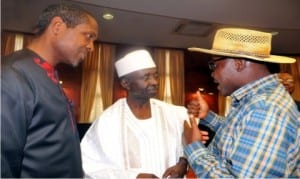
L-R: Director of Sahara Group, Mr Tonye Cole, Deputy Governor of Kaduna State, Mr Barnabas Bantx and Executive Director, Safe 54, Mr Shedrack Madlion, during their visit to the Government House in Kaduna on Wednesday



The Head of the Department of Anatomy at the University of Port Harcourt’s College of Health Sciences, Prof Gabriel Sunday Oladipo, has underscored the urgent need for Nigeria to develop a comprehensive forensic science infrastructure, warning that the nation’s ability to investigate and solve crime is being hampered by lack of scientific data and systems.
In his inaugural lecture titled, “Man: Fearfully Different, Wonderfully Made,” delivered as part of the 207th Inaugural Lecture Series of the university, Prof Oladipo highlighted that while no two individuals are exactly the same, the country currently lacks the robust systems needed to collect and manage biological and anthropometric data that could support criminal investigations.
He explained that the natural variations among humans — from fingerprints to physical measurements — form the foundation of personal identification in forensic work. These biological differences, he said, are essential for distinguishing one person from another, especially in the context of criminal investigations where clarity of identity can mean the difference between justice and impunity. Without this scientific foundation, he argued, law enforcement agencies lack a critical tool in the fight against crime.
Experts have noted that Nigeria’s forensic science capacity has historically lagged behind needs, with only a few forensic facilities available and many law enforcement agencies struggling to access or use scientific evidence effectively. One review of the state of forensic investigation in Nigeria found that outdated facilities and limited adoption of modern forensic methods have left many cases unsolved or poorly investigated, even as crime rates rise across the country.
In Lagos, efforts to improve forensic capabilities have focused on DNA analysis, with the Lagos State DNA Forensic Centre — the first of its kind in West Africa — providing critical support for criminal investigations and helping to identify human remains, link related cases, and assist with paternity testing. However, such initiatives are yet to be replicated at a national scale, leaving many regions without access to these vital scientific tools.
Prof Oladipo’s lecture went beyond academic theory to propose concrete actions. He called for the establishment of a National Institute of Forensic Science responsible for creating and managing a nationwide anthropometric and forensic data bank. This repository, he stressed, would significantly enhance Nigeria’s capacity to track crime, assist law enforcement agencies, and improve the administration of justice by providing reliable scientific evidence for investigative and legal processes.
He also highlighted the importance of strengthening research and training in forensic science. Many Nigerian universities currently lack the funding and infrastructure to offer complete undergraduate or postgraduate programs in areas such as forensic anthropology, DNA analysis, and crime scene investigation, a gap that forces aspiring experts to rely on collaborations with institutions abroad. By fostering a research-friendly environment and securing greater support from both government and private sectors, Nigerian institutions could produce homegrown experts capable of advancing forensic science in the country.
Awareness of forensic science’s role in criminal justice remains low among the general public and even among some security professionals. Studies have shown that a significant portion of Nigerians are unfamiliar with basic forensic concepts or the existence of tools such as DNA profiling and national forensic databases — tools that are common features of criminal justice systems in countries like South Africa and the United Kingdom.
Prof Oladipo also urged regular training and retraining programs to keep forensic practitioners updated with evolving scientific methods. According to him, continuous professional development is critical in a field where technological advances — from biometric databases to digital forensic tools — are transforming how crimes are investigated and solved.
The lecture was attended by academics, students, and professionals drawn to the intersection of science, identity, and justice, all of whom heard the professor make a compelling case for scientific innovation and institutional reform as central to Nigeria’s effort to contain crime and strengthen its justice system.
The event not only showcased Prof Oladipo’s expertise in human anatomy and forensic psychology but also positioned forensic science as a strategic national priority — one that could bring clarity to investigations, support victims and their families, and ultimately enhance public safety across Nigeria.

The University of Port Harcourt Women Association (UPWA) on Thursday staged a vibrant and memorable edition of its Annual Inter-House Sports Competition at the University of Port Harcourt Sports Village, drawing an impressive turnout of pupils, parents, staff and invited guests.
The event, organised by the UPWA International Group of Schools, brought together children from the pre-nursery, nursery and secondary sections in a colourful celebration of youth athleticism, discipline and teamwork. The arena came alive with cheers and excitement as pupils, clad in their various house colours, marched in a ceremonial parade before proceeding to compete in a wide range of track and field events, relays, novelty races and other team-based activities designed to promote physical fitness and healthy competition.
Declaring the competition open, the Vice-Chancellor of the University of Port Harcourt, Professor Owunari Georgewill, commended UPWA for sustaining a tradition that continues to nurture young talents beyond the classroom. He noted that sports remain a critical component of holistic education, helping to build resilience, confidence, leadership skills and social interaction among children.
In her remarks, the President of UPWA, Professor Udeme Georgewill, expressed appreciation to parents, teachers and members of the organising committee for their dedication and sacrifice in ensuring the success of the programme despite prevailing economic challenges. She described the event as a reflection of unity and collective effort within the school community.
“This is the first time White House is emerging overall winner, and that shows remarkable improvement and great sportsmanship,” she said. “We all had fun. It is not easy putting an event like this together considering the economic situation, but we are grateful to the parents for being part of this journey. The excitement everywhere is truly heartwarming.”
The competition featured spirited participation from the various houses, including Purple House, San Chicago Red House and White House, with pupils demonstrating strength, speed, coordination and teamwork. Parents and supporters filled the stands, cheering enthusiastically and adding colour to the spectacle, while teachers ensured orderliness and safety throughout the proceedings.
Professor Georgewill emphasized that the true essence of sports lies not merely in winning trophies but in participation and personal growth. “Sports is not just about winning. It is an avenue for growth, discipline and opportunity. The fact that a child is able to participate is already a win. Losing this year does not mean you cannot win next year. Keep trying,” she encouraged, urging pupils to see both victory and defeat as stepping stones to greater achievements.
She further observed that while there are many competing interests in the Nigerian sports sector, consistent grassroots investment remains essential for discovering and nurturing future champions.
The colourful ceremony culminated in medal presentations, trophy awards and group photographs, with UPWA executives, including Vice President I, Professor Adedamola Onyeaso, joining the participating teams to celebrate the day’s achievements.
The annual inter-house sports competition continues to stand as one of UPWA’s flagship events, reinforcing its commitment to balanced education, character formation and the promotion of healthy lifestyles among its pupils.
-

 News4 days ago
Amend Constitution To Accommodate State Police, Tinubu Tells Senators
-
 Politics4 days ago
Senate Urges Tinubu To Sack CAC Boss
-
Business4 days ago
Crisis Response: EU-project Delivers New Vet. Clinic To Katsina Govt.
-
Business4 days ago
President Tinubu Approves Extension Ban On Raw Shea Nut Export
-

 News4 days ago
Disu Takes Over As New IGP …Declares Total War On Corruption, Impunity
-
Business4 days ago
Fidelity Bank To Empower Women With Sustainable Entrepreneurship Skills, HAP2.0
-
Business4 days ago
President Tinubu Extends Raw Shea Nuts Export Ban To 2027
-
Sports4 days ago
NDG: Rivers Coach Appeal To NDDC In Talent Discovery