
Environment
Pollution And Environmental Litigations’ Effects In N’Delta

The fact is that, it is only
few people that will dispute that environmental degradation is rampant throughout the oil producing region of Nigeria. Whether due to oil spills gas flaring, dumping of wastes associated with drilling artesenal refining or other related activities, the impacts on the environment and human livelihoods and health are widespread and severe.
Environmentally, the Niger Delta is sick and the inhabitants are poor. Moreover, there seems to be a rising tide of criminality and militancy in the region and this has made most communities, particularly in the riverine areas unsafe.
It is an obvious fact that the greatest casualties are the environment and the people.
It would be recalled that, in the past, the people of the Niger Delta have embarked on series of legal actions to seek redress on the pollution of their lands.
A publication recently released by the Centre for Environmental Human Rights And Development (CEHRD) revealed that over 38 environmental related cases have been prosecuted in the region since 1970.
The publication titled; “After Bodo: Effective Remedy And Recourse options for victims of environmental degradation related to oil extraction in Nigeria” showed that in many of these cases, the affected communities and individuals received compensations both monetarily and otherwise.
According to the report, the cases all bothered on pollution which include, pollution of water ways, and destruction of farmlands.
The first of these cases include; Mon Igara V. Shell BP 1970, San Ikpede V.SPDC PDC 1973, Atubie V. Shell BP PDC 1974 and Chinda v Shell BP PDC 1974.
Also mentioned in the report are; Umudje V. SPDC 1975, Nweke and others V. Nigerian Agip Oil Company in 1976. The report also said that in 1986, a number of oil companies were held liable in a case of crude oil pollution which occurred in the Calabar River and spread to Port Harcourt River damaging marine life and raffia palms.
Other cases also examined by the report includes; Nwadiaro V. SPDC 1990, Otoko V. SPDC, a case of oil spillage along the Andoni River 1990, SPDC V Ambah 1991, SPDC V. Enoch 1992 and Elf V. Opere Sillo 1994.
The publication also mentioned the cases of SPDC V. Farah 1995, SPDC V. Tiebo 1996, SPDC V. Amaro 2001, SPDC V. A. Otelemaba Max, SPDC V. Isaiah 2001, Mobil V. Monokpo 2003, SPDC V. Edamkue 2003 and NNPC V. Sele 2004.
The rest are; Gbemre V. SPDC seeking a declaration to stop gas flaring in 2007, Phyne V. SPDC 2006, Firibed V. SPDC also in 2006.
Also are Agadia and Uruesheyi SPDC .V. SPDC 2006, Chief Omu and others V. SPDC V. Ohaka 2008, Agbara V. SPDC 2001 – 2010 SPDC V. John 2011, John Holt Krebale and others V. SPDC and Barizaa M. T. Dooh V SPDC in 2012.
The report further mentioned other cases such as Ogbodo V. SPDC 2011, Batan, Delta State V. SPDC, Bodo Community V. SPDC, SERAP V. Federal Republic of Nigeria and the Bonga Oil Field coast of the Niger Delta.
The report which dwelt extensively on the Bodo V. SPDC case described it as the most successful.
According to the report, the well studied and highly publicized Bodo V. Shell cases began with two large spills in August and December 2008 affecting thousands of fishermen and farmers in Bodo and neighbouring communities.
“The oil company’s response to the spill was slow and it infact admitted liability”.
It noted that the case which greatly benefitted from legal expertise and scientific evidence led to an out of court settlement in which a whooping sum of 83.3 million dollars was paid to the communities.
Commenting on the report in an interview with The Tide, a Director in the Centre for Environment Human Rights and Development (CCHRD) Mr Laurent Dube, said that getting Justice for the communities have always been problematic except the case of Bodo.
Mr Dube said that, the situation shows the level of resistance to environmental pollution in the Niger Delta, adding that the resistance will continue for a longer time to come until the oil companies change their strategies in their operations.
The overall impacts was that while some of these communities got compensations, others never received any compensations.
The report also revealed that, some loop holes in our Judicial System were exploited by the companies to deny the communities of their rights. A case or point was that of Gbemre V. SPDC in Delta State, in which a declaratory injunction was sought for the stoppage of gas flaring on the Niger Delta by April 30 2007.
The Tide learnt that in the same year, the Judge was transferred to another court and the court file went missing.
SPDC however obtained a court order, thereby further delaying compliance and currently ruling has not been enforced.
The effect is that the non enforcement of the ruling has made gas flaring a common phenomenon in the Niger delta.
In the other cases, although compensations have been paid to the communities, but that has not stopped the companies from further polluting the environment.
An environmentalist, in the Niger Delta, Mr Thomas Ikaraba told The Tide in an interview that, the impacts of these litigations are yet to be felt in the region as after monetary compensations, the environment are left un-cleaned.
Mr Ikaraba cited the case of Bodo, where individuals and families received monies, but the community is yet to be clean up.
He urged for legislations that will make it crime for companies not to clean up polluted sites after paying compensations.
He views were also shared by across section of environmental Right Activities in the region.
In summary, the report showed the level of resistance by the people to pollution in the Niger Delta and the probable impacts.
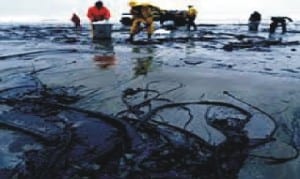
An oil spill polluted site in the Niger Delta



-

 News5 days ago
Amend Constitution To Accommodate State Police, Tinubu Tells Senators
-

 Politics5 days ago
Senate Urges Tinubu To Sack CAC Boss
-

 News5 days ago
Disu Takes Over As New IGP …Declares Total War On Corruption, Impunity
-
Politics2 days ago
2027: NIGERIANS FAULT INEC ON DIGITAL MEMBERSHIP REGISTER DIRECTIVE
-
 Environment2 days ago
LAWMA Director Says Sweeping Reforms Have Improved Waste Collection
-

 Featured5 days ago
Fubara Reads Riot Act To New SSG, CoS …Warns Against Unauthorized Meetings
-
Rivers5 days ago
Etche Clan Urges Govt On Chieftaincy Recognition
-
News5 days ago
25 Killed In Adamawa Jihadist Attacks