
Connect with us

Environment

‘112 Million Nigerians Lack Access To Sanitation’

Published

on

Water Aid Nigeria, an
international non-governmental organisation has put the number of people in Nigeria with lack of access to basic sanitation at 112 million.
The policy Adviser of the organization, Mr Saheed Mustapha who said this an interview with newsmen in Abuja also restated the commitment of the organization to increasing access to water in the rural areas.
Mr Mustapha said that the 112 million of people was a two third of the nation’s population, adding that the group was committed to ensuring that more people especially in the rural areas have access to water.
“Nigeria is the most populous country in Africa with a population of 170 million people and growing rapidly as the population increases remote communities are further cut off from development.
Local governments often do not have the funds to make necessary improvement and can instead be forced to use short-term solutions, which cannot be maintained by the communities who need them.
“As a group, we are committed to ensuring that more people, especially in the rural areas enjoy basic infrastructure, this is because water is a human right issue,” he said.
He said Nigeria’s water infrastructure has been suffering from severe neglect, pointing out that the rural areas are facing decline in services.
Mustapha said that this has also started to manifest in some urban slums.
He said the organisation works through partnership with local experts to build simple technologies like boreholes and water pumps that could serve the people.
This, he said, has been helpful to support health, education and basic livelihoods in such communities.
The policy advisor said the organisation uses practical technologies by making sure that the right skills exist in the community to ensure sustainability of projects.
“By working with local partners we’re able to invest in the future of local communities so that they can continue the good work,’’ he said.
He said that the organisation would continue to create avenues for advocacy to influence governments and other service providers to prioritise safe water and sanitation.
Mustapha revealed that the organisation works in no fewer than 100 communities in Bauchi, Benue, Enugu, Ekiti, Jigawa and Plateau states.
Mustapha noted that sanitation was yet to be given priority of attention in spite of the huge health problems caused by the growing population.
He, however, said that the benefits of good sanitation cannot be over-emphasised as this was a necessity for the overall well being of the citizenry.
“There are gaps in the sanitation infrastructure, making access to simple facilities like toilets impossible for many people,“
He said that, “except in Abuja and some areas of Lagos, there are no sewer systems across communities.“
The policy advisor stated that sanitation has now become the responsibility of individual households who cannot afford to make improvements.
Mustapha, however, stated that the group was working with local and national governments to set standards for water and sanitation systems.
He added that this would promote good sanitation and hygiene to communities and schools.
According to him, no fewer than 63 million people are believed to be without access to safe drinking water, while about 39 million are still defecating in the open.
Our correspondent reports that WaterAid works to build strong relationships with governments and communities to help provide clean water and safe sanitation to people who desired them.
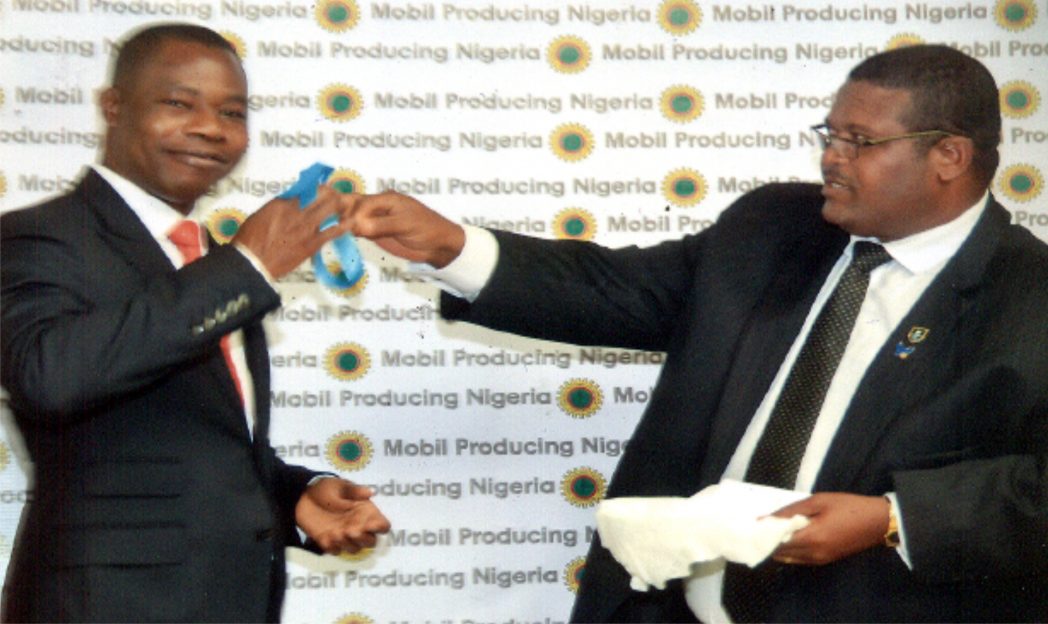
Manager, Public and Government Affairs, BRT, Onne, Mobil Production, Mr Adeyemi Fakayejo (right) presenting key of a refuse compactor truck donated by Mobil Production to Rivers State Waste Management Agency (RIWAMA), Mr Ade Adeogun, in Port Harcourt, recently.Photo: Chris Monyanaga

Manager, Public and Government Affairs, BRT, Onne, Mobil Production, Mr Adeyemi Fakayejo (right) presenting key of a refuse compactor truck donated by Mobil Production to Rivers State Waste Management Agency (RIWAMA), Mr Ade Adeogun, in Port Harcourt, recently. Photo: Chris Monyanaga

Continue Reading

Environment

Lagos State Government Refuted Resumed Monthly Sanitation 

Published

on

The Lagos State Government on Saturday refuted an online media report claiming that the state had resumed the monthly environmental sanitation exercise.
The Commissioner for the Environment and Water Resources, Mr Tokunbo Wahab, said no categorical statement had been made regarding the commencement date of the exercise.
Wahab explained that what he told newsmen after a project inspection tour last Sunday was that engagements with relevant stakeholders were still ongoing.
He said the state government had planned to begin with a sensitisation programme last week, but was constrained by logistics issues.
“The truth is, we were meant to start with a sensitisation programme last week, but we had a logistics issue. We need to find a day that is acceptable to all stakeholders,” he said.
He expressed optimism that the exercise might return very soon, adding that the official date would be communicated by the Governor, Mr. Babajide Sanwo-Olu.
The commissioner urged law-abiding residents to continue their lawful activities without hindrance, assuring them that adequate notice would be given before the exercise was reintroduced.
The monthly environmental sanitation, previously held on the last Saturday of every month between 7.00 a.m. and 10.00 a.m., was suspended in November 2016 following a legal pronouncement restricting movement during the exercise.
However, renewed waste management challenges, including clogged drainage channels and indiscriminate refuse disposal, have sparked calls from residents for its reinstatement.
Continue Reading

Environment

RIWAMA In Collaboration With Obio Akpo And Port Harcourt LGA Ban Dumping Of Refuse On  Road Side

Published

on

The Rivers State Waste Management Agency (RIWAMA) in Collaboration with Obio Akpor Local Government Council and Port Harcourt City LGA had advised the public not to dump refuse on the road side.
 In a statement signed by the Director of RIWAMA Dr Ibimina Wokoma, Mayor of Port Harcourt Sir Hon Allwell Ihunda and Obio Kpor local government Chairman Hon  Dr,  Gift  Worlu made available to Tide news stated that dumping of refuse on road medians is banned in Obio Akpor LGA, Port Harcourt City LGA, and the entire metropolis.
The statement said all waste is to be properly bagged and taken to the nearest RIWAMA-approved receptacle only between the hours of 6pm and 10pm daily.
“The use of cart pushers for waste collection, evacuation, and disposal is highly prohibited across Obio Akpor LGA and Port Harcourt City Local Government. Corporate organizations are requested to engage only Private Service Providers licensed by RIWAMA, in line with extant laws.
“Scattering of refuse bags at the receptacles or roadside by scavengers, individuals, and organizations engaged in illegal sorting or segregation of waste or recycling business is hereby banned, except as authorized or licenced by RIWAMA at the final dumpsites.
“The Thursday sanitation exercise by shop owners will continue alongside business activities without closing or locking up shops.
The statement also said  that , shop owners whose shop environment or surroundings are untidy will be arrested and prosecuted accordingly.
This notice applies to all residents, businesses, and organizations in Rivers State. Let’s work together to restore our “Garden City” status.
By: Kiadum Edookor
Continue Reading

Environment

Ministry Of Environment To Validate A Landmark Policy To Advance Nigeria’s Economy 

Published

on

The Federal Ministry of Environment last Thursday convened key stakeholders in Abuja to validate a landmark policy brief aimed at tackling marine litter to advance Nigeria’s transition to a circular economy.
Mrs Falmata Bukar-Kolo, the Deputy Director, Solid Waste Management and Technology Division in the ministry, warned that plastic pollution poses serious risks to aquatic ecosystems and public health.
She stated that microplastics have already entered the food chain through fish consumption, while clogged waterways, soil contamination, and greenhouse gas emissions from burning plastics are worsening the environmental crisis.
Bukar-Kolo said that plastics, though widely used, are non-biodegradable and persist in the environment for years.
She called for improved waste management systems, stronger enforcement of environmental regulations, and behavioural change amongst citizens and businesses.
Mr Clem Ugorji, Regional Coordinator of PROTEGO, emphasised on the urgency of action, saying Nigeria’s marine litter crisis carries environmental, economic, and reputational costs.
He expressed optimism that the 2025 to 2040 roadmap endorsed at the workshop would shift the country from prolonged dialogue to concrete implementation.
The  event was organised in collaboration with PROTEGO (Prevention of Marine Litter in the Gulf of Guinea).
Discussions centred on a draft policy input paper titled “Policies, Institutional Set-up and Financing of Marine Litter Prevention in Nigeria,”.
These seeks to present insightful analysis and a set of recommendations to address the structural and financing gaps that have long hindered effective waste management, particularly plastic leakage from inland communities and waterways into the Atlantic Ocean.
The PROTEGO initiative is supported by the German Federal Ministry for the Environment, Nature Conservation, Nuclear Safety and Consumer Protection and led by adelphi, with implementation in Nigeria by WASTE Africa and the Nigeria Climate Innovation Centre (NCIC).
The policy brief is a key delivery for one of the programme’s four impact areas – building capacities of public stakeholders.
Continue Reading

Trending