
Business
Poor Electricity Inhibits Steel Industry Growth – Stakeholders

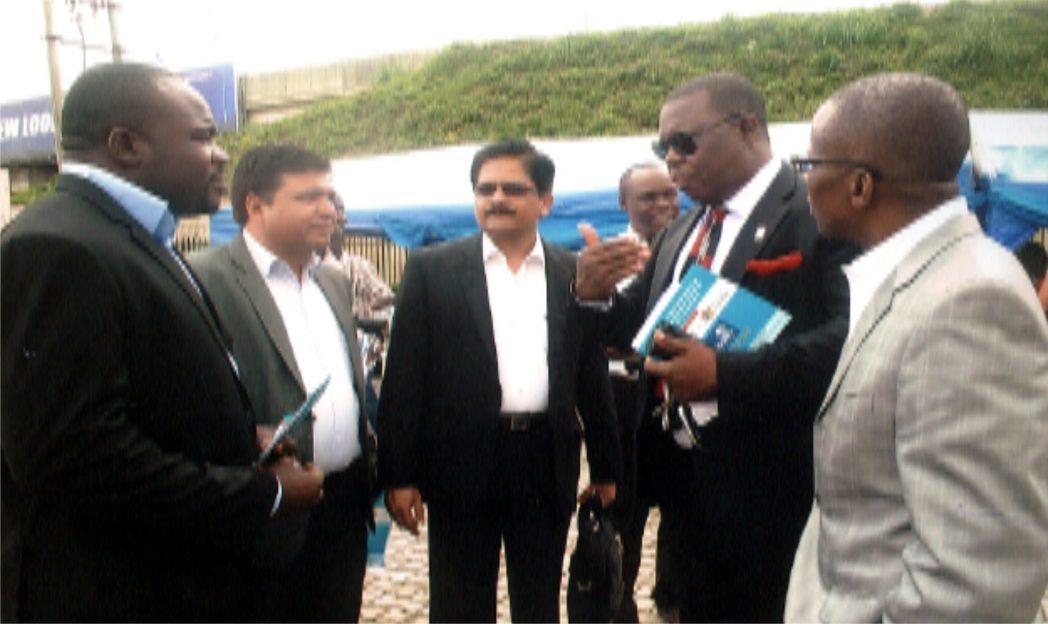
L-R: Citizenship and Partners in Learning Manager, Microsoft, Ugochukwu Nwosu, Project Delivery Head, ICT-STP Education Services Ltd, Pradeep Joshi, STP Education Services Ltd, Gautham More, Special Adviser to the Rivers State Governor on ICT; Enger Goodliffe Nmekini, Special Assit. to the Rivers State Governor on Environmental Health Dr. Ogu Emejuru during offical launching of Badiliko Digital HUBS, in Port Harcourt, recently. Photo: Egberi .A.Sampson
Stakeholders have identified poor electricity supply as one of the factors inhibiting the growth of the nation’s steel industry.
Some of the stakeholders told newsmen on Wednesday that frequent power outages were preventing the steel companies from rolling out products to satisfy market demands.
Alhaji Isma’ila Bello, Managing Director, Crittal-Hope Ltd., Lagos, said the company was fabricating steel, aluminum windows and doors, but that poor power supply was the major problem adversely affecting production.
“In the past, the company had up to 2,000 workers who operated on shift basis, but today the employees are less than 200 and they work on single shift. And this is due to poor electricity supply.
“We consume about two drums of diesels daily, which translate to 480 litres per day. If you multiply that by N160 per litre, it means that we spend about N76, 800 per day.
“What is our profit margin if we spend such money on power alone. It is adversely affecting our business,” Bello said.
The National President, Iron and Steel Senior Staff Association of Nigeria (ISSSAN), Mr Otori Maliki, said many privately-owned steel firms in Lagos, including Crittal Hope Nig. Ltd.; NIWIL Nig. Ltd. and Eureka Nig. Ltd., were experiencing power challenges.
Maliki said the companies were producing at 30 per cent installed capacity due to poor power supply, and also lack of raw materials from Aladja and Ajaokuta Steel Rolling mills in Warri, Delta, and Kogi, respectively.
“There should be dedicated power supply lines for these companies to enable them function well.
“Also, the steel companies ought not to import raw materials if our rolling mills were functioning and prices of steel products would have been cheaper,” the union leader said.
Jos Steel Rolling Mill which became Zuma Steel West Africa after it was sold to private owners in 2003, is now dormant due to inadequate power supply.
The Group Executive Chairman of the company, Mr Innocent Zuma, told reporters that he was optimistic that the outfit would come back to life once there was adequate power supply.
“We are trying to get access to steady power supply; once we can get that the mill will come back on-stream,” Zuma said.
To address the problem, Zuma said the company was working toward establishing two power plants which, when completed, would serve not only the Jos Steel Plant but also other subsidiaries.
He said that the mill, when fully operational, would boost economic activities in Plateau, generate revenue, provide employment and empower the youths.
A Kano-based construction engineer, Abubakar Bello, also identified poor electricity as one of the problems bedeviling the steel industry.
“The steel industry requires electricity but the cost of electricity in this country is so high compared to what obtains in other countries.
“So, I appeal to the Federal Government to guarantee stable power supply to enable the industry produce enough steel materials for national development,” Bello said.



-
Politics2 days ago
2027: NIGERIANS FAULT INEC ON DIGITAL MEMBERSHIP REGISTER DIRECTIVE
-

 Environment2 days ago
LAWMA Director Says Sweeping Reforms Have Improved Waste Collection
-
Politics2 days ago
LP Crisis: Ex-NWC Member Dumps Dumps Abure Faction
-

 Sports2 days ago
Abia Not Sure To Secure continental Ticket
-

 Politics2 days ago
Umahi Dismisses Allegations On Social Media, Insists On Projects Delivery
-
 Transport2 days ago
FAAN Announces Pick-Up Points for Go-Cashless Cards
-
Sports2 days ago
La Liga: Yamal Records First Career Hat-trick
-

 Sports2 days ago
City Survive Leeds’ Challenge At Elland Road