
Business
FG To Reduce Tarriff On Rice Import

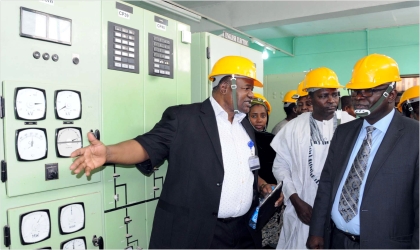
L-R: General Manager, Transmission Station, Mr John Obajulu, Leader of the delegation of board members, Transmission Company of Nigeria (TCN), Alhaji Musa Gumel and a member, Prof. Peter Akper, during the facilities tour of the regional transmision station by TCN board in Kaduna last Tuesday.
The Minister of Finance, Dr Ngozi Okonjo-Iweala, has said the Federal Government was contemplating a downward review of tariff on importation of rice.
Okonjo-Iweala, who disclosed this while answering questions at the ‘Budget 2014 Jam’, in Abuja said the drop in the tariff would reduce smuggling of the commodity into the country.
The Tide source reports that Budget 2014 Jam is a youth online programme where the minister answers questions on the Federal Government’s 2014 budget from youths across the nation.
The three-day programme, which began on Tuesday is organised by the Ministry of Finance in collaboration with IBM Technology, a telecommunication firm.
The minister said the existing 110 per cent duty on the importation of rice was encouraging smuggling of the commodity into the country.
“We increased the tariff to 110 per cent, and it encouraged some people to go and grow rice and we grew 1.1 million metric tonnes of the product.
“But it also encouraged smuggling from neighbouring countries because they immediately dropped their own tariffs to 10 per cent,” she said.
She added that the rice issue was similar to tariff on importation of used vehicles, saying “we are watching it now to see what the appropriate tariff to be paid on it will be.”
The minister added, “For rice, we decided to bring it down because we see that it is not working.”
Okonjo-Iweala explained that the government had decided to encourage the automobile industry to ensure that vehicles were manufactured in the country.



Business
Jonathan, Diri, Others Laud Firm’s Milestone in Bayelsa …Says Project Will Drive Industrialisation, Create Jobs



-

 Oil & Energy5 days ago
Aiyedatiwa Signs New Electricity Bill
-

 Maritime5 days ago
Marine Minister Commends President Tinubu On NPERA Bill Assent
-

 Oil & Energy5 days ago
NLNG Commissions Research And Innovation Centre In RSU
-

 Maritime5 days ago
NAGAFF Petitions IGP Over Alleged Maritime Police Harassment
-
Rivers5 days ago
Journalist Pledges To Build On Father’s Legacies
-
 Education5 days ago
UNIPORT VC Hails Postgraduate School Over Planned International Conference
-
 News5 days ago
College Of Bishops Endorses Tinubu, APC Candidates For 2027 Polls
-

 News5 days ago
Rivers DPOs Receive Awards For Outstanding Performance In Crime Prevention …As Students, Media Group Honour CSP Worgu, CSP Yusuf