
Nation
THE STATES

Jigawa
The Maigatari Local
Government Council of Jigawa State has recruited 60 casual staff as
environmental workers to enhance sanitation services in the area.
The Chairman of the council, Alhaji Isa Zakari, disclosed
this when the state Commissioner for Environment, Hajiya Hassana Adamu, visited
the council, in Maigatari.
Zakari said the workers were engaged to ensure prompt
clearing of drains and the evacuation of solid wastes dumped at various sites
in the area.
He said the council had also concluded arrangements to enact
a by-law to ban indiscriminate dumping of refuse in the area.
Responding, the commissioner urged the people to clear
culverts and drains to control flooding in the area.
Kano
The Kano State
Government has ordered the immediate closure of Triumph Publishing Company in
Kano, publishers of the Triumph group of newspapers.
Dr Umar Faruk, the Commissioner for Information, who
announced the closure while speaking to newsmen on Thursday, said the action
was necessary to facilitate some restructuring of the company.
Faruk said that the decision to close down the newspaper was
taken at Wednesday’s state executive council meeting, pointing out that the
government had ordered the payment of outstanding three months salary to the
members of staff of the company.
The commissioner said that freelance journalists, as well as
consultants, were to report to the office of the Head of Service of the state
to facilitate payments of their entitlements.
He said the newspaper staff would be posted to other
agencies and ministries.
Kaduna
The Nigeria Police
College, Kaduna has said that it found a robbery suspect among recruit
constables undergoing training in the college.
The Commandant of the college, Alhaji Sanusi Rufai, told
newsmen in Kaduna that the suspect was named by members of his gang after they
were arrested by the police in Abuja.
The commandant said details of the suspect’s identity were
forwarded to the college, which withdrew, arrested and transferred him to the
appropriate police unit for investigation.
Rufai said the suspect was among 25 recruits the college
disqualified for various inadequacies identified during training, pointing out
that some of the students were found to have presented forged school results
and others had criminal records, “while some were withdrawn based on health
grounds.
Rufai noted that the college would continue to screen “unfit
persons” out to ensure that only those with good knowledge and character were
allowed to train as policemen and women.
Katsina
Musawa Local
Government in Katsina State has begun the distribution of pesticides worth N2
million free of charge to farmers as assistance toward preventing crop damage
in the area.
Alhaji Sama’ila Kira, the Council’s Caretaker Committee
Chairman, said in Musawa, Katsina State, that the initiative was conceived due
to the financial difficulties faced by farmers and to serve as an encouragement
to smallholder farmers.
Represented by his deputy Alhaji Babangida Musa, his deputy,
Kira said the support would also enhance food security, noting that increased
harvest was expected considering the farmers’ huge investments.
He said that a committee had been constituted to ensure that
smallholder farmers who needed such support benefitted from the gesture, adding
that the council, has provided farming support to both rainy season and
irrigation farmers to reduce poverty and facilitate people’s engagement toward
ensuring food security.
Kogi
The Kogi State Government has warned people displaced by the
recent flood disaster in the state not to go back to their houses for now.
The government gave the warning in a statement signed by the
state’s Director of Information, Mr James Adedoyin, and issued in Lokoja on
Thursday.
The statement said the warning became necessary when
government observed that some victims in various camps had started leaving for
their homes, due to the noticeable decease in water level of the River Niger.
The release said some of the houses that had been under
water for several days might not be habitable as some of them were already
collapsing.
It said that in line with the promise made by the state’s
governor, Capt Idris Wada, government would conduct integrity test on buildings
that were submerged to ensure that they were safe for haibitation.
Kwara
State Government plans to spend N3.1 billion on
state-of-the-art aviation infrastructure to make the state the hub of aviation
services in West Africa.
Dr Abubakar Kanike, the Commissioner for Works and
Transport, made this known when the National Good Governance Tour team visited
the state-owned aviation college and cargo terminal in Ilorin.
He said the state government had spent N1.2 billion on the
establishment of a world-class aviation college, while N1.9 billion was spent
on the construction of the cargo terminal.
On the aviation college, Kanike said the state government
had provided modern facilities for Private Pilot Licence and Commercial Pilot
Licence training, noting that a lot was also spent on acquiring the
multi-engine qualification for the ICAO certified pilots.
Lagos
A total of 200 men of
the Lagos State Command of the Nigeria Security and Civil Defence Corps (NSCDC)
are currently undergoing training in arms bearing and physical drilling, The
Tide reports.
Mr Sunday Eromosele, a spokesman of the NSCDC, told NAN in
Lagos on Thursday that the trainees were expected to go through the general
rudiments of arms bearing, physical drilling and mental alertness.
According to the NSCDC spokesman, the training, taking place
at the NSCDC Camp in Badagry, became necessary in view of the security
challenges currently facing the country.
“The NSCDC Act of 2007 empowers the Corps to have Arms
Squads in all the state commands throughout the federation.
“The Lagos State Command has begun the first in the series
of such trainings, and it is being administered by the Nigerian Army,”
Eromosele said.
Ogun
The Ogun State Bureau
of Local Government Pensions on Thursday said it had disbursed N1.6 billion as
monthly pensions to retired local government and primary school workers.
Alhaji Ade Momodu, Permanent Secretary of the bureau,
announced this during an oversight visit by members of the Ogun State House of
Assembly Committee on Local Government and Chieftaincy Affairs.
Momodu said that the money was paid between January and
September.
He said that pension was paid from the monthly allocation
the bureau received from the Joint Allocation Account Committee (JAAC).
“The bureau has also paid N643.3 million as gratuities to
retired local government staff, as well as primary school teaching and non
teaching staff between January and September 2012.
Ondo
In an effort to
further prevent flooding in Ondo State, the state government has approved the
purchase of additional Amphibious Excavator for dredging of rivers and other
water ways.
The Director, Ecology, Ministry of Environment and Mineral
Resources, Mr Olumide Kinga told The Tide on Thursday in Akure that the
ministry was taking every precautionary step to tackle the challenge.
Kinga said that the ministry had in the past three years
undertaken enlightenment campaigns to educate the people on how to properly
dispose their refuse.
“We made them to know the danger in dumping refuse into
gutters, streams, rivers and other waterways, we told them such action will
block the free flow of water, causing flood and damages to lives and
properties.
Osun
The Director, Centre
for Distance Learning, Obafemi Awolowo University, Ile-Ife, Prof. Bode
Asubiojo, says the university would
close its study centres in compliance with the National University Commission’s
directive.
Asubiojo told The Tide on Thursday in Ile-Ife, that the
commission directed that such centres outside the main campus of the university
should be shut.
The professor of chemistry said: “ There is not going to be
study centres run by the university any more outside the main campus, what we
are presently doing is a mop up to pave way for e-learning programme.
“We are planning a programme whereby lectures will be
recorded and then super-imposed on key-points; we want to be doing distance
learning in a proper way that meet international standard.
Plateau
The Yakubu Gowon
Foundation (YGF) is organising a national essay competition for serving
National Youth Service Corps (NYSC) members, Mr. Dan Tenshak, the Chief
Executive Officer of the foundation, has said.
Tenshak told our correspondent in Jos that the essay
competition was part of the activities to commemorate the 78th birthday of the
former Head of State, Dr Yakubu Gowon.
He said that the 2012 YGF essay competition, with the topic,
“Harnessing Our Diversity and Strength for National Development’’, would be
organised in collaboration with the National Orientation Agency and NYSC
directorate.
He stated that the competition was aimed at keeping the
mandate of upholding worthy values and legacies of leadership in the nation.
Taraba
Taraba State House of
Assembly on Thursday in Jalingo removed the state Deputy Governor, Alhaji Sani
Abubakar, from office.
The action followed the assembly’s adoption of the
recommendation of the seven-member Judicial Commission of inquiry set up by
Justice Josephine Tuktur, the acting Chief Judge of the state.
The commission, with Mr Usman Dangiri as Chairman, was set
up to investigate allegations of gross misconduct against the deputy governor.
Dangiri, submitted the findings of the panel to the plenary
sitting of the assembly on Thursday, saying that the deputy governor was found
guilty of the three allegations against him.
The report said Abubakar used his office to divert MDG
projects to Yagai Academy, a private school, which belonged to him.
Similarly, the report stated that the deputy governor was
guilty of using his office to influence the posting of an officer and
interfering in the affairs of his Karim-Lamido Local Government .
Zamfara
The Zamfara State
Government is to plant 1.5 million mango seedlings under a special irrigation
farming programme aimed at facilitating rural economic development.
The Consultant for the programme, Alhaji Abdulkadir Nasir,
told our correspondent in Gusau on Thursday that 14 local government councils
would partner with the state government on the programme.
“The idea of involving the local government councils is to
ensure that the pilot programme is replicated in all the councils for maximum
impact across the state.“
He said the programme was designed by the state government
to build the productive capacity of the rural farmers, train them in planting
and rearing of economic trees.
According to him, the goal is to address extreme poverty
among the rural adding that the mango seedlings had been raised at various
nurseries in the state and would soon be distributed for planting.



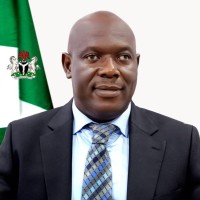
The Hydrocarbon Pollution Remediation Project (HYPREP) has commemorated the 15th anniversary of the release of the United Nations Environment Programme (UNEP) Environmental Assessment Report on Ogoniland, reaffirming its commitment to restoring the environment and improving the livelihoods of affected communities.
In a statement signed by the Project Coordinator, Prof Nenibarini Zabbey, to commemorate the anniversary, HYPREP described the anniversary as a significant milestone in Nigeria’s environmental restoration efforts, noting that the project has made remarkable progress in implementing the recommendations of the landmark UNEP report released on August 4, 2011.
The UNEP report had revealed extensive oil pollution across Ogoniland, severe environmental degradation, and serious public health risks resulting from decades of petroleum operations. It also recommended an initial $1 billion fund to commence the cleanup of the affected communities.
According to HYPREP, the Federal Government formally launched the Ogoni clean-up in 2016, while the Project Coordination Office was established in 2017 to drive the implementation of UNEP’s recommendations.
Zabbey said the current administration has continued to prioritise the project under the Renewed Hope Agenda.
Providing an update on the cleanup, the Project Coordinator disclosed that 30 of the 65 contaminated sites identified by UNEP have been fully remediated, while work is ongoing at several medium- and high-risk locations. It also stated that more than 1.5 million mangrove seedlings have been planted as part of what it described as the world’s largest restoration of oil-degraded mangroves, with over 1,000 hectares of shoreline already rehabilitated.
Zabbey further revealed that 49 Ogoni communities have been connected to potable water schemes through multiple water projects and booster stations aimed at providing safe drinking water across the region.
In the health sector, he said the 100-bed Ogoni Specialist Hospital in Kpite and the 43-bed Cottage Hospital in Buan are nearing completion, adding that several existing health facilities have been upgraded with modern medical equipment, while five ambulances have been donated to improve emergency healthcare services. The Project Coordinator also disclosed that a three-year human health biomonitoring study is being conducted in collaboration with the World Health Organization’s International Agency for Research on Cancer (IARC).
On economic empowerment, Zabbey stated that the Project has created more than 8,000 direct jobs and trained thousands of Ogoni youths and women in various vocational and technical skills, including software development, cybersecurity, aviation, commercial diving, seafaring, mechatronics, and creative arts. The project also reported awarding scholarships to more than 1,000 students, providing grants to small businesses, and supporting persons living with special needs through skills acquisition programmes.
The statement further highlighted ongoing legacy projects, including the Ogoni Power Project and the Centre of Excellence for Environmental Restoration, which it said is about 96 per cent complete. HYPREP also welcomed the recent designation of the Ogoni Wetland as a Ramsar Site of International Importance and pledged to continue promoting biodiversity conservation and sustainable management of the ecosystem.
Marking the anniversary, Zabbey said the progress achieved over the past 15 years demonstrates the collective commitment of government, development partners, stakeholders, and local communities to restoring Ogoniland. He called for renewed collaboration to sustain the cleanup effort, promote environmental sustainability, and support the long-term development of the region. 3
-

 News2 days ago
RSG Targets Nine Million Residents in Mosquito Net Distribution Campaign
-

 Oil & Energy1 day ago
Aiyedatiwa Signs New Electricity Bill
-

 Oil & Energy1 day ago
NLNG Commissions Research And Innovation Centre In RSU
-

 Maritime1 day ago
Marine Minister Commends President Tinubu On NPERA Bill Assent
-

 News2 days ago
KenPoly Holds Eight Convocations, August 29
-

 News2 days ago
RSG Begins Another Phase of Projects Commissioning Today
-

 News2 days ago
RMAFC Completes Revenue Sharing Review, Proposes New Pay
-

 Maritime1 day ago
NAGAFF Petitions IGP Over Alleged Maritime Police Harassment