
Nation
THE STATES

Adamawa
The Commissioner of Information in Adamawa, Alhaji Abdurrahman Jimeta, has described the Action Congress of Nigeria (ACN) in Adamawa as “a dead party” that did not know how to mount an opposition to government policies and programmes.
Abdurrahman, who was reacting to ACN allegation that the state PDP led government has not delivered and was living on borrowed time, said the people of Adamawa knew better.
Abdurrahman said the past administration of Boni Haruna, who is now the state ACN leader, constructed only 300 classrooms in eight years whereas Gov Murtala Nyako who spent four years now had built 4,000 classrooms.
“We have awarded contract for the construction of road networks, transformed agriculture through the introduction of commercial agriculture to empower the people alongside other numerous projects.
“On issues of security and workers salaries ACN is trying to play politics with the issues; everybody knows security is a general problem and that Adamawa is far better in the North East if you talk of security problems.
Bauchi
Some residents of the area marked for the construction of the proposed Bauchi International Airport have accused the government of not compensating them for their lands.
A representative of the residents, Alhaji Musa Ibrahim of Durum Ward, told newsmen in Bauchi on Wednesday that in 1982, some government officials visited the area and wrote down their names.
Ibrahim said that none of the land owners had been paid, adding “We urge the government to tell us who was paid the money in our community so that we can confront him’’.
Also speaking, Malama Hadiza Umar, who said she was representing her mother, said the family had not received any compensation and urged the government to assist them.
“I am here to represent my mother because she is very old and unable to be here; we are asking the good government of Bauchi State to please pay us the compensation,’’ she said.
FCT
President Goodluck Jonathan has said the happiness and aspirations of many families across the world had been dampened by natural disasters such as earthquakes and floods.
Jonathan made the statement at the 39th World Congress on Military Medicine in Abuja.
He listed the natural disasters as earthquakes and landslides in Haiti, China, Spain, India, Turkey as well as floods in Brazil, Philippines, Colombia, South Africa, South Korea and Thailand.
The President was represented on the occasion by the Chief of Defence Staff, Air Chief Marshal, Oluseyi Petinrin.
“There is no gainsaying that many nations in the world are presently grappling with problems of emergencies and natural disasters. The earthquakes and landslides that occurred in 2011 in Haiti and China as well as those in Fukushima, Spain, India and Turkey.
Gombe
The Emir of Pindiga in Akko Local Government Area of Gombe State, Alhaji Adamu Yakubu has helped in resolving the problem of resistance among the people to polio vaccines in two districts.
Yakubu told newsmen on Sunday in Pindiga that he with the assistance of traditional rulers and opinion leaders in the districts, including Kashare, were able to re-orient the people to participate in polio immunisation.
He attributed the problem of resistance by the people to communication gaps between the traditional rulers and their subjects.
“We organised awareness campaigns several times in this emirate in order to reach out to the people and we were able to make them understand the importance of immunisation.
Jigawa
The Economic Adviser, Cross River State Planning Commission, Dr Ndem Ayara, has urged state governments to make laws that will establish State Planning Commissions and Bureau of Statistics.
Ayara gave the advice in Dutse on Monday in an interview with newsmen in Dutse, the Jigawa State capital.
He said that a law establishing the Commissions should make the governors as the chairmen of the commissions to ensure effective implementation of the plans.
“First of all, you need a law that establishes the state planning commission which will put the governor as the chairman.
“The second is that the backbone of planning is statistics and also we need to have law for your state bureau of statistics and those two laws in Cross River State have been passed,” the economic adviser said.
Kebbi
The Kebbi Universal Basic Education Board (SUBEB) has banned the collection of any form of levy by heads of Primary and Junior Secondary Schools (JSS) in the state, an official has said.
Alhaji Sodangi Diggi, the Secretary of the Board, told newsmen in Birnin Kebbi, on Tuesday, that the state government had declared all levies illegal.
“Education at those levels are free and no one should collect any form of levy.“
He warned that violators of the new directive would be penalised.
Kogi
Ahead of the December 3 governorship elections in Kogi, INEC on Monday warned its officials against receiving “strange gifts” from any quarter.
The INEC Chairman, Prof. Attahiru Jega, gave the warning in Okene at a two-day training programme for supervisory presiding officers recruited for the election.
He advised them to exercise self-caution, saying that desperate politicians would attempt to reach out to them before and during the election.
Jega urged the officers to partner with INEC to deliver a free and fair election in the state, saying that the perception of the commission as a credible electoral umpire must be sustained.
The INEC Chairman, who was represented at the event by the national Commissioner in charge of training, Prof. Lai Olurode said the commission intended to improve on the standards achieved in the April elections.
Kwara
The Sector Commander of the FRSC in Kwara, Mr Yusuf Salam, said 17 lives were lost, while 20 persons were injured in motor accidents in the state during the Eid-el-Kabir festival.
Salam told newsmen in Ilorin on Tuesday that most of the accidents were as a result of careless and reckless driving.
He said the command had taken measures to ensure that the rate of accidents were drastically reduced during the Christmas.
“The corps will improve on its efforts and enforcement level. We are introducing more mobile courts to ensure that people violating traffic rules are instantly brought to book.
“During the period, we will encourage the use of rest areas. We will encourage road users, especially motorists, the drivers, at least, when they travel for long period, to rest.
Lagos
Speaker of the House of Representative, Aminu Tambuwal, on Saturday in Lagos defended the inauguration of a Constitution Review Committee by President Goodluck Jonathan.
The committee was charged with the responsibility of advising the President on the amendment of the 1999 Constitution.
Tambuwal made the defence while fielding questions with journalists at the Murtala Muhammed Airport Lagos.
He described the setting up of a committee by Jonathan on constitution review as highly proactive in the dynamic Nigerian polity.
Ogun
The prevailing under-development in Nigeria’s rural communities has been identified as a major threat to the country’s national security.
The Commandant General, Nigerian Security and Civil Defence Corps (NSCDC), Dr Ade Abolurin made the observation in Abeokuta on Monday at the commencement of the 2011 Press Week of the Ogun State Chapter of the NUJ.The theme of the event is “Democracy and National Security”. Abolurin spoke on “Grassroots Development: a Prerequisite to National Security’’.
The NSCDC boss said that information had shown that many of the apprehended terrorists and hoodlums were people who migrated from rural areas to the cities for better living conditions.
Abolurin stressed that there were sub-standard living conditions in the grassroots, due to inadequate provision of electricity, bad roads, poor transportation system and a lack of health facility.
He noted that the situation had resulted in poor health, high infant and maternal mortality, high level of disease, low level of education, chronic poverty and high rate of rural-urban drift.
“The fact that life in the grassroots is nasty and brutish further leads to petty thievery and drug abuse among the adults and youths.
“Many of the youths in the grassroots migrate to the urban areas to get better life, but because many of them are not academically suited for jobs in the urban areas, their life styles are not better than what they are at the grassroots,” he noted.
Osun
The Osun Government is to recruit caterers and food vendors for its elementary school feeding and health programme, known as ‘O-Meal.’
The Operations Officer of the programme, Mrs Olubunmi Ayoola said in a statement in Osogbo on Monday that Gov. Rauf Aregbesola had pledged to improve the programme, which was introduced by his predecessor, retired Brig.-Gen. Olagunsoye Oyinlola.
Ayoolasaid the state government was prepared to re-organise the programme to ensure that it had the desired impact on the school system.
She said arrangements had been concluded to recruit candidates, who possessed the Ordinary National Diploma in Catering and Hotel Management, as caterers and food vendors.
According to the statement, applicants must also possess at least the West African School Certificate (WASC) or General Certificate of Education (GCE) in Home Economics.
Although the number of those to be recruited was not stated, job seekers have started to submit applications for employment under the ‘O-Meal’ Programme.
The programme is expected to cover all elementary schools in the 30 local government areas of the state.



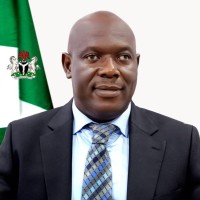
The Hydrocarbon Pollution Remediation Project (HYPREP) has commemorated the 15th anniversary of the release of the United Nations Environment Programme (UNEP) Environmental Assessment Report on Ogoniland, reaffirming its commitment to restoring the environment and improving the livelihoods of affected communities.
In a statement signed by the Project Coordinator, Prof Nenibarini Zabbey, to commemorate the anniversary, HYPREP described the anniversary as a significant milestone in Nigeria’s environmental restoration efforts, noting that the project has made remarkable progress in implementing the recommendations of the landmark UNEP report released on August 4, 2011.
The UNEP report had revealed extensive oil pollution across Ogoniland, severe environmental degradation, and serious public health risks resulting from decades of petroleum operations. It also recommended an initial $1 billion fund to commence the cleanup of the affected communities.
According to HYPREP, the Federal Government formally launched the Ogoni clean-up in 2016, while the Project Coordination Office was established in 2017 to drive the implementation of UNEP’s recommendations.
Zabbey said the current administration has continued to prioritise the project under the Renewed Hope Agenda.
Providing an update on the cleanup, the Project Coordinator disclosed that 30 of the 65 contaminated sites identified by UNEP have been fully remediated, while work is ongoing at several medium- and high-risk locations. It also stated that more than 1.5 million mangrove seedlings have been planted as part of what it described as the world’s largest restoration of oil-degraded mangroves, with over 1,000 hectares of shoreline already rehabilitated.
Zabbey further revealed that 49 Ogoni communities have been connected to potable water schemes through multiple water projects and booster stations aimed at providing safe drinking water across the region.
In the health sector, he said the 100-bed Ogoni Specialist Hospital in Kpite and the 43-bed Cottage Hospital in Buan are nearing completion, adding that several existing health facilities have been upgraded with modern medical equipment, while five ambulances have been donated to improve emergency healthcare services. The Project Coordinator also disclosed that a three-year human health biomonitoring study is being conducted in collaboration with the World Health Organization’s International Agency for Research on Cancer (IARC).
On economic empowerment, Zabbey stated that the Project has created more than 8,000 direct jobs and trained thousands of Ogoni youths and women in various vocational and technical skills, including software development, cybersecurity, aviation, commercial diving, seafaring, mechatronics, and creative arts. The project also reported awarding scholarships to more than 1,000 students, providing grants to small businesses, and supporting persons living with special needs through skills acquisition programmes.
The statement further highlighted ongoing legacy projects, including the Ogoni Power Project and the Centre of Excellence for Environmental Restoration, which it said is about 96 per cent complete. HYPREP also welcomed the recent designation of the Ogoni Wetland as a Ramsar Site of International Importance and pledged to continue promoting biodiversity conservation and sustainable management of the ecosystem.
Marking the anniversary, Zabbey said the progress achieved over the past 15 years demonstrates the collective commitment of government, development partners, stakeholders, and local communities to restoring Ogoniland. He called for renewed collaboration to sustain the cleanup effort, promote environmental sustainability, and support the long-term development of the region. 3
-

 News2 days ago
RSG Targets Nine Million Residents in Mosquito Net Distribution Campaign
-

 Oil & Energy2 days ago
Aiyedatiwa Signs New Electricity Bill
-

 Oil & Energy2 days ago
NLNG Commissions Research And Innovation Centre In RSU
-

 Maritime2 days ago
Marine Minister Commends President Tinubu On NPERA Bill Assent
-

 News2 days ago
KenPoly Holds Eight Convocations, August 29
-

 News2 days ago
RSG Begins Another Phase of Projects Commissioning Today
-

 News2 days ago
RMAFC Completes Revenue Sharing Review, Proposes New Pay
-

 Maritime2 days ago
NAGAFF Petitions IGP Over Alleged Maritime Police Harassment