
Politics
“High Cost Of Governance, Recipe For Under Dev”

Rivers State was created on May 27, 1967 by a military Decree and by 1996, Bayelsa State was carved out of it. However, agitation for the creation of Rivers State predated Nigeria’s independence from Britain in 1960. During the Colonial period. Britain signed many treaties of protection with the chiefs of many coastal communities.
Some of these chiefs had hoped that with Nigeria’s independence, the treaties of protection they signed with Britain would also lapse and thus, they would become independent states. The 1958 constitutional conference which affirmed Nigerian nationhood dashed that hope, but agreed on some measures to allay the fears of the ethnic minorities in this area.
Between 1941 and 1952, an organization known as the izo Rivers People’s League had agitted for the creation of a distinct Rivers Province in 1953, another body called the Council of Rivers Chief People Conference in 1956. The leaders of this organization cooperated with the Calabar Ogaja Rivers (COR) State Movement formed in Uyo in December 1953, but later broke away to press their own case before the Willink commission.
To allay the fears of the minorities under the dominant ethnic groups within the Nigerian nationhood, the British made one import and concession by setting up a Commission headed by Sir Henry Willink to look into the misgivings of the ethnic minorities. The Willink Commission recommended the establishment of the Niger Delta Development Board (NDDB) to address the problem of underdevelopment of the area.
Surprisingly that board did not meet the aspirations of the people and thus, some people attempted to take the extra-legal means to achieve their goal. In February 1966, Isaac Boro, Sam Owonaro and Nottingham Dick with their supporters proclaimed a “Delta Peoples Republic.” Federal and Eastern Nigeria Governments brought this rebellion to an abrupt end. On May 27, 1967, Rivers State was among the twelve States created by the Gen Yakubu Gowon Regime.
The cries of political marginalization, environmental degradation and economic pauperization continued among the Ijaws, such that the Old Ijaw province was carved out of Rivers State as a distinct Bayelsa State in 1996 by the Abacha led military government of Nigeria.
The cries of political marginalization, environmental degradation and economic pauperization continued among the Ijaws, such that the Old Ijaw province was carved out of Rivers State as a distinct Bayelsa State in 1996 by the Abacha led military government of Nigeria.
But after the civilians took power in 1999, through a democratic process, Rivers State has not been able to meet those aspirations it suppose to have met after many years of civilian rules in the state.
Baring his mind on Nigeria’s Democracy, the leader of the Movement for the survival of Ogoni people, (MOSOP), Mr. Ledum Mitee, said in some aspect the country may have done as much as it would have done, in terms of freedom of speech, people can express themselves, press relatively free and delections were done and not military exerting force against everybody, even in terms of human rights, we have gone a step ahead but, still believed that in terms of translating the devidends and benefits that democracy offers the ordinary people, I’m not sure that we have gotten there yet. There were times that people living in the Diobu area use to turn the tap and water runs in their various yards, but today that is not the case, people now use pure water or sink a borehole, that is not good enough for a country like Nigeria. The public schools were not in good shapes until few years. The schools then looked like museum that have been abandoned for ages, thanks for the efforts of this government in Rivers State with the edifice that could be point to that there is still public schools.
Apart from the social amenities which has been absent even before the democratic process in the country, Mitee said, the government have not looked at the Agriculture and way of empowering the young ones. They have not explored enough Agriculture. The country have not reach where it supposed to reach in terms of farming, but unfortunately, the nation was still depending on the people who are toiling on their own pace, and we are getting nothing for it, and that adds to the poverty. In the past Rivers State Government use to have produce board, this board guarantee price. We also use to have palm plantations, rubber plantations but I think, since oil came, we completely dealt deathblow to all those things, our children who are growing up do not know what palm plantations are and why they even exited.
In terms of industry, the country, lendership open floodgatefor all sort of goods from every where, and so industries are completely dead, come and think of what had happened to Michelin some years ago, the company used to offer jobs to people and this was because they could produce tires and people could buy, and the company offered jobs for some thousands of people because they could do tyres and prople would buy them and it offered employments to a lots of people. Trans Amadi use to bubble of activities and several people were employed in various companies at Trans Amadi now the economy has sunk to the level, the factories have all gone and churches have taken over as a means of employment, he said.
He noted that one of the causes of the do or die politics in Nigeria is the lucrative nature and the high stake of the political offices, explaining that society have no longer value for professionals and role modes.
According to him, “you see somebody whom have no qualifications but as soon as he becomes a councilor, he earns more than a professor and Medical Doctor who have spent years of learning. “So, we have averted the value of society. If I may ask who are the people who are as role modes now in society, would you think of a medical doctor who have spent about 8 years in the university, trying to do the little that can save lives, or would you think of a university professor, who have gone through all the years learning, no one thinks of them as role models any longer, we are thinking of how to be councilors or politicians. Some even apply to be a political thugs, because that is what is obtainable.
He also said the cause of running governance in Nigeria is also expensive, stressing that it has also contributed to the underdevelopment of the nation. “If you take a look at the amount the legislators are taking, you would be surprise at the cost of governance. If there is a reduction in those areas, there would be sufficient money to handle social security, government can pay every person N10,000 monthly, if even the person has no job. This would make them not to engage in criminal activities. It happens in other countries, I believe that if all these combinations are put in place, we can now say we are geting the real benefits of democracy.
Stressing further, Mitee said government can as well buy jobs for its youth, adding that some countries do it.
He noted that the idea was to secure future for the coming generations but regretted that Nigeria is not thinking towards that direction and does not give attentions to its youths a situation he said was not a welcome development.
He said as Governor Chibuike Amaechi is about to commence the second phase of his administration, he should consolidate on what he has done in the past four years and try to connect the people with what had happened instead, “He has built schools, he should get teachers, not only getting teachers but also putting the system on check through supervision.” This, he said would help create a system that would work and punish the bad eggs.
According to him, “You can put such edifices’ and then have some class of people who would ruin the good job that he has started.
He advised, Amaechi to be thinking more of a legacy, “By now he should have settled those he owed last section. This is his last lap and the time that he owes himself a legacy. It is something that they would remember him of long after people have forgotten who built roads.
On the conduct of the last general elections by the Independent National Electoral Commission (INEC), the MOSOP leader noted he was not sure we are there yet but said, “you do not expect a leap from zero to hero just one night,” He noted that the problem does not lie on the INEC, but the mentality and attitude of the people to what is being done. In this respect, we could look at the self imposed urgency we gave ourselves, after the 2007 elections. Late Musa Yar’Adua acknowledged that the 2007 elections was not good enough and proposed for an electoral reforms, but regretted that nothing started until few months to the elections, so I think to build on what had happened 2011 election we should start now to amend any area that needs amendment in the electoral law and not to wait till the next election before thinking of having a law. “We give ourselves imposed urgency and I think it is not too good.”



The Senate yesterday received the 2026-2028 Medium Term Expenditure Framework and Fiscal Strategy Paper from President Bola Tinubu, marking the formal launch of the 2026 federal budget cycle.
In a letter addressed to the upper chamber, Tinubu said the submission complies with statutory requirements and sets out the fiscal parameters that will guide the preparation of the 2026 Appropriation Bill.
He explained that the MTEF/FSP outlines the macroeconomic assumptions, revenue projections, and spending priorities that will shape Nigeria’s fiscal direction over the next three years.
The letter was read during plenary by the Deputy President of the Senate, Senator Barau Jibrin (APC, Kano North), who urged lawmakers to expedite consideration of the document.
“It is with pleasure that I forward the 2026 to 2028 Medium-Term Expenditure Framework and Fiscal Strategy Paper for the kind consideration and approval of the Senate.
“The 2026 to 2028 MTEF and FSP were approved during the Federal Executive Council meeting of December 3, 2025, and the 2026 budget of the Federal Government will be prepared based on the parameters and fiscal assumptions therein,” the President stated.
Last week, the Federal Executive Council approved the fiscal projections, pegging the oil benchmark price at $64.85 per barrel and adopting a budget exchange rate of ?1,512/$1 for 2026—figures expected to significantly shape revenue forecasts and expenditure planning.
After reading the President’s letter, Jibrin referred the document to the Senate Committee on Finance, chaired by Senator Sani Musa (APC, Niger East), with a directive to submit its report by Wednesday, December 17.
The Senate adjourned shortly after to allow committees to commence scrutiny of the fiscal framework and continue the ongoing screening of ambassadorial nominees.
Tinubu’s communication to the Senate came less than 24 hours after he transmitted the same MTEF/FSP documents to the leadership of the House of Representatives.
The letter was read on the House floor by the Deputy Speaker, House of Representatives, Benjamin Kalu, who also urged timely legislative action as required by law.
The MTEF and FSP are statutory instruments mandated by the Fiscal Responsibility Act and serve as the blueprint for Nigeria’s annual budgets.
They outline the government’s fiscal stance, macroeconomic assumptions, revenue frameworks, projected deficits, and sectoral priorities over a three-year period.
The Tide reports that approval by the National Assembly is a prerequisite for the executive to present the Appropriation Bill for the next fiscal year.

In a statement on Saturday, the former Senate Leader stated that the allocation of nominees across states and geopolitical zones falls short of the constitutional requirement for fair representation in the composition of the Federal Government.
The ex-Senate Whip warned that allowing the list to pass could deepen ethnic suspicion at a time when the administration should be consolidating national unity.
He highlighted disparities in the spread of nominees, noting that while some states have three or four slots, others have none. He also cited the inclusion of Senator Adamu Garba Talba from Yobe, who reportedly died in July.
“The entire North-East states have seven nominees in the list. Further checks revealed that the South-West geo-political zone has 15 nominees, while North-West and South-East have 13 and 9, respectively.
“North-Central region has 10 nominees in the list of career and non-career ambassadorial nominee while South-South parades 12 nominees,” Senator Ndume said.
According to him, such imbalances could heighten tensions and undermine Section 14(3) of the Constitution.
“My sincere appeal to President Tinubu is to withdraw this list. At this critical juncture in his administration, he should avoid missteps that could undermine national unity and foster ethnic distrust.
“I know him to be a cosmopolitan leader who is at home with every segment and stakeholder in the country. He should withdraw that list and present a fresh set of nominees that will align with the spirit of the Constitution on the Federal Character Principle,” Senator Ndume added.

He accused the legislators of undermining the sanctity of the legislature and acting as instruments of destabilization.
“The members of the Rivers State House of Assembly have, by their actions since they assumed office, shown that they are political puppets and a clog in the wheels of democratic progress,” Comrade Ememobong stated, adding that “They will go down in history as enemies of democracy and those who made mockery of the legislature.”
“So the easiest way to describe their action is a defection from APC to APC,” he said.
Comrade Ememobong announced that the party would deploy constitutional provisions to reclaim its mandate from those who have “ignobly and surreptitiously” abandoned the platform on which they were elected.
“Consequently, the PDP will take legal steps to activate the provision of the Constitution of the Federal Republic of Nigeria (1999 as amended) to recover the mandate gained under the banner of our party which these people have now switched to another platform,” he said.
He urged party members in Rivers State to remain calm and steadfast.
“We urge all party members in Rivers State to remain faithful and resolute, as efforts are underway to rebuild the party along the path of inclusiveness, fairness and equity,” Comrade Ememobong assured.
-

 Politics3 days ago
Senate Receives Tinubu’s 2026-2028 MTEF/FSP For Approval
-

 Sports3 days ago
New W.White Cup: GSS Elekahia Emerged Champions
-
Sports3 days ago
Players Battle For Honours At PH International Polo Tourney
-

 News3 days ago
RSG Lists Key Areas of 2026 Budget
-

 Sports3 days ago
AllStars Club Renovates Tennis Court… Appeal to Stop Misuse
-
 News3 days ago
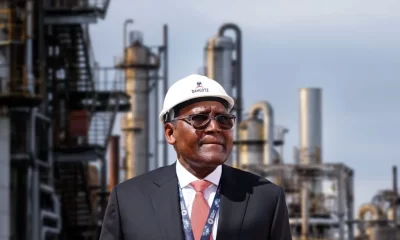
Dangote Unveils N100bn Education Fund For Nigerian Students
-
Sports3 days ago
NFF To Discuss Unpaid Salaries Surrounding S’Eagles Coach
-

 News3 days ago
Tinubu Opens Bodo-Bonny Road …Fubara Expresses Gratitude