
Maritime
Ports Dev And Policy Implications

There is a popular saying that “when two elephants fight, the grass suffers” this scenario could better explain what has come to be of the Nigerian Port Authority (NPA) with the policy of ports concession introduced a few years back after a very serious clash of interest between the government and the Maritime workers Union of Nigeria (MWUN), over the policy.
The federal government embarked on privatisation and commercialisation of Nigerian ports, policy in 1991 which eventually disengaged over 8,000 officers and staff of the authority.
Out of this number terminated that year, about half were professionals, trained by the authority in various universities abroad and two-thirds of the remaining number were people who understudied the Hamburg Port Consultant (HPC), according to records.
Port experts from Germany had operated the Nigerian ports effectively, before some greedy Nigerians who envied their position maneuvered to chase them out of operations and quickly occupied their quarters which were given to them for their services as consultants.
When these foreigners were in service as expatriates, both revenue and operations were not disrupted, as operating cost and wastage in term of fraud was almost absent.
From records, operations of the NPA began to dwindle when Nigerians who understudied the expatriates with the view of taking over from them, as well as the majority of the middle-level manpower who were trained in various universities and ports all over the world were disengaged, leaving about one third of the workforce.
As a result of this, much pressure mounted on the remaining workers, and there was serious cargo and ship congestion to the extent that office staff, including typist were deployed to the traffic department, on board ships, at shore quay apron and staking areas of operations.
As unskilled labour then, a lot of things took place among shipping companies, freight forwards and stevedoring companies. A lot of losses were recorded by the NPA, forcing the authority to go into mass employment of graduates, secretaries and other required officers, who were used to fill the gap so created by the rationalising policy.
That apart, today, another policy popularly known as port concessioning has been introduced, without minding the consequences, not only to the maritime sector, but to the economy also. Developed economies that opted for concessioning did put their economic indices intact, but our economy is so loose and almost unregulated.
The Structural Adjustment Programme (SAP) we thought would improve our economy just led to more debt and borrowing, whereas in other developing economies, the policy improved their economy, and we are living testimonies that the negative effect of SAP is still telling on the Nigerian economy.
Then military head of state made a significant statement that “Nigeria’s problems have defied all economic principles, and are we sure the leakages that pushed SAP to our optimal financial mess will not repeat itself?
Port concessioning chronicled from port privatisation, which means that most of the area of services in the port will be privately operated under a lease agreement.
The term concessioning agreement means that NPA is restricted to being a regulatory body of the port (landlord) and will no longer offer services, as the role of NPA on the new arrangement could be said to be mere fanciful.
The NPA lack the political will and could not check the concessionaire firms, even the charges they impose on importers for one service or the order. Importers who may be compelled to use the services of these private firms cry over high charges, as the NPA can not dictate how much charges the firms should impose on their client.
Such scenario will also lure the multinational shipping companies to introduce multiple charges on Nigerian importers and the effect will be transferred to the Nigerian consumers.
Talking about duplicated charges by shipping operators, it was sometime reported that the Nigerian Shippers Council (NSC) detected about eleven charges imposed by the multinational shipping firm, some of which are not applicable in Nigerian ports.
Such charges include: Shipping companies terminal charges, terminal handling charge; transfer charge; port operations surcharge, commission on turn-over charge, documentation and administrative charge, manifest amendment charge, container deposit, container demurrage and rent/equipment charge. Apart from the above charges, NPA still collect some of their charges from importers.
In the Rivers Ports, especially the Port Harcourt port complex, the activities of some concessionaires create room for one to question the viability of the policy in terms of accelerated development and employment generation.
The Bua ports and Terminal Limited, one of the concessionaires in Port Harcourt wharf had apart from reducing the workforce it inherited which are mostly dock labour workers, it has also up till now failed to rebuild the collapsed quay apron (Berth) in its area of operation.
One could begin to wonder if the terms of concessioning agreement did not cover the aspect of port development and other areas like development of the host communities within which the concessionaires operate.
Rather than pursue programmes that will upgrade the general port condition to make it better than how they met it, some of these concessionaires had remained adamant to issues of port development and employment generation, and this simply suggest that their focus is only on how they will maximise profit, and whatever the effect, implication with respect to their activities on the environment is not much of concern to them.
On the part of the NPA that has lost substantial number of their professional manpower to the concessioning policy, it has now known that most of those staff lost through retrenchment in concessioning are still needed to run the organisation, particularly for those vital technical and specilalised areas that could not be easily be replaced.
In that regard, the NPA had turn-around to re-engage some of these old staff so as to enable it cope with the work load and dire demand for adequate manpower to accomplish stated goals.
From all indications. The new regime of port concessioning has not yeilded the desired objective so envisaged. In the past six years of its implementation. Rather than create employment, it has reduced the workforce, and on the other side, the development of both the port environment and the host communities have not been properly attended to.
The fact that the NPA is still in need of some of the staff it lost to the concessioning policy, for which it engaged some of them on contract, and the fact that port development so envisaged as well as in employment which had not changed suggest that the concessioning policy though might be good, but the timing and implementation leaves much to be desired.
It is ideal that policy makers take their time to look at the various aspect of the implication, irrespective of the perceived profits.
Corlins Walter



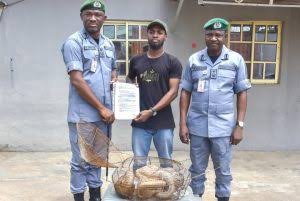
The Nigeria Customs Service (NCS), Federal Operations Unit (FOU) Zone ‘A’, has rescued five more live pangolins in Ogun State, intensifying its crackdown on the illegal wildlife trade and raising fresh concerns about the activities of endangered-species trafficking syndicates.
The latest interception, carried out at about 1:18 a.m. on Friday, October 23, 2026, along the Igbo-Ora/Imeko-Afon axis of Ogun State, followed intelligence reports on the suspected movement of endangered wildlife.
Acting on the intelligence, Customs officers intercepted the five pangolins confined in wire-mesh cages and concealed in a manner suspected to have been designed to evade detection.
The suspected traffickers reportedly abandoned the animals and fled upon sighting the patrol team.
The rescue marks another intervention by the Unit against wildlife trafficking within approximately seven days, prompting calls for an extensive investigation to identify and dismantle the criminal networks behind the illicit trade.
In line with its commitment to wildlife protection, FOU Zone ‘A’ formally handed over the rescued animals to the Greenfingers Wildlife Initiative Centre for safekeeping, rehabilitation and eventual release into a protected habitat.
The handover was conducted by the Deputy Comptroller in charge of Enforcement, Oluwaseun Oguntuase, on behalf of the Acting Controller of the Unit, Deputy Comptroller Oladapo Afeni.
Speaking at the handover ceremony, Oguntuase said the interception of multiple wildlife consignments within a short period underscored the need for sustained investigations and stronger enforcement measures against those involved in the illegal capture, transportation and trafficking of endangered species.
He reaffirmed the Service’s commitment to combating wildlife trafficking, protecting endangered animals and enforcing Nigeria’s obligations under the Convention on International Trade in Endangered Species of Wild Fauna and Flora (CITES), alongside relevant national legislation.
“Pangolins are among the world’s most trafficked mammals. This seizure is another clear warning to those involved in the illegal wildlife trade that Nigeria’s borders and transport corridors remain under active surveillance,” Oguntuase said.
Pangolins are listed under Appendix I of CITES, which generally prohibits international commercial trade in wild-caught specimens and their derivatives, subject to the Convention’s applicable provisions.
Nigeria’s Endangered Species (Control of International Trade and Traffic) Act also provides a legal framework for protecting endangered wildlife and regulating activities involving listed species.
Oguntuase said FOU Zone ‘A’ would sustain intelligence-led operations, deepen collaboration with conservation organisations and other relevant stakeholders, and ensure that rescued animals receive appropriate care.
He warned that individuals involved in wildlife trafficking would face the full weight of the law.
“Those who engage in wildlife trafficking will be made to face the full weight of the law,” he declared.
Receiving the rescued pangolins, Dr. Austin Tochukwu of the Greenfingers Wildlife Initiative Centre commended the Nigeria Customs Service for its vigilance and prompt intervention.
He assured the Service that the organisation would provide the animals with the necessary care and undertake efforts towards their rehabilitation and eventual release into a safe, protected environment.
The latest rescue underscores the importance of collaboration between law enforcement agencies and wildlife conservation organisations in confronting the illegal wildlife trade.
By; Nkpemenyie Mcdominic, Lagos
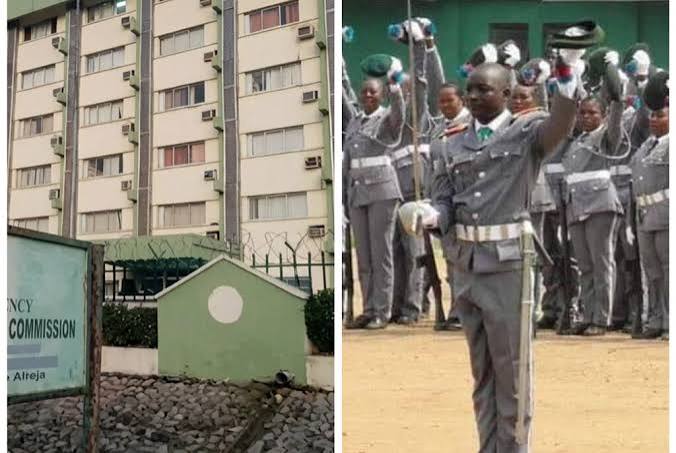
The Federal Character Commission (FCC) has directed the Nigeria Customs Service (NCS) to suspend its ongoing training exercise for newly recruited officers pending an investigation into alleged irregularities in the recruitment process.
The directive follows reports that hundreds of candidates whose names appeared on the published final list and who had completed the required screening, documentation and medical examinations were not invited to participate in the training exercise.
Briefing journalists at the commission’s headquarters in Abuja on Thursday, the Chairman of the FCC Committee on Financial Services, Abdulwasiu Bawa-Allah, said the commission was not invited to monitor the recruitment exercise.
“It is deeply troubling that the NCS conducted this exercise without the commission’s monitoring and oversight,” he said.
Bawa-Allah said the allegations of violations of federal character principles required a thorough investigation, noting that the affected candidates had made significant personal and financial sacrifices in anticipation of their employment.
“Some affected candidates resigned from their jobs, trained replacements, incurred substantial expenses and made important personal decisions.
“They did all these with the expectation that their published selection would lead to training and formal engagement.
” He stressed that the FCC was not an advisory body whose oversight federal establishments could recognise only when convenient.
“It is worthy to note that the FCC is not an advisory body that federal establishments may recognise only when convenient. It is a constitutional institution established to promote, monitor and enforce compliance with federal character principles in appointments and recruitment across ministries, departments and agencies,” he said.
Bawa-Allah directed the NCS to cooperate fully with the commission’s Committee on Financial Services and any investigation lawfully instituted by the commission.
He emphasised that the FCC would invoke its investigative, compliance and enforcement powers under the Constitution to ensure transparency and accountability in the recruitment process.
He added that the commission would take the necessary steps to ensure compliance with federal character principles.
“For clarity, the commission is not asking that unqualified candidates be recruited. The FCC does not replace merit.
“It requires suitably qualified candidates from all parts of Nigeria to receive equitable opportunities through transparent, verifiable and nationally inclusive procedures,” he said.
In a statement issued on October 19, the NCS acknowledged complaints from applicants who appeared on the recruitment shortlist but were subsequently disqualified from proceeding to the training college.
The Service said the Comptroller-General of Customs, Bashir Adewale Adeniyi, had directed a case-by-case review of the complaints after meeting with some of the affected applicants.
It, however, clarified that appearing on the final shortlist did not automatically guarantee enlistment, noting that candidates were required to pass several stages of verification, including credential checks, physical fitness assessments, medical examinations, age verification and drug screening.
By: Nkpemenyie Mcdominic, Lagos

Dredgers Association of Nigeria (DAN) has dissociated itself from a report published on Linda Ikeji’s Blog and other online platforms on October 23, 2026, titled “Dredgers Association Appeals to Sanwo-Olu Over Alleged Extortion, Urges Governor to Call Alebiosu, Cardozo to Order.”
In a disclaimer signed by its National President, Batare Akpomejero and National Secretary, Richard Ntan, the Association categorically stated that the publication did not originate from its National Leadership or any authorised organ of the Association.
DAN clarified that it neither authorised, approved nor issued any petition or press release accusing Hon. Ekundayo Alebiosu, Commissioner for Waterfront Infrastructure Development, Lagos State, and Mr. Cardozo of harassment, intimidation or extortion of dredgers and tipper operators.
The Association further stated that it had no record of the alleged impounding of trucks and demand for ?500,000 as reported in the publication, adding that it completely dissociated itself from the claims.
Reaffirming its relationship with the Lagos State Government under the leadership of Governor Babajide Olusola Sanwo-Olu, DAN described its engagement with the government and the Ministry of Waterfront Infrastructure Development as cordial and collaborative.
On matters relating to dredging regulations and the interpretation of Supreme Court judgments concerning shoreline authority, the Association explained that discussions were being pursued through appropriate institutional channels and dialogue with relevant federal and state authorities, rather than through media confrontations.
Consequently, DAN has disclaimed the report in its entirety, urging the public, the Lagos State Government, Hon. Alebiosu and other stakeholders to disregard the publication as a statement issued on behalf of the Association.
The Association also expressed regret over any embarrassment, inconvenience or reputational damage the publication may have caused the Lagos State Government, the Honourable Commissioner and other officials mentioned.
DAN reaffirmed its commitment to promoting lawful, sustainable and collaborative dredging operations across Nigeria, while maintaining constructive engagement with relevant authorities.
By: Nkpemenyie Mcdominic, Lagos
-

 Education1 day ago
FCE Yola Graduates 3,555 Teachers , Seeks Upgrade to University
-

 Sports1 day ago
Nigerian Trio Target Titles At PFL Africa Finals
-

 Niger Delta1 day ago
Diri Restates Stance On Lagos-Calabar Coastal Highway
-

 Niger Delta1 day ago
C’River, NUJ Pay Tribute To Late Guardian Editor
-

 News1 day ago
NDLEA Recovers Tons Of Illicit Drug Consignments In Nine States
-

 Opinion1 day ago
Checking Voter Apathy In Nigeria’s Electoral Process
-

 Politics1 day ago
2027: DICKSON’S EX-ALLY VOWS TO WORK AGAINST NDC INTEREST IN BAYELSA
-

 Politics1 day ago
2027: GROUP PLEDGES 40,000 SUPPORTERS FOR COALITION CANDIDATES IN RIVERS