
Business
Compensation Law Workers Commend Jonathan

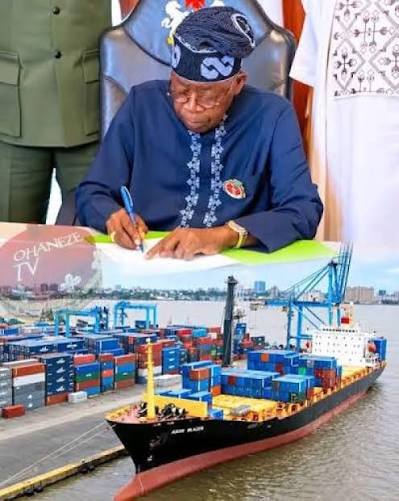
Workers in both the public and private sectors on Tuesday hailed President Goodluck Jonathan for signing the Employees’ Compensation Act into law.
Some of the workers who spoke with newsmen in Abuja said the signing of the Act was a welcome development, urging the government to monitor its implementation.
Mr Obi Okafor, a public servant, said the signing of the Act was one of the best initiatives of the Federal Government.
“This is a welcome development as it concerns the labour sector of the economy. Before now a lot of workers had suffered injuries while on official duties and nobody cared for them.
“With this law, it will be compulsory for an employer to pay compensation to his or her employee who suffers accident while on duty,” he said.
Okafor said the law would go a long way in creating harmonious industrial relationships between labour groups and organisations.
Malam Bello Murtar, an accountant in a private organisation, said that if the law covered the private sector, it would bring hope for labourers who work throughout the day.
“A lot ofthem are not compensated in the event of accidents. They are only given time to recover. Now they have something to fall back on,” Murta said.
Mrs Kemi Ibiyemi, a public servant, said “the only fear is at the implementation stage of this law; we in this country have a lot of ideas but the problem is implementation.
“I will like to call on the Federal Government to ensure that this particular law is implemented because it involves lives,” she said.
The main objective of the Act is to provide a more open and fair system of guaranteed and adequate compensation for all employees or their dependants for any death, injury, disease or disability arising out of or in the course of employment.




-

 Education24 hours ago
FCE Yola Graduates 3,555 Teachers , Seeks Upgrade to University
-

 Niger Delta1 day ago
Diri Restates Stance On Lagos-Calabar Coastal Highway
-

 Sports23 hours ago
Nigerian Trio Target Titles At PFL Africa Finals
-

 Niger Delta1 day ago
C’River, NUJ Pay Tribute To Late Guardian Editor
-

 News1 day ago
NDLEA Recovers Tons Of Illicit Drug Consignments In Nine States
-

 Opinion1 day ago
Checking Voter Apathy In Nigeria’s Electoral Process
-

 Politics23 hours ago
2027: DICKSON’S EX-ALLY VOWS TO WORK AGAINST NDC INTEREST IN BAYELSA
-

 Politics23 hours ago
2027: GROUP PLEDGES 40,000 SUPPORTERS FOR COALITION CANDIDATES IN RIVERS