
Features
Challenges Of Water Resources Development In Nigeria

Water, water everywhere, and not a drop to drink’’ is a popular quote from “Rime of the Ancient Mariner’’, a poem by the English Romantic poet Samuel Taylor Coleridge in the early 1800s, and it exemplifies the concern that water can be abundant but unusable.
The maxim aptly depicts the current situation in Nigeria, as the country, which is blessed and surrounded with a large volume of water, is still grappling with efforts to provide adequate potable water for its citizens.
Available statistics indicate that Nigeria’s surface water is about 226 billion cubic metres, while the ground water is estimated at 406 billion cubic metres. Experts are of the opinion that if the water potential of the country is properly harnessed and utilised , it is enough to satisfy all human, industrial and agricultural as well as livestock needs.
The Federal Ministry of Water Resources is entrusted with the responsibility of facilitating the provision of water for the citizens but many observers argue that the ministry, in the past years, has not been able to fully discharge this function because of its merger with the agriculture ministry.
A water expert, Mr Hope Ogbeide, said that the continuous merger and de-merger of the water resources ministry had caused some setbacks for the ministry in moves to fulfil its mandate.
Ogbeide stressed that the merger had particularly hindered the country’s efforts to provide water for the citizenry in a way that would enhance public health, food security and poverty eradication, among others.
“The agricultural sector had overshadowed the water sector and investments in the water sector were less than those in the agric sector and the development led to the abandonment of most of the viable water projects,’’ he said.
However, the Federal Government, apparently aware of these limitations, has decided to restructure the ministry. In April this year, Dr Goodluck Jonathan, then the country’s Acting President, appointed and swore in Mr Obadiah Ando as the new Minister of Water Resources.
The minister’s inauguration elicited some measure of hope from officials, the non-governmental organisations (NGOs) in the water sector, as well as other stakeholders.
Ando’s appointment after his retirement as the ministry’s Director Planning Research and Statistics 15 years ago is seen by many stakeholders as the beginning of efforts to restore the ministry’s lost glory.
However, the task before the new minister appears to be challenging, while people’s expectations about a positive turn-around of the water sector are rife, regardless of the fact that he has only one year to spend in office.
Apparently aware of the people’s expectations, Ando, on assumption of office, pledged to make potable water available, particularly in the country’s rural areas.
His words: “I thank God for this privilege and I have promised Acting President (now President) Jonathan that I will make water available in the rural areas.
“As you are aware, most of the diseases in Nigeria are water-borne. So, I will strive to reduce the syndrome. By the time I complete my tenure, I should be able to look back and say we had accomplished a lot.
“But I need your cooperation to achieve our goals and if there is anyone who is not ready to work, he can either seek transfer or retire voluntarily. We should do our best to justify the confidence the people reposed in us,’’ he admonished the ministry’s officials.
The minister, however, gave the assurance that in spite of the de-merger of the ministries of water resources and agriculture, the two agencies would still play complementary roles.
“I see the de-merger not as a separation of twins but as one that will continue to complement each other; this is because we are expected to work together as a team. “For us, we will provide adequate water for people’s farms. We will also use the dams for power generation activities to enable the Ministry of Power to generate enough electricity.
“That is one area we shall focus our attention on for now. We will work with all the agencies, especially those that relate with us directly,’’ Ando said.
Aware of the need to carry along workers in carrying out his duties, the minister solicited the officials’ cooperation.
“If you do the right thing, if you are honest and hardworking, we shall all move in the right direction,’’ Ando assured the officials.In spite of all the minister’s assurances, some water experts particularly urge Ando to execute the National Water Resources Master Plan which was developed in concert with the Japanese government in 1995.
Mr Ibrahim Yusuf, a water engineer, argued that the full implementation of the master plan would engender the revival of the water sector, while boosting the utilisation of the country’s vast water resources.He stressed that the master plan would aid the minister in efforts to provide potable water for people in the rural areas. Yusuf noted that all aspects of the water sector such as dams, irrigation, erosion control, hydropower and water supply were addressed in the master plan with project costs attached to them.
The setback we experienced in the sector for the past two years is due to the inability to implement the plan; it is a good document that can be subjected to reviews over the years,’’ he said.
Mr Peter Nze, a water resources analyst, urged the minister to fast-track the implementation of projects, saying: “We have lost so much in terms of implementation of water supply, dams and irrigation projects.
“For the past two and half years, nothing has been achieved. So, we urge the minister to focus on the development and utilisation of the water resources in an integrated manner.
“Irrigation and dam projects should be executed, so as to empower rural communities and provide job opportunities for people across the country,’’ he said.
Nze, however, stressed that need for the minister to accord priority attention to projects such as flood-control, hydropower, inland waterways development, fresh fish production and afforestation schemes.
He particularly canvassed the need to promptly complete the Kashimbilla Dam so as to check the menace which a collapse of the structurally weak volcanic Lake Nyos, in Cameroon, could cause. Nze also wanted considerable emphasis placed on the development of hydro-power resources, as part of efforts to end to the persistent power crisis in Nigeria. Besides, he urged the minister to facilitate the ministry’s collaboration with the National Inland Water Ways Authority and other relevant agencies in efforts to develop and utilise the country’s water resources. Mrs Lydia Okoro, a civil servant, advised the minister to focus his attention on boreholes, dams and irrigation schemes. “Nigeria has a large body of water; the water resources should be utilised for poverty eradication, wealth creation, employment generation and the improvement of the people’s lives in general,’’ she said.“Due to his short tenure in office, the minister should narrow down his attention to small-scale water projects instead of embarking on big projects which he would not be able to complete by the time he leaves office,’’ she added.
Dr Gabriel Dimlong, a water resources analyst, advised the minister to initiate efforts to revive water projects that were hitherto abandoned.
“The water sector has been relegated to the background due to the ministries’ merger and this had led to the stoppage of many viable water projects. Efforts should be made to revive those projects,’’ he said.
A sanitation consultant, Mrs Comfort Olayiwole, however, wanted the minister to give tangible emphasis to the sanitation aspects of his water supply programmes.
According to her, embarking on water supply projects without taking due cognisance of their sanitation and hygiene components will be counter-productive.
“The new minister should not focus only on ensuring the provision of potable water but he should also ensure the promotion of hygienic practices among the people, the beneficiaries of the projects,’’ she said.
Besides, the consultant stressed the need to empower the communities to enable them to regularly maintain the water facilities and their sanitation components, adding, however, that the Federal Government should give the people the requisite technical support.
“They know the right thing to do; all they need is a proper coordination to enable them to do it at the right time. Emphasis should be, however, placed on cleanliness, good sanitary facilities and hygienic practices,’’ Olayiwole said.
She warned that if the government failed to give the communities the essential technical support, the water projects’ impact on the lives of the people would be minimal.
Meanwhile, Ms Junita During, the WaterAid’s Head of Governance, has urged the new minister to implement the “e-Thekwine Declaration’’ so to enable Nigeria to meet the sanitation targets of the Millennium Development Goals (MDGs).
The e-Thekwini Declaration, signed in 2008 in Durban, South Africa, during the AfricaSan Conference, sets global targets for political commitment to put Africa back on track in meeting the sanitation targets of the MDGs.
During said: “We are really excited about President Goodluck Jonathan’s efforts in the water sector, particularly for his decision to have a separate ministry for water resources.
“There are so much that can be achieved. For instance, the e-Thekwine Declaration wants a separate budget for sanitation activities and proposes the allocation of a minimum of .05 per cent of the GDP to sanitation.
“The declaration also talks about national sanitation plans and some other things. Efforts should now be taken to implement some of the commitments spelt out in the declaration with a new drive and a new focus,’’ she added.
During lamented that the water sector had suffered a lot of neglect when it was subsumed under the Ministry of Agriculture, saying that “we are quite excited about the demerger because a lot of us have been calling for it for so long.
“We encourage the new minister to speedily set the ball rolling; marshal his plans and execute his programmes, considering the limited time at his disposal and the huge challenges confronting the sector,’’ she said .
During gave the assurance that WaterAid would work with the minister and other stakeholders in the water sector in efforts to provide safe water to the citizens and ensure basic water sanitation.
All the same, concerned citizens warn the Federal Government against the temptation of merging the water resources ministry with any other ministry in future, saying that the water sector requires serious government activities that are coordinated under the aegis of a separate ministry.
Ologunagha writes for NAN
Cecilia Ologunagba




It has been 25 years of impactful development of the Niger Delta region, facilitated by theNiger Delta Development Commission. NDDC. Without doubt, it has been a remarkable journey, marked by significant milestones and daunting challenges.
For the past week, the NDDC has been celebrating its achievements, beginning with a thanksgiving service in Akure, Ondo State, on July 6, drawing stakeholders and Niger Deltans to express gratitude to God for the Commission’s journey so far.
Taking off on the wings of the Oil Minerals Development Commission, OMPADEC, in 2000, the NDDC has grown into a symbol of federal presence in the oil-rich Niger Delta region.
The celebration moved from spiritual reflection and thanksgiving to strategic communication, with a World Press Conference held in Asaba, Delta State, on Monday, the 7th of July. There, members of the Fourth Estate across all media gathered in what was perhaps the most extensive media engagement of its kind. The NDDC Managing Director and Chief Executive Officer, Dr. Samuel Ogbuku, reaffirmed the Commission’s commitment to its motto of “making a difference.”
Dr. Ogbuku stated, “The President gave us a matching order during our inauguration to positively turn things around in the Niger Delta region.” That presidential directive, he noted, continues to guide the Board and Management as they pursue legacy projects across the region.
From electricity restoration in Ondo to road linkages in Bayelsa and Akwa Ibom, the NDDC’s impact was showcased in clear, tangible terms. “We commissioned the 45-km double-circuit 33KV feeder line from Omotosho Power Station to Okitipupa in Ondo State,” Dr. Ogbuku recalled, “bringing electricity back to 25 local governments after 15 years in darkness.” This was just one of several landmark interventions highlighted during the press briefing, underscoring the Commission’s renewed vigour under the current leadership.
The Managing Director spoke candidly about the setbacks caused by years of instability in leadership. “Frequent changes in management and boards have slowed our progress,” he admitted. “But today, we are targeting legacy projects. Our mandate is to complete those critical projects.” He emphasised that the Commission had transitioned from a transactional mindset to one of transformation, including the digitisation of procurement processes to ensure transparency and accountability.
Other top executives echoed similar sentiments. The Chairman of the Governing Board, Mr. Chiedu Ebie, stressed the importance of collaboration, particularly with the media, whom he described as “critical stakeholders” in advancing development. Alabo Boma Iyaye, the Executive Director of Finance and Administration, noted that the celebrations would run until Saturday, July 12, culminating in a gala night and plenary session in Port Harcourt.
Perhaps, the most significant message from the silver jubilee celebration is the renewed hope that the Niger Delta can finally experience holistic and sustainable development.
According to Ogbuku, “Through the initiative of the Board and Management, we have restructured the administrative architecture of the Commission to its 13 statutory Directorates, introduced robust Corporate Governance protocols… This formalised a value- driven institutional culture anchored on ethics and performance.”
As the weeklong celebrations continue across different states in the region, the NDDC appears determined not just to celebrate its past but to chart a bold course for the future.
The people of the Niger Delta are watching, hopeful that the next 25 years will be defined not by promises, but by lasting progress that transforms lives and communities, truly making a difference.
The celebration also featured a movie premiere titled “Making a Difference”, which traced the Commission’s journey and told stories of transformation in communities once plagued by underdevelopment. For many observers, the film served as both an emotional tribute and a powerful reminder of the NDDC’s role in shaping the destiny of the region.
The Governing Board and management of the NDDC have again proven to Nigerians, particularly the people of the oil-bearing Niger Delta region, that history does matter. They have also shown clearly that extraordinary personalities can upturn calculations and permutations. The above assertion was evidenced by the torrents of praises, accolades, and commendations poured on the Commission and its management and board by critical stakeholders during its week-long 25th anniversary celebration.
Beginning with Ondo State, one of the NDDC mandate states, Ondo Governor, Lucky Aiyedatiwa, hailed the management of the NDDC for the peace and development currently prevailing in the Niger Delta region. He said the Commission, under the current management and board, has succeeded in bridging developmental gaps in the region, noting that NDDC’s emphasis on partnerships and collaboration aimed at driving sustainable development across the Niger Delta has ushered in unprecedented progress.
Aiyedatiwa, who spoke at the Thanksgiving Service of the NDDC held at St Thomas’s Anglican Church, Akure, the Ondo State capital, stressed that the commission has undoubtedly lived up to its established mandate, commending the Board and Management for their exemplary leadership and commitment.
The Governor hailed the commission’s commitment and dedication to project conception, implementation, and completion, noting that the NDDC has established a culture of delivery and the region would no longer witness abandonment of projects as was the case in the past.
He said, “As we celebrate the Silver Jubilee of the NDDC, we must acknowledge the progress we have made and also recognise that there is still much work to be done as the Niger Delta region continues to face significant development challenges and we must work together to address these issues. “I urge the NDDC to continue to improve on its activities, ensuring that projects are tailored to the needs of the communities we serve. Let us work together to unlock the potential of our region, promote economic growth and enhance the lives of our people. We are partners in progress, unity and development.”
From Ondo State to Asaba, the Delta State capital, it was the same rain of praises. The Asaba monarch, the Asagba of Asaba, Obi Epiphany Azinge, on his part, was full of praises for the NDDC for its achievements in the past 25 years.
Obi Azinge spoke when Ebie led a delegation of the Commission’s Board and Management to pay a courtesy visit to him in his palace in Asaba, the Delta State capital. The Royal Father commended the NDDC for its intervention in several sectors across the Niger Delta region.
He expressed delight with the foreign postgraduate scholarship programme, which had helped many youths from the Niger Delta upgrade their knowledge.
He also acknowledged the contributions of the NDDC Chairman, whom he said had served the Delta State Government in different capacities. He noted that Ebie served meritoriously as Delta State Commissioner for Basic and Secondary Education and later, Secretary to the State Government. The monarch thanked the NDDC for selecting Asaba as the venue for some of the activities marking its 25th anniversary, such as a press conference and the movie premiere.
Earlier, the NDDC Board Chairman congratulated Asagba on his ascension to the throne of his forefathers, saying he was eminently qualified for the position. Ebie expressed optimism that the Asagba’s reign would bring good tidings to Asaba, which serves as both a Kingdom and the capital of Delta State.
He stated that the NDDC had come of age and was now a big brother to the new development agencies in Nigeria’s geo-political zones. Ebie disclosed that as part of the silver jubilee celebration, the Commission was going around the nine States of the Niger Delta.
The NDDC Chief Executive Officer pledged that the NDDC’s commitment to adhering strictly to the President’s directive to the Commission to complete all ongoing projects in the region, including roads, bridges, schools, and healthcare facilities. He disclosed that the Commission was engaging all stakeholders to ensure harmony and cooperation in the task of developing the hitherto neglected Niger Delta region.
He noted that, ”It is not only by our efforts; it is the collaborative efforts from all the stakeholders who believe the time has come when there should be stability in the NDDC and that stability is a challenge to us to ensure that we deliver development to the people of the Niger Delta region.”
Ifeatu Agbu
Agbu wrote in from Port Harcourt.
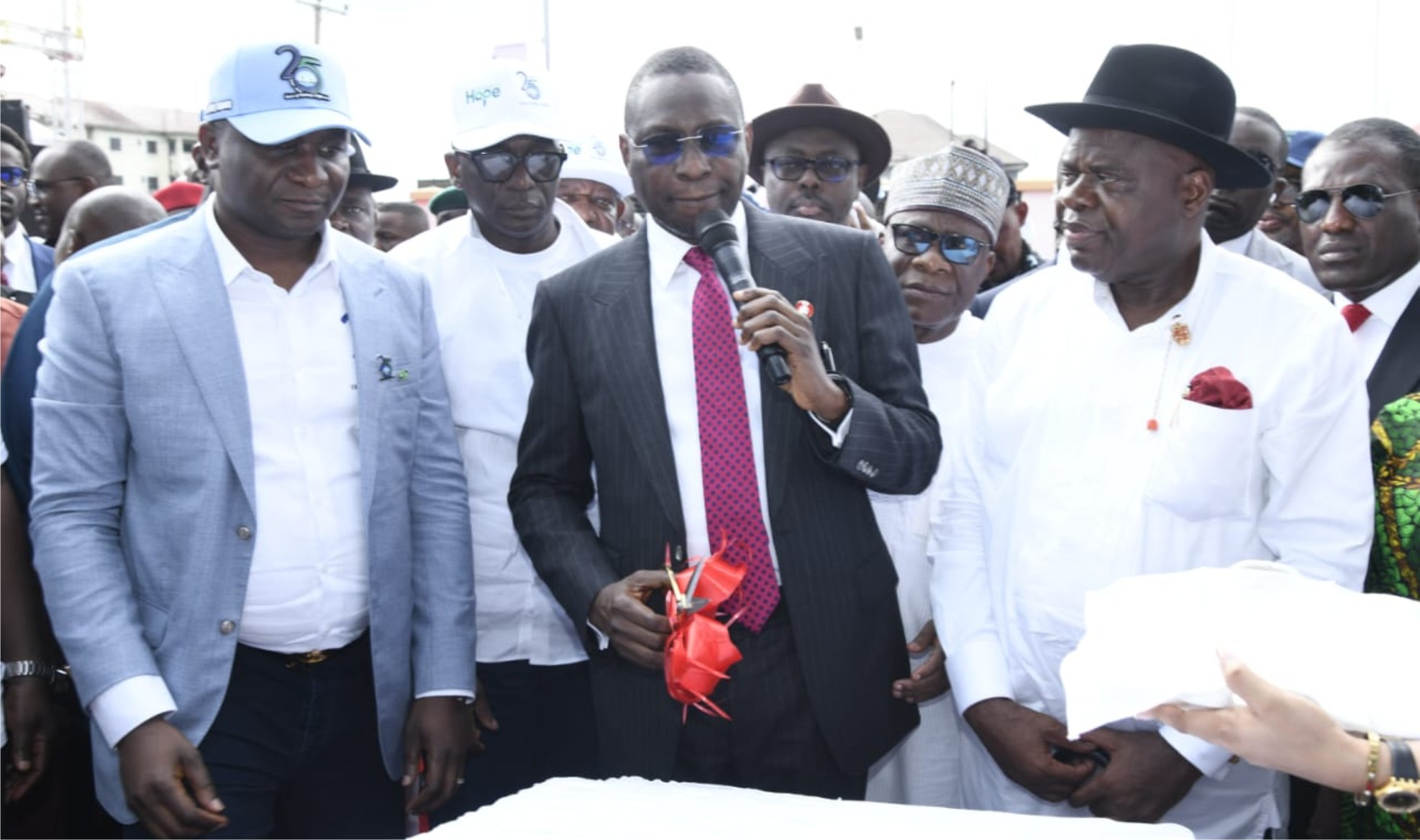
The mandate of the Niger Delta Development Commission, NDDC, is to facilitate the rapid and sustainable development of the Niger Delta region, while that of the Economic and Financial Crimes Commission, EFCC, is to investigates financial crimes and put corrupt practices in check.
Given their different roles, the idea of an alliance between the two organisations may seem far-fetched. However, with the NDDC Managing Director, Dr Samuel Ogbuku, and the EFCC Executive Chairman, Mr. Olanikpekun Olukoyede, it is not just an idea; it is a reality.
The unique collaboration between the NDDC and the EFCC has given rise to the Renewed Hope Multi-Purpose Training Centre, unveiled on Tuesday at Otuokpoti Community in Ogbia Local Government Area, Bayelsa State.
According to the NDDC Managing Director, the vast training complex was executed with funds recovered on behalf of the Commission by the EFCC.
Ogbuku explained that the Bayelsa training centre was funded through the money recovered by the EFCC and executed under a signed performance bond, ensuring transparency and impact. He noted that the facility represented one of several such centres being constructed in Delta and Rivers States. He said: “We have similar facilities currently under construction in Odi, Bayelsa State, while the ones in Delta State are being built in Patani and Ozorro and another two in Rivers State.”
He observed that the Multi-Purpose Training Centre, which was completed in record time, was a partnership between the EFCC and the NDDC, as the anti-crime agency had recovered the funds that facilitated the project’s execution.
Ogbuku observed that the facility, which could accommodate 1,000 persons, represented a significant step toward empowering local communities through skills development and inclusive growth.
The training centre’s components, which include a school, hospital, cafeteria, police post, and recreational centre, are all designed to support training, healthcare, and emergency accommodation within a single integrated complex.
Speaking at the inauguration ceremony, the EFCC Chairman assured the NDDC of the release of more recovered funds in the coming weeks.
Olukoyede described the NDDC as a “renewed and transformed government agency.” He assured that the EFCC would do everything to recover all outstanding statutory contributions due to the NDDC from oil companies.
He noted: “We have made several recoveries on behalf of the NDDC, and we will not relent in this direction. We are encouraged by the fact that the NDDC is making the Renewed Hope Agenda of the Federal Government a reality in the Niger Delta region.”
Olukoyede commended the NDDC for its institutional and policy reforms, declaring that the people of the Niger Delta will have every reason to celebrate the current leadership of the Commission. He described the NDDC as a beacon of good governance under President Bola Ahmed Tinubu.
He noted: “The Niger Delta is the goose that lays the golden egg and should not be denied the benefits of that golden egg. On our part at the EFCC, we must do everything within our power to ensure that the three per cent statutory contribution due to the NDDC is recovered and handed over to the Commission. We are going to continue supporting you.”
He said further: “Under this President, NDDC is working; good governance is being delivered. It is my delight to be part of this transformational agenda. The Renewed Hope Agenda is no longer a slogan—it is a reality. For the first time, people are identifying with what NDDC is doing.”
Olukoyede commended the NDDC, saying the Commission has refined its processes to uphold the principles of probity. This aligns with the agency’s head’s emphasis on upholding transparency and accountability in the country’s affairs.
The Chairman of the anti-crime agency confessed that his perspective on the NDDC was turned around in 2024, when the NDDC management, led by Ogbuku, paid him a courtesy visit at the EFCC’s headquarters in Abuja.
Olukoyede stated that he was impressed by the Commission’s “Rewind to Rebirth” initiative.
He declared: “The five minutes of interaction with the MD left me with a different perception of NDDC. Maybe, we will begin to see an NDDC that is a symbol of pride, accountability, transparency and able to deliver on its mandate.
“From his presentation, you can see that he is ready to bring a change, and that is the exact thing that we stand for in EFCC.”
Assuring that the EFCC would continue to assist the NDDC to achieve its mandate, he said: “We have been working with you to make recoveries; we will continue to do more.
“The collaboration is something we need to take to the next level, and with what you have put on the table I think we are ready to work with you to strengthen your systems and processes and to take the NDDC to the next level.”
In his remarks, the Minister of Niger Delta Development, Engr. Abubakar Momoh, praised the NDDC Board and Management for their unity of purpose and commitment to service delivery, stating that the level of harmony and stability within the Commission is unprecedented.
He declared: “What we are witnessing here today has never happened in the history of the NDDC. Since I assumed office as Minister, I have not been called upon to settle any crisis within the Commission. This is a testament to the teamwork between the Board and Management.”
Also speaking, the Chairman of the NDDC Governing Board, Mr. Chiedu Ebie, emphasised the human capital development focus of the two projects commissioned, noting that reforming the NDDC is an ongoing but rewarding process.
He stated: “We are moving from transaction to transformation. We are doing our best to improve not just the reputation of the NDDC, but everything that concerns the Commission. Today is about promoting and celebrating human capacity.”
Without a doubt, the Niger Delta region is confronted with ecological and environmental challenges that should, perforce, attract significant funds from the Federal Government and the oil companies operating in the region.
Sadly, this has not been so, thus limiting the capacity of the NDDC to fulfill its mandate of driving the development process and transforming the Niger Delta region into one that is “economically prosperous, socially stable, ecologically regenerative and politically peaceful.”
It is rather unfortunate that, despite the spirited efforts by successive boards and managements of the NDDC to meet the expectations of the people, their efforts have not been matched with commensurate funding.
The issue of inadequate funding is resurfacing again. Indeed, it is an inconvenient truth that will remain on the front burner until it is fully addressed.
That explains why the NDDC Managing Director highlighted the issue during interactive sessions that the Commission’s Board and Management held with the relevant Committees of the National Assembly in Abuja last year.
Ogbuku told the House of Representatives Committee on NDDC, chaired by Hon. Ibori-Suenu Erhiatake, that the Commission is owed over N2 trillion, arising from withheld funds and underpayments by both the government and the oil companies. He blamed this on non-compliance with the Act establishing the Commission.
Given the enormous impact of their activities on the environment, the oil companies are expected to be at the forefront in the critical task of urgently developing the oil basin that has suffered so much neglect in the past. It is, in fact, in their interest to develop the communities where they operate to guarantee peace, which is very necessary for them to continue with their work.
Thankfully, both the Senate and the House of Representatives promised to assist the NDDC in recovering its outstanding funds. In their various interactions with the NDDC leadership, the lawmakers expressed concern about the disregard for existing laws governing the Commission’s funding.
The Chairman of the Senate Committee on NDDC, Senator Asuquo Ekpenyong, expressed displeasure over the disregard for the law by the International Oil Companies (IOCs) and promised to call them to order.
The Senate Committee Chairman stated that proper funding would help NDDC to adequately address the sustainable development of the Niger Delta region, noting that the challenge of developing the region was enormous and that all relevant contributors to the NDDC must play their roles diligently.
Senator Ekpenyong said that in discharging its oversight functions, his committee will ensure that every contributor to NDDC pays what they owe the Commission, “because we cannot afford to toy with the development of that very important region. We owe it to the country to make sure that we improve the living conditions of the people of the region.”
It is reassuring to note that both chambers of the National Assembly are concerned about the pressing funding challenges facing the NDDC and are taking steps to address the situation.
The lawmakers understand that we have a responsibility to adequately fuel the vehicle chosen to drive the development process in the Niger Delta region.
In 2023, the House of Representatives unveiled plans to investigate the activities of International Oil Companies (IOCs) operating in the Niger Delta region, as well as the recovery of over $4 billion allegedly owed to the NDDC.
The resolution was passed sequel to the adoption of a motion sponsored by Hon. Donald Kimikanboh Ojogo, who frowned at the flagrant breach of the NDDC Act, 2000, which was established in response to heightened agitations and violent yearnings for special intervention in the oil-producing states.
He said: “The House is aware that the indebtedness of the IOCs to the NDDC had culminated in the drive by the Economic and Financial Crimes Commission (EFCC) to commence the debt recovery process.
By Ifeatu Agbu
-

 News2 days ago
RSG Targets Nine Million Residents in Mosquito Net Distribution Campaign
-

 Oil & Energy2 days ago
Aiyedatiwa Signs New Electricity Bill
-

 Oil & Energy2 days ago
NLNG Commissions Research And Innovation Centre In RSU
-

 Maritime2 days ago
Marine Minister Commends President Tinubu On NPERA Bill Assent
-

 News2 days ago
KenPoly Holds Eight Convocations, August 29
-

 News2 days ago
RSG Begins Another Phase of Projects Commissioning Today
-

 News2 days ago
RMAFC Completes Revenue Sharing Review, Proposes New Pay
-

 Maritime2 days ago
NAGAFF Petitions IGP Over Alleged Maritime Police Harassment