
News
Nigeria @61: Nothing To Celebrate, Nigerians Lament

As Nigerians celebrate a new beginning at 61 years of age, stakeholders in all sectors of the nation’s life have x-rayed the myriad of challenges facing the country. Their takes are reproduced below. Please, read on.
An Educationist, Blessing Atuora said: “At 61, I congratulate Nigerians for their determination to survive all odds and still carry on as a nation. Even under several threats, unity prevailed till date.
“I believe the problem of Nigeria is more of leadership. Once we get the right minded people in the leadership, they will do the right thing and ensure that everybody respects the law.
“We have the human resources to grow higher. If we give education adequate attention, Nigeria has the brains and minds to build this nation.
“Economically, Nigeria is great. But greed and apathy amongst the leaders and the led kept us where we are not supposed to be”.
Stephen Ozor, Legislative Aide/Public Analyst: “Today, we celebrate the 61st year of our nation’s Independence.
“Nigeria at 61 years as a sovereign state is no mean feat and this is deserving of celebration.
“However, each moment of celebration of one’s birth anniversary is a time for the gradually aging adult to, one; rejoice over the gift of life and its sustenance and two; reflect, recount, retreat on every aspect of his/her life and re-strategize and chart better ways forward in the right direction.
“Our 61st Independence Anniversary is yet another opportunity for us to look back as a people and appraise our journey together as a nation of diverse culture and ethnicity, particularly in the areas of our cohesion, economic development, human rights, justice and fair play, security, employment, human capital development, etc.
“Nigeria is a country blessed with abundant natural resources and in all honesty, at 61 years, matching our achievements with where we should be, we have not performed excellently.
“We all have a responsibility to make Nigeria the country of our dream. Leaders should lead with the overall interest of country and countrymen at heart. They should prioritize security of lives and properties of citizens and shun nepotism, ethnicity and all forms of discrimination against any fellow citizen.
“This shall foster unity in the country and resultantly drive progress.
“Happy 61st Independence Anniversary to Nigeria and fellow Nigerians”.
Yusuf Ahmed; Civil Engineer: “What are we celebrating? Nigeria that is getting worse with age? We are growing in crime and criminality when others are growing in technology and economy. Tuesday, this week, over 50 persons were gunned down in a community in Niger State. No help from anywhere. Our Leaders keep on confining killings and condoling with the bereaved.
“It has become a daily occurrence in every region. Nowhere is safe. I can’t celebrate Nigeria that was better 30 years ago. Nigeria that is dwindling and disintegrating with age? I can’t celebrate a nation whose future has become so bleak. The masses are living in fear day and night.
“I only pray that God sends us good leaders who can save this nation from total collapse”.
Elizabeth Isah; Civil Servant: “@ 61, a satchet of pure water sells at N20. Some Nigerians workers still earn less than N20,000 per month and thousands of retirees are being owed for months.
“I pray for Nigeria at 61. May God forgive us our sins, give Nigerians the will and zeal to unseat bad leaders, vote with patriotism in our minds and uphold justice.So, help us God”.
Arch Chinwendu Nwubi said there should be a great commitment by the leadership of the country to improve the betterment of the nation, especially in the areas of building and housing sector.
Nwaubi, who is a building specialist, averred that the building sector has not been positively impacted much, adding that there should be a concerted efforts to ensure that the costs of building materials are addressed as the nation celebrates 61st Independence in order to address the challenges of housing deficit across the country.
He, however, commended the efforts of the leadership across the three tiers in the country for the unity and oneness, adding that the country can be great again if only we all can be committed to the one Nigeria project.
Also speaking, a youth activist, Comrade Precious Dike, opined that the unity of the country cannot be over-emphasized, adding that the strength of the nation dependent upon on our unity.
Dike, the prime minister of Etche Youth Worldwide, said the leadership of the country must use the 61st Independence celebration to address all the challenges that was provoking agitations across various ethnic nationalities in recent times.
He used the opportunity to call on the youth to shun all negative tendencies that are inimical to the development and unity of the country, adding that they should channel their energetic ventures to things that will assist the leaders move the country forward.
In his remarks, an agricultural expert, Mr Ndukwe Amah, said more zeal be committed towards developing the agriculture sector, adding that the nation has not fair to well within the years under review.
Amah opined that the agriculture sector has the needed key to unlock the nation’s economic diversification if properly harnessed, adding that the sector has the capacity to generate millions of job opportunities especially to our unemployed young men.
He thanked the Federal Government for the renewed interest in the sector through various loan schemes that have assisted farmers.
He, however, urged states government to step into developing of the agric sector in their various states so as boast economic growth.
The National Coordinator, Community Reformed Youth Initiatives (CRY), Engr Gogo Wenike-Briggs, said that the unity of the country under threat, sequel to series of challenges facing the nation.
Wenike-Briggs, who spoke in in Port Harcourt, said that in authority lack the audacity to sermonize unity, if they cannot demonstrate faith.
“At 61, it is difficult to preach unity if you can’t offer faith. The unity of our dear country is under threats today because to many people have lost faith in the nation. Why…the answer is sad but relatively straight forward”, he said.
The factors responsible for loosed faith in the country, he said, was high rate of unemployment, tribalism,religion, quota system and federal character selection or appointment system.
To have it right, he said that the drivers of the system, must preach unity with a sincere heart and not been hypocritical about it.
“I can only preach one Nigeria with my mouth but the Nigerian state is more than just saying one Nigeria, rather we as a Nigerian government must preach one Nigeria with love for the nation, security for the people, employment for the youths, as visionaries, builders, religious leaders,teachers and all workers bringing a progress that is inclusive of all Nigerians”, he said.
To keep any great nation up to a high standard of civilization, he said, there must be enough superior characters to hold the balance of power, and added that such would be lost if the system adopted a different approach.
In his opinion, a Lecture with Rivers State University, Dr Monday Didia, pointed that the country was in a serious administrative challenge.
Didia expressed regrets that at 61, the country was yet to have a clear administrative system that spelt out how some things should be handled clearly.
He recalled the issue of employment where the chances are slim in some quarters whereas, some other areas enjoy robust opportunity.
On how to improve the quality of education in the country, he suggested that all forms of overseas learning opportunities should be stopped or limited.
According to him, such opportunities only favour a certain class, who ought to have fixed or reform the system, but would not because of their financial prowess to send their children/wards abroad for learning.
“If there would be a kind of constitutional provision to bare the ruling class and other top class from sending their people abroad for studies, they will be forced to make policies that will improve education in this country. Since they have the opportunity to sponsor their people abroad for studies, I don’t think they have anything to loose, hence the nonchalant attitude towards education”, he said.
Another respondent, Madam Chisa Amadi, a businesswoman,noted that the country was still at a kindergarten stage.
Amadi, said no parent would be proud to have Nigeria as a child with feeding bottle at 61.
She was of the view that the country was yet to make a remarkable mark in any of its sectors.
“We are not there in security. A country whose military training formation was attacked, up till date, no useful report about its cause? Is it in power, or where? For me, we are only marking the day the whites left our soil as our rulers, that’s all”, he said.
Obiajulu Agu, Political Analyst:”Sadly, Nigeria at 61 could have been in a totally different state than her present poor lot. It is heart-rending that a devastating combination of cycles of bad leadership and hapless followership took Nigeria down an ugly path and has kept her mired in unfulfilled potential and stunted development.
“This unfortunate situation is in spite of her enormous endowments in human capital and natural resources.
“However, the Nigerian spirit of resilience that dwells in me and also resides in tens of millions of other fellow citizens assures me to remain hopeful of a better and beautiful future yet for the country.
“This unflinching faith in Nigeria is that, in spite of her various challenges, Nigerians are relentlessly toiling at various tasks within the country chasing progress in their lives. And outside her shores, Nigerians are excelling in different spheres, driving the over $20billion annual remittances from the country’s Diaspora community, boosting foreign exchange earnings”.
Helen Akananwan, Tokunbo bags seller: “A man at 61is matured enough to take care of himself and family but in the case of Nigeria our country is not so. Nigeria is crawling on the ground at 61 and nothing to write home about. Let me give you example .some of us who buy our market from Cotonou are now out of business because of exchange rate. Naira money can no longer meet up common Cefa talk less of dollar. Oga, please, I don’t know where our country is going because of bad leadership.They keep borrowing and the common man on the street is not feeling the impact”.
Ismail Aniemu, Maritime Expert: “Nigeria maritime industry has not truly lived up to the country’s age of 61. Comparatively, Neighbouring West and Central African countries, talking about Benin Republic,Togo, Ghana, Ivory Coast and Cameroun seems to be developing their port system at a faster pace.
“Findings have shown that these smaller countries target Nigerian bound cargoes thereby increasing the incidents of smuggling.
“At 61, Nigeria should review her maritime related laws and make them synchronize with modern realities like achieving ease of doing business by fixing port access roads, which should be treated like a national emergency and maximizing the advantages of technology and transparency”.
Former National President, Nigeria Merchant Navy Officers and Water Transport Senior Staff Association, Matthew Alalade, while speaking on the 61 Anniversary of the country, maintained that ‘Nigeria in time past was identified as the big brother of Africa but today the narrative has changed.
“Our maritime industry years back was worthy of emulation but the situation has changed”.
Unarguably, Alalade, said the maritime sector is still struggling to grow.
According to him, smaller West African countries are taking over maritime business from Nigeria because government policies on the sector are not encouraging; that is why we find ourselves where we are today.
He called on the government to encourage the transportation industry and improve on decay infrastructure as a veritable tool for boosting the nation’s economy.
On his part, a consultant to the International Labour Organization (ILO),Captain Thomas Kemewerigha, said, “On paper and social media it is assumed that the nation’s maritime industry is doing well but in practice terms we are not there yet in terms of growth and development.
“Our local content policy is zero because the influx of foreigners in waterways since the introduction of the Cabotage Act has not addressed the challenges befalling Nigerian seafarers. The government’s needs to work up from she slumber because at 61 Nigeria as a country should be competing with Asia and European countries in terms of growth and not struggling.
“Therefore, we need to get it right this time around. 61 years is more like a grandfather to many nations of the world but we are acting like a baby literally”.
Barrister Chika Aleruchi Wobo: “Nigeria as a country @ 61 is a failure to the masses based on insecurity, unemployment, failure in the governance by our leaders, hard economy and high cost of livings experienced by the masses.
“@61, Nigeria is no longer a baby, a matured adult, but considering the state of the Nation, Nigeria is a colossal failure, it is not only President Muhammadu Buhari issue, but a systemic issue from 1960 to date.
“Buhari only inherited the failure of the past government, he only galvanized it because of inadequacy policy management, but as a nation, security wise, we have failures woefully because as nation, the only basic thing that can attracts Foreign Direct Investment (FDI), investors to the country is stability, safety of lives and property, in fact from the North-East to the South/South,everywhere, there is a total breach of insecurity, killings, abductions of school children and elderly and wanton destruction of lives and property across the states.
“On economy, countries do borrow monies to developed and build up its infrastructures across the globe, Buhari is not only government that borrows, past administration has been borrowing, not borrowing monies that matters, but the management of the fund is heavy a problem, Nigerians see’s politics as the short cut amongst our youths as a means of looting the national treasury, everybody wants to loot the state wealth by indulging in politics, but in overseas, countries liked United States of America, Great Britain is indebted to the world bank through borrowing, no county that is not indebted, but the management and policy makers and politicians is what is giving us this systemic failures.
“There are cries for restructuring, but I don’t believed in this restructuring, but there should be structural restructuring, not physical, something should be in the hand of the federal government, but since politics has divided the country into six geo- political Zones, now they have given the North East Development Commission, the South/South has the Niger Delta Development Commission (NDDC), let there be development commissions in all the geo- political zones, so that they can be able to collect little powers from the state governors, so that the governors can be answerable to the development commission so that all monies released will not be going to the governors alone, but to the commission who now release money to the governors”.
On Valued Added Tax (VAT), Wobo said the constitution of the Federal Republic Nigeria has not actually defines who collects VAT, but the Supreme Court in their wisdom may rule that VAT should go to the exclusive list, but in countries like Australia, New Zealand, VAT is usually collected by the residential states for its development and not exclusive lists.
@61,the lawyer admonished the Federal Government to make some changes on appointment of some persons into offices of trust for the will-being of the nation.
He faulted Mr. President for appointing the national electoral officers, but insisted that such appointment should be decided by the National Judiciary Commission (NJC).
Government should do some changes in some appointment of office holders.
He advocated for the scraping of the State Independent Electoral Commission (SIEC).
Mr. Anyawu Chinedu, Teacher: “Our problem as Nations is our political leaders, they know what to do as leaders, but refused because of personal interest.
“On our economy, our leaders should go back to drawing board and see what to do to reduce inflation, everything on the high side, an average Nigeria cannot go to the market and buy something with a little money, things are very expensive, something you can buy at the rate of N200, has skyrocketed, things are very high”.
On insecurity, he said the government in power should empower the youths, unemployment everywhere, the politicians knows that there is hunger in the land, they also know that boys do kidnapped, destroys and killed innocent civilians.
As a graduate, no job, with PHD no job to feed the mouth, when a graduate supposed to be a research assistant no job, our leaders knows what to do, they should create jobs, empower the youths.
@ 61 is not a joke, a man at 61 is a grandfather, our leaders should go to the drawing board and do the right thing, the nation will bounce back as a people.
Rev. Canon Friday Asobinow Wosu, Dioceses of Ikwerre Anglican Communion: I want to join well-meaning people, particularly President Muhammad Buhari and Rivers State Governor, Chief Nyesom Wike, to congratulate the nation for attending this level of our nationhood. I also thank God for keeping us together as a nation and as a country.
Politically, we are making progress since 1999, the country is not at war with its neighbouring states, but what is going on at the Northern Nigeria is not palatable, an aberration.
In terms of security, we know that insecurity is everywhere in the world, but that of Nigeria, it is expected that internal security is well galvanized, tackled by the security agent’s.
It is an aberration that criminals, bandits will attack our military formation’s, kidnap our soldiers and even militia groups will forced sit at home in Eastern Nigeria, called on President Buhari to beef up security across the regions to guarantee safety of lives and property.
On economy, we are not making head way, we are borrowing every day, no fiscal development, no employment, killings and banditry.
If the nation is borrowing, we should use it to developed the nation and not for parties.
The cleric called on Nigerians to diversify its economy from oil to agriculture, Information and Communication Technology (ICT) to create employments, stability and reduce hardships.
On religion, the clergy advised the religious leaders to support the nation in prayers to curb social vices.
The clergy appealed to the clerics to shun act of corruption and embrace peace and harmony, insisted that clergies shun desist from evils and ensure that all hands are on deck to develop the nation for better.
By: Nnake Amaechi-Nnadi (Abuja), Nkpemenyie Mcdominic
(Lagos), Amadi Akujobi, King Onunwo, Chinedu Wosu (Port Harcourt)


News
Rivers DPOs Receive Awards For Outstanding Performance In Crime Prevention …As Students, Media Group Honour CSP Worgu, CSP Yusuf

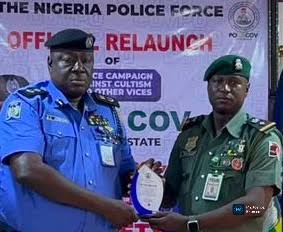
The beneficiaries are the DPO of Afam Police Division, CSP Endurance Worgu and his counterpart at Oyigbo Police Division, CSP Bello Yusuf.
CSP Worgu was honoured by a group of students under the aegis of Rivers State Graduate Students Associations for what they described as his commitment and outstanding performance in the discharge of his duties.
The students, led by Chidi John Enyie, Esq. said CSP Worgu was selected based on his track record and status as one of the longest-serving young DPOs of Rivers State origin.
According to the group, CSP Worgu has made significant contributions to the protection of lives and property in the area since assuming office following the #EndSARS period.
The students said they were particularly impressed by the improvement in community-police relations under his leadership, noting that professionalism had remained a key feature of his service.
Enyie represented by Comrade Briggs Soku, said the students community was pleased to identify with a Rivers indigene who had distinguished himself in the police force.
He said the students considered it necessary to encourage and celebrate CSP Worgu because of his achievements as a young Rivers man excelling in a profession that many people from the state were often reluctant to join.
Receiving the award at his office in Afam, CSP Worgu expressed gratitude to God and the students for finding him worthy of the honour.
The DPO said the recognition had boosted his morale and encouraged him to sustain his efforts towards maintaining peace and security in the area.
He said he least expected the honour, particularly because it came from the students, adding that the recognition would further motivate him to serve the people better.
CSP Worgu assured residents of Afam that the police would sustain the existing peace in the area.
He appealed to members of the public to support the police by providing credible and timely information, stressing that useful information from residents would make the job of security personnel easier.
Meanwhile, the Ikwerre/Etche Media Association has also honoured the DPO of Oyigbo Police Division, CSP Bello Yusuf, for his efforts in tackling criminal activities in the area.
The media group presented the award following the swift tracking and arrest of five suspected kidnappers who had allegedly terrorised residents of the Kom-Kom axis and other parts of Oyigbo.
The group commended CSP Bello for what it described as his determined efforts to restore confidence and security in the affected communities, particularly Kom-Kom and Obeama.
According to the group, the arrest of the suspects demonstrated the DPO’s commitment to tackling criminality and safeguarding residents.
The media association said residents had received the development with relief, noting that the police action had sent a strong message to criminal elements operating in the area.
Responding, CSP Yusuf appreciated the group for the recognition and reaffirmed that there would be no room for criminality in Oyigbo.
He also commended the media for its role in disseminating credible information to the public, saying the media had remained supportive of the police in the fight against crime.
CSP Yusuf warned criminal elements operating in Oyigbo to leave the area or be prepared to face the full weight of the law.
He assured residents that the police would continue to pursue criminals and work to dismantle their hideouts, regardless of where they might be operating.
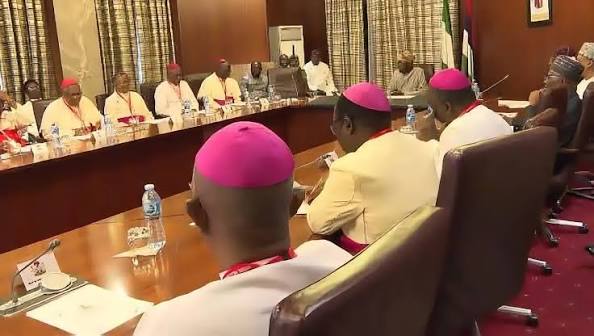
International President of the forum, Archbishop Lucky Aroh, disclosed this during the ordination and consecration of three new Bishops, as well as an award ceremony held in Port Harcourt.
Aroh said the performance of the APC-led Federal Government had endeared the party to the organisation, prompting the forum to declare its support for President Tinubu and other APC candidates in Rivers State.
He said the forum would support all APC candidates in the state during the 2027 elections and urged Nigerians to vote for the party.
Aroh, who is also the General Overseer of Caring Peoples Church, Port Harcourt, charged the newly consecrated Bishops to see their new positions as a great responsibility and dedicate themselves to the advancement of the kingdom of God.
He cautioned them against conduct capable of bringing their offices into disrepute, stressing that their activities would be closely watched by members of the public.
“As Bishops, the eyes of the public are on your activities. You must therefore conduct yourselves in a manner worthy of your calling,” he said.
Also speaking, the International Coordinator of the forum, Bishop Saint Robinson, urged the newly consecrated Bishops to work diligently towards winning souls for the kingdom of God.
Robinson, who was the guest speaker at the event, stressed that the activities of Bishops must at all times be guided by godly principles.
He also called on members of the church to support and cooperate with the newly consecrated Bishops in the discharge of their responsibilities.
The Secretary of the College, Apostle Elizabeth Ayadi Abaye, said the organisation was established to advance the kingdom of God and promote spiritual development.
According to her, the forum has organised several crusades, conferences, prayer meetings, ordinations, consecrations, enthronements, empowerment programmes and other spiritual development activities across the country as part of efforts to win souls for Christ.
Abaye said the organisation has members across the world and disclosed that more programmes had been scheduled to promote the spiritual development and wellbeing of humanity.
The three Bishops consecrated at the ceremony were Prince Alban Chike, Testimony Omenihu Shedrach and Prince Ifemena.
Among those honoured at the event were the Chairman of the Community Development Committee (CDC), Abali Community, Port Harcourt City Local Government Area, Manuchimso Prince Lemmy Wopara, and Clifford Oko Jaja, Coordinator of the 5,000 House-to-House for President Tinubu.
By: John Bibor
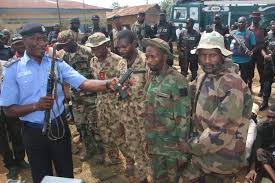
The State Commissioner of Police, CP Olugbenga Adepoju, disclosed this in Port Harcourt, recently during a press briefing at the Command Headquarters, where he said the arrests formed part of the operational achievements recorded by the Command between June and August 2026.
Adepoju said Atausi was arrested on August 10 by police operatives along Ada George, Port Harcourt, while dressed in military uniform and driving a Toyota Hilux painted in Army colours.
The Commissioner said investigation revealed that Atausi was not a member of the Armed Forces, adding that he was suspected to be a serial car snatcher, with three suspected stolen vehicles recovered from him.
He said the recovered vehicles included three Toyota Hilux vehicles without registration numbers and a Toyota Corona Premio with registration number BNY 380 ES, noting that the chassis and engine numbers of the vehicles had allegedly been tampered with.
Adepoju added that an axe and military accoutrements were also recovered from Atausi, as investigation continued into the circumstances surrounding the vehicles and other items recovered from him.
On the June 29 attack on police officers at Aluu Division, the Commissioner said three members of the gang allegedly responsible for the incident had been arrested by operatives of the Violent Crime Response Unit, VCRU-AKU.
The suspects, identified as Maduabuchi Emeka, 34, alleged gang leader; Doctor Chinedu Owhor, 42, and Kamachi Joe, 28, alleged armourer, reportedly led operatives to their hideout at Omagwa where two AK-47 rifles stolen during the attack were recovered.
Adepoju recalled that two police officers were killed during the Aluu attack, while others were wounded and one officer had his leg amputated, stressing that efforts were ongoing to apprehend the fourth suspect.
On kidnapping, the Commissioner said five members of a suspected kidnapping syndicate were arrested in Oyigbo Local Government Area, adding that they allegedly confessed to operations in Kom-Kom, Railway, Obeama and Afam communities.
He said two other suspects from the same network, Anele Ogbogu, 35, alleged to be the gang’s armourer, and Kenneth Eke, 38, were arrested on July 27, with one AK-47 rifle and one SMG rifle recovered.
The Commissioner further disclosed the arrest of suspects in connection with alleged firearm offences, armed robbery, cultism and one-chance robbery, with firearms, ammunition and other exhibits recovered during the operations.
Adepoju assured residents that the Command would sustain intelligence-led, proactive and community-oriented policing in collaboration with other security agencies, while urging members of the public to continue providing credible information that would assist the police in combating crime across Rivers State.
By; King Onunwor
-

 News2 days ago
RSG Targets Nine Million Residents in Mosquito Net Distribution Campaign
-

 Oil & Energy2 days ago
Aiyedatiwa Signs New Electricity Bill
-

 Oil & Energy2 days ago
NLNG Commissions Research And Innovation Centre In RSU
-

 Maritime2 days ago
Marine Minister Commends President Tinubu On NPERA Bill Assent
-

 News2 days ago
KenPoly Holds Eight Convocations, August 29
-

 News2 days ago
RSG Begins Another Phase of Projects Commissioning Today
-

 News2 days ago
RMAFC Completes Revenue Sharing Review, Proposes New Pay
-

 Maritime2 days ago
NAGAFF Petitions IGP Over Alleged Maritime Police Harassment