
Business
Osinbajo Canvasses Crack Teams For International Trade Negotiations

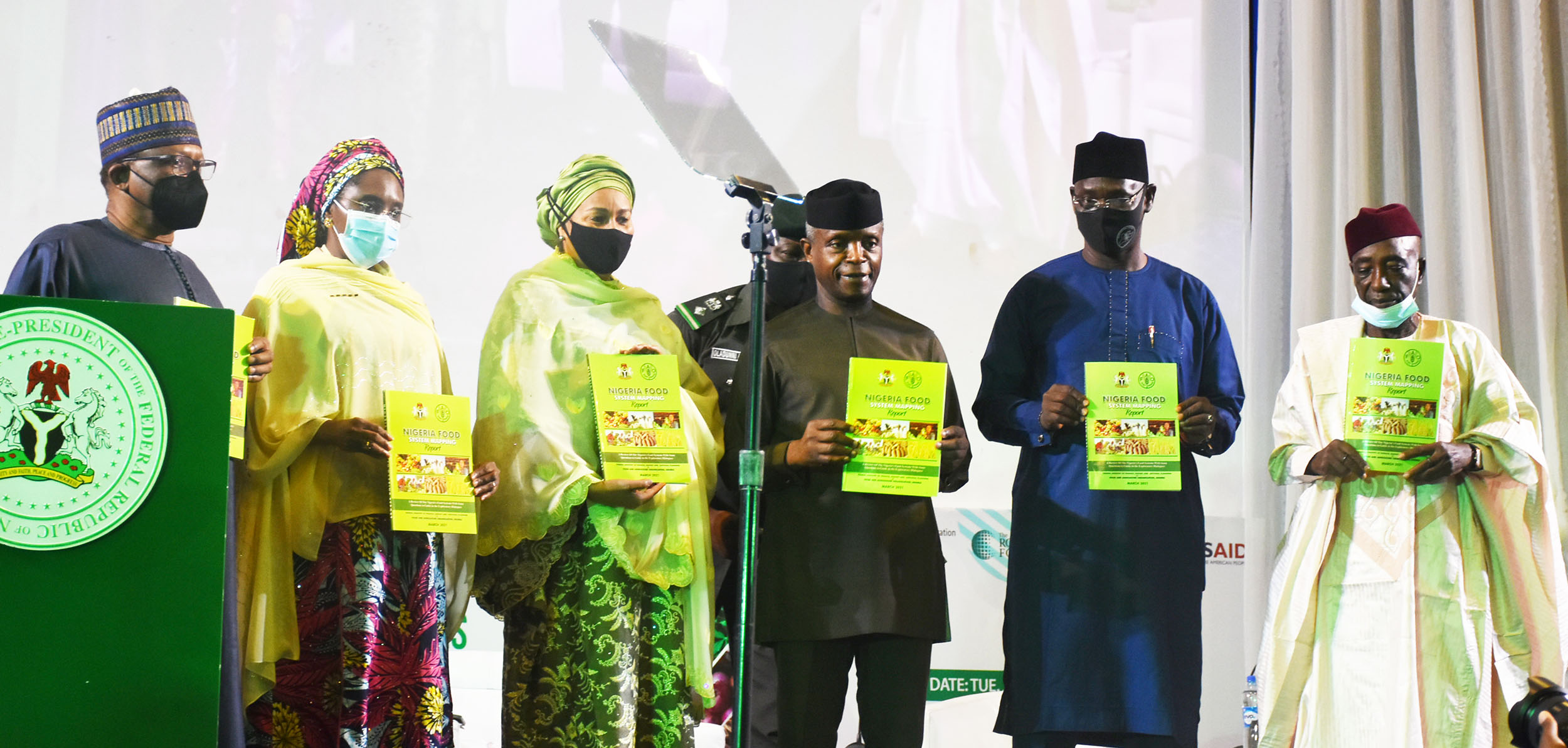
Vice President Yemi Osinbajo says Nigeria must continue engaging crack teams and subject matter experts, to avoid serious economic consequences that may arise from badly-negotiated international economic agreements.
The vice president said that such knowledgeable teams would be in addition to the Nigerian Office for Trade Negotiations created in 2017.
Osinbajo’s spokesman, Laolu Akande, in a statement, said the vice president made the submission on Monday, at the opening of a one-day capacity building workshop in Abuja, for negotiators of international economic agreements.
The workshop was jointly organised by the Independent Corrupt Practices and Other Related Offences Commission (ICPC) and the Inter-Agency Committee on Stopping Illicit Financial Flows (IFFs) from Nigeria.
“That this capacity building workshop will be the start of a structured regular programme of training for negotiators in the initial areas of investment, trade, environment, natural resources and taxation agreements.
“I expect further down the line that negotiators of other similar agreements in financial, air services, shipping, fishing rights and such like will also be included in the programme.
“Our objective must be to build a corps of crack negotiators and subject matter experts on international economic agreements and indeed to develop what should emerge as a national style of negotiations”, the statement quoted Osinbajo as saying.
Osinbajo, who made reference to instances of agreements that brought about undesirable outcomes for countries, cited the cases of the Simandou iron ore contract in Guinea, the bilateral investment treaty in Pakistan, and the Strategic alliance contract in Nigeria, among others.
He said that the deals pointed to the fact that poorly negotiated contracts or framework agreements could lead to serious financial losses for countries, stressing that one of the most significant sources of economic loss for a country was the consequence of poorly negotiated agreements.
“Every negotiator must realise he or she is putting the entire nation’s economic prospects on the table every time they negotiate.
“My position is that, depending on the size of some of these contracts, and their implications, outside counsels who are subject matter experts, should be involved at all stages of the negotiations”, he added.
In preparation for the Climate Change Conference of Parties (COP 26), Osinbajo urged negotiators from Nigeria and other developing countries to be focused on the issues of a just transition to the net-zero emission target.
He said that the focus must include ensuring that gas projects continued to be funded by international financial institutions.
“A topical issue in terms of negotiations is the preparation for the climate change conference of parties taking place in the UK towards the end of this year”.


Nkpemenyie Mcdominic
Reports say that the training is designed to equip youths with practical technical skills for employment in the oil and gas and construction sectors, with emphasis on employability, safety, competence and self reliance.
In attendance at the flag-off ceremony this week, at the Petroleum Training Institute (PTI) Conference Hall, Effurun, were stakeholders, dignitaries, and political representatives, among others.
Dafinone, represented by his Chief of Staff, Adelabu Bodjor, said the initiative reflects a deliberate political investment in human capital development across Delta Central.
He explained that the training focuses on rigging and scaffolding, noting that “both are essential technical competencies required in industrial operations, construction projects, and oil and gas installations”.
Bodjor added, “The programme is intended to reduce dependency among youths by providing job-ready skills capable of supporting long-term economic opportunities and self-sufficiency. The initiative aligns with Senator Dafinone’s broader development agenda, which prioritises practical skill acquisition as a pathway to sustainable empowerment.”
Also addressing the participants, the NCDMB, Felix Omatsola Ogbe, represented by Mr. Teddy Bai, commended Dafinone for sponsoring the programme, describing it as “a timely response to critical manpower gaps in the industry”.
Bai explained that rigging and scaffolding remain safety-sensitive skills required across fabrication yards, offshore platforms, and construction sites, stressing that the programme bridges the gap between certification and practical competence.
He also charged the training consultant, OROH Contractors Limited, to maintain strict standards of professionalism, safety, and discipline, while urging participants to remain committed, focused, and disciplined throughout the exercise.
The Senate Liaison Officer for Sapele Local Government Area, Chief Patrick Akamuvba, , described the programme as a major step in strengthening human capital development in Delta Central.
Akamuvba said scaffolding and rigging skills are in high demand across residential, commercial, and industrial construction projects, noting that the training offers real employment opportunities for beneficiaries
He urged participants to prioritise knowledge and certification over short-term material expectations, stressing that discipline and seriousness would determine their long-term success.
He also cautioned youths against social vices and distractions, advising them to remain focused to maximise the opportunities provided by the programme.
-
News2 days ago
Obuah’s Victory Excites Former Lawmaker as APC Primaries Conclude in Rivers West
-

 Politics4 days ago
APC PRIMARIES: FUBARA’S WITHDRAWAL, HISTORIC SACRIFICE FOR NATIONAL STABILITY ……. GROUP
-

 News4 days ago
Court Sentences Seven To Death Over Murder Of Cleric In Rivers
-
News2 days ago
105 Nigerians Killed In S/Africa In Seven Years
-

 Sports4 days ago
PH Arsenal Community Set For Streets Procession, Saturday
-

 Politics4 days ago
IPAC Flays INEC Over Election Guidelines Judgement
-

 Niger Delta2 days ago
Royal Father Endorses PH Arsenal Community, Pledges To Support
-

 Politics4 days ago
NDC To Adopt Electronic Voting For Future Primaries