
Business
Nigerian Workers May Begin Strike Over Minimum Wage ….As Sanwo-Olu Promises To Pay N55,000

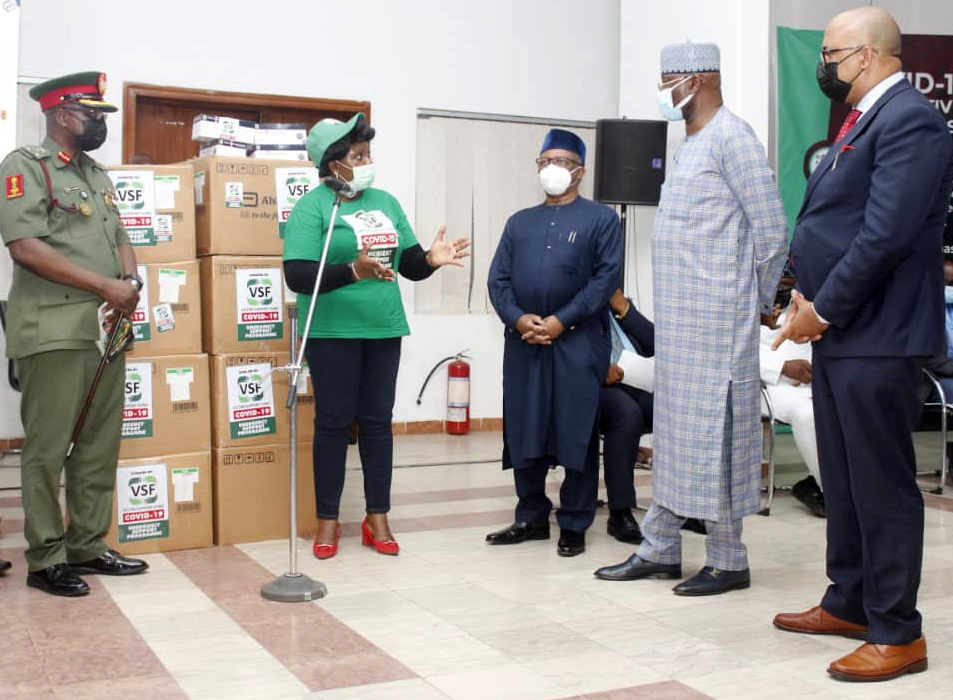
The organised labour has directed workers in the states where governors are yet to implement the new minimum wage to immediately begin an indefinite strike.
This came as the Federal Government said state governors had no choice but to pay the N30,000 national minimum wage, warning that any governor not paying was breaching the nation’s law.
The unions also sought for general upward salary review for workers, even as it lamented the seemly intractable socio-economic and political predicaments that had enveloped the nation.
In a joint address to Nigerian workers to mark this year’s celebration, the Nigeria Labour Congress (NLC) and the Trade Union Congress (TUC), at the Eagle Square, Abuja, on Saturday directed workers in the states where governors were not paying the minimum wage to immediately begin an indefinite strike.
In their May Day address titled: ‘Covid-19, Social and Economic Crises: Challenges for Decent Work, Social Protection and Peoples Welfare’, jointly read by the President of NLC, Ayuba Wabba, and his TUC counterpart, Quadiri Olaleye, they said: “We demand an upward review of salary of core civil servants to narrow the gap between their emoluments and those of employees in other segments of the public service. We implore the Federal Government to once more direct the Office of the Head of the Civil Service of the Federation to set up a committee to undertake this review.”
On N30,000 national minimum wage, the labour leaders said, “For Nigerian workers, it has been a catalogue of workplace and trade union rights violations. First is the criminal refusal by some state governors to pay the new national minimum wage and consequential increase in salaries thus violating workers’ rights. We have already directed all our state councils to declare strike actions if any governor remains adamant about paying the new national minimum wage”.
Reacting, President Mohammadu Buhari said the 36 governors of the Federation were bound by law to pay the N30,000 minimum wage.
According to him, any governor not paying the new wage was breaching the new National Minimum Wage Act, signed into law by him, in April 2019.
The President, represented by the Minister of Labour and Employment, Senator Chris Ngige, assured workers of better packages to cushion the economic effects of Covid-19 on their resources, stressing that his administration has put in place some socio-economic policies to alleviate poverty.
Meanwhile, the Lagos State Governor, Babajide Sanwo-Olu, has promised N55,000 minimum wage for the state workers.
Sanwo-Olu, in his message to mark this year’s Workers Day, also expressed the commitment of his administration to create at least 395,000 jobs in the next few months, with an average monthly wage of N55,000 above the N30,000 national minimum wage.
He said: “Our goal is to create at least 395,000 jobs in the next few months, with an average monthly wage of N55,000, in the sectors and industries that have a high demand for labour, like agriculture, construction and services.”
In the same vein, workers under the umbrella of the Nigeria Labour NLC and TUC in Bayelsa State, have lauded the worker-friendly disposition of the State governor, Douye Diri.
Delivering a joint address of both unions at the Peace Park in Yenagoa, venue of this year’s Workers Day celebration, State NLC Chairman, Comrade Bipre Ndiomu, praised the governor for prompt payment of salaries and gratuity since his emergence as governor in February 2020.


Business
IPMAN Raises Concern Over Delay In Chinese Refinery Deal …Predicts Lower Fuel Prices Through Competition

-
Rivers2 days ago
Rivers Police Uncovers Firearm Concealed In Loaf Of Bread
-

 Niger Delta2 days ago
Pro-Chancellor Hands Over Okey Onuchuku Peace, Conflict Institute Building
-
Sports2 days ago
Six Nigerians To Play For NBA Teams
-

 News2 days ago
Fubara Reaffirms Commitment To Blue Economy, Private Sector Growth …Calls For Protection Of Marine Resources
-
Business2 days ago
Gas Economy: Decade of Gas, Pi-CNG/ EV Deepen Media Engagement
-
 Business2 days ago
IPMAN Raises Concern Over Delay In Chinese Refinery Deal …Predicts Lower Fuel Prices Through Competition
-
Business2 days ago
Navy Nabs 13 Black Sand Miners In Bayelsa –Impound Two Boats
-

 Politics2 days ago
Senate Defends Passage Of State Police Bill