
Opinion
America, Homosexuals And Others

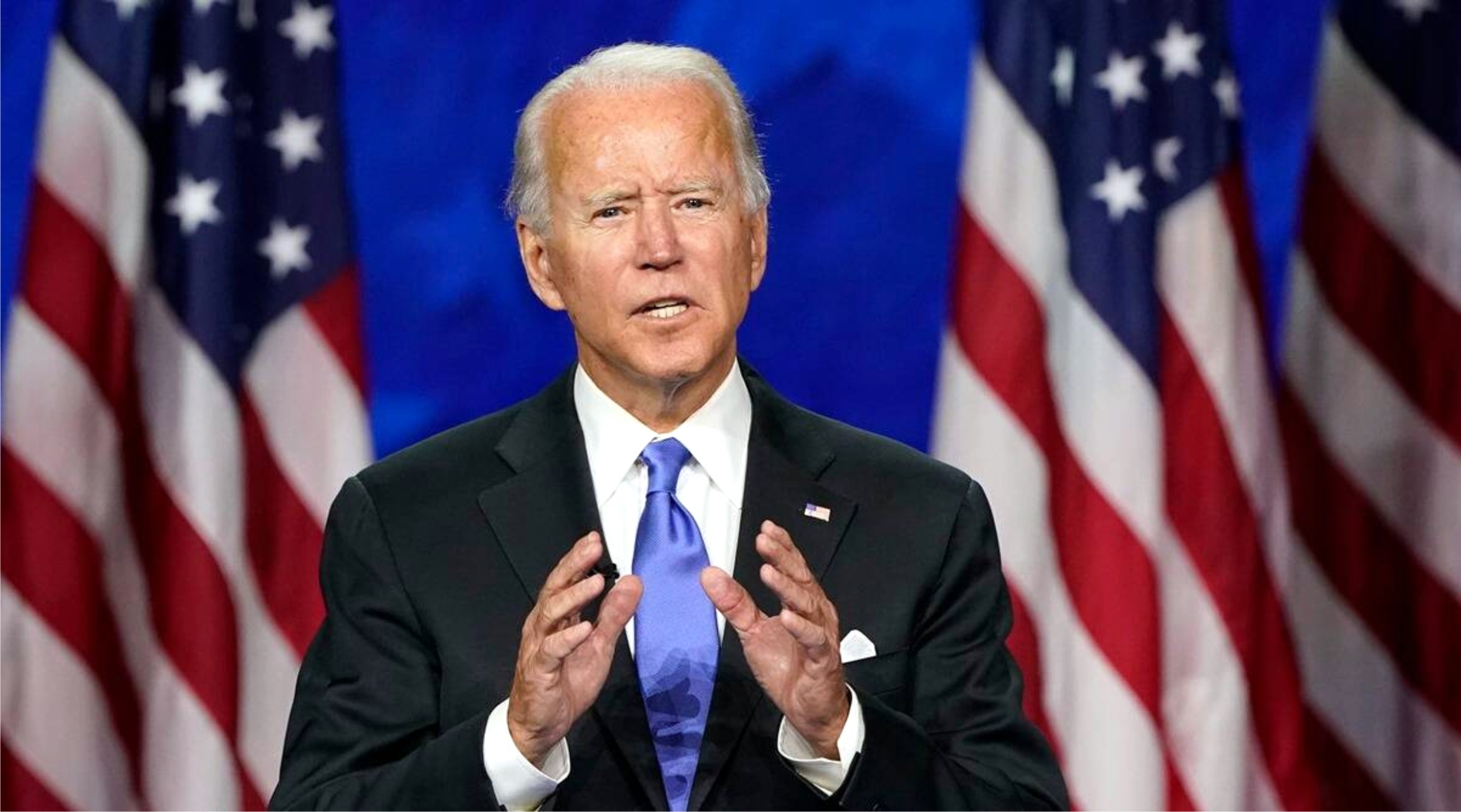
United States President Joe Biden, a fewdays ago, launched a campaign towards shielding lesbian, gay, bisexual, transgender, intersex and queer (LGBTIQ) people with directives to embassies to ensure that violence and discrimination against the group are resisted, and with sanctions to noncompliant nations. Biden further directed all agencies to come up with protective plans within 180 days. This controversy which began from his former boss, Barack Obama, but suffered severe setback under Donald Trump, incidentally resurfaces despite criticisms from many quarters, particularly religious bodies.
In his memorandum, Biden emphasised; “All human beings should be treated with respect and dignity and should be able to live without fear no matter who they are or whom they love”. This statement, no doubt, reflects the position of the United Nations Charter on Human Rights which many nations are signatory to, and domesticated in their respective laws. Pope Francis has also overtly jerked against discriminations against LGBTIQ people. The Catholic pontiff argued that they are humans, possibly born with the traits and, therefore,it’s unfair to castigate them over a trait acquired from birth without their freewill, and perhaps beyond their control. This has continued to dominate as major argument coupled with the fact that the acts ostensibly harm nobody or jeopardise lives.
Logically Biden, a Christian, is holding a public office, thereby leading people of diverse beliefs, but his office is governed by positive laws than morality or religious beliefs. A critical question is; should an occupant of such office enforce religious doctrines above laws – laid down rules particularly human rights considered above other laws. This is where the problems begin. If a political leader succumbs to be guided by religious doctrines, what would be the fate of the society when a succeeding government imposes anyone it chooses? This is the danger of arbitrariness.
For instance, some predominantly Muslim countries prohibit drinking of alcohol publicly or women openly associating with men. And the battles to quash the barbaric laws have continued without positive outcomes. In the same vein, Christian doctrines prohibit premarital sex, known as fornication in the Bible, as immorality; nonetheless, the act is not a crime under the laws provided the adults indulge with consents. Without consent and backed by an essential element – penetration, a rape may be established.
In other words, while premarital sex is forbidden in Christian doctrine, it is legalised under the laws. It, therefore, implies that positive laws alone do not shape the society. Not all acts prohibited in religious circles constitute crimes as the present situation on LGBTIQ. Among acts forbidden for Christians include idolatry, adultery, fornication, masturbation, homosexuality, covetousness, theft, extortion and envy. In the list, only ‘theft and extortion’ are criminalised in the laws of most countries. The rest is overlooked. But does their legality imply they are expedient as acceptable norms in the society, not at all. Incidentally, they are all protected by Right to Privacy enshrined in the UN Charter on Human Rights, and domesticated in Nigeria.
Section 37 of the 1999 Nigerian Constitutionprovides, “The privacy of citizens, their homes, correspondence, telephone conversations and telegraphic communications is hereby guaranteed and protected.” The Bible foresees the colossal conflicts and thus admonished Christians in Corinthians 1 6:12 – “All things are lawful for me; but not all things are expedient. All things are lawful for me; but I will not be brought under the power of any”(American Standard Version). It suggests some conducts may not constitute crimes in law, nevertheless destructive and offensive. Instructively, for any act to qualify as a crime in law, it must be enforceable. Conducts or deeds that do not pass enforceability test cannot constitute crimes and also, must not be in any conflict with fundamental human rights.
Suffice it to say that the battle to eradicate or transform LGBTIQ people falls majorly on religious bodies; not by pressure but preaching and persuasion. If done with force, it is no longer within the ambit of the law. Besides, they are mostly done in private, and therefore, would amount to infringement to peoples’ privacy when interfered with. For example, Sorcery (witchcraft) is a known terrific act but not recognised as a crime in law; however, typically dealt with at religious atmospheres. It is hard to prove demonic activities in law despite the fact societies, including law-officers,recognise their existence.
Again, it should be noted that premarital sex which often led to abortion and deaths arising from sundry complications is not prohibited as a crime, yet, many keenly abstain from it on account of preaching, evangelisation. Thus, though America openly protects LGBTIQ people on account of human rights, nobody is enthused to indulge in them. Obama and Biden are happily married to ladies. America’s position shouldn’t, therefore, be misconstrued to bidding to LGBTIQ. Its goal as a leading nation is to protect human rights vis-à-vis discrimination and violence — same way it promotes contraceptives including condoms; indirectly endorsing premarital-sex or extramarital affairs – but on principles.
Another point is that adults that bid for uncharacteristic lifestyles should bear responsibility provided it poses no harm to next persons. Measuring LGBTIQ from this angle, it could be said that homosexuals, lesbians, others harm nobody but merely wasting valuable times on unproductive, filthy activities. And the actors that pose as matrimonial couple knowingly deceive themselves as none has lasted after flings, thus merely for shows. Also, no ‘wife’ of the same-sex union has ever changed surname or the ‘husband’ pay dowry which is a basic requirement in a marriage, thus, a self-deceit.
So, grownups that knowingly choose the bush in place of pathways should personally face the consequences. Nonetheless, America should advisably desist from pushing LGBTIQ too far with sanctions as a model. The mannerit is hard-pressed is unconsciously giving the outlandish conducts undeserved promotion albeit the goal, without doubt, is for preservation and protection of human rights against violence and discrimination.
Umegboro is a public affairs analyst.
Carl Umegboro




-
Rivers1 day ago
Rivers Police Uncovers Firearm Concealed In Loaf Of Bread
-

 Niger Delta1 day ago
Pro-Chancellor Hands Over Okey Onuchuku Peace, Conflict Institute Building
-

 News1 day ago
Fubara Reaffirms Commitment To Blue Economy, Private Sector Growth …Calls For Protection Of Marine Resources
-
Sports1 day ago
Six Nigerians To Play For NBA Teams
-
Business1 day ago
Gas Economy: Decade of Gas, Pi-CNG/ EV Deepen Media Engagement
-
Business1 day ago
Navy Nabs 13 Black Sand Miners In Bayelsa –Impound Two Boats
-

 Business1 day ago
IPMAN Raises Concern Over Delay In Chinese Refinery Deal …Predicts Lower Fuel Prices Through Competition
-

 Politics1 day ago
Senate Defends Passage Of State Police Bill