Connect with us

Women

Issues On Women And Youth Development

Published

on

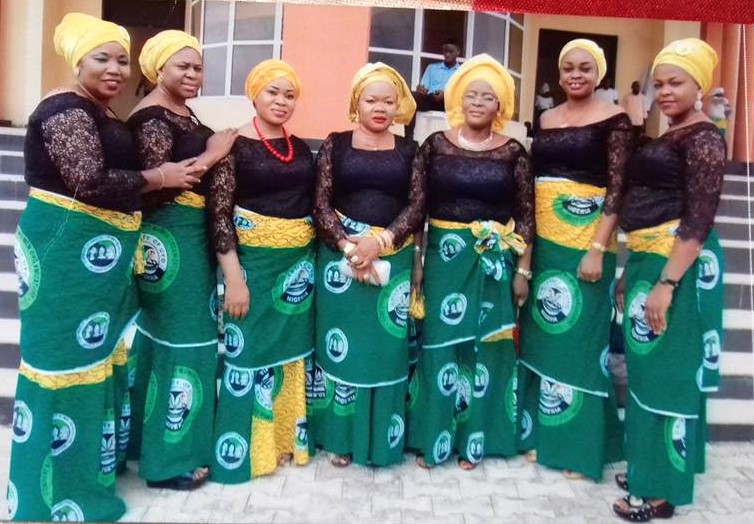
Nigerian women have really come a long way. From the immediate post independence era to this 21st century, they have played major roles in social and economic activities which may have received little or no recognition at all.
In their bid to rise above the traditional Nigerian indigenous belief that the woman’s role is predominantly in the home where she is expected to act as a wife, mother and housekeeper, women are beginning to break out of such stereotypes. This is evident in their achievements in the various fields of endeavors which they now engage in.
60 years ago, women potrayed an image of a helpless, oppressed and marginalized folk. Yet, their desire to be involved in deciding the the fate of their environment, emboldened their muscles to struggle to make impact, no matter how minute. With division of labour being done along gender lines, women could only control such occupations as food processing and distribution.
Notably, in the south eastern part of Nigeria, women were involved in the production of palm oil and palm kernel, their successes in long distance trade in different parts of the country also accounted for the distribution of various food items and commodities.
Fish drying was done in the coastal areas of Calabar, Oron and the Niger Delta. Women in Okposi, Yala and Uburu were known for salt production. Pottery making and weaving were popular among the Afikpo women. The women in the north, even those in purdah, were also involved in food processing and trading. The resourceful nature of these women made them able to contribute to the sustenance of their families.
Beyond the household level, needless to say that power was generally dominated by men. Nevertheless, in many areas, specific titles were given to women. The queen mother; a powerful title among the Edo and Yoruba, could be bestowed upon the king’s mother or a free woman of considerable stature.
The most successful among them rose to the prestigious chieftaincy title of Iyalode, a position of great privilege and power. Although with time, patriarchy, combined with colonial changes altered gender relations which declined the position of female chiefs in importance
The under representation of women in political participation gained root due to the patriarchal practice inherent in our society, much of which were obvious from pre-colonial era till date.
In all of this, the most serious threat to the influence and privileges of women occurred during the 20th century, when the cultural orientation by which a woman is seen as dependent on her husband created an enabling environment for thier subordination and restriction in pursing education.
Their plight was made worse by the operational system of education that placed more priority on male-child over the female-child. This era witnessed a system that subjected women to a place of being seen and not heard.The exclusion of the girl-child from western education to a great extent, widened the intellectual gap between the two folks.
This situation did not only súcceed in placing the Nigerian woman in second fidlle in the scheme of things, it projected her as a mediocre personality stripped of the will and power to rule, dominate and impact her environment. A very serious impediment to the political and socio-economical enthronement of the Nigerian woman in the 21st century.
This was the reason behind the numerous struggles for the emancipation of the Nigerian woman from political mediocrity and stagnancy through education and participation in the socio-economic and political development of the nation.
Like women in other patriarchal societies, the subordinate position which Nigerian women were subjected to, predisposed them to various acts of gender-based discrimination. Being a patriarchal society, male dominance was reflected in the marriage institution, political, religious and governing institutions, and in other public and private institutions existing in the country.
The result was low participation of women in both elective and appointive positions as very few women in the country occupied leadership positions and participated equitably with their male counterparts in decision-making. All the same, as Nigeria marks her 60th independence anniversary today, there is every reason for the women to celebrate as their status have continuously evolved curtesy of formal education from which a large number of elite women have emerged.
Intelligent, educated, and confident, women can now be found in all leading occupations; they now challenge many aspects of patriarchy and are gradually organizing to ensure that the political arena expands sufficiently to accommodate them.Today, Nigerian women have demonstrated great resourcefulness, not only in nation building but as custodians of great legacy in a country with rich cultures and potential.
Although controversial, gender has come to be a very crucial instrument for shaping the society and based on this, the world’s governments adopted gender equality and women’s empowerment as the third Millennium Development Goal in 2000. To this end, Food and Agricultural Organisation, FAO, recognizes the importance of promoting the full and equitable participation of women and men in efforts to improve food security, reduce poverty, and fuel sustainable rural development.
Thus the millenium Development Goal3, MDG3, is targetted at eliminating gender disparity in primary and secondary education, and in all levels of education
The previous United Nation’s conferences such as the Convention on the Elimination of All forms of Discrimination Against Women (CEDAW, 1979), the World Conference on Human Rights, Vienna, (1993), the International Conference on Population and Development, Cairo (1994), the World Conference on Women, Beijing (1995), and the Security Council Resolution (2000), all focused on gender equality and women’s empowerment.
Many actions had to be taken by women in order to break loose from political backwardness and social subordination and from other contending factors to the political progress of women. More awareness is being created with regard to incorporating gender perspectives in policy-making and the adoption of gender-inclusive approaches in the implementation of development-related goals in order to empower women.
As we speak, there are obvious efforts made by government and non -governmental organizations to increase the level of participation of women in politics in line with the declaration made at the fourth World Conference on women in Beijing, which advocated 30% affirmative action.
In Nigeria, the extant National Gender Policy (NGP) recommended 35% affirmative action instead, and sought for a more inclusive representation of women with at least 35% of both elective political and appointive public service positions respectively.
At the federal level, in 2011, the Goodluck Jonathan-led administration’s cabinet had women occupying about 33% of the positions. This was more than the 30% reserved for women under the affirmative action guidelines contained in the National Policy of Women adopted in 2000. However, since then, the number of women in top government positions has dropped.
Here in Rivers State, the Executive Governor, Nyesom Wike provided an enabling environment for women to ascend political height by mandatorily reserving the local government vice chairmanship position for women as well as encouraging them into councillorship positions as a stepping stone into politics.
Right now, following the United Nations (UN) declaration on Millennium Development Goals (MDGs), which emphasize gender equality, economic empowerment of women has been spotted as a prerequisite for sustainable development, hence a global phenomenon.The MDGs 3 leverages on the understanding that promoting women‘s economic empowerment serves as a precursor for gender equality, poverty eradication and inclusive economic growth. To this end, governments and donor agencies such as the World Bank, the African Development Bank Group (AfDBG), International Finance Corporations (IFC) and several other organizations including the private sector, have developed various gender related polices to enhance WEP.
The Federal Government of Nigeria recently launched the WEP programmes alongside other women/youth related development projects. the Central Bank of Nigeria (CBN) through its financial inclusion strategy (under the Microfinance Policy), plan to reduce gender inequality by increasing women‘s access to financial services by fifteen per cent (15%) annually.
These are indications that Nigeria is keen in ensuring that women are economically empowered. Women make enormous contributions in every sector of the economy (markets, formal institutions, informal institutions, households, etc.). It is on record that in the last 30 years, 552 million women joined the labor force with a 4 per cent increase in Sub-Saharan Africa.
On the other hand, life that was much more abundant at independence gradually became difficult for the youths in the late 1970s and 1980s. Crushing economic hardships inflicted sorrow on many Nigerian youths. Thus, the picture of Nigerian youth since independence has been that of a marginalized group.
Most vulnerable for development and filled with vigour and the spirit to achieve, every one expects the young, agile, and virile to be innovative, unfortunately an enabling environment had remained elusive.
In a clime full of misery, the youths were left to contend with violence, pandemics of all sorts, assassination, examination malpractice, sexual promiscuity, joblessness and above all, poverty.
In an attempt to save their future from absolute deterioration, Nigerian youths disaggregated themselves into different forms of resistant militia groups, leaving questions in the air as to what hope the future holds for a ‘dishonourable’ future leaders?
Nonetheless, realizing that skills and knowledge are the driving forces of economic growth and social development, thus providing an opportunity to achieve inclusion and productivity within the country, the Nigerian government chose to harness Nigeria’s young demography through appropriate skill development efforts called N-Power Programme.
The modular programmes under N-Power is ensuring that each participant learns and practices most of what is necessary to find or create work. The N-Power Volunteer Corp involves a massive deployment of 500,000 trained graduates who will assist to improve the inadequacies in our public services.
The Nigerian Youth Employment Action Plan was also developed by the Federal Ministry of Youth Development (FMYSD), as a strategy to respond effectively to the youth employment challenge in Nigeria.
The major objectives of the plan are to address fragmentation and harness technical and financial resources for meaningful impact. The plan targets young people between the ages of 18-35 years and details needed actions in support of employment creation for youth in critical economic and social sectors and outlines the financing, implementation, monitoring and evaluation frameworks.
The Nigerian Youth Employment Action Plan (NIYEAP) has an implementation phase from 2019-2023 and emphasizes the 4Es: Employability, Entrepreneurship Development, Employment Creation and Equal Opportunity.
In addition, a Presidential Youth Empowerment Scheme (P-YES) was conceived and designed to: fight and reduce unemployment among Nigerian youth by creating at least 774,000 empowerment opportunities.
Here, youths are trained and empowered to have the capacity to empower at least one other youth within immediate community. It helps to create wealth among the growing youth population. While incomes will be stablised and sustsined, through this programme, it is expected to fight the scourge of criminality and drug abuse among the youth by keeping them productively engaged.
All these programmes if sincerely harnessed, no doubt would build the capacity of the youth to take charge of their own wellbeing and future by building their assets and realizing their potentials.
Hopefully, with the efforts of the federal and state governments as well as those of public spirited individuals and non governmental organisations at ameliorating the wellbeing of the youths, the hitherto devastated nigerian youth can contribute to GDP growth through the development of Micro, Small and Medium Scale Enterprises (MSMEs).


By: Sylvia ThankGod-Amadi

Continue Reading

Women

When Rivers Women Pray

Published

on

Port Harcourt, the Rivers State capital went agog when women from all the local government areas of Rivers State came together for a prayer conference themed: “Women Converge 2025”.
The programme in it’s second series, which held at the Alfred Diette Spiff Civic Centre was put together by the Rivers Women Unite For Sim, a foundation that is nurtured by the women of Rivers State for prayers to God for the peaceful and smooth running of the state.
 Like a delegate conference, the  Civic centre was filled to the brim with women dressed in white attires.  They sang, danced and prayed to God for sustenance of peace in Rivers State while reaffirming their support for Governor Sim Fubara and his wife, Lady Valerie.
Women Converge With the sub-theme, “Women In An Evolving World”, explains the actions and strategies that the women use in fitting and succeeding in the digital and technical era that is very competitive.
During political rallies and campaigns, with their drummers, beautifully dressed, showcase their dancing steps to entertain audience.
In everything one does in the earthly world, prayers is key. Prayer, they say conquers. Women have been conquering many odds with prayers, and God answers whenever they pour out their minds concerning issues.
Of course, due to their nature, women have always been in the forefront of championing prayers, garnering supports for those in authority, taking care of their families as well as coping with their job careers.
Since the inception of the current administration, women have been relentless in ensuring that peace reigns in the Rivers state through prayers so 2025 edition of the Women Converge which is the second edition recorded huge success.
Speaking at the ceremony, the wife of the Rivers State Governor, Lady Valerie Fubara, commended Rivers women whose continuous prayers have impacted on the state and appreciated the support by the women to the Governor, Sir Siminalayi Fubara.
She described Rivers women as wonderful for the support both in prayers and solidarity to her family.
She described Women Converge 2025 as another milestone in an effort to shape the society for good and support for the sustenance of peace and development in Rivers State.
According to her, let me enjoin our women to remain prayerful because God is ever ready to answer our prayers. In all that we do, we must not forget the hand of God and seek him for direction and help.  You have always been steadfast and I urge you not to relent and together we will move our society forward.
Describing the theme, “Women Converge 2025, Women In An Evolving World”, as apt, she said it is a reflection of the very essence of actions and strategies that women adapt in navigating the new world order.
She said that despite the complexities of managing the home front and the constraints of economic realities, women had demonstrated formidable strength and resilience to confront the odds of life.
In her words, “This event underscores the resilience of our women to succeed no matter the odds, especially with absolute faith in God and determination for greater accomplishments”.
“Whether in the industry, business, agriculture, public service or even in politics, they have always shown strong determination to adapt and to accomplish like others”, she maintained.
A guest speaker at the event, the founder and medical director of  Save A Live medical centre, Dr. Okoye, told women to always take wise decisions in things concerning maternal and infant mortality.
The medical expert reiterated that women should not misunderstand the biblical idea of “you will deliver like the Hebrew women”.
He advised women to take  instructions from medical experts concerning pregnancy and child birth as those will go a long way in saving their lives and advised the women not to patronize quacks.
In a goodwill message, the former Commissioner for Environment, Prof. Roseline Konya,  expressed hope that the peace women have been praying for is already yielding positive result.
The President of Port Harcourt Chambers of Commerce, Industry, Mines and Agriculture, PHACCIMA, Dr. Chinyere Nwoga, spoke on the sustenance of peace in Rivers State as that will move the state to greater height.
Also speaking at the
Women Converge, Pastor Ene Secondus, enjoined women to continue to pray for peace and it’s sustenance in Rivers State.
One of the guest speakers, Pastor Eno Jerry Eze, during the intercessory prayers said women are the foundation of the society and explained that development of any society depends on the strength of womanhood.
The wife of the former Deputy Governor of Rivers State, Dr Christie Toby, a daughter of Rivers State, Ann Kio Briggs also graced the occasion.
Apart from the prayer session,  women from different local government areas showcased different kinds of food items in their various canopies and stands.
The Okrikans and in fact the Riverine extraction, in a food exhibition displayed fishes, crayfish, oporo (prawn), periwinkle( isam).
The women from Etche and Omuma decorated their tables with agricultural products like Garri, fufu, vegetables (okashi ala), plantain, bananas etc.
The Ekpeyes and Ogbas were not left out as they displayed their own food crops like fish, garri, fufu and the likes.
Women from Ikwerre and Emohua local government areas came with their food stuffs.
By: Eunice Choko-kayode
Continue Reading

Women

RIVERS NAWOJ AND PHACCIMA PARTNER TO STRENGTHEN MUTUAL GOALS

Published

on

In a significant development, the Nigeria Association of Women Journalists (NAWOJ) Rivers State Council has recently undertaken a courtesy visit to the Port Harcourt Chamber of Commerce, Industries, Mines & Agriculture (PHACCIMA).
The visit took place on  Monday, 1st December, 2025, representing a formal engagement initiative undertaken by NAWOJ to cultivate a fruitful collaboration with PHACCIMA that can greatly benefit both the union and the agency.
During this occasion, the Chairman of NAWOJ, Rivers State Council, Comrade Susan Serekana-Nwikhana, articulated her vision for the partnership, stating that its primary aim is to work collaboratively toward the ambitious goals that both entities are striving to achieve.
She said that the goals are designed not only to enhance the operational capabilities of NAWOJ and PHACCIMA but also to ultimately contribute meaningfully to the sustainable development and economic growth of Rivers State and the broader Niger Delta region.
In her remarks, Serekana-Nwikhana emphasised, “We’re not just partnering,  we’re propelling change. With PHACCIMA’s  focus on promoting women-led businesses through the Women in Commerce Initiative (WACIMA), spearheaded by Dr Patricia Ogbonnaya, we’re actively working to dismantle barriers, unlock untapped potential, and demonstrate that investing in women is fundamentally investing in the future of a nation.”
Dr Chinyere Nwoga, who holds the position of President of the Port Harcourt Chamber of Commerce and Industries (PHACCIMA), acknowledged in her response that the Niger Delta region is endowed with abundant resources and opportunities, yet simultaneously grapples with a variety of challenges.
She emphasised that the challenges necessitate concerted efforts from both the media and the business sectors, working in tandem to address them effectively.
As the first female President of PHACCIMA, Dr Nwoga expressed her optimism for a successful and impactful partnership during her tenure and encouraged female journalists to collaborate actively with PHACCIMA to realise their shared goals.
The discussions during the meeting were centred on amplifying women’s economic empowerment, spurring investments, and repositioning Rivers State to become an attractive and vibrant destination for business endeavours, all while maintaining a strong focus on green innovation and climate resilience.
The gathering culminated in the formation of a groundbreaking partnership between the two organisations, marking the beginning of a collaborative journey full of potential.
Key Initiatives projected in the partnership include,  the upcoming Port Harcourt International Trade Fair (scheduled for 12th – 22nd December, 2025).
According to the partnership agreement, this event is set to serve as a dynamic platform for women entrepreneurs to showcase locally made products denoted as “Made in Rivers.” It will provide participants with invaluable opportunities, including access to complimentary entrepreneurial training and avenues to connect directly with potential investors. Each local government in Rivers State will have the chance to highlight its unique selling points, including the promotion of agro-products, natural resources, and innovative solutions.
Another is the NAWOJ National Summit (planned for early 2026): The event will be themed “Empowering Women, Sustainable Future: Breaking Barriers, Shaping Change,” with a sub-theme focused on “Greening the Future: Empowering Women for Climate Resilience.” The summit will gather an array of leaders, investors, and change makers to collectively shape the economic and environmental future of Rivers State. Specific dates and venue details will be communicated in January 2026.
 An ambitious Economic Impact Goal has been envisaged: The partnership is aspiring to create over 500 economic opportunities tailored for women, thereby boosting local industries, enhancing green jobs, and fostering inclusive growth. This will align with Rivers State’s vision of cultivating a sustainable, eco-friendly economy that diversifies beyond oil dependency as contained in the partnership agreement.
Present at the event were numerous members of both NAWOJ and PHACCIMA, where Hon. Barr. Uchenda Ukgubule, Chairman of NAWOJ’s National Summit Planning Committee, lauded Dr Nwoga’s exemplary leadership, proclaiming, “Her intelligence and visionary approach make collaboration not only possible but a pleasure. To every man: join us! Dr Nwoga has a lot to offer – let’s drive progress together.”
In affirmation, Dr Nwoga stated: “Women are powerful catalysts for change. With the support of NAWOJ, Rivers State, we’ll drive sustainable growth, promote eco-friendly innovations, and transform Rivers State into a magnet for  green investments. This endeavour will serve to protect our environment while empowering local communities.”
Among the highpoints was a heartfelt call to all women entrepreneurs, inviting them to take an active role by registering for the upcoming Trade Fair.
 This initiative encourages them to showcase their talents, innovative products, and services while providing an excellent opportunity for them to grow their businesses and expand their networks.
Additionally, investors from far and wide were urged to consider exploring the untapped potential that Rivers State has to offer, with the promise of collaborating to build a prosperous and vibrant state together, thereby enhancing the local economy and contributing to community resilience.
Moreover, the Media were cordially invited to participate in a post-Trade Fair joint briefing, designed specifically to spotlight inspiring success stories that emerge from the event, thereby amplifying the voices of those who have benefited from this collaborative effort.
The general public was requested to stay updated on these initiatives by visiting the NAWOJ Rivers State Chapter office located at the Ernest Ikoli Press Centre, or simply check for further details through our official communication channels.
For any inquiries or additional information, women and other stakeholders are asked to contact the following individuals, Comrade Susan Serekara-Nwikhana, the Chairman of the NAWOJ Rivers State Chapter, available at 0806 797 1973,  Honorable Barr. Uchenda Ukgubule, the Chairman of the Planning Committee for the NAWOJ National Summit, reachable at 0803 339 5699,  Ambassador Beauty David Nteugot, the Secretary of the Planning Committee for the NAWOJ National Summit, is contactable at 0803 338 7806.
Susan Serekara-Nwikhana
Continue Reading

City Crime

Women And Dangers Of Obnoxious Practices

Published

on

It is worrisome to hear that a woman or a girl is bathed with acidic contents just because she refuses to adhere to one instruction or the other from an opposite sex.
Sometimes, you see a woman with bruises on the face, with one eye swollen as if she is an animal perhaps she demanded one or two things from her spouse.
A situation where a widow will be mandated to marry a brother-in-law for her to still belong to the family where she is married and to partake in inheritance should be looked into.
Severally, there have been talks, seminars, workshops, fora, arguments, bills and laws abolishing the issues that concern women, especially violence.  But much has not been achieved to curtail the menace.
Violence against girls and women has been on the increase.  From time to time, it is either girls are denied access to father’s property or a widow is denied inheritance to husband’s properties.  Even when laws are put in place about things that will help women have their rights, some persons feel that culture and tradition do not permit such laws.
We are aware that some women are rich and may not want to partake in the share of their late parents’ property, but there are vulnerable ones who may need to be empowered, through perhaps, late parents’ property inheritance.
Some of the obnoxious laws were made before now without the consent of women. There was no enough representation to either argue for or against so as to be beneficial to women generally.  Some of the laws were so primitive that even when civilisation came, became difficult to change. Very unfortunately, it is the women sometimes who execute the laws made by men in their absence. But women are suffering it.
If government can establish laws abolishing certain practices against women and girls, it will be better for them and should in the presence of women so that they can contribute as well.
For long, laws against female genital mutilation and circumcision have existed but some communities with their culture and tradition have refused to put a stop to it with reasons best known to them.
Circumcision of a full-grown girl or lady may not be the only way of attaining maturity. It is a harmful practice and the pain associated with it cannot be imagined.  The illegal operation is not performed in the hospital so the dangers inherent will be much.
For those who still practise it, the menace should be discouraged as that is not a proper way of ushering a girl into womanhood. A lot of women lose their lives due to pains experienced during the process. If it was practised in the past when civilisation was not there, it is a different case, nowadays with science and technology proving it wrong, those who still practice should resist.
We know that government is doing a lot to save women and girls from some of the pains they go through but right steps should be taken in the right direction  and all stakeholders intensify efforts in dealing with persons who perpetuate evil against their fellow women.
One issue that comes to mind is implementation even if policies and laws are out in place by relevant agencies.  The issues have been dwelt on for decades, but it is still practised as big ceremonies in some communities.
When it comes to inheritance, a girl born into a family, married or unmarried will be denied access to father’s property.
When parents are sick, the female child will pick him or her for care and offset medical bills.  If it has to do with the demise of parents, the woman and the husband will be mandated to provide a cow and perform other burial rites.
If the National Assembly makes laws concerning the well-being of women, community heads, molecular leaders, women groups and associations, religious organisations, Non-Governmental organizations (NGOs) and Civil Society Organisations (CSOs) should create more awareness through the media to sensitise rural dwellers.
In this digital era, it should be forbidden that a woman loses her spouse and she is mandated to drink water used on the late husband.
A legal practitioner,  Tam Jacobs, said if one forcefully shaves a woman’s hair with the intention that she is mourning her late spouse, she can sue that person for assault.
He said if the woman is forced to drink water used on her late husband’s body, she can also sue for attempted murder.
According to him, several cases of girl-child inheritance have been won and documented in the law court but some cannot claim it.
“Even a widow who is handicapped may not be able to make attempts so NGOs, CSOs should be in the forefront to support them and ensure that the laws are implemented at the grassroots level where they are practised”, he said.
A pharmacist, Eno Amos said any culture that does not add colour and value to life, especially as it concerns women should be abolished.
She added that implementation can be easy in the cities where awareness has been created but expressed fear that it may not be easy in the rural areas where culture is really practised.
A business woman, Agnes Ugwu, said tradition and culture were made by man and not God and wondered why people who claim to be educated still follow the tradition of ancestors who never went to school.
Ignorance also comes to play here.  If you have watched a documentary showing female genital mutilation and the gory experience the young women go through is something else.  Some of the perpetrators claim that the practice has existed for ages. Women have to learn more about issues that concern them.
A nurse, Rosy Ekeocha, said it is not about culture but about the behavior of a group of people in the community who force it on others.
According to her, let people change their behaviour and leave culture alone.  It does not happen in every family and if any family allows it that is its business.
She said we are in the 21st century, certain cultures and tradition need to be reviewed to ensure that they align with today’s reality.
Culture is dynamic she said, but that implementation of laws relating to the vulnerable in the society calls for concern.
We should not behave the way people behaved twenty decades ago, after all, we do not dress the way our forefathers dressed.  Time has evolved and things are getting better as it concerns women. We are getting more exposed and more enlightened about issues that concern us.  Information is moving round as the world is a global village.
Talking about culture nowadays, we wear shoes whereas our forefathers never had any.  They walked barefooted
far distances to get family necessities but things are better now as we are mobile.
That should also happen to culture and tradition.  There are certain aspects of our culture and tradition which are practised today that have expired long ago. We should get rid off them.
Sometime, the bill for prohibition of obnoxious practices against women at the National Assembly was a welcome development, how far have the powers that be gone to ensure that it favours women.
It is expected that the bills abolishing obnoxious practices against women and girls in the society should have started achieving results as it concerns their wellbeing.
Eunice Choko-Kayode
Continue Reading

Trending

Decoration sticker
Decoration sticker
Decoration sticker
Decoration sticker