
News
We’ll Scuttle APC’s Plans To Rig Edo Poll, Wike Vows

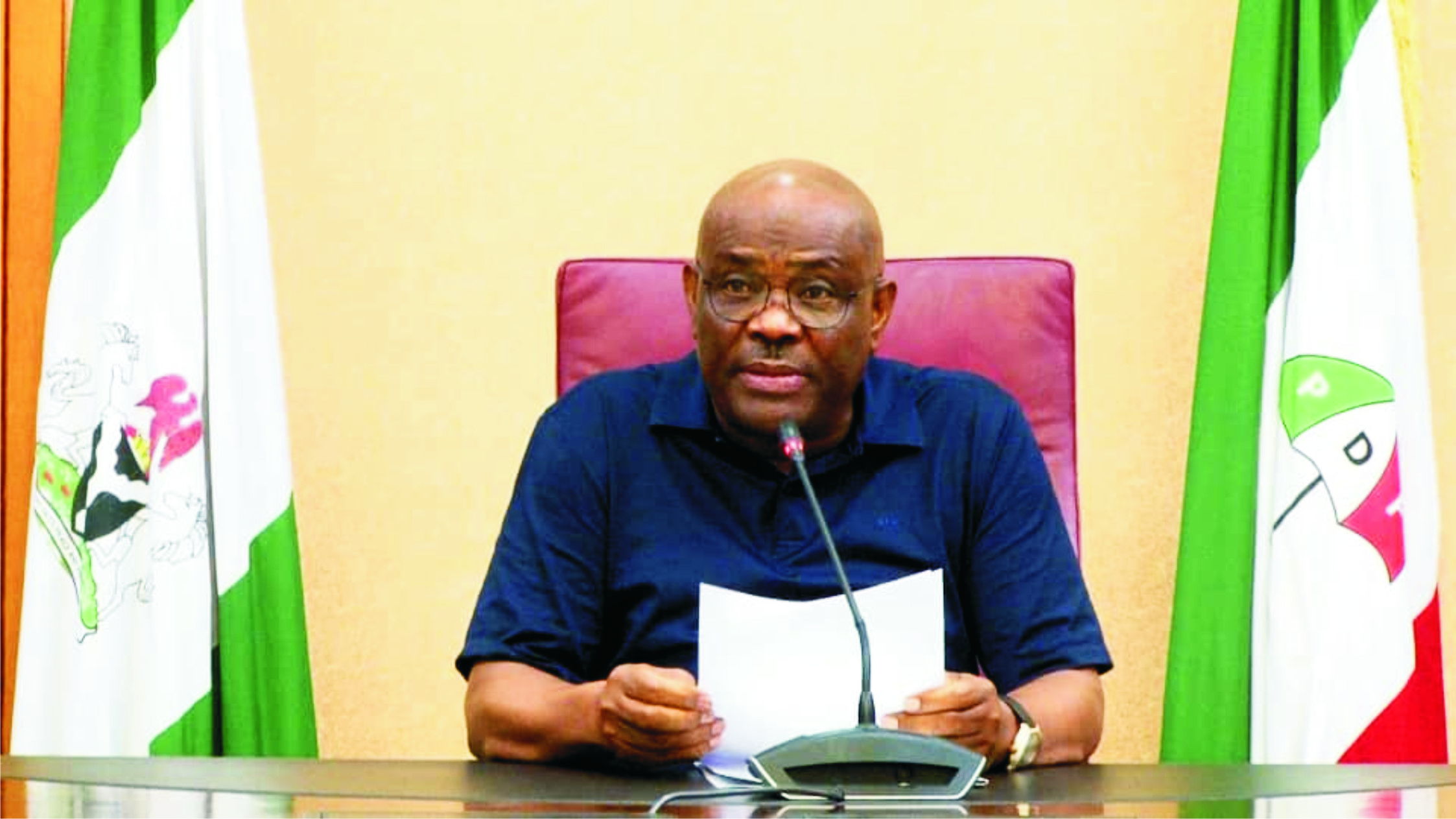
The Chairman of the Peoples Democratic Party (PDP) National Campaign Council for Edo Governorship Election and Rivers State Governor, Chief Nyesom Wike, has said the council would scuttle alleged plans by the All Progressives Congress (APC) to use security agencies to rig the September 19 governorship poll in Edo State.
Addressing journalists in Port Harcourt, Wike said the APC was confident about winning because it wanted to rig.
He stated that the PDP has gathered enough intelligence report about the alleged plan and would scuttle it at the appropriate time.
Wike added that Obaseki cannot be described as an ingrate because he has proven to be a man of character.
He said: “Governor Godwin Obaseki is not an ingrate like Adams Oshiomhole and Osagie Ize-Iyamu who can do anything, including betraying people to grab power.
“Obaseki is morally qualified and stands out as the best candidate for the September 19, 2020 election.
“Edo people cannot support and desire the handover of power to the APC candidate, Osagie Ize-Iyamu, who is a nomadic politician and ingrate who lacks character.
“It is Oshiomhole who is an ingrate because he told us that Obaseki served as the brain box of his administration that lasted eight years. How can such a person become an ingrate?
“Look at Ize-Iyamu, he is an ingrate too. He served as Secretary to the State Government in Chief Lucky Igbinedion’s administration. When he didn’t get what he wanted, he dumped the party and moved to another party.
“In 2015, people supported him for the governorship, when he failed; he did not consult them but abandoned them for another party.
“That is the life of a nomadic politician. Like his master, they are dangerously desperate, insatiable and can do anything for power.”
Wike stated that Obaseki is not a violent man like Ize-Iyamu who allegedly instructed thugs he called “lions and tigers” to cause crisis.
He challenged the police and the Independent Electoral Commission (INEC) to use the Edo election to correct previous mistakes by conducting free and fair polls.
“We consider the comment by INEC to cancel or suspend the election because of violence as succumbing to the antics of the APC.
“All they want is violence because they cannot win the election. If the election is suspended, the implication is that Obaseki will serve out his tenure without an election in November,” he said.
Meanwhile, the Federal High Court, sitting in Abuja, has adjourned till August 24, hearing in a suit seeking the disqualification of Ize-Iyamu and Ganiyu from the September 19 poll.
Justice Taiwo Taiwo adjourned the case after granting an application for substituted service of the court processes on the third and fourth defendants, Ganiyu and Ize-Iyamu, respectively.
Two APC chieftains, Hon. Momoh Abdul-Razak and Hon. Zibiri Muhizu, had sued the APC’s candidate and his running mate for alleged perjury.
Defendants in the suit marked FHC/ABJ/ CS/758/2020 are APC, Independent National Electoral Commission (INEC), Audu Ganiyu and Osagie Ize-Iyamu as 1st, 2nd, 3rd and 4th defendants respectively.
The plaintiffs are asking the court to disqualify Ganiyu from participating in the forthcoming election on account of giving false information to INEC in aid of his qualification for the governorship poll.
Ganiyu, in the suit filed on July 10, by the plaintiffs’ lawyer, Mr. Friday Nwosu, was also accused of certificate forgery.
They further prayed the court to annul the nomination of Ize-Iyamu as APC’s governorship candidate on account of running with an allegedly unqualified deputy.
In addition, they prayed the court for another order restraining the APC from contesting the September 19 governorship poll upon the disqualification of the third and fourth defendants.
In a 41-paragraph affidavit deposed to in support of the suit, the plaintiffs averred that Ganiyu contravened provisions of the electoral laws by providing false information and lying on oath in his form CF 001 he submitted to INEC in support of his qualification for the September 19 governorship election in Edo State.
According to the deponent, Abdul-Razak, “There are several irrevocable different and false information given by the third defendant about himself, which cannot be true in his 2020 INEC Form EC-9.
“That I know as a fact that both the alleged name Audu Abudu Ganiyu in his 2020 form EC-9, Audu Abudu Ganiyu in the WAEC (GCE) of December 1983, Audu Gani on the APC card No: 0054243, are not the name of the third defendant as fully and definitely confirmed by the statutory declaration of age (exhibit 6A) that accompanied the third defendant’s 2019 form CF 001 personally deposed to by the third defendant at the Registry of the Chief Magistrate’s Court, Yaba Lagos State on 24/5/1996.”
Abdul-Razak averred that the deputy governorship candidate, who is a serving member of the Edo State House of Assembly representing Etsako West Constituency, submitted a different name to INEC in 2020 from what he submitted in his 2015 and 2019 CF 001 forms.
He said the third defendant had no time in the various certificates paraded by him, attached any change of name to prove the names belong to him.
The plaintiffs accused the deputy governorship candidate of superimposing the letter ‘A” on the testimonial issued by a state authority or institution to read from originally Audu Ganiyu to Audu “A” Ganiyu, which he presented same to INEC in aid of his qualification for the election.
When the matter came up yesterday, counsel to the plaintiffs informed the court that while both the first and second defendants have been served with the processes, the third and fourth have not been served and as such he has brought an application for substituted service.
Counsel to the first defendant, Dr. Ehiogie West-Idahosa, acknowledged service while there was no appearance for INEC.
In a short ruling, Justice Taiwo granted the application as prayed and ordered that the court processes, including the hearing notice, be pasted on the Benin City residences of the third and fourth defendants.
He subsequently adjourned till August 24 for hearing in the substantive suit.


Rivers State Deputy Governor, Prof. Ngozi Odu, has called for renewed commitment, transparency, and collaboration among stakeholders in the health sector in the State.
The deputy governor particularly urged synergy between the Rivers State Contributory Health Protection Programme (RIVCHPP) and the Primary Health Care Management Board towards improved healthcare delivery in the State.
?Prof. Odu made this call during the 2026 First Quarter Review Meeting of the Task Force on Primary Health Care at the Government House, Port Harcourt, on Wednesday.
?She stressed the importance of honesty and urged all parties to be truthful and open in addressing challenges within the system.
?According to her, transparency remains critical to identifying and resolving underlying issues affecting healthcare delivery, noting that “if we are not truthful, we will not cure the disease, but merely cover it up.”
The deputy governor recounted a personal experience at a Primary Health Center where a patient, despite being duly registered under the RIVCIPP scheme with completed biometric capture, was still asked to make payment for services.
According to her, intervention by relevant authorities later confirmed the patient’s eligibility, exposing a communication gap between the scheme and healthcare providers.
Odu warned that such incidents could discourage community members from enrolling in the scheme, thereby undermining its objectives.
“When this happens, we are disenfranchising our people. The message that goes back to the community is that even when you register, you are still made to pay,” she stressed.
?While commending the leadership and staff of the Primary Health Care Management Board, Ministry of Health, Development Partners as well as other supporting units, for their efforts, ty deputy governor stressed that performance should not lead to complacency.
She urged stakeholders to continuously strive for improvement, raise standards, and leave lasting positive impacts within the system.
?
?

The Joint Admissions and Matriculation Board (JAMB) has announced the opening of examination slip printing for candidates registered for the 2026 Unified Tertiary Matriculation Examination (UTME).
JAMB made the announcement yesterday, urging candidates to visit its website to download their slips ahead of the examination.
“Examination Slip Printing is now available. The slip contains details of the venue, date and time of your examination and gives you access to the examination hall,” the board said.
Candidates are to visit jamb.gov.ng and click on “2026 Slip Printing” to print their slips.
The development comes after JAMB dismissed a viral press release falsely claiming the examination had been postponed.
The board described the notice as “malicious and fake” and urged candidates to disregard it.
The 2026 UTME is scheduled to hold from Thursday, April 16, to Saturday, April 25, 2026.
The examination follows a mock test conducted on Saturday, March 28, which recorded technical difficulties at some Computer-Based Test centres.
Of the 224,597 candidates who registered for the mock, 152,586 sat for the test across 989 CBT centres nationwide.
JAMB said over 20 centres were delisted for technical inadequacies.
The board also warned candidates against fraudsters on WhatsApp claiming to facilitate score inflation, describing such claims as “false and criminal”, and threatening cancellation of registration or withholding of results for any candidate found involved.
Over two million candidates, according to JAMB Registrar, Prof. Ishaq Oloyede, registered for this year’s UTME.
News
RSU Unveils Five-Year Strategic Dev Plan …Calls For Collective Commitment To Institutional Excellence


In a decisive step towards redefining its future, the Rivers State University, Port Harcourt, has formally unveiled its Third Five-Year (2026-2030) Strategic Development Plan.
The development plan is a comprehensive roadmap designed to strengthen the university’s position as a leading institution in Nigeria and beyond.
The unveiling took place during a high-level engagement with the Governing Council, Principal Officers and the university congregation, at the Convocation Arena, recently.
Delivering his remarks at the unveiling ceremony, the Pro-Chancellor of the university and Chairman of Council, Hon. Okey Wali, SAN, charged all members of the university community to align their activities with the strategic direction of the institution, emphasizing that the success of the plan depends on collective commitment.
He noted that the plan is not merely a document, but a working framework that requires discipline, accountability and unity of purpose.
According to the Pro-Chancellor, only through coordinated efforts from all stakeholders can the university fully realize its vision.
“I hereby invite the Visitor to the University, donor agencies, friends and well-wishers, and all stakeholders to support and fund the implementation of this strategic plan. We are confident that this plan will take RSU to greater heights in the comity of higher institutions,” he said.
The Vice-Chancellor of the University, Prof. Isaac Zeb-Obipi, described the Strategic Development Plan as a document that would enhance the university’s corporate strengths, mitigate current weaknesses, leverage its corporate opportunities and address perceived existential threats.
“This Five-Year Strategic Plan sets out RSU’s goals, strategic objectives, expected outcomes and impact, including intervention strategies,” he said.
On his part, the Chairman of the Strategic Development Planning Committee, Prof. Emeritus Joseph A. Ajienka, noted that the 2026-2030 Strategic Development Plan represents a bold reaffirmation of the university’s founding ideals of excellence, creativity, innovation and inclusivity, aimed at positioning the institution to respond effectively to contemporary challenges in higher education.
Prof. Ajienka, who is also a member of the Governing Council, disclosed that the plan was developed through an extensive and inclusive consultative process, which he said reflects contributions from Faculties, Departments, Satellite Campuses and Administrative Units.
At its core, the plan seeks to advance the university’s vision of becoming a “unique and uncommon” institution that is structurally and philosophically oriented towards solving practical societal problems and ranking among the top ten universities in Nigeria.
The strategic framework identifies six key challenges confronting the university, including funding constraints, infrastructure deficits, limited research collaboration, and service delivery inefficiencies.
A statement by the university’s Acting Director, Corporate Affairs, Victor G. Banigo, further stated that the university has articulated four broad strategic goals supported by eight targeted objectives.
A central priority of the plan, according to him, is the strengthening of governance and administrative systems, alongside deliberate efforts to expand the university’s funding base. Others include enhanced alumni engagement, strategic partnerships and innovative fundraising initiatives aimed at ensuring long-term financial sustainability.
“Equally significant is the commitment to upgrading physical infrastructure across all campuses. Plans are underway to modernize lecture halls and laboratories, expand student accommodation, improve campus security and deploy advanced ICT systems to support teaching, learning and research.
“Recognizing that human capital is the backbone of institutional success, the university has placed strong emphasis on staff development, recruitment and productivity enhancement. Through targeted training programmes, mentorship initiatives and performance management systems, the plan aims to foster a highly skilled and motivated workforce.
“In addition, the university is poised to deepen its focus on research, innovation and entrepreneurship. By reviewing academic curricula, strengthening industry partnerships and establishing innovation incubation centers, Rivers State University seeks to translate research outputs into practical solutions that address societal needs and drive economic growth,” he said.
The PRO disclosed that the implementation of the strategic plan is projected at ?110 billion, reflecting the scale of transformation envisioned.
“While the university is committed to funding a significant portion internally, additional resources will be mobilized through government support, donor agencies, alumni contributions, and public-private partnerships.
“This multi-channel funding strategy aligns with the university’s broader goal of building a resilient and self-sustaining financial model capable of supporting long-term development,” he explained.
To ensure effective implementation, he said, “the plan incorporates a comprehensive monitoring and evaluation framework, complete with performance and impact indicators. A mid-term review is scheduled within the first two years to assess progress and make necessary adjustments.
“Furthermore, the establishment of a dedicated Strategic Planning Office will provide oversight, coordination and accountability in executing the plan across all units of the university.”
According to the statement, “As the university embarks on this transformative journey, the message from leadership is clear: the Strategic Development Plan is a collective mandate.
“For staff, students, alumni and stakeholders, it represents an opportunity to contribute meaningfully to the growth and advancement of the institution. For the university, it is a pathway to consolidating its legacy while embracing innovation and global relevance.
“With a clear vision, defined priorities and a united community, Rivers State University stands poised to translate this strategic blueprint into measurable progress, advancing knowledge, empowering people and shaping the future of higher education in Nigeria.”
-

 Editorial5 days ago
Domesticate FG’s Exit Benefit Scheme
-

 News5 days ago
RSU Unveils Five-Year Strategic Dev Plan …Calls For Collective Commitment To Institutional Excellence
-

 News5 days ago
DHQ Confirms Deaths Of Terrorists, Soldiers In Borno Attack
-

 News5 days ago
Tinubu Commissions Bayelsa Gas Turbine, Other Projects Today
-
Business5 days ago
Niger Delta Investment Summit Targets $5bn Inflows, 500,000 Jobs
-
Nation5 days ago
Rumuji Youth Leader Condemns Protest, Disowns Alleged Government Empowerment Claim
-
Business5 days ago
NPF Disburses ?21.68m To Fallen Heros’ Families …Reinforce Welfare Commitment
-

 Nation5 days ago
Haniel Jack Foundation Awards Five Rivers Indigenes Scholarship