
Business
Osinbajo Meets IMF, World Bank Over Economic Stimulus

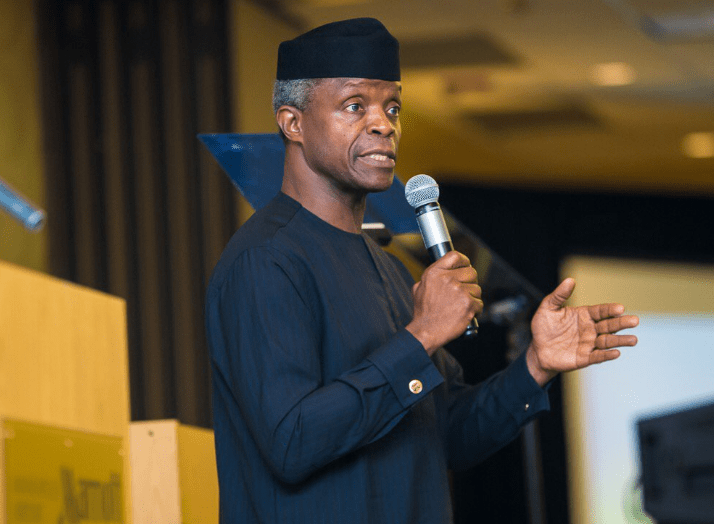
Vice-President Yemi Osinbajo, on Tuesday, met with representatives of the International Monetary Fund (IMF) and the World Bank via video conference to discuss collaborative strategies for the economic stimulus packages planned by the Federal Government.
The Osinbajo-led Economic Sustainability Committee had stated that it was working out a stimulus package that would take the country’s economy out of global recession to positive growth in 2021.
The committee was inaugurated by President, Muhammadu Buhari, earlier this month.
The Senior Special Assistant to the Vice President on Media and Publicity, Laolu Akande, posted a video on Twitter on Tuesday, showing Osinbajo in a video conference meeting.
The tweet read, “VP Osinbajo has been busy today holding video conference-based meetings with IMF and World Bank representatives on how the agencies can collaborate with President Buhari’s forthcoming additional economic stimulus packages. Video shows just-concluded meeting with World Bank Nigeria reps.”
The Minister of Finance, Budget and National Planning, Zainab Ahmed, who is a member of the economic sustainability committee, had on April 17, said the global economy would go into recession in 2020 as a result of the coronavirus pandemic.
According to her, the prediction of the IMF that Nigeria will go into a negative growth of 3.4 per cent next year is based on an assessment of the National Bureau of Statistics.
The minister, however, noted that the stimulus package being worked out by the economic sustainability committee would be approved by the President, before it would be announced to Nigerians.



-

 Education1 day ago
FCE Yola Graduates 3,555 Teachers , Seeks Upgrade to University
-

 Sports1 day ago
Nigerian Trio Target Titles At PFL Africa Finals
-

 Niger Delta1 day ago
Diri Restates Stance On Lagos-Calabar Coastal Highway
-

 Niger Delta1 day ago
C’River, NUJ Pay Tribute To Late Guardian Editor
-

 News1 day ago
NDLEA Recovers Tons Of Illicit Drug Consignments In Nine States
-

 Opinion1 day ago
Checking Voter Apathy In Nigeria’s Electoral Process
-

 Politics1 day ago
2027: DICKSON’S EX-ALLY VOWS TO WORK AGAINST NDC INTEREST IN BAYELSA
-

 Politics1 day ago
2027: GROUP PLEDGES 40,000 SUPPORTERS FOR COALITION CANDIDATES IN RIVERS