
Opinion
For Lagos To Work Again

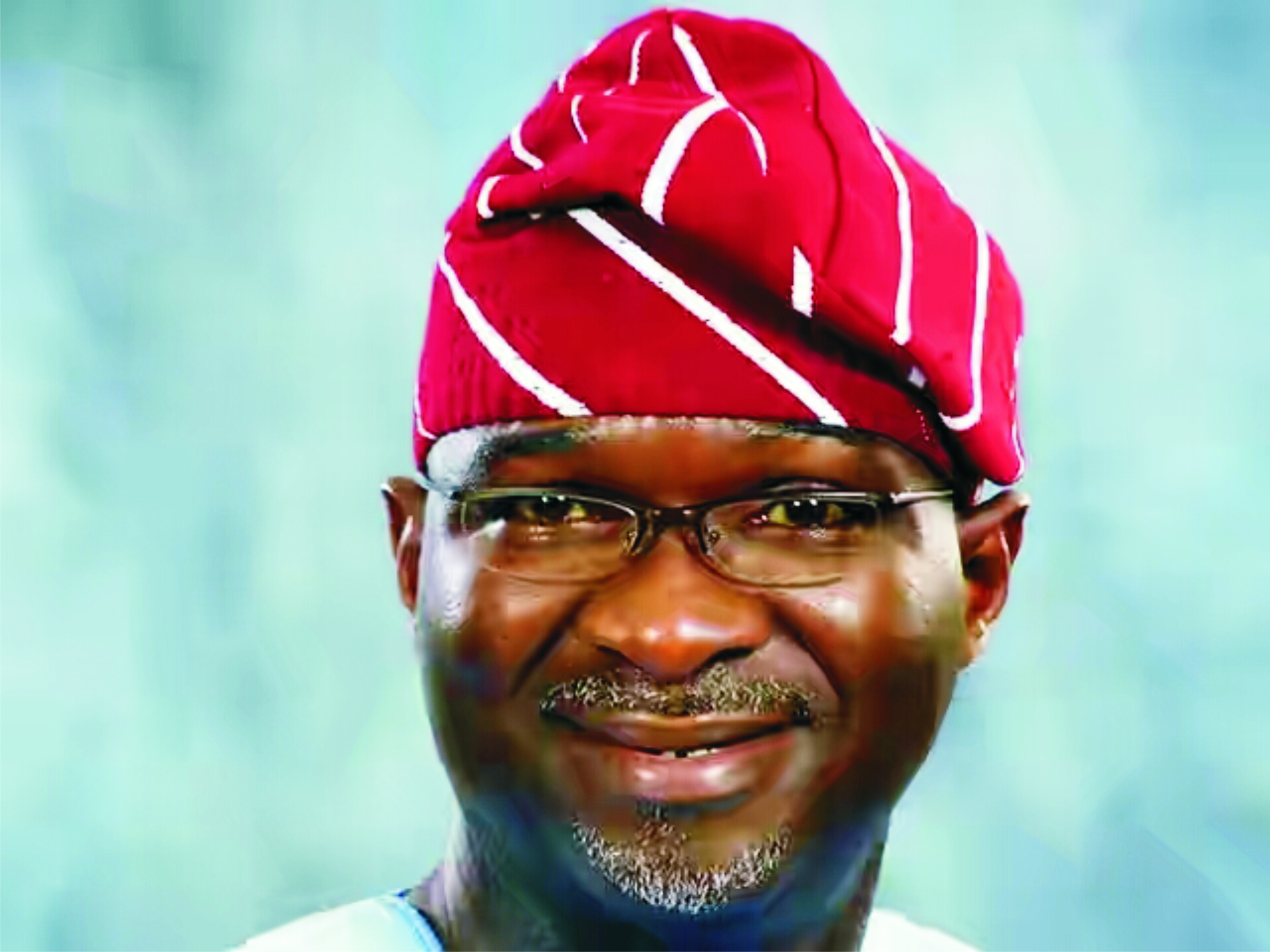
As the Centre of Excellence, Lagos in southwest arguably did backslide from its position in 2015 where the then governor, Babatunde Raji Fashola (SAN), impressively left the state. Without a doubt, Fashola’s exploits during his tenure compellingly fetched his portfolios in President Muhammadu Buhari’s administration as trinity minister immediately after handing over to his successor, Akinwunmi Ambode.
During Fashola’s tenure, residents were overwhelmed to such an extent of enthusiastically paying taxes owing to convictions that the state was synchronizing with his slogan Eko o ni baje.
No doubt, gigantic projects particularly some necessary overhead bridges to address traffic situations alongside inner roads constructed by Ambode’s administration are commendable. However, the state honestly didn’t sustain the momentum from Fashola’s administration. For example, scores of roads in the state are presently eyesores to an extent that some motorists now pack and use commercial buses.
Disgustingly, the state metamorphosed to refuse dump arena after Fashola’s exit. Ambode’s first gaffe was the cancellation of monthly environmental sanitation exercise in place which restricted movement for merely three hours on last Saturdays, without any alternative scheme to address sanitation. That alone is abysmal error. Ambode’s government had anchored its action on a court judgment that declared the exercise unlawful and an infringement to freedom of movement enshrined in the 1999 Constitution of the Federal Republic of Nigeria.
Strangely, the state government without wasting time comfortably adopted the verdict despite the critical implications particularly hygiene that is sufficient to set aside the judgment. Reports show that the state government appealed but was practically unserious by not filing their brief. To restrict movements for such a reasonable time in a month for health reasons cannot fall within the context of infringement to peoples’ movements. There is a doctrine of necessity for remedying lacunas. For example, under national security, movements are always restricted during general elections as well as presidential movements despite Sections 35, 38 and 40 of the Constitution.
Logically, if there is a right to life which can be indirectly threatened by dangerous sicknesses resulting from unhealthy environments, arguably, a public policy to prevent such hazards within a reasonable time aptly cannot amount to infringement of right to movement. The World Health Organization (WHO) report shows that one-fourth of deaths across the globe are attributed to unhealthy environments. Besides, every society grows and presently, governments shouldn’t responsibly leave general hygiene to citizens’ discretions.
Another critical issue is bad roads. In fact, those that shuttle from Badagry axis to the Island are completely cut-off due to bad roads. Not even officials of Lagos State Traffic Management Authority (LASTMA) are on sight in these critical areas. The stresses motorists and commuters go through daily are better imagined than experienced. To describe the people as isolated or forsaken is no hyperbole. All these are convincingly traceable to not adopting continuum in government accordingly. Had Ambode conscientiously continued with his predecessors’ policies with constructive modifications as Fashola did after succeeding Asiwaju Bola Tinubu, believably, Lagos will be ahead of where Fashola left it.
Thus, these episodes present big lessons to the present governor, Babajide Sanwo-Olu. The new administration thus, faces critical tasks to put the state back to shape. The situation requires state of emergency principally on refuse disposal, roads rehabilitation and traffic management. Similarly, the rate of area boys’ excesses in Lagos roads grew exceedingly during Ambode’s tenure than it was when he took the mantle of office from Fashola. These areas must be critically addressed.
Now, over to the federal government; the high population in Lagos is undeniably worrisome. Imagine if the military junta of General Ibrahim Babangida didn’t thoughtfully relocate the federal capital to Abuja, how would the federal government effectively be operating from Lagos including presidential movements alongside the great workforce?
In a nutshell, the seaport calls for a state of emergency and transcends temporary decongestion. Sensibly, having a functional seaport only in Lagos is a big blunder. There’s urgent need to spread out the seaports to other geopolitical zones. If not, the trailers-parking, traffic crisis in Lagos roads and excessive population may never be subdued no matter the efforts deployed.
For example, by the present poor arrangement, indisputably, all clearing and forwarding agents, haulage workers in the country alongside their families are all resident in Lagos; likewise their trailers and trucks in numbers. These numbers alone are in high and sufficient to create catastrophe let alone other seaport-related businesses. By decentralizing the seaport, other zones will instantly pick up economically as scores of people will relocate to other areas and operate through other seaports; thereby drastically depopulate Lagos to be a standard and viable state. Beyond that, job opportunities will abound in all those new areas.
Typically, in any system where economic activities are concentrated in one direction, the congestion being experienced in Lagos environs must follow. Same for unemployment ratio as too many people would be queuing for few employment opportunities. But if decentralized, job opportunity will multiply correspondingly to a number of seaports and government agencies alone will likewise absorb a good number across all their operational stations. Thus, while the palliative measures by the governments are estimable, the ultimate panacea remains to decentralize the seaport.
Umegboro, a public affairs analyst, wrote from Abuja.
Carl Umegboro



Quote: “Ogoniland does not
The latest attack by Chief
Instead, the gathering and
The proposal for a unified
The question should be: who
It is easy to criticise
The people are looking beyond
onest people can reach
Society must therefore

Quote: “Privilege should
There is an old saying that
While motivations cannot
A person who benefits from a
This is why citizens should
We must not assume that
By: Michael Abraham
Quote:”Although the Federal
The recent outburst by the
The senator also alleged
They connect ports, airports,
To address these challenges,
Rwanda and Morocco, for
FERMA should also prioritize
Many Nigerians have asked
-

 News1 day ago
RSG Targets Nine Million Residents in Mosquito Net Distribution Campaign
-

 Oil & Energy1 day ago
Aiyedatiwa Signs New Electricity Bill
-

 Maritime1 day ago
Marine Minister Commends President Tinubu On NPERA Bill Assent
-

 Oil & Energy1 day ago
NLNG Commissions Research And Innovation Centre In RSU
-

 News1 day ago
KenPoly Holds Eight Convocations, August 29
-

 News1 day ago
RMAFC Completes Revenue Sharing Review, Proposes New Pay
-

 News1 day ago
RSG Begins Another Phase of Projects Commissioning Today
-

 Maritime1 day ago
NAGAFF Petitions IGP Over Alleged Maritime Police Harassment