Connect with us

Business

Implementation Of 7.5% VAT Begins, Feb 1

Published

on

The Federal Government will from February 1 begin the implementation of 7.5 per cent Value Added Tax espoused by the finance law.
The law, according to the government will take effect after all the necessary administrative procedures must have been completed, especially the gazette of the Act by the Federal Ministry of Justice.
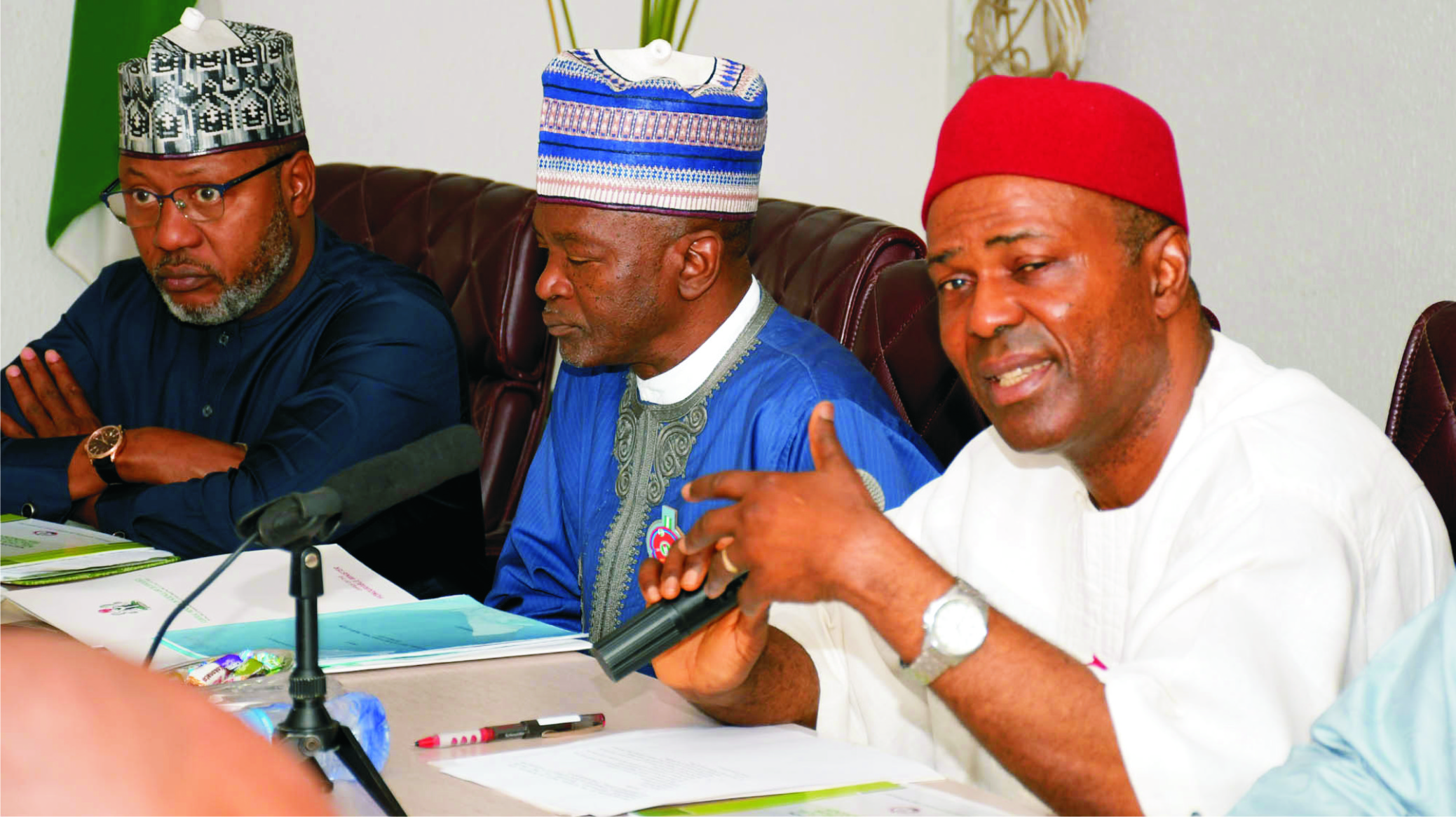
The Minister of Finance, Mrs Zainab Ahmed, confirmed the development in Abuja at the inauguration of the board of the Federal Inland Revenue Service, last Thursday.
She said the February 1 commencement date had put to rest every speculation regarding the take-off date of the new VAT regime.
The minister said once a bill is signed into law, it takes effect immediately, but noted that there were certain administrative procedures and formalities to be finalised before commencement.
The VAT increase which is meant to help government achieve its revenue projections for the 2020 budget is a part of the tax reforms included in the 2019 Finance Act.
She said with the Act, there would be more revenue to finance key government projects especially in the areas of health, education and critical infrastructure.
She said, “The implementation of the Value Added Tax is to take effect from February 1, 2020, after all the necessary administrative procedures have been completed, especially the gazette of the Act by the Federal Ministry of Justice.”
The minister’s remark however, contradicts an earlier claim by the Accountant General of the Federation, Ahmed Idris, who said the new VAT increment took effect from January 13 when the 2020 Finance Act was signed.
The minister told the members of the FIRS board that the responsibility bestowed on them was critical to the smooth operation of the various tiers and arms of government in Nigeria and, by implication, the well-being of the Nigerian people.
The newly appointed Executive Chairman of the FIRS, Mr Muhammad Nami, vowed to reposition the service for improved performance.
Nami said he would implement policies that would ensure maximum increase in tax revenue.
He said as tax administrators and custodians of the Nigerian tax system, the FIRS had a responsibility to implement all tax policies and laws in a manner that would ensure optimal benefits to the nation.
In achieving these objectives, he said his agenda to reposition the FIRS for better service to taxpayers would be anchored on four cardinal pillars.
These include rebuilding FIRS’ institutional framework by strengthening the capacity of departments and units to deliver on their mandates and robust collaboration with stakeholders to eliminate critical bottlenecks in the tax system.
Others are to build the FIRS into an institution that supports Nigeria’s longing to become an investment destination and to make the FIRS an agency in which its people, processes and technologies are all geared towards a clear goal.
In order to achieve these agenda, he said within the next three months, a lot of initiatives would be implemented.

Continue Reading

Business

Shippers Council Vows Commitment To Security At Nigerian Ports

Published

on

The Nigerian Shippers Council (NSC)has restated its commitment towards ensuring security at Nigerian seaports.
Executive Secretary/Chief Executive Officer of the Council, Dr Pius Akuta, said this in Port Harcourt, while declaring open a one day workshop organized by the Nigerian Shippers Council in collaboration with the Nigerian police( Marin Division).
Theme for the workshop was ‘Facilitating Port Efficiency; The strategic Role of Maritime police “
Akuta who was represented by the Director, Regulatory Services, Nigerian Shippers Council, Mrs Margeret Ogbonnah, said the workshop was to seek areas of collaboration with security agencies at the Ports with a view to facilitating trade
Akuta said the theme of the workshop reflects the desire of the council and the Nigerian police to build capacity of police officers for better understanding and administration of their statutory roles in the Maritime environment.
He said Nigerian seaports has constantly been reputed as one of the Port with the longest cargo dwell in the world, adding,”This is so, because while it takes only six hours to clear a containerized cargo in Singapore Port, seven days in Lome Port, it takes an average of 21 days or more in Nigerian Ports” stressing that this situation which has affected the global perception index on Ease of Doing Business in Nigerian seaports must be addressed.
Akuta said NSC which is the economic regulator of the Ports has the responsibility of ensuring that efficiency is established in the Ports inorder to attract patronages.
“Pursuant to its regulatory mandate, the NSC has been collaborating with several agencies to ensure the facilitation of trade and ease of movement of cargo outside the Ports to avoid congestion”he said.
Also speaking the commissioner of police, Eastern Port Command, Port Harcourt, CP Tijani Fakai, said Maritime police has played some roles in facilitating Ports efficiency.
He listed some of the roles to include ensuring security and crime prevention at the Ports, checking of illegal fishing activities at the Ports, checking of human trafficking and drug smuggling and prevention of fire incident at the Ports.
Represented by ACP, Rufina Ukadike, the CP said police at the Ports have also helped in the decongestion and prevention of unauthorized Anchorage.
He commended the Nigerian Shippers Council for the workshop and assured of continuous collaboration.
Speaking on the dynamics of cargo handling, Deputy Controller of customs, Muhydeen Ayinla Ayoola, said the launching of electronic tracking system and dissolution of controller General Taskforce has helped to ensure efficiency at the Ports.
Ayoola who represented the custom Area Controller Port Harcourt 1 Area command, however raised concerned over rising national security threat , which according to him has affected efficiency at the Ports.
John Bibor
Continue Reading

Business

Nigeria Risks Talents Exodus In Oil And Gas Sector – PENGASSAN

Published

on

The Petroleum and Natural Gas Senior Staff Association of Nigeria (PENGASSAN) says Nigeria risks massive brain drain in the oil and gas sector due to poor remuneration.

Mr Festus Osifo, President of PENGASSAN, said this while briefing newsmen at the end of the National Executive Council (NEC) meeting of the union on Thursday in Abuja.

He said the sector was facing challenges arising from Naira devaluation and inflation, noting that, oil and gas skills remained globally competitive.

“A drilling engineer in Nigeria does the same job as one in the U.S. or Abu Dhabi,” he said.

Osifo said the union must take steps to bridge the wage gap to prevent members from leaving the country for better opportunities abroad.

“If we don’t act, the brain drain seen in other sectors will be child’s play,” he said.

He said PENGASSAN had recorded significant gains through collective bargaining across oil and gas branches.

“We signed numerous agreements across government agencies, IOCs, service and marketing sectors,” he said.

He said the agreements brought relief to members facing rising costs of living, adding that,  the association’s duty is to protect members’ jobs and enhance their pay.

Osifo urged companies delaying salary reviews and those foot-dragging as a result of the prevailing economic realities, to do the needful.

He said the industry employed some of the nation’s best talents, making competitive pay critical to retaining skilled workers.

“This industry recruits the best. Companies must provide the best conditions,” he said.

On insecurity, Osifo urged government to take decisive action against terrorism and kidnappings across the country.

“We are tired of condemnations. government must expose sponsors and protect citizens,” he said.

He urged government at all levels to prioritise tackling insecurity through better funding and equipment for security agencies.

Osifo said PENGASSAN supported calls for state police to improve local security response, adding that decentralising policing will protect citizens better than rhetoric.

He also said economic indicators meant little, if food prices remained high and farmers could not return to farms due to insecurity.

“Nigerians want to see food on the table, not macroeconomic figures,” he said.

He urged government to coordinate fiscal and monetary policies to ensure economic gains reach households.

“Translate macro results to food on the table,” he said.


Continue Reading

Business

NCDMB, Others Task Youths On Skills Acquisition, Peace 

Published

on

The Executive Secretary, Nigerian Content Development and Monitoring Board(NCDMB), Engr. Felix Omatshola-Ogbe, alongside former acting Director-General of the Department of State Services(DSS), Matthew Seiyefa, and the Bayelsa State Commissioner for Youths Development, Kemepado Nimizigha, have charged youths of the Niger Delta region to maintain peace and tranquility in the region.
The trio gave the charge in their separate remarks at the Youths session of the 2025 edition of the NCDMB Practical Nigerian Content (PNC) held in Yenagoa, the Bayelsa State capital, Tuesday.
In his opening remarks, Ogbe , represented by the Head of Department, Government Relations,Teddy Bai, noted that Nigeria stands at a defining moment as global energy systems were rapidly transforming adding that the nation must be deliberate in preparing for a future which balances traditional oil and gas operations with cleaner and more innovative energy solutions.
He said the 2025 PNC Youth forum themed, ‘Building Youth Capacity, Securing Investments, Sustaining Growth In The Oil And Gas Industry’ was not a mere gathering to discuss issues, but to chart new pathways toward meaningful youth engagement, responsible participation in the oil and gas value chain, and sustainable development for the local communities.
Ogbe emphasized that Nigeria’s energy sector was undergoing a transition, with the youths considered as great partners at the heart of the energy sector transition.
“As youths, you’re not just the leaders of tomorrow. You’re contributors and solution-creators today. Your creativity, digital literacy, and innovations are needed in the transitioning energy sector and its value chain.
“It’s my profound pleasure to address you at this year’s PNC 2025 Youth Event, a platform that continues to grow in importance as we collectively shape the future of our energy sector and, indeed, our nation.
“At the heart of this transition is you-the Nigerian youth. Your creativity, digital literacy, and entrepreneurial capacity are crucial assets for solving some of our most pressing challenges, including Pipeline vandalism and crude oil theft, Environmental degradation, Skills gaps in emerging energy technologies, and innovations for local content development.
“The NCDMB recognizes your central role, and this event is one of many interventions designed to empower, inform, and prepare you for opportunities ahead.
“The Nigerian youth must be champions of protection- not destruction- of national assets”, he said.
In his keynote address, Pro-Chancellor of the Niger Delta University (NDU), and former acting Director-General of the Department of State Services(DSS), Mathew Seiyefa, called on youths to maintain the peace in the oil rich Niger Delta region and Nigeria at large.
He cited instances of youth restiveness and their perceived causes in various parts of the region and other parts of the country, saying without peace no meaning development can take place in any part of the world as investors and Government need peace before siting developmental projects in any given area.
In his goodwill message, the Bayelsa State Commissioner for Youth Development, Alfred Kemepado Nimizigha, represented by the Director-general of the State’s Centre for Youth Development, Robert Igali, lauded the NCDMB for the programme.
The Commissioner urged youths to engage in meaningful activities rather than taking to social vices, noting that the Governor Douye Diri’s led ‘prosperity administration’ would continue to embark on several initiatives and programmes aimed at empowering youths across the state.
 Ariwera Ibibo-Howells, Yenagoa
Continue Reading

Trending