Connect with us

Politics

Umahi Announces Plan To Appoint 800 New Aides

Published

on

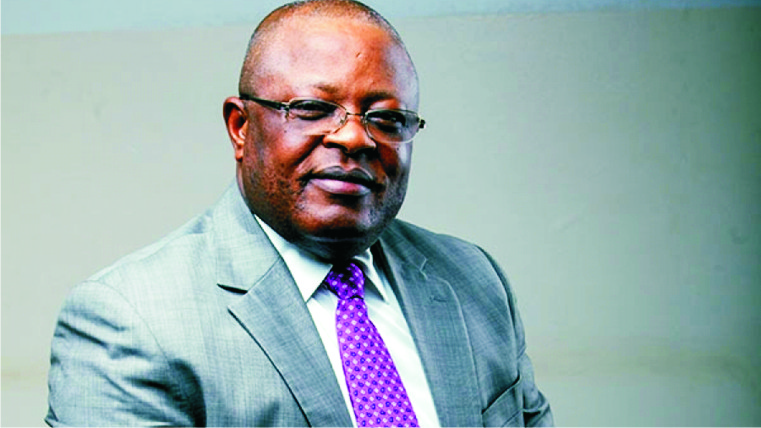
Governor David Umahi of Ebonyi State has announced his plan to appoint 800 aides, in addition to the 4,000 appointments already made by his administration.
Umahi said this last Monday in Abakaliki when he met with members of the state Executive Council, state House of Assembly, Local Government Area Chairmen and all the new appointees, among other stakeholders.
The governor said that in spite of an initial 185 Executive Assistants (EAs), Senior Technical Assistants (STAs) and Technical Assistants (TAs), he made an additional 200 similar appointments last Monday.
He said: “We would be getting about 800 EAs, STAs and TAs by the end of this meeting and from this moment, the task of making similar appointments is taken from me and given to the people from the ward level.
“This means that we will appoint three more TAs from each ward of the state and the stakeholders will sit and nominate two, while the party, the Peoples Democratic Party (PDP) will nominate one.
“The criterion used was that not all the past appointees returned but 80 per cent of the appointments included former appointees, especially those who did well.”
He said that the EXCO met last Monday and approved the remuneration of the new appointees, because it was in its power to do so.
“The EAs will receive N150,000 (N100,000 salary and N50, 000 for overhead costs), while the STAs will receive N120,000 (N80,000 salaries and N40, 000 for overhead cost).
“The TAs will receive N100 (N70,000 salaries and N30,000) for overhead cost.
“We would approach the House of Assembly on the issue of liaison officers, to bring their salaries to N60,000 in order to create additional ones, especially for women (widows).
“We intend to have two liaison officers in the wards, one for men and one for women and if you add party executives at the ward level, we will have about 4,000 appointees,” he said.
The governor said that the essence of the appointments was to encourage the people to contribute to the development of the state.
“Anyone that would be appointed would have something doing, at least possess one hectare of farmland, which will be adequately profiled.
“The development centre coordinators will ensure adequate supervision of schools and ensure that all ‘out of school children’ are in school, ” he said.
Commissioner for Special Projects, Mr Ikechukwu Nwobo, who spoke on behalf of the stakeholders, thanked the governor for convening the meeting.
Nwobo assured the governor that they would always partner with him in the task of developing the state.
“The stakeholders will ensure that the right people are nominated so that the wheel of progress in the state is sustained,” he said.


Continue Reading

Politics

FG’s Economic Policies Not Working – APC Chieftain

Published

on

A senator who represented Taraba Central, Mr Abubakar Yusuf, has declared that the economic policies of President Bola Tinubu are not yielding the expected results.
His comment is one of the strongest internal critiques yet from within the ruling All Progressives Congress (APC).
The comment underscores the growing dissatisfaction within sections of the ruling party over the direction and impact of the administration’s economic reforms amid rising living costs and fiscal pressures across the country.
Mr Yusuf, who served in the Senate between 2015 and 2023 under the platform of the APC, made the remarks during an appearance on national television.
Responding to a question on whether the administration’s economic direction, often referred to as Tinubunomics, was working, Mr Yusuf answered in the contrary.
“For me, it is not working. I am a member of the APC. I would be the last person to hide the facts”, he said.
He said while the government might be operating diligently within its policy structure, the framework itself is ill-suited to Nigeria’s current realities
“Within the policy framework, yes, they are doing their best, but it is not the framework that is suitable for Nigeria at the point in time that President Asiwaju came into power,” he said.
Mr Yusuf criticised the immediate removal of fuel subsidy on the day the president was sworn in, arguing that the decision lacked sufficient consultation and planning.
“I am one of those who say President Asiwaju ought to have waited. Not on the day he was sworn in to say subsidy is gone. On what basis?”, he asked.
He urged broader engagement before major fiscal decisions are taken.
“Sit down with your cabinet, sit down with your ministers, sit down with your advisers,” he said, dismissing the argument that subsidy removal was justified solely on grounds of corruption.
The former lawmaker identified “structural flaws” in the country’s budgeting system, particularly the envelope budgeting model.
“One of the basic problems is that before you budget, you should have a plan. The envelope system we have been operating has been you budget before you plan. That has been a major issue”, he said.
He argued that allocating spending ceilings without aligning them to concrete development strategies inevitably weakens implementation and delivery.
“If you give me an envelope which is contrary to my plan, whether it is plus or minus, there is no way I am going to implement my plan. It is bound to fail,” he said.
Mr Yusuf called for the scrapping of the envelope budgeting system, noting that he had consistently opposed it even during his years in the National Assembly.
“It is not good for us. It is not going to work well for us,” he said.
He further blamed poor capital releases and persistent deficit financing for undermining budget performance over the years.
“We could not meet 60 percent of our capital budget in all these years. No releases. If you make a budget and the release is very poor, there is no way the budget will be executed”, he stated.
According to him, weak fund disbursement mechanisms and reliance on deficit financing have entrenched a cycle of underperformance.
“Our budget ought to have been a surplus budget, but all our budgets have always been deficit financing budgets,” Mr Yusuf added.

Continue Reading

Politics

Reps To Meet,’Morrow Over INEC’s 2027 Election Timetable

Published

on

The Nigerian House of Representatives has resolved to reconvene for an emergency session tomorrow February 17, 2026, to deliberate on issues arising from the Independent National Electoral Commission’s (INEC) release of the timetable for the 2027 general elections.
The decision was disclosed in a statement issued by the House Spokesman, Rep. Akin Rotimi, who described the electoral body’s announcement as one of “constitutional and national significance.”
INEC had fixed February 20, 2027, for the Presidential and National Assembly elections.
According to the statement, members of the Green Chamber were notified of the emergency sitting through an internal memorandum from the Speaker’s office.
The session is expected to focus on legislative matters connected to the newly released timetable, reflecting the House’s resolve to act promptly on issues affecting the nation’s democratic process.
Rep. Rotimi noted that all related businesses would be treated with urgency and urged lawmakers to prioritise attendance in view of the importance of the deliberations.
INEC had on Friday formally unveiled the comprehensive schedule for the 2027 polls, including timelines for party primaries slated for July to September 2026, as well as the commencement of Continuous Voter Registration in April 2026.
The development comes amid ongoing consultations and proposed amendments to the Electoral Act ahead of the 2027 general elections.

Continue Reading

Politics

Group Continues Push For Real Time Election Results Transmission

Published

on

As the controversy over the transmission of election results continues across the country, the Defence For Human Rights And Democracy (DHRD), a pro democracy organisation in the country, has criticised the National Assembly for not giving express approval to real time transmission of elections results.
To this end, the group is calling on all civil society organisations in the country to mobilise and push for a better Electoral Reform in the country.
This was contained in a press statement titled, “Defence For Human Rights and Democracy Demands Real Time Election Transmission of Result”, a copy of which was made available to newsmen in Port Harcourt.
The group described the refusal of compulsory real time transmission of result results by the Senate as undemocratic, adding that the situation will give room for election manipulation, rigging and voters apathy.
It said that the provision of mandatory real time transmission of election results would have significant improvement on the nation’s democracy.
According to the statement, “Since the return of democracy in 1999 to date, it is 27 years, so our Democracy has metamorphosed from being nascent and as such significant improvement should have been recorded.
“Defence For Human Rights And Democracy (DHRD), is really disappointed at the National Assembly, especially the upper chamber (Senate) for not approving ‘Real Time Electronic Transmission of Election Result’.
“This undemocratic act of theirs, if not tamed, will give room for election manipulation and rigging’”.
Signed by Comrade Clifford Christopher Solomon on behalf of the organisation, the statement further said, “The Defence For Human Rights and Democracy unequivocally supports real time transmission of election result”, stressing that his group will resist any act by the National Assembly to undermine the nation’s democracy.
“DHRD,unequivocally supports ‘True Democracy’, which is Government of the people, by the people and for the people.
“Therefore, anything that will crash the hope of Nigerians to Freely, Fairly and Transparently elect candidates of their choice in any given election should and will be vehemently resisted because good governance begins with leaders elected through credible process. By so doing, leaders have entered a social contract with the citizens to equitably manage their affairs and abundant resources”, the statement added.
It urged the National Assembly to revisit the issue in order to avoid civil unrest.
According to the DHRD, “To avoid civil unrest,voters apathy, election rigging and manipulation, rather to promote citizens participation, advancing our Democracy and entrenching free, fair, credible and acceptable electoral outcome, the National Assembly should amend the electoral act in a manner that will deepen our democracy and boost citizens confidence.
“On this note, The Defence For Human Rights And Democracy (DHRD), is calling on all other civil society organisations (CSOs) to mobilise, organise and push for a better electoral act amendment by the National Assembly”.

By: John Bibor

Continue Reading

Trending