
Oil & Energy
Non-Performing DISCOs Risk NERC’s Sanction – Minister

The Minister of Power, Works and Housing, Mr Babatunde Fashola, says the power to revoke licences of non-performing electricity Distribution Companies (DisCos) is vested in the Nigerian Electricity Regulatory Commission (NERC).
Fashola said this recently in Abuja at the 2019 Punuka Annual Lecture with the theme: “Rethinking the Model for an Effective Nigerian Electricity Supply Industry (NESI): Challenges for Government and Industry”.
According to him, the power not to renew or to cancel the license of non-performing DisCos exists and it is vested in the regulator, NERC and not in the minister.
He said that the regulator could on its own, upon complaints of consumer or a group of customers amend or cancel the license of a non-performing DisCo.
Fashola said that the powers of NERC to amend or cancel licenses is applicable to all licensed authorities, the transmission companies, generation companies, distribution companies and others under the Act.
“The power not to renew or to revoke operational license of any of the authority is in sections 73 and 74 of the Act and so, there is no monopoly granted any agency unless it is endorsed on their license.
“So, there is nothing that stops the regulator from licensing another person to do the same activities within their territory as DisCo.
“If you are not serving an area well, you will get a notice that consumers in the area are not happy and you will be given a time limit to deal with the problem,” he said.
Fashola said that state governments are empowered under the constitution to generate, transmit and distribute electricity in areas not covered by the national grid.
According to him, the states have been engaged in grid extension, taking the existing grid to where it has not reached.
He said states have constitutional powers to build their plant and set up their power authorities without being questioned.
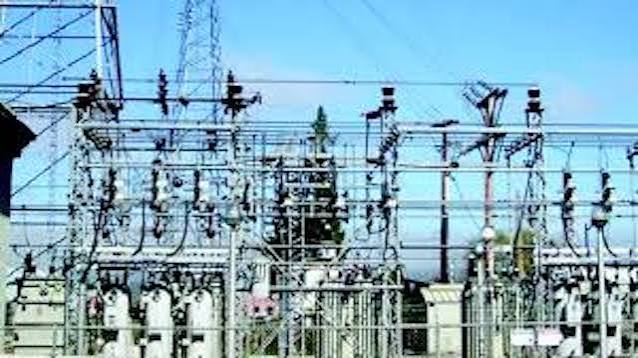
The minister called on electricity consumers to protect power installations from abuse, vandalism, pay bills and also, be vanguards against energy theft.
In her remark, Ms Elizabeth Idigbe, the Managing Partner, Punuka Attorneys and Solicitors said the theme of the lecture was borne out of public and private sector concern.
She said that supply and availability of power is key to modern industrial economy and pivotal for increasing business development agenda.



Utilities built a total of over 21,000 km of new transmission lines last year, the International Renewable Energy Agency reported this week at COP31, citing data from a group called the Utilities for Net Zero Alliance. This is 50% more than the new transmission lines installed during the previous year, IRENA noted in its report.
“Power grids will make or break not only the energy transition but also the world’s ambition to raise global electrification to 35% by 2035, as championed by the Turkish COP31 Presidency,” said the director-general of IRENA, Francesco La Camera. “IRENA’s analysis shows that global grid investment must more than double, reaching a cumulative USD 10 trillion by 2035,” he added, noting that ambition would not be enough and that “We must move from targets to implementation, from individual projects to system-wide transformation, and from commitments to delivery at scale.”
Transmission line capacity has become one of the biggest obstacles in the path of the energy transition. Due to their weather-dependent, variable output nature, wind and solar installations generate electricity intermittently. Because the best locations for such installations are often far from electricity demand centers, having to waste output in times of low demand is a frequent occurrence with both. Called curtailment, wind and solar electricity waste increases costs for the alternative energy sources.
The solution, net-zero proponents such as the International Energy Agency believe, is to expand the grid by building new transmission lines connecting wind and solar installations with demand centers. Back in 2023, the IEA said utilities needed to add or replace some 50 million km of transmission lines by 2040 if Paris Agreement signatories were to meet their commitments.
Forecasting how many millions of kilometers of cable need to be built or replaced, however, is one thing, while paying for it is quite another. Last year, the European Commission estimated that the European Union alone needs to cough up between $2 trillion and $2.3 trillion on grid upgrades by 2050 to achieve the Commission’s climate goals. For context, EU investment in the grid in 2024 stood at $90.5 billion. This would need to rise to over $100 billion annually, according to energy think tank Bruegel.
$100 billion in grid buildout investment is no small potatoes, yet some believe this investment would be inevitable as energy security takes priority over climate change concerns. Wood Mackenzie said this week that countries that prioritize energy security over emission-reduction plans could achieve lower emissions through faster electrification, replacing hydrocarbon import dependence.
“The energy transition has arrived at a genuine crossroads,” Prakash Sharma, Wood Mackenzie’s head of scenarios and technologies, said. “The world is no longer moving in one direction. Nations are making fundamentally different choices about how to power their economies, and those choices are producing outcomes that confound conventional wisdom.”
Energy security has indeed come to the fore since February, with emission reduction taking the back seat as governments struggle to keep energy relatively affordable without emptying state coffers and slipping into a recession. This has proven hard for many that depend on imports of oil and gas, with the effects of this dependence especially obvious in most of Asia and the European Union.
Reducing this dependence on imports has become an obvious path for many of these governments, as much as it is possible. And the most obvious way of reducing this dependence has been electrification, wherever possible. According to Wood Mackenzie, the impact of the war in Iran on energy prices would drive a shift to electrification, a wind and solar buildout, and nuclear generation expansion to produce more energy locally. This, in turn, would inevitably lead to lower emissions, even though, ironically, these lower emissions are not the priority.
COP31 host Turkey has proposed that participants commit to electrification, aiming for electricity to account for 35% of final energy. That would be up from some 20% today, with most of the world’s final energy still coming from hydrocarbons despite the net-zero rush from the last ten years. What is interesting, however, is that the proposal does not include a stipulation for reducing the use of hydrocarbons. Based on Wood Mackenzie’s scenario for inadvertent emission reduction, the lower use of hydrocarbons would happen organically rather than by means of government regulation enforcement.
Such developments would be an interesting departure from what has become the standard modus operandi of pro-transition governments: regulation, emission-cutting mandates, and penalties for using hydrocarbons, such as credit offsets. Instead, the energy ramifications of geopolitical events could lead to what one could describe as an organic shift away from imported hydrocarbons, while countries with their own mineral resources exploit those more fully. Whether such an organic shift would indeed reduce the consumption of oil, gas, and coal, however, remains to be seen.
By: Irina Slav
-
Business2 days ago
BSG Partiner American Coy To Invest $100m In Gas Processing
-
 Oil & Energy2 days ago
FG To Double Oil, Gas Reserves, Moves To Intensified fresh Exploration
-
Business2 days ago
Seme Customs Intercepts Live Pacific Ridley Sea Turtle
-
 Politics5 days ago
2027: INEC Begins Deployment Of Non-Sensitive Materials
-
 News5 days ago
FG Spends N10tn On Power Since Privatisation
-
News5 days ago
Fubara: Why We Engage Only Qualified Engineers, Indigenous Contractors On Projects …As Governor Bags NATE Platinum Award, Inducted Into Highest Membership Cadre
-

 Niger Delta5 days ago
Onuchuku Urges More Funding For Vocational, Technical Education …Calls For Collective Responsibility Among Stakeholders
-

 Featured5 days ago
Rivers Capable Of Delivering Massive Votes For Tinubu, Chinda, Others -Fubara …Charges APC, Rainbow Coalition To Embrace Team Work